تمت ترجمة هذا النص بواسطة الذكاء الاصطناعي وقد يحتوي على أخطاء.
تخطي إلى المحتوى

Nabil Mohsen

Intern, Oman Library

This individual is a guest contributor. MEI is not able to assist with contact requests.

Nabil Mohsen is an Intern at the Middle East Institute’s Oman Library. He is a determined learner who enjoys his studies in politics and is interested in Islamic history, architecture, and ceramics.

The Latest from Nabil Mohsen

تصفية حسب
10001 Results
Can Nidaa Tounes Lead Tunisia?
معهد الشرق الأوسط
  • التحليل
  • Can Nidaa Tounes Lead Tunisia?

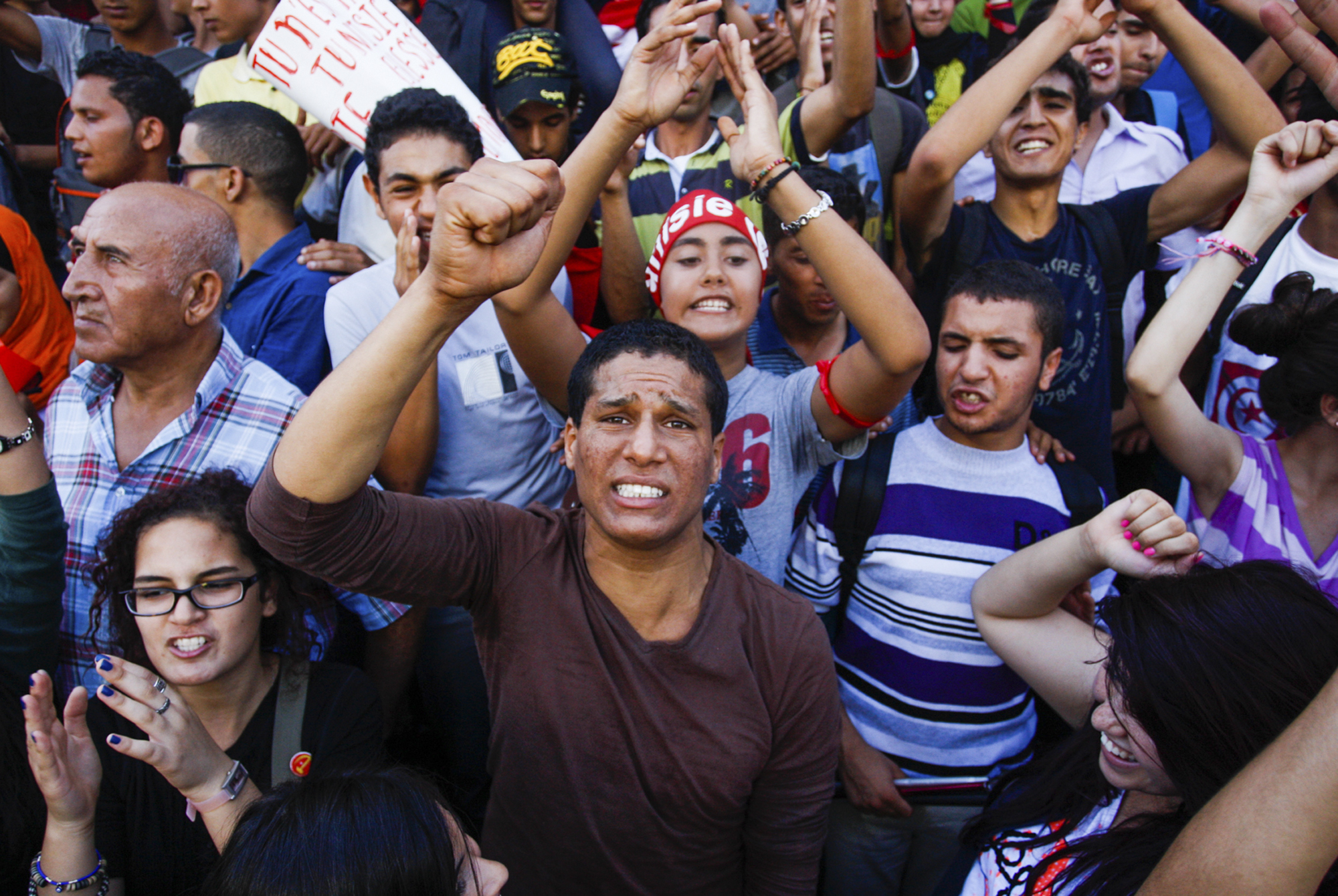
    Tunisia will hold its first presidential elections on Sunday, November 23. Main candidates include former Interim Prime Minister Beji Caid Essebsi of the Nidaa Tounes Party, Moncef Marzouki of the Congress for the Republic (CPR), and Mustapha Kamel Nabli, a former governor of the Central Bank of Tunisia. The Islamist Ennahda party did not present a candidate, wrongly assuming that it would regardless become the strongest voice in politics.

    November 21, 2014

    Islamic Politics in Indonesia: Domestic Challenges, Cross-National Inspirations
    معهد الشرق الأوسط
  • التحليل
  • Islamic Politics in Indonesia: Domestic Challenges, Cross-National Inspirations

    At the height of harsh authoritarian rule of the Suharto era, Islamic political activism was often the focus of the most intense of state repression. Because the Indonesian Communist Party had been destroyed in the 1960s, only Islamic organizations possessed the potential to mobilize substantial grassroots support. Thus, they were considered a particular threat to the centralized and rigid authoritarianism of Suharto’s New Order regime.

    November 21, 2014

    2014 Annual Conference
    معهد الشرق الأوسط

    2014 Annual Conference

    November 20 – January 1, 1970, November 20 - 9:00 AM – 12:00 AM
    January 1 - 9:00 AM – 12:00 AM

    Grand Hyatt Hotel, 1000 H St. NW, Washington, District of Columbia 20001

    Democracy Promotion: Obama's Mixed Record
  • التحليل
  • Democracy Promotion: Obama's Mixed Record

    This paper is part of an MEI scholar series, titled “Obama’s Legacy in the Middle East: Passing the Baton in 2017.” Click here to view the full project, or navigate using the table of contents to the right.

    Current Situation

    November 19, 2014

    The Middle East in 2015 and Beyond: Trends and Drivers
  • التحليل
  • The Middle East in 2015 and Beyond: Trends and Drivers

    Four years after the uprisings that broke the mold of the old Middle East, 2015 promises to be another year of tumultuous change. The eruptions of 2011 unleashed decades of pent-up tensions and dysfunction in the political, socioeconomic, and cultural spheres; these dynamics will take many years, if not decades, to play themselves out and settle into new paradigms and equilibriums.

    November 18, 2014

    Obama’s Legacy on Terror
    معهد الشرق الأوسط
  • التحليل
  • Obama’s Legacy on Terror

    This paper is part of an MEI scholar series, titled “Obama’s Legacy in the Middle East: Passing the Baton in 2017.” Click here to view the full project, or navigate using the table of contents to the right.

    November 18, 2014

    Hezbollah: In Syria for the Long Haul
  • التحليل
  • Hezbollah: In Syria for the Long Haul

    As Syrian President Bashar al-Assad gazes across Damascus from his palace on Mount Qasioun, he can be grateful to his Russian, Iranian, and Hezbollah allies that he is still in a position to enjoy such a view.

    November 18, 2014

    Moving Ahead for the United States and Turkey
    معهد الشرق الأوسط
  • التحليل
  • Moving Ahead for the United States and Turkey

    Ankara and Washington once again are wide apart on regional objectives. Not since 2003 and, for some, not since Cyprus in 1974 have the two capitals seen the same crisis so differently. Moving back onto the same page will require a series of concrete steps. President Obama reportedly has ordered a review. One of its main objectives should be to bring Turkey and the United States closer together on goals and tasks each will undertake. The United States cannot build a stable coalition without Turkey, and Turkey cannot accomplish its aims without the United States.

    The Israeli-Palestinian Conflict and Obama’s Legacy
  • التحليل
  • The Israeli-Palestinian Conflict and Obama’s Legacy

    This paper is part of an MEI scholar series, titled “Obama’s Legacy in the Middle East: Passing the Baton in 2017.” Click here to view the full project, or navigate using the table of contents to the right.

    The Israeli-Palestinian conflict has gone through a number of different phases in its long history. It is possible—though only time will tell—that a new phase is beginning now, but not a particularly hopeful one.[1]

    November 14, 2014

    Iran's Role in Syria: Drivers and Dynamics

    Iran's Role in Syria: Drivers and Dynamics

    November 14 – January 1, 1970, November 14 - 12:00 PM – 12:00 AM
    January 1 - 12:00 PM – 12:00 AM

    The Middle East Institute, 1761 N Street NW, Washington, District of Columbia 20036

    Syria: A Fire Within
    معهد الشرق الأوسط

    Syria: A Fire Within

    November 12 – January 1, 1970, November 12 - 6:00 PM – 12:00 AM
    January 1 - 6:00 PM – 12:00 AM

    The Middle East Institute, 1761 N. Street NW, Washington, District of Columbia 20036

    Obama's Legacy on Iran
  • التحليل
  • Obama's Legacy on Iran

    This paper is part of an MEI scholar series, titled “Obama’s Legacy in the Middle East: Passing the Baton in 2017.” Click here to view the full project, or navigate using the table of contents to the right.

    Soft Islam: Indonesia’s Interfaith Mission for Peace in the Middle East
  • التحليل
  • Soft Islam: Indonesia’s Interfaith Mission for Peace in the Middle East

    Historians and anthropologists have focused on Muslim networks of scholars, merchants, and pilgrims that connect the Middle East with Southeast Asia. Especially with respect to the study of Islam in Indonesia, where political scientists and anthropologists approach Islam largely in terms of national politics and local cultures, this burgeoning body of literature on global Muslim networks offers both ethnographic insights into actual practices and an historical appreciation for the longue durée. The importance of this scholarship notwithstanding, much of this work focuses on formal networks of migration, trade, learning, and pilgrimage. In this respect, the cultural and political work of Islam has been largely confined to the study of either Muslim scholars or lay Muslims who participate in trade, travel, study, and migration. Here I shift the focus to a religious diplomacy tour that connected Muslims with states, citizen-believers, and global politics.

    November 12, 2014