Nabil Mohsen is an Intern at the Middle East Institute’s Oman Library. He is a determined learner who enjoys his studies in politics and is interested in Islamic history, architecture, and ceramics.
The Latest from Nabil Mohsen

Preface to Iraq's Petroleum Industry: Unsettled Issues
Originally posted April 2010
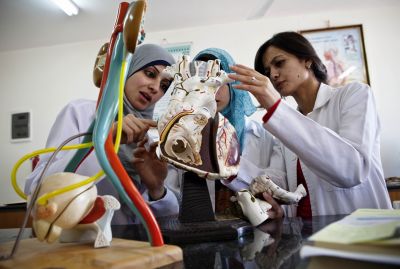
Women's Prospects in Afghanistan: Oppression or Opportunity?
Recent media reports indicate that fewer Afghan women turned out to vote for a President on August 20, 2009 than went to the polls five years ago, when in some districts female turnout had been even higher than that of males. Apprehension, convention, ennui, and disorganization led to families keeping their women home on election day, even as men dared to vote. The reversal of women’s rights, which they had only recently begun to exercise, is an ominous sign.
The Kurdish Dimension to Turkey's Syria Policy
This article first appeared in Foreign Policy’s Middle East Channel on April 10, 2012
The Iranian Revolution at 30
Originally posted January 2009
It is only fitting that “The Iranian Revolution at 30” begin with an introductory essay by R.K. Ramazani and that this project be dedicated to him. For 55 years, Professor Ramazani has been a teacher and mentor to many scholars and practitioners of the Middle East. His body of work on Iran is unrivalled in its scope and originality. Many of his articles and books on Iranian foreign policy are standard works.
Iran Diplomacy: Letter from Berlin
This article originally appeared in Foreign Policy’s Middle East Channel on April 9, 2012
BERLIN – If at one time European governments believed the threat of a nuclear-armed Iran was far more frightening for the United States than for those across the Atlantic, those days are in the past. As talks near on Iran’s nuclear program, Tehran should know that European officials’ views are somewhere in the middle between America’s caution and Israel’s alarm.
The Artist of the Revolution: Hamza Namira, the Arab Spring, and the Dream of a Free Egypt
It is said that Egypt is the Pyramid and the Nile
But they forget that true Egyptians
When the right time comes
Are able to do the impossible
—Hamza Namira, “El-Midan” (“The Square”)[1]

Egypt and the Dynamics of Transition and Revolution
Today, more than a year after the Tahrir Square protests toppled the Mubarak regime, tension remains between the old guard and the new. As the Muslim Brotherhood works to assert political authority, the military elite, as represented by the Supreme Council of the Armed Forces, seeks to retain some vestige of power in government. Dr. Ghabra posits that the ongoing attempts on the part of the SCAF to retain control over Egypt's political future will not succeed, given the new political awareness and involvement of Egyptian citizens.
Egypt and the Dynamics of Revolution and Transition
Egypt and the Dynamics of Revolution and Transition, MEI Podcast 6 April, 2012
Egypt and the Dynamics of Revolution and Transition
Egypt and the Dynamics of Revolution and Transition, MEI Podcast 6 April, 2012
Egypt and the Dynamics of Revolution and Transition
Egypt and the Dynamics of Revolution and Transition, MEI Podcast 6 April, 2012
Egypt and the Dynamics of Revolution and Transition
Egypt and the Dynamics of Revolution and Transition, MEI Podcast 6 April, 2012
Egypt and the Dynamics of Revolution and Transition
Egypt and the Dynamics of Revolution and Transition, MEI Podcast 6 April, 2012



