Randa Slim is a non-resident fellow at the Johns Hopkins University School of Advanced and International Studies (SAIS) Foreign Policy Institute and was formerly director of the Conflict Resolution and Track II Dialogues Program at the Middle East Institute. A former vice president of the International Institute for Sustained Dialogue, Slim has been a senior program advisor at the Rockefeller Brothers Fund, a guest scholar at the United States Institute of Peace, a program director at Resolve, Inc, and a program officer at the Kettering Foundation. A long-term practitioner of Track II dialogue and peace-building processes in the Middle East and Central Asia, she is the author of several studies, book chapters, and articles on conflict management, post-conflict peace-building, and Middle East politics.
The Latest from Randa Slim
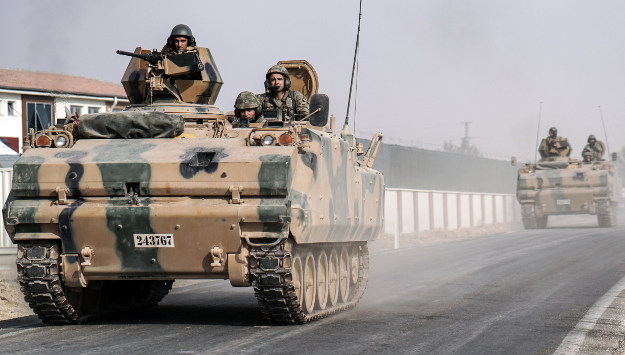
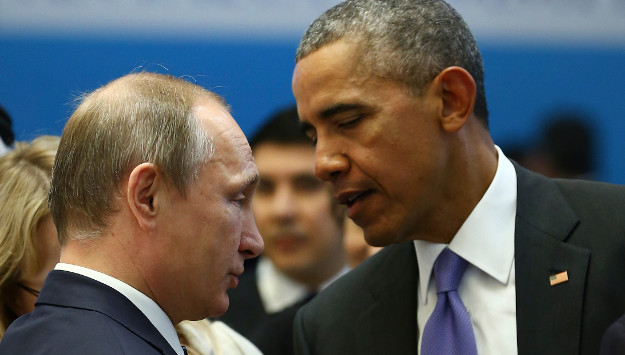
Weekly Briefing: Syria Talks at G20 Summit, Russian Moves on Israel-Palestine, and Iran Energy Policy
In this issues of MEI’s weekly briefing, contributors Daniel Serwer, Randa Slim, Eran Etzion, and Alex Vatanka provide analysis on recent and upcoming events including discussions between the United States, Russia and Turkey on Syria policy at the G20 Summit, the Syrian opposition’s transition plans, Russian moves on Israel-Palestine, and Iran’s energy policy.
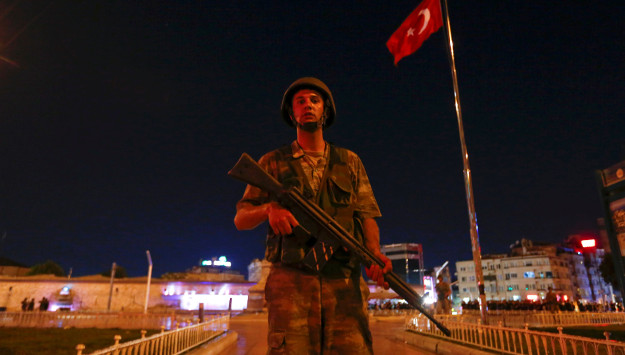
Monday Briefing: Turkey's Post-Coup Military Restructuring and US-Russia Meeting in Geneva on Syria Coodrination
In this week’s Monday Briefing, MEI experts Gonul Tol and Randa Slim provide analysis on the restructuring of Turkey’s military following the recent failed coup attempt and the meeting between U.S. and Russian officials in Geneva tomorrow to discuss counterterrorism coordination in Syria.
Turkey Restructures Military
Gonul Tol, Director of the Center for Turkish Studies
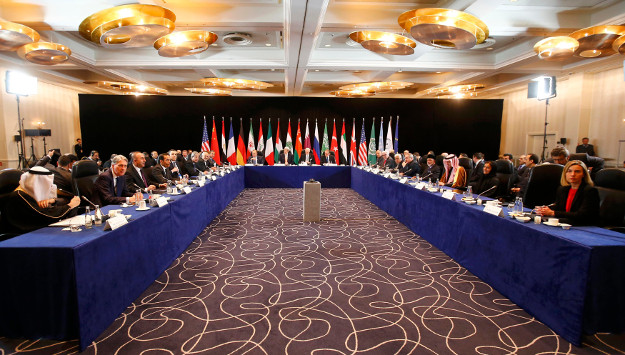
Monday Briefing: International Syria Support Group, Mustafa Badreddine, Global Refugee Summit, and India's Modi to Visit Iran
In this week’s Monday Briefing, MEI experts Robert S. Ford, Randa Slim, Paul Salem, and Alex Vatanka provide analysis on recent events including Tuesday’s meeting of the International Syria Support Group in Vienna, the death of Hezbollah senior leader Mustafa Badreddine, the global Refugee Summit to be held in Istanbul, and Indian PM Modi’s upcoming visit to Iran.
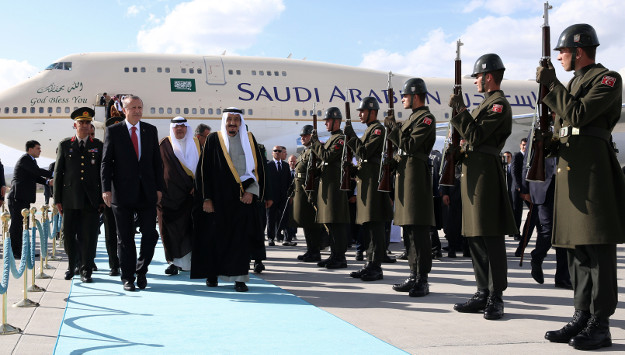
Monday Briefing: Syrian Peace Talks, Yemen's Cease-fire, and Saudi Regional Diplomacy
In this week’s Monday Briefing, MEI experts Randa Slim, Charles Schmitz, and Paul Salem provide analysis on recent and upcoming events including the next round of Syrian peace talks, the cease-fire in Yemen and the negotiations ahead, and Saudi King Salman’s visits to Egypt and Turkey.
Round Two of Syrian Peace Talks
Randa Slim, Director of the Initiative for Track II Dialogues
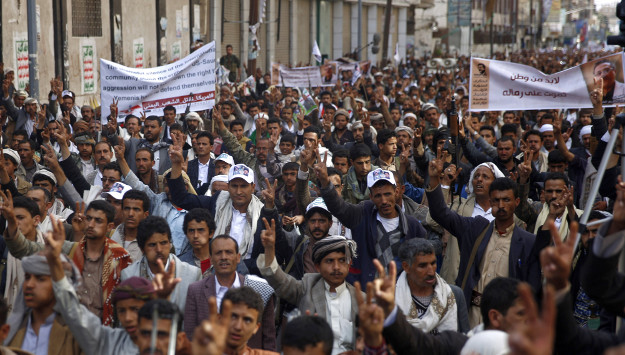
Monday Briefing: Latest Analysis on Yemen, Turkey, and Syria
In this week’s Monday Briefing, MEI experts Charles Schmitz, Gonul Tol, Randa Slim, and Charles Lister provide analysis on recent events including the announced cease-fire between the Saudi’s and Yemen’s Houthis, the consequences of the recent terrorist attacks in Turkey and the P.Y.D’s move to declare an autonomous Kurdish zone in northeastern Syria, expectations for Secretary Kerry’s visit to Moscow this week to discuss the Syrian conflict, and the impact of the cease-fire on conditions on the ground in Syria.

Putin's Master Plan for Syria
For the full article visit Foreign Policy
After first surprising the world by entering the fray in Syria last year, Vladimir Putin again shocked observers by announcing he was partially pulling out. On March 14, the Russian president declared his objectives “generally accomplished” and announced the withdrawal of part of his Russian military forces in Syria.
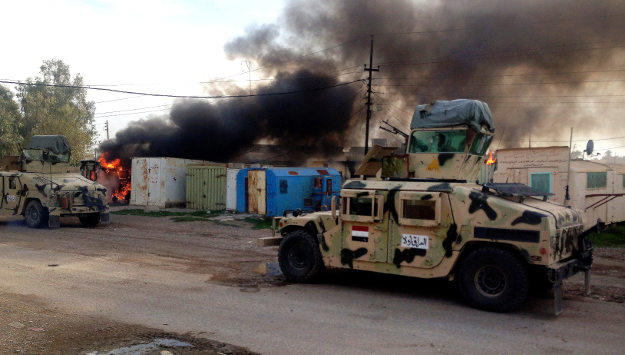
Iraq Is Struggling Forward and Needs Help
This article is the result of a recent visit by the authors to Baghdad where they met with government leaders, security officials, political party representatives from the various communities, and leaders of ten Iraqi think tanks. A version of this article appeared in the March 10 issue of the Arabic Al-Hayat newspaper.
Despite deep internal divisions, a massive security threat from ISIS, and a fiscal collapse due to low oil prices, the Iraqi government is struggling to move the country forward and deserves urgent support from international and regional players.
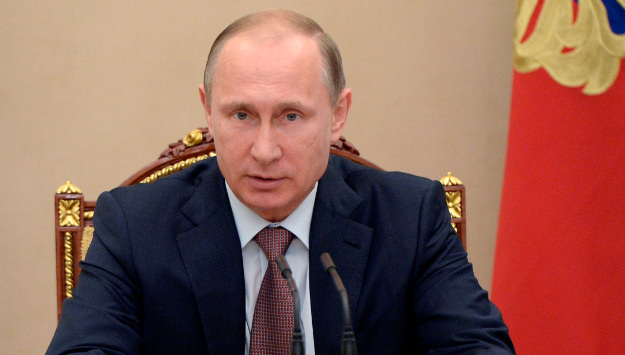
Randa Slim on Russia’s Decision to Partially Withdraw from Syria
Russian President Vladimir Putin surprised observers when he announced on March 14 that he is going to begin withdrawing Russian military forces from Syria. As the director of MEI’s Initiative for Track II Dialogues Randa Slim has worked extensively with all parties on the Syrian conflict, including Russian participants. She discusses the meaning of Putin’s decision with MEI Senior Editor Antoun Issa.
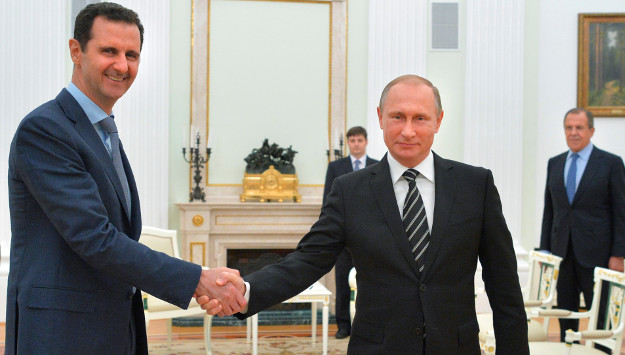
5 Obstacles That We Must Overcome in Syria — Starting with Assad
This article was first published on The World Post.
Under the pall cast by the horrific terrorist attacks in Paris, the U.S., Russia and other world powers met in Vienna Saturday and agreed on a timetable for a political process in Syria. However, the principles and steps they set conjure a sense of déjà vu.
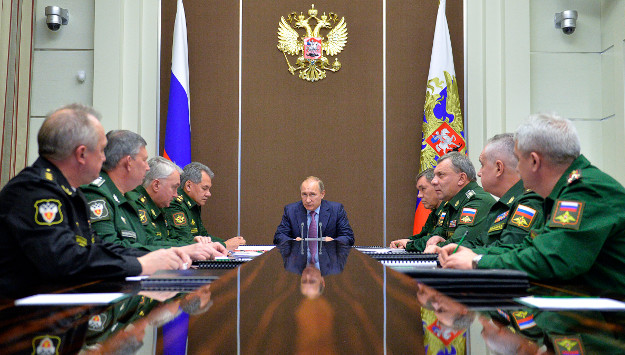
Debating Russia's Aims in Syria
There is a debate within U.S. policy circles about Russian president Vladimir Putin’s strategy in Syria. While all agree that Putin intervened to shore up the faltering regime of Bashar al-Assad, there are at least two interpretations of what Putin’s ultimate objective is.
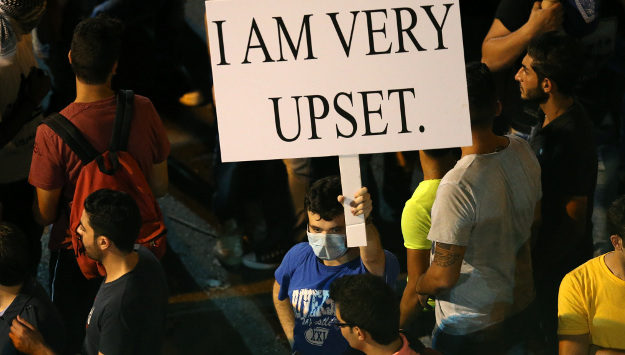
Can #Youstink Campaign Shake Up Lebanon?
Read the full article on CNN.com.
Lebanese have long suffered through water shortages, regular electricity blackouts, a leaking sewage system and poor health and education services. But as trash has piled up on the streets in recent weeks, it looks like the people of Lebanon have had enough.
“You Stink” is the message they are sending. And the campaign might just succeed where others have failed.
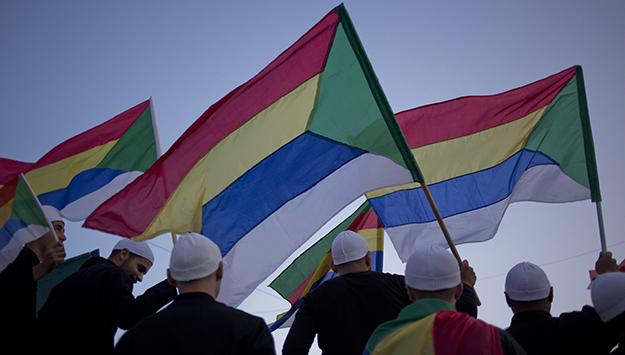
The Syrian Druze at a Crossroads
In the last few weeks, the Syrian Druze have been a focal point in significant fighting on the ground. If their role in the fighting continues, or even if it changes, the Druze will likely have a profound impact on the trajectory of the Syrian conflict.
Responding to Recent ISIS Advances in Iraq and Syria
How are Iraq and the United States responding to the capture of Ramadi by ISIS?
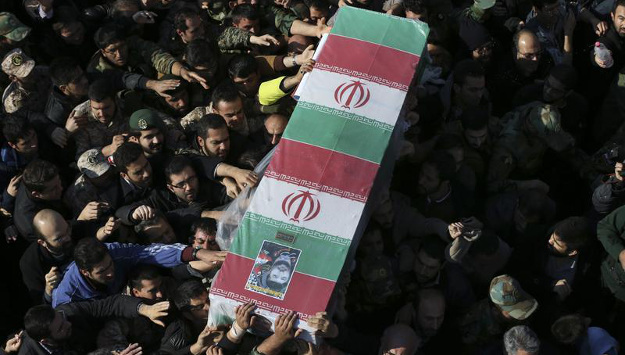
Is Iran Overstretched in Syria?
Read the full article on Foreign Policy.
For the majority of Arabs, Syria symbolizes all that is wrong with Iranian influence in the Middle East. Since 2011, Tehran and its regional proxies have poured men, money, and weapons into Syria to prevent President Bashar al-Assad’s military defeat. In June 2013, Hezbollah’s intervention in the western city of Qusayr single-handedly turned the tide of the war in Assad’s favor.



