This individual is a guest contributor. MEI is not able to assist with contact requests.
Rebecca Anne Proctor is an independent journalist, editor, author, and broadcaster based in Dubai and Rome, from where she covers the Middle East and North Africa. She is the former editor-in-chief of Harper’s Bazaar Art and Harper’s Bazaar Interiors.
Keynote by Amb. Robert Ford at MEI's 2015 Annual Awards Banquet
Robert S. Ford, senior fellow at The Middle East Institute and former U.S. Ambassador to Syria and Algeria, delivered the keynote address at MEI’s Annual Awards Banquet on November 12, 2015, in Washington, D.C.
Obama's Mideast Legacy and the Next Administration
The first panel at MEI’s 69th Annual Conference featured Prem Kumar (Albright Stonebridge Group), Michael Singh (The Washington Institute for Near East Policy), Tamara Cofman Wittes (The Brookings Institution), Robin Wright (The New Yorker, U.S. Institute of Peace and the Woodrow Wilson International Center for Scholars), and moderator Elise Labott (CNN).
The Egyptian state today faces one acute crisis after the other. To be fair, the Egyptian military cannot be held responsible for creating these crises. However, it is unlikely that Egypt will be able to resolve them unless and until the armed forces divests itself of the power and the privileges associated with the immense economic power and privileges it has accumulated.
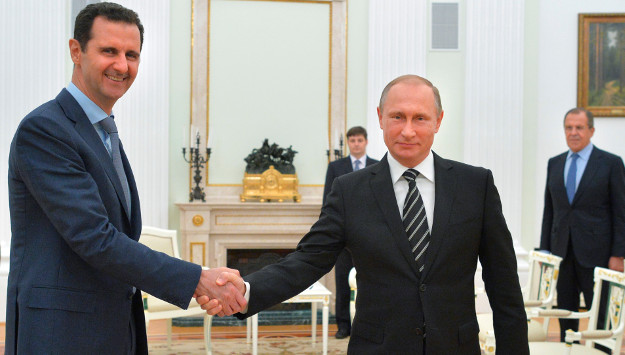
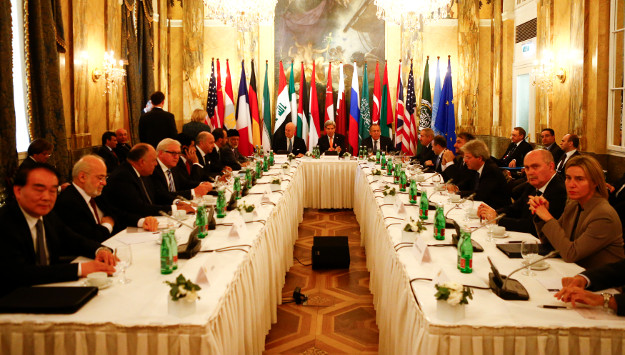
Under the pall cast by the horrific terrorist attacks in Paris, the U.S., Russia and other world powers met in Vienna Saturday and agreed on a timetable for a political process in Syria. However, the principles and steps they set conjure a sense of déjà vu.
Sectarian Backfire? Assessing Gulf Political Strategy Five Years after the Arab Uprisings
The division of citizens into confessional and other group constituencies, rather than some spontaneous outpouring of primordial hatred, was in fact a calculated survival strategy employed by frightened regimes under siege. It was and remains one premised on forestalling the emergence of cross-cutting societal factions that could challenge the political status quo, coalitions that—unlike narrow sectarian groups—could claim to represent the will of all the people and mobilize a broad base of support in pursuit of those claims. But has playing the sectarian card paid off?
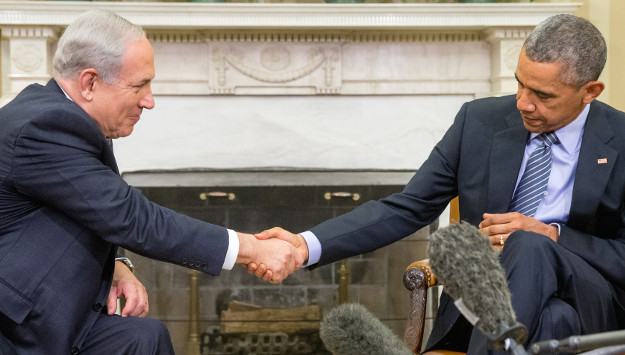
The White House recently acknowledged that it was out of ideas on how to pursue Israeli-Palestinian peace talks in the final year of Barack Obama’s presidency, raising — for the first time — the prospect that Israel’s occupation of East Jerusalem and the rest of the West Bank is permanent.
This piece was co-authored by Chester Crocker, the James R. Schlesinger Professor of Strategic Studies at Georgetown University’s Walsh School of Foreign Service. Read the full article at The National Interest.