This individual is a guest contributor. MEI is not able to assist with contact requests.
Rebecca Anne Proctor is an independent journalist, editor, author, and broadcaster based in Dubai and Rome, from where she covers the Middle East and North Africa. She is the former editor-in-chief of Harper’s Bazaar Art and Harper’s Bazaar Interiors.
Almost immediately after the triumph of the Islamic revolution, Ayatollah Khomeini and the new Iranian leadership turned against Saudi Arabia and its ruling family.
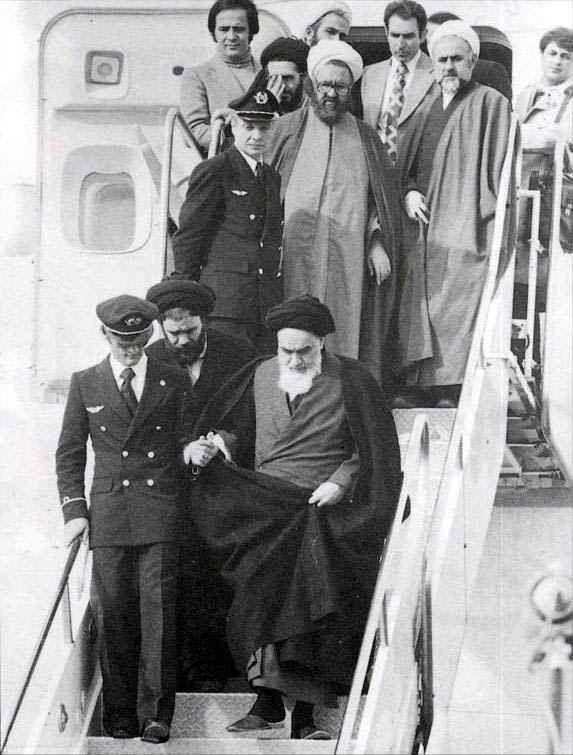
When Iran’s 1979 revolution took place, many Iranians predicted that relations between Iran and France would improve in an unprecedented way. Ayatollah Ruhollah Khomeini, the founder of the Islamic Republic, spent the last four months of his 14-year in exile in France. The revolutionaries in Tehran lauded French leaders for being hospitable toward their spiritual leader. They had no hatred of France, which lacked colonialist aspirations regarding Iran.
The Spectrum of Perceptions in Iran's Nuclear Issue
The relationship between Iran and the West has been marked by mutual mistrust and confrontation for the past 30 years. Iran’s nuclear standoff with Western countries is currently regarded as the main symbol of that confrontational relationship. Iran insists that its nuclear program is exclusively peaceful, while Western countries are suspicious of Tehran’s intentions. There are polarized and incompatible views about this complicated and multidimensional issue. The main source of incompatibility is that this issue is seen from different perspectives.
As one of the most important events of the past three decades in the Middle East, the Islamic Revolution not only has sustained itself, but the Islamic Republic which it spawned celebrated its 30th anniversary in February 2009.
The revolution of February 1979 was a revolt of the society against the state. In some of its basic characteristics, the revolution did not conform to the usual norms of Western revolutions, because the state did not represent just an ordinary dictatorship but an absolute and arbitrary system that lacked political legitimacy and a social base virtually across the whole of the society.
The Arab world, especially the Gulf countries, face many environmental threats and problems such as desertification, biodiversity loss, marine and coastal areas pollution, air pollution, and water scarcity and quality. Beside these traditional environmental threats, various other environmental problems have begun to emerge in the last few years, related to military conflicts, construction and demolition debris, and climate change.