تمت ترجمة هذا النص بواسطة الذكاء الاصطناعي وقد يحتوي على أخطاء.
تخطي إلى المحتوى

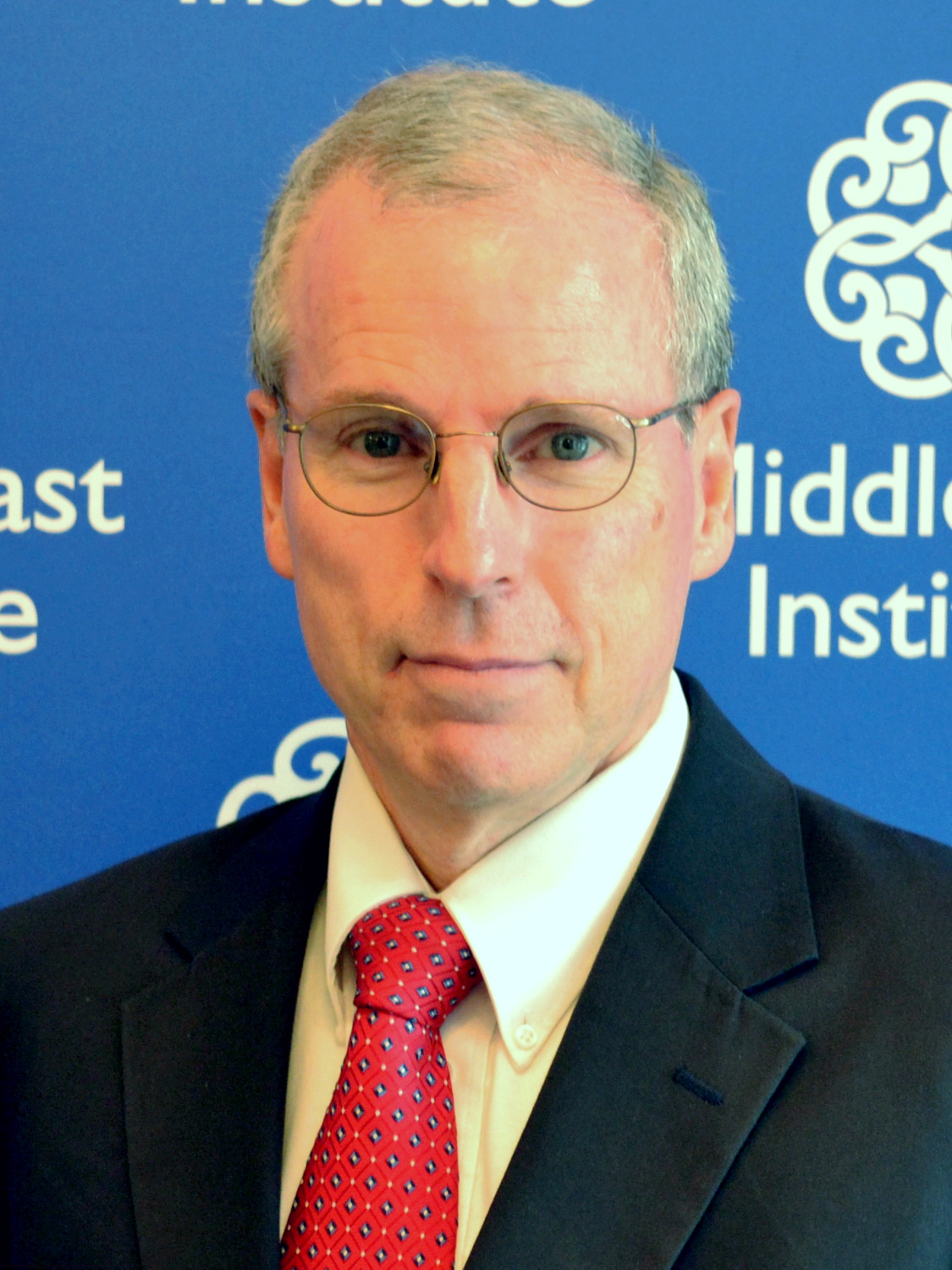
Amb. (ret.) Robert S. Ford is currently a senior fellow at the Middle East Institute in Washington where he writes about developments in the Levant and North Africa. Amb. Ford  retired from the U.S. Foreign Service in 2014 after serving as the U.S. Ambassador to Syria from 2011 to 2014. In this role, Amb. Ford was the State Department lead on Syria, proposing and implementing policy and developing common strategies with European and Middle Eastern allies to try to resolve the Syria conflict. Prior to this, Amb. Ford was the deputy U.S. Ambassador to Iraq from 2008 to 2010, and also served from 2006 until 2008 as the U.S. Ambassador to Algeria, where he boosted bilateral education and rule of law cooperation. Amb. Ford served as deputy chief of mission in Bahrain from 2001 until 2004, and political counselor to the U.S. Embassy in Baghdad from 2004 until 2006 during the tumultuous establishment of the new, permanent Iraqi government. In 2014 he received the Secretary’s Service Award, the U.S. State Department’s highest honor.  He also received in April 2012 from the John F. Kennedy Library in Boston the annual Profile in Courage Award for his stout defense of human rights in Syria.  He has appeared on CNN, PBS, Fox, MSNBC, NPR, the BBC and Arabic news networks as well as in The New York Times and Foreign Policy.

Education
B.A. in international studies, Johns Hopkins University; M.A. in Middle East studies and economics, Johns Hopkins SAIS; Advanced Arabic studies, American University of Cairo

Regions of Expertise
Syria, Iraq, North Africa

Issues of Expertise
US foreign policy, economic and political development, Islamist movements

Languages
Arabic, French

Sample Interview:

April 17, 2015: An Interview with Amb. Robert S. Ford.
The Latest from Robert S. Ford

تصفية حسب
173 Results
Outside Views on the U.S. Strategy for Iraq and Syria and the Evolution of Islamic Extremism
  • التحليل
  • Outside Views on the U.S. Strategy for Iraq and Syria and the Evolution of Islamic Extremism

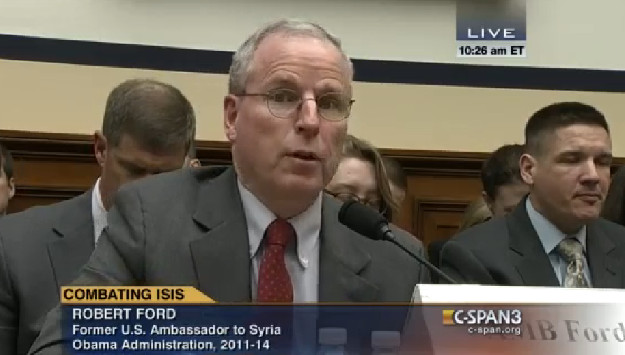
    Amb. Robert Ford delivered the following prepared remarks at a hearing of the U.S. House Armed Services Committee on January 12, 2016. Click here to watch C-SPAN’s coverage of the hearing.

    Mr. Chairman and members of the Committee,

    It is an honor to be on this distinguished panel.  Thank you for inviting me.

    Challenges Ahead for Algeria in 2016
  • التحليل
  • Challenges Ahead for Algeria in 2016

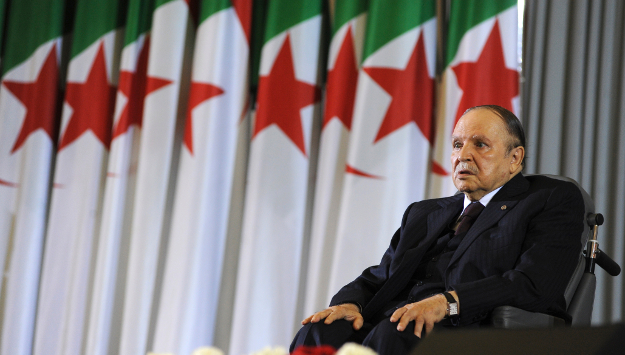
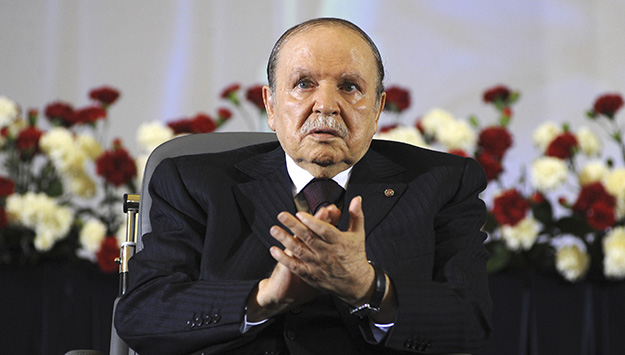
    Many used to say that unlike other countries that have an army, Algeria is an army that has a country. As 2016 begins, President Abdelaziz Bouteflika—no mere client of the army—has consolidated his authority and empowered his allies in Africa’s largest nation. However, questions about Algeria’s political and economic stability loom large in the new year.

    On Syrian Talks and Ceasefires: An Open Letter to Secretary Kerry
  • التحليل
  • On Syrian Talks and Ceasefires: An Open Letter to Secretary Kerry

    Mr. Secretary,

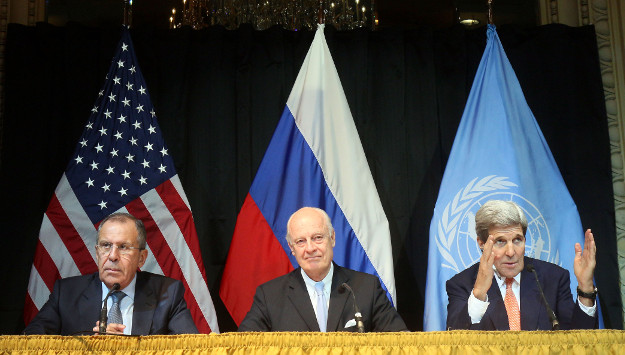
    No one has worked harder than you to find a way to bring all sides together to stop the Syrian civil war and muster more international action against the Islamic State. But as a former colleague, let me caution that without some major adjustments in its approach to the Syrian peace talks in Vienna, the Obama administration is headed down another dead end.

    The Ceasefire Challenge

    Syria in Vienna: Governance Before Elections
  • التحليل
  • Syria in Vienna: Governance Before Elections

    Ten days ago 17 countries called for “credible, inclusive, nonsectarian governance” in Syria followed by a new constitution and elections.  It sounds good on paper.  However, the key element is not elections, nor is it a new constitution; it is the rule of law.  Syria has had no rule of law to speak of under Baath and Assad family rule, and in its absence the Constitution is worth little and fair elections are impossible.  Thus,  the governance reference in the Vienna statement is the vital element.  Only after serious governance changes are made can a new constitution come into real effect

    A Message to Vienna: Build a Framework, but Leave the Details to Syrians
  • التحليل
  • A Message to Vienna: Build a Framework, but Leave the Details to Syrians

    As Secretary of State John Kerry seeks to launch a new peace effort on Syria, he needs to be careful about the goals he sets and the language he uses. Getting the fundamentals wrong at the outset might scuttle the process or could ensure that whatever deal results will crumble under pressure.  It will then lead to more warfare and a worsening of the refugee crisis. Moreover, it would preclude us from securing our strategic goal of mobilizing more Syrians to contain and eventually expel terrorists from Syria.

    More Russian Aid to Assad: Chasing the Impossible Dream
  • التحليل
  • More Russian Aid to Assad: Chasing the Impossible Dream

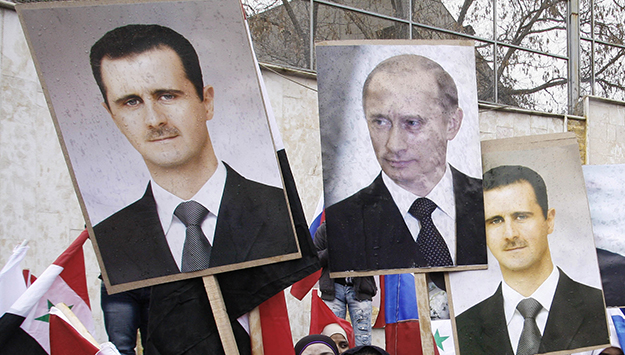
    Russia’s recent increase in military aid to the Syrian government is an extension of previous Russian policy on Syria; what is different is not the thrust of Russian policy but the scale of the aid. This ramp-up carries new risks to those hoping for a real political solution to the longstanding Syrian conflict and to those hoping to see the threat of terror groups operating in Syria contained.

    The Kurdish PYD & the Challenge of Rebuilding a Syrian State
  • التحليل
  • The Kurdish PYD & the Challenge of Rebuilding a Syrian State

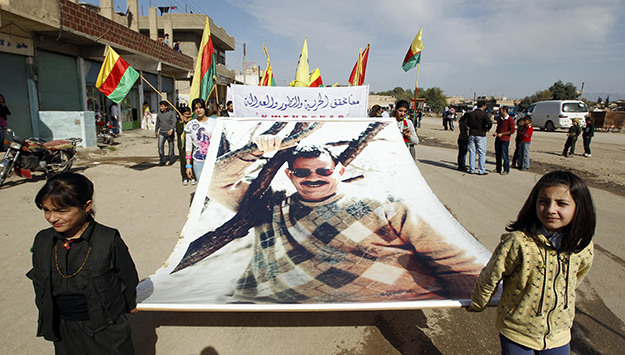
    The United States’ unprecedented close air combat support to the PYD, a Syrian Kurdish political party and its associated militia, has helped the PYD drive back the Islamic State’s forces from a long strip along the Turkish border, handing ISIS its greatest defeat in Syria to date. The airstrikes have also enabled the PYD to consolidate its hold on Syrian Kurdish territories, and it has launched an ambitious autonomous governance project creating new administrations to manage local affairs.

    Yes, Talk with Syria’s Ahrar al-Sham
  • التحليل
  • Yes, Talk with Syria’s Ahrar al-Sham

    Probably the most important group fighting the Syrian regime now is Ahrar al-Sham (Free Men of the Levant), a Salafi group fighting mainly in the north but also in central and southern Syria. Contrary to Western reports suggesting that the al-Qa‘ida-linked Nusra Front led the battle to capture the northwestern Syrian provincial capital of Idlib last March, Ahrar had more fighters in the battle—a fact demonstrated by its predominance in the subsequent military oversight council established for Idlib.

    Wringing Our Hands and Endless Bombing Won’t Help Us in Syria
  • التحليل
  • Wringing Our Hands and Endless Bombing Won’t Help Us in Syria

    Three months ago CIA Director John Brennan told a Congressional panel that the administration fears the fall of the Assad government in Damascus, as it could lead to “Islamist extremists, including the Islamic State, Jabhat al-Nusra, and al-Qa‘ida elements within Syria to seize power from a collapsed regime.” I heard similar fears during a Congressional hearing I attended June 17.

    The Assad Regime: The Beginning of the End?
  • التحليل
  • The Assad Regime: The Beginning of the End?

    Bashar al-Assad’s regime in Syria did not have a good winter. His forces lost a provincial capital, Idlib, and despite repeated efforts could not even seize northern and eastern suburbs adjoining Damascus. There were also failures in Aleppo and Dara‘a. He had to relieve heads of two of the regime’s four secret police services. The economic situation worsened.

    Algeria: Quiet but Not Calm
  • التحليل
  • Algeria: Quiet but Not Calm

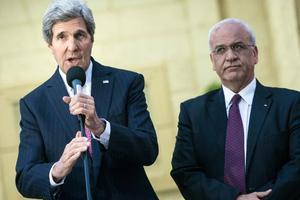
    Last week U.S. Secretary of State John Kerry and Algerian Foreign Minister Ramtane Lamamra, an experienced diplomat, concluded bilateral consultations that focused on regional security and Algerian economics. The United States endorsed Algeria’s efforts to resolve the conflict in Mali, and the two countries pledged to work closely on counterterrorism. The United States also voiced support for Algerian efforts to diversify its economy and attract new investment, and the two countries will continue to build their bilateral cooperation in education.

    Do Kerry’s Remarks on Syria Represent a Break with Previous Policy?
  • التحليل
  • Do Kerry’s Remarks on Syria Represent a Break with Previous Policy?

    Over the weekend, the Western and Arab media reported extensively on U.S. Secretary of State John Kerry’s remarks, given on the fourth anniversary of the Syrian revolution, that the United States must negotiate “in the end” with Bashar al-Assad. Are his remarks anything new, or do they represent a continuation of previous policy? MEI’s Robert Ford weighs in.