Japan's Important Role in Saudi's Vision 2030
Cinzia Miotto contributed to this article.
This individual is a guest contributor. MEI is not able to assist with contact requests.
Cinzia Miotto contributed to this article.
On November 28, Iranian President Hassan Rouhani and his Russian counterpart Vladimir Putin agreed in a telephone conversation to coordinate steps about global oil and gas prices as well as on the war in Syria.
In another sign of Tehran’s improving trade and economic ties with regional countries, Iran has overtaken OPEC-member rivals Saudi Arabia and Iraq as Indi
In this week’s Monday Briefing, MEI experts Charles Lister, Yousef Munayyer, and Mabrouka M’Barek provide analysis on recent and upcoming events including the Assad regime’s advances in Aleppo, Fatah’s annual conference, and Tunisia’s upcoming conference for its economic plan.
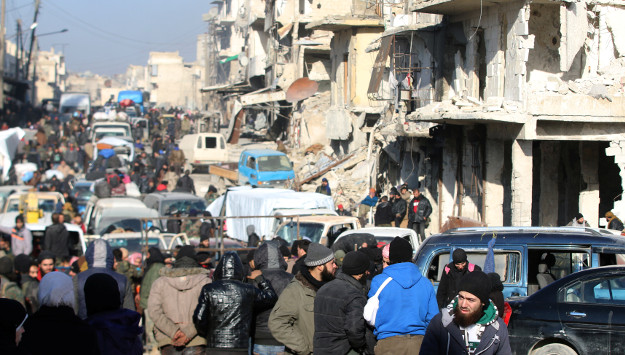
Regime Advances in Aleppo
Charles Lister, Senior Fellow
In a remark that is likely to heighten tension in the Gulf region, the Iranian chief of staff of the armed forces has called for setting up naval bases across on the coasts of Yemen and Syria in the future.
On the evening of November 26, security officials tried to arrest Mahmoud Sadeghi, a university lecturer and lawmaker from Tehran – disregarding his parliamentary immunity. But the authorities backed down after Sadeghi’s supporters, including a number of parliamentarians and students, gathered in front of his house to protest the move. The controversy soon turned into the “most heated” political issue in Tehran the following day.
The Iranian president, Hassan Rouhani, faces an uphill struggle as he prepares for his reelection bid scheduled for May 2017. It was not supposed to be this way. Iran’s 2015 nuclear deal with world powers, including the United States, was supposed to seal Rouhani’s second term.
After all, the moderate cleric had delivered on his key promise, the lifting of the painful nuclear-related international sanctions. But Rouhani’s hardline opponents inside the Islamic Republic are now increasingly identifying corruption as Rouhani’s Achilles Heel.
On November 22, a senior Iranian official admitted that more than 1,000 combatants dispatched by Iran to fight alongside President Bashar al-Assad’s forces have been killed in the Syrian war.
On November 23, Supreme Leader Ali Khamenei said Iran would strike back if Washington renewed sanctions against the Islam
This essay, which draws upon extensive field research in Libya over the period 2011-2013, seeks to shed light on an under-theorized area of research, namely the forces that challenge an emerging civil society during a political transition. In doing so, the essay makes two contributions to knowledge, first by arguing the value and inevitable role of civil society in a divided or conflict-ridden society, and second by helping readers better understand and unpack the case of Libya’s disrupted and dispersed civil society.
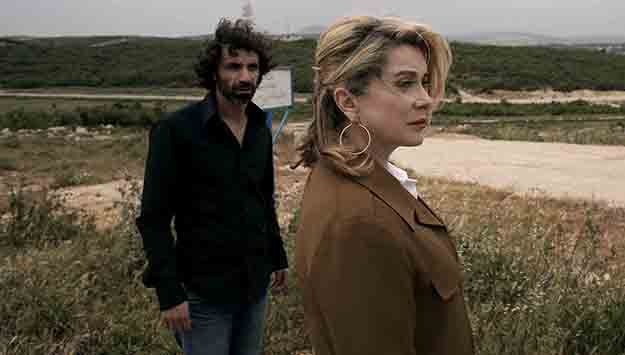
Countless films have been made about the Lebanese Civil War, the dominant subject of Lebanese cinema for the past 40 years. But in Vatche Boulghourjian’s striking debut film Tramontane, he wanted to tell a different story and tackle the lingering legacy of the civil war.
When the Lebanese parliament elected Michel Aoun as the country’s president on October 31, Iran celebrated the news as a “
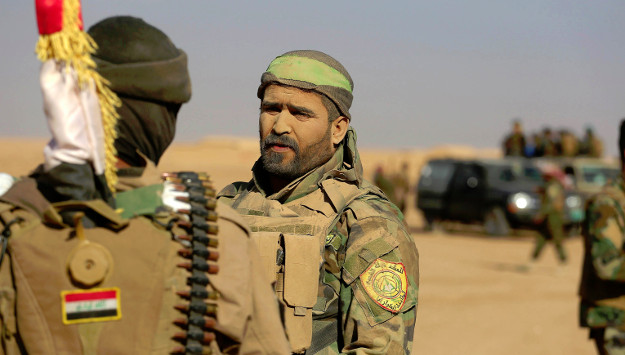
The increasing role of Iran-backed Iraqi Shiite militia forces in the battle of Mosul has alarmed the Iraqi Sunni minority as well as many countries in the region.
In this week’s Monday Briefing, MEI experts Paul Salem, Randa Slim, and Gonul Tol provide analysis on recent and upcoming events including the vulnerabilities in Trump’s Middle East policy, Russia’s plan in Syria after Trump’s election, and Erdogan’s hopes for Gulen’s extradition under the next administration.