The Latest from Salam Kawakibi
Middle East Dialogue Report: Beirut
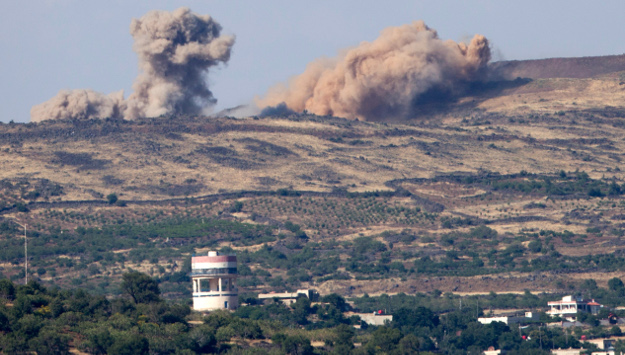
The Middle East Dialogue on New Political and Security Dynamics Shaping the Arab Region met in Beirut May 30-31 to consider the situation in Syria, which has deteriorated further since the last meeting of the Dialogue in Berlin last December. Violence has risen, government-controlled territory has been lost to both opposition and extremist forces, Syrians are suffering and the Syrian government is reaching the limits of its military and civilian capabilities.

Education: The Key to Women’s Empowerment in Saudi Arabia?
In recent news from Saudi Arabia: religious police filmed berating a fully veiled woman for not wearing gloves; a cleric’s fatwa against women watching football to prevent them from staring at men’s thighs; and a woman sentenced to 70 lashes for insulting her husband on WhatsApp.[1] At the same time, the Saudi education ministry released statistics showing that women constitute almost 52 percent of university graduates inside the kingdom, while more than 35,000 female Saudis studied abroad in 2014.
The Military Muzzling of Thailand and the Quandary of Demilitarization
Over a year has passed since the latest military coup in Thailand. On May 22, 2014, then-Army Commander Gen. Prayuth Chan-ocha led a putsch against civilian Prime Minister Yingluck Shinawatra. The coup followed six months of demonstrations against Yingluck and her brother, fugitive ex-Prime Minister Thaksin Shinawatra. The protests, centered in Bangkok, were reportedly protected by military elements.
The Truth in Criticisms of the Iran Deal
This article was first published on Peacefare.net.
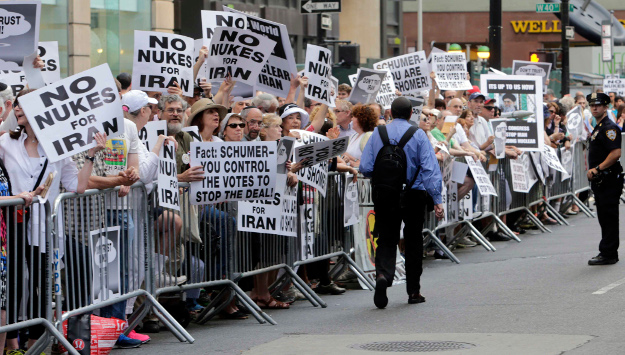
Here are some criticisms of the Iran deal that contain at least a kernel of truth; they are worth addressing for the sake of clarifying some of the arguments pro and con.
Responding to Assaults on Health Care in the Middle East
The conflicts and political crises in the Middle East have brought anguish, suffering, and severe declines in health to people throughout the region. The most catastrophic case by far is Syria, where more than a million people have experienced traumatic injuries, once-rare infectious diseases have returned, chronic disease goes untreated, and the health system has collapsed. In Yemen, Libya, Gaza, and Iraq as well, violence has limited access to health care and grievously harmed the population.
Improved Egypt-Israel Relations through Sinai Crisis: Will They Last?
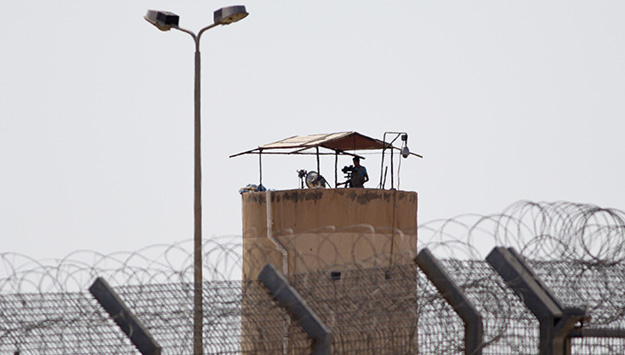
Egyptian diplomats rarely have a good word to say about U.S. policies these days. In contrast, they are enthusiastic in their praise of the close relations between Cairo and Jerusalem—centered on counterterror security and intelligence cooperation in Sinai—and effusive in their acknowledgement of Israel’s response to the bloody insurgency there, led by Egypt’s ISIS affiliate in the “Sinai Province,” Ansar Beit al-Maqdis.
“Relations with Israel are great,” observed an Egyptian official recently.[1]
Salafism Infiltrates Turkish Religious Discourse
Salafi discourse has made considerable inroads in Turkey over the past 30 years, making contributions to sectarianism in ways that have yet to be fully studied and understood.
Caring for the Most Vulnerable Populations Affected by Conflict in the Middle East
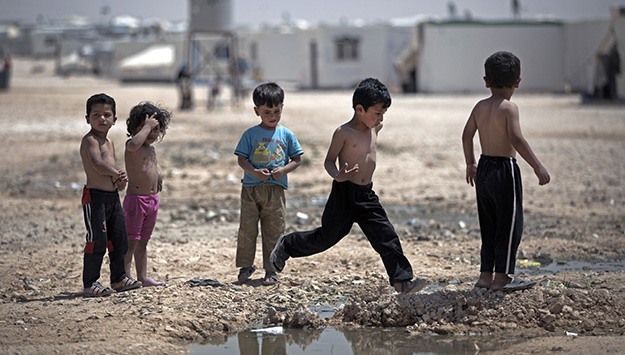
Imagine your child is bleeding from a severe wound. The hospital lacks the necessary medical equipment to stop it, and you are told that amputation is the only option, but the hospital has no anesthesia. Imagine losing a newborn baby, not for any medical reason, but because a power outage cut off the heat to your child’s incubator. Sadly, these are not infrequent tragedies in a number of Middle Eastern countries. In Syria, as in other areas of conflict across the region, it’s not just bombs, bullets, and shells that are killing and maiming children and others.
Liberalism in the Arab World: Accounts from the Region
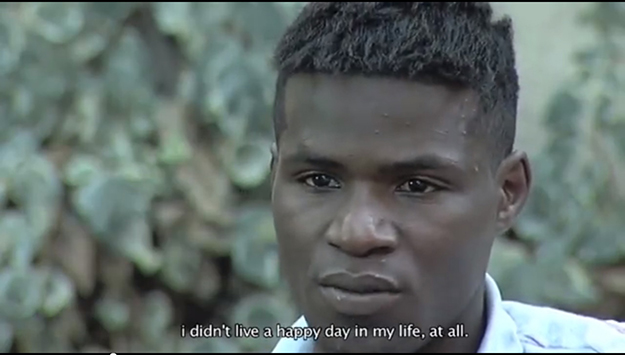
Ismael Mohammed of Egypt recalls the moment he lost his religion. It happened four years ago, at the age of 26, when he heard about the theory of evolution for the first time. He had come across it online by watching YouTube videos and reading all the material he could fit through Google Translate. He sent query emails to evolution scientists around the world, asking them if what they were saying was true. Some responded, sending him the nuts and bolts of Darwin’s work.
The Syrian Refugee Crisis: What’s Next?
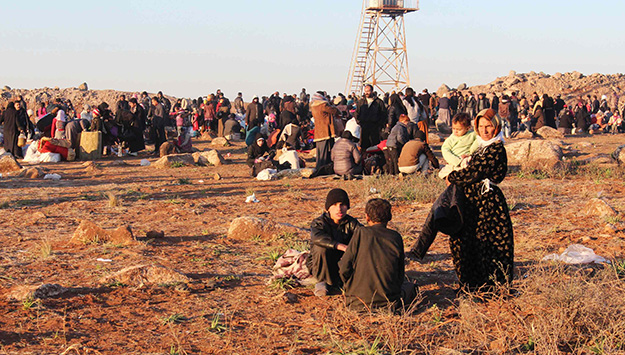
“What’s going to happen to the Syrian refugees?” This was the question I asked of everyone I met during a recent trip to Lebanon and Turkey to research Syrian displacement. Without exception, those I asked—government and UN officials, academics, business and NGO representatives, Syrian diaspora groups, and Syrian refugees—responded with the same answer: “I don’t know” (or sometimes “‘God only knows”). When pressed, almost everyone said that the war in Syria would continue for the foreseeable future and that more people would likely leave or try to leave.
Sectarianism and the Search for New Political Orders in the Arab World
In many Arab countries, the homogenizing, authoritarian, centralized state is a relic of a bygone past. However, what will replace it is not yet clear. The popular Arab uprisings that exploded in December 2010, and their overlap with already-underway geopolitical battles unleashed by the 2003 U.S. invasion and occupation of Iraq, combined to torpedo the political orders of a number of Arab states.
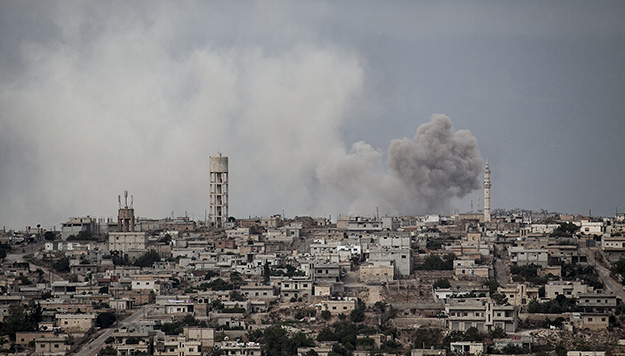
Yes, Talk with Syria’s Ahrar al-Sham
Probably the most important group fighting the Syrian regime now is Ahrar al-Sham (Free Men of the Levant), a Salafi group fighting mainly in the north but also in central and southern Syria. Contrary to Western reports suggesting that the al-Qa‘ida-linked Nusra Front led the battle to capture the northwestern Syrian provincial capital of Idlib last March, Ahrar had more fighters in the battle—a fact demonstrated by its predominance in the subsequent military oversight council established for Idlib.
From Nonintervention to What?: Analyzing the Change in China’s Middle East Policy
Though China still adheres to the principle of nonintervention, its unprecedented proactivity and break from its position to “pursue friendly, cooperative relations with all Middle Eastern countries” has already distinguished its behavior in the Syria crisis from its traditional stance.



