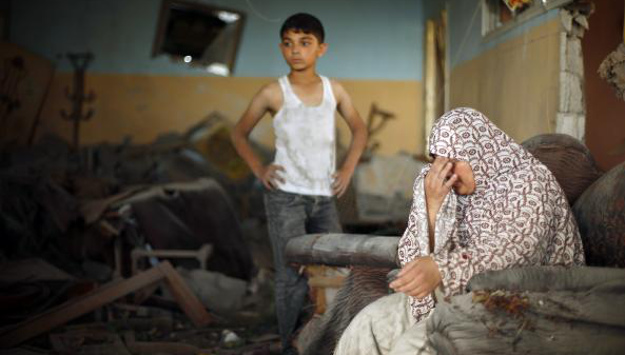
The Israeli incursion into Gaza and the ensuing diplomatic efforts to end the violence have revealed Turkey’s waning influence in the region.
The Turkish government has been promoting itself as a potential mediator between Israel and Hamas. The latter’s rejection of an Egyptian ceasefire in mid-July bolstered Turkey’s hopes of playing a key role, as did its inclusion in this past weekend’s Paris summit hosted by U.S. Secretary of State John Kerry.
The primacy of ethnic Malays (and by association their adherence to Sunni Islam) has meant that Shi‘i Islam is considered a “deviant” sect in the country. Although official spokespeople regularly claim that the state has no concerns about Shi’a practicing their faith as long as they refrain from proselytizing, adherents face both social and legal restrictions.
When the Nidaa Tounes (“Call for Tunisia”) party was formally licensed in July 2012, it positioned itself as a “modern” alternative to the Islamist Ennahda party. Led by former interim prime minister Béji Caid Essebsi, Nidaa Tounes drew a wide range of people, including supporters of Tunisia’s Destourian (“Constitution”) movement, trade unionists, leftists, and independents, as well as former members of Zine el-Abidine Ben Ali’s Constitutional Democratic Rally (RCD) party.
Egypt’s Least Bad Option for Addressing Energy Troubles
A proposed deal to export Israeli natural gas through Egypt has the potential to enable Israel’s entry into its first major export markets, help Egypt escape a deepening energy crisis, and welcome the first European players into Israel’s natural gas industry. However, the deal is complicated by political realities and a history of deeply rooted grievances between the two countries, made worse by the recent violence between Israel and Hamas in Gaza.
Shi‘a-Inspired Violence in Malaysia: A Possibility?
Ever since the triumph of Iranian Shi’a revolutionaries against the shah in 1979, the Malaysian government has been wary of the dangers of the revolution being exported across its borders. The author argues that rather than oppressing and vilifying indigenous Shi‘a citizens, the state should engage them intellectually, socially, and perhaps even religiously, in the spirit of Prime Minister Najib Razak.
When US commanders in Iraq in 2006 were trying to figure out the best way to approach the burgeoning insurgency, two points of view emerged from the debate.
Sectarian-Based Violence: The Case of the Yezidis in Iraq and Syria
Historically, the Yezidis — an ancient Kurdish-speaking ethno-religious community — have been subject to discrimination and violence. The current status of this community in Iraq and Syria is precarious, at best.
The Role of Civil Society in Countering Violent Extremism in Indonesia
The Indonesian experience suggests that an over-reliance on hard power may actually be counter-productive, inadvertently strengthening rather than weakening the violent Islamist extremists. The author explains the need for an indirect strategy in which calibrated hard power is subordinated to and supplemented by softer measures aimed at diminishing the underlying conditions that give rise to violent extremism.
Amb. Philip Wilcox, MEI scholar and president of the Foundation for Middle East Peace, discusses the motivations that led to the current escalation of hostilities between Israel and Hamas, and why Israel decided to pursue a ground assault in Gaza.
Israel’s ground assault continues an historical pattern of dealing with threats from adversaries. How well has this strategy worked before?