This individual is a guest contributor. MEI is not able to assist with contact requests.
Shahmahmood Miakhel is the Country Director in Afghanistan for the US Institute of Peace (USIP). Prior to that he was a Governance Advisor for the United Nations Assistance Mission in Afghanistan (UNAMA), and, from 2003–2005, a Deputy Minister of the Interior in the Government of Afghanistan. In 1994–1995 he worked for the United Nations Development Programme (UNDP) and United Nations Office for Project Services (UNOPS) in South and Southeast Afghanistan helping to establish District Rehabilitation Shuras (DRS). He also worked as a reporter for the Pashto service of the Voice of America from 1985–1990.
I.R.G.C. Claims It Dismantled “Terrorist Team” in Northwest Iran
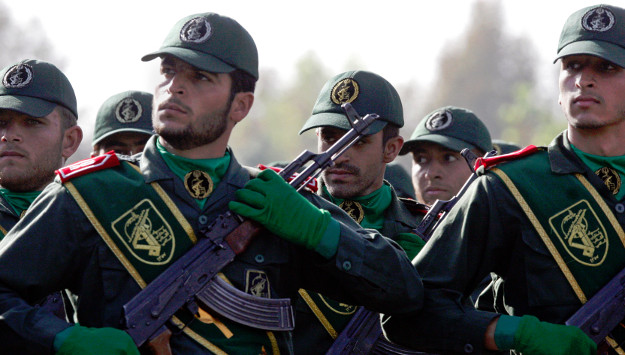
Iran’s Islamic Revolution Guards Corps (I.R.G.C.) announced on Thursday that its forces “dismantled a terrorist team” in Chaldaran region of northwestern Azerbaijan Province. According to a statement released by the public relations department of I.R.G.C.’s Hamze Sayyid al-Shohada Base, four “terrorists’ were killed in armed clashes between I.R.G.C. forces and the militants.
In their new report for the Atlantic Council, “U.S. Strategy Options for Iran’s Regional Challenge,” and an essay version published in the Washington Quarterly, Bilal Saab and Kenneth M. Pollack lay out a “pushback” strategy to weaken Iran’s regional influence. The co-authors join host Paul Salem to weigh the strengths and weaknesses of this and other strategies in this week’s podcast.
Wars Distracting Middle East from Serious Climate Change Threats
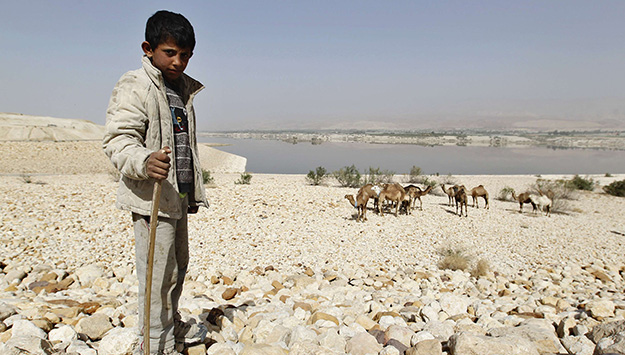
Wars in MENA are causing irreparable damage to water security and resilience to climate change in some of the region’s countries and to their viability. The continuation of this dangerous state could ultimately reinforce even deeper instability in MENA.
Khamenei Urges Visiting Iraqi Leader not to Rely on America
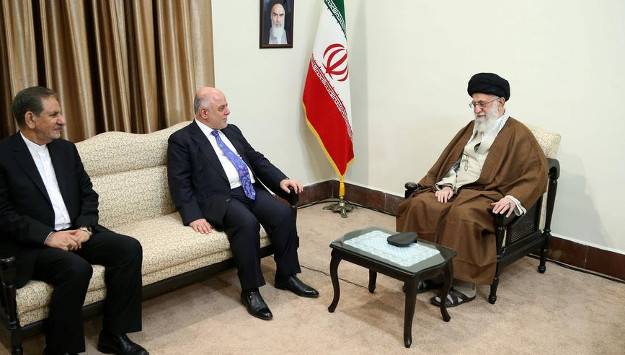
Iran’s Supreme Leader Ali Khamenei told visiting Iraqi Prime Minister Haider al-Abadi today in Tehran that he should not trust the United States as a reliable partner in the fight against terrorism, the Iranian media reported. “The Americans themselves created Daesh [Islamic State]. But now that the terrorists are defeated by the Iraqi government and people, they pretend to be supportive and helpful.
Khamenei: No Negotiations with Enemy over Iran’s Defense Capabilities
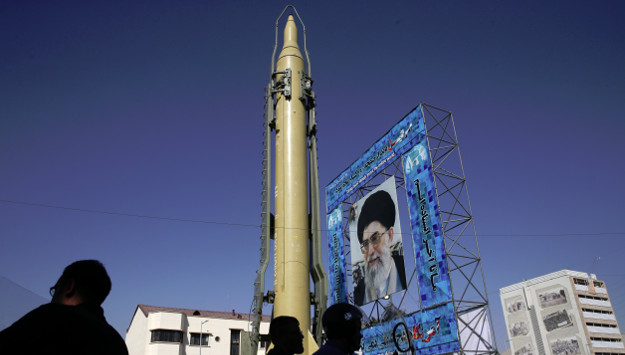
Defying U.S. pressure, Iran’s Supreme Leader Ali Khamenei reiterated on Wednesday that the country’s defense capabilities and assets are non-negotiable, Tasnim News Agency reported.
Iraqi Hezbollah: Our Heroes Fired First Shots at U.S. Soldiers, Expelled them from Iraq
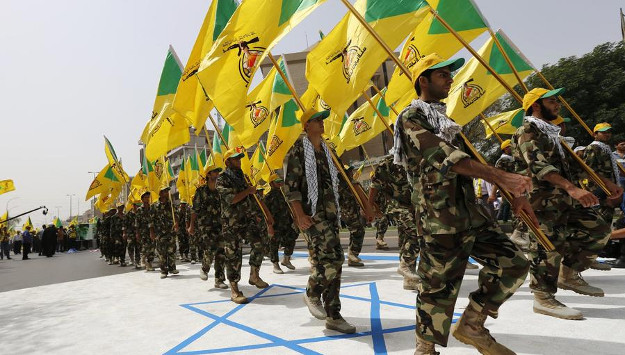
Kata’ib Hezbollah, an Iranian-sponsored Iraqi militia group, said today that the United States and its regional allies created the Islamic State three years ago to destabilize Iraq and Syria. A statement released by the group claimed that “heroes of the Hezbollah Brigades had the privilege of firing the first shots at the U.S.
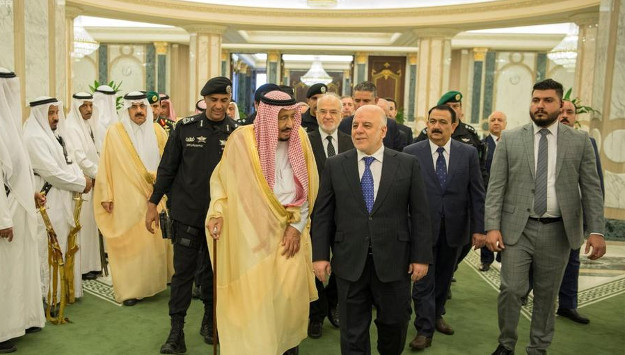
Tillerson’s Remarks and Saudi-Iraqi Meeting in Riyadh Worried Tehran
The 2003 ouster of the Saddam regime and the emergence of the Islamic State in 2014 in the wake of the U.S. withdrawal helped Iran to become the most influential foreign power in Iraq. However, there is a growing concern in Tehran that the latest U.S.-backed diplomatic efforts by Saudi Arabia to forge close ties with the Iraqi government and Shiite leaders may undercut Iranian influence in Iraq.
Yemen’s Humanitarian Disaster: Halting the Famine Threat
Summary
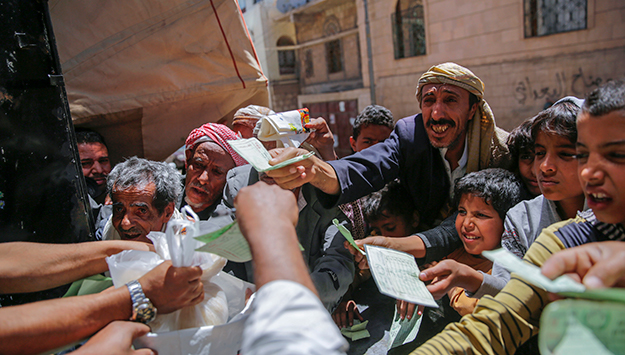
Only several months after the Saudi-led military coalition waged its ongoing campaign against the Iranian-backed Houthi rebels in March 2015, the United Nations began issuing warnings about famine. Today, millions of Yemenis are on the brink of famine, with about half a million suffering from a cholera outbreak. This paper analyzes the causes of Yemen’s humanitarian catastrophe and offers the Trump administration recommendations for helping the impoverished Arab state avoid a famine.
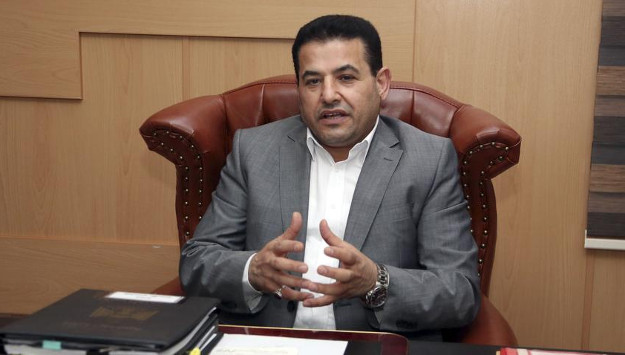
An Obstacle to Riyadh’s Outreach to Baghdad: Iraqi Interior Minister’s Ties with I.R.G.C.
After a long period of disengagement, Saudi Arabia is improving its relations with the Iraqi government and Shiite leaders to challenge Iran’s long-established influence in the country. Riyadh has recently hosted several Iraqi leaders for talks, including Prime Minister Haider al-Abadi, Interior Minister Qasim Mohammad Jalal al-Araji, and Muqtada al-Sadr, a prominent Shiite cleric and politician.
Political Life Waning in Jordan with Death of Centrist Party
This month’s decision by Jordan’s biggest centrist party, the National Current Party (N.C.P.), to disband has been described by pundits as tantamount to issuing a formal death certificate to political parties in the kingdom. But the demise of the N.C.P. has barely raised an eyebrow among ordinary Jordanians, the majority of whom are busy making ends meet amid an economic crunch and widespread political apathy.
Think West to Go West: Origins and Implications of India’s West Asia Policy Under Modi (Part II)
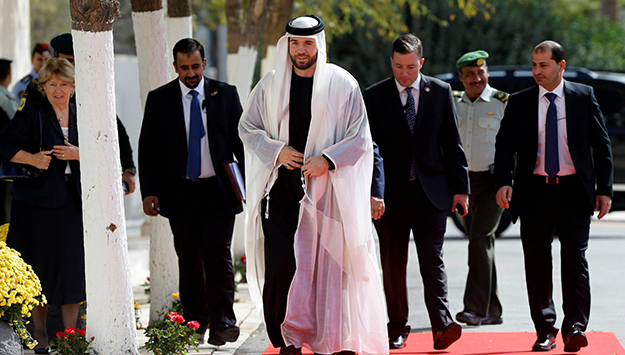
The first part of this article outlined how the newly-elected Narendra Modi government had no sense of where West Asia, including the Persian Gulf, fit into its larger foreign policy. However, this view changed radically following overtures from the Abu Dhabi royal family and the August 2015 state visit by Prime Minister Modi to the United Arab Emirates (U.A.E.). This second part details how, since that visit, India’s relations with West Asia, and particularly with the Gulf monarchies and Iran, have evolved.
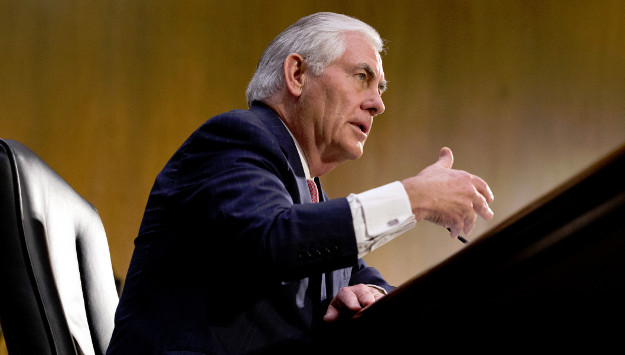
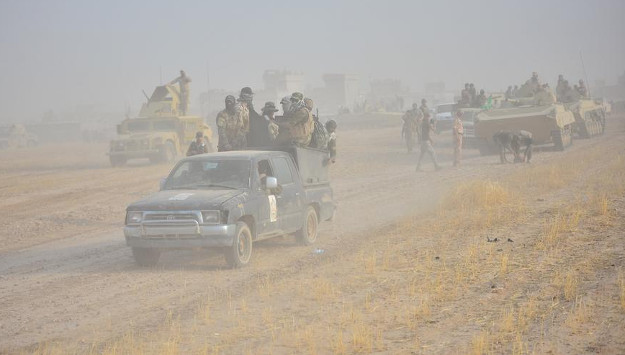
U.S. Secretary of State Rex Tillerson’s recent remarks about the role of Iranian-led militias in Iraq have sparked a lot of controversy. “Certainly, Iranian militias that are in Iraq, now that the fight against Daesh and ISIS is coming to a close, those militias need to go home,” Tillerson said at a press conference in Riyadh on October 22 just before departing for Baghdad.
Iran-Backed Iraqi Group Calls for American Troops to Leave Iraq
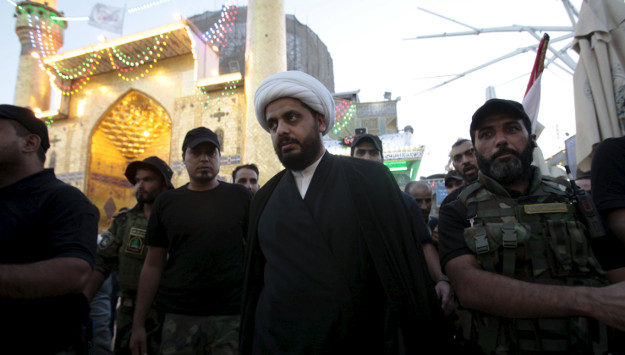
U.S. Secretary of State Rex Tillerson’s call for Iranian-sponsored militia forces in Iraq to be disbanded drew angry reactions from leaders of Popular Mobilization Forces (P.M.F.). Qais al-Khazali, the head of Asa’ib Ahl al-Haq, said Washington should immediately withdraw its troops from the Arab country as soon as the fight against the Islamic State is over.
Hojjatoleslam Mohammad Mohammadi Golpaigani, the head of Supreme Leader Ali Khamenei’s office, credited the Iranian leadership for preventing the establishment of a “second Israel” in northern Iraq. “America and Israel had planned to create a second Israel in the Iraqi Kurdistan region. And it is a shame that the Israeli flag was hoisted there,” Golpaigani said at the inauguration ceremony of 200 mosques and a cultural center today.