This individual is a guest contributor. MEI is not able to assist with contact requests.
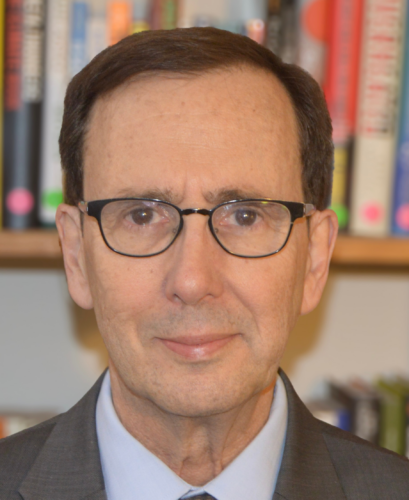
Shahmahmood Miakhel is the Country Director in Afghanistan for the US Institute of Peace (USIP). Prior to that he was a Governance Advisor for the United Nations Assistance Mission in Afghanistan (UNAMA), and, from 2003–2005, a Deputy Minister of the Interior in the Government of Afghanistan. In 1994–1995 he worked for the United Nations Development Programme (UNDP) and United Nations Office for Project Services (UNOPS) in South and Southeast Afghanistan helping to establish District Rehabilitation Shuras (DRS). He also worked as a reporter for the Pashto service of the Voice of America from 1985–1990.
An Iranian official from the western province of Kermanshah said Monday that the Parviz Khan border crossing between Iran and Iraq was shut down yesterday because of “internal clashes between the Iraqi federal government and Kurdistan region.” Faramorz Akbari, the governor of Ghasreshirin in Kermanshah, added that all trade transactions and transportation through this border e
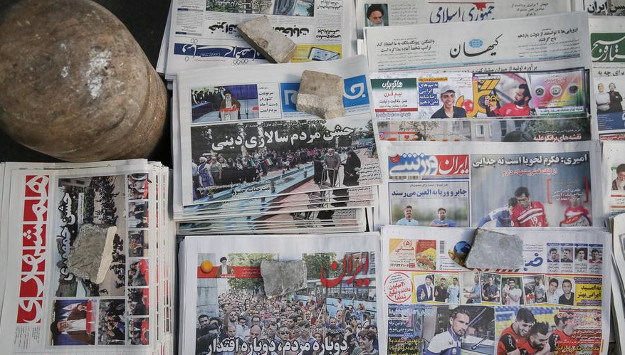
An article in reformist Shargh daily has urged the Rouhani government to abstain from impulsive measures to retaliate against the Trump administration latest anti-Iran sanctions and statements. The piece entitled “Neutralizing Trump’s Bombs” argues that the best course of action for Tehran would be to focus on consolidating its latest gains in Syria and Iraq and facilitating foreign investment in the country even by American companies.
Iranian Official Hails Iraqi Forces for Foiling Israeli “Plot” in Iraqi Kurdistan
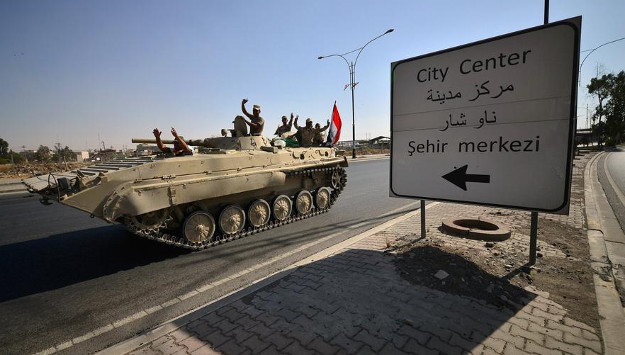
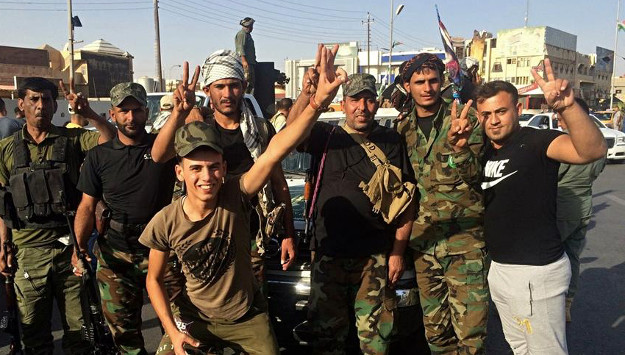
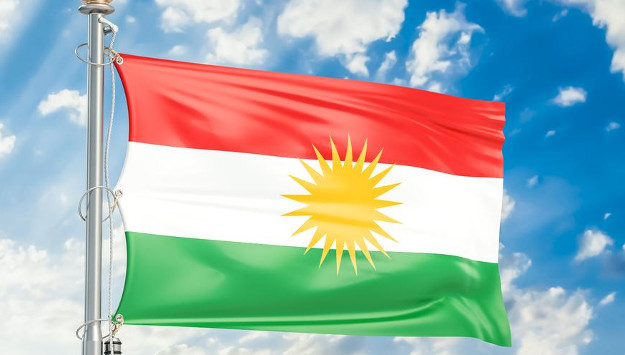
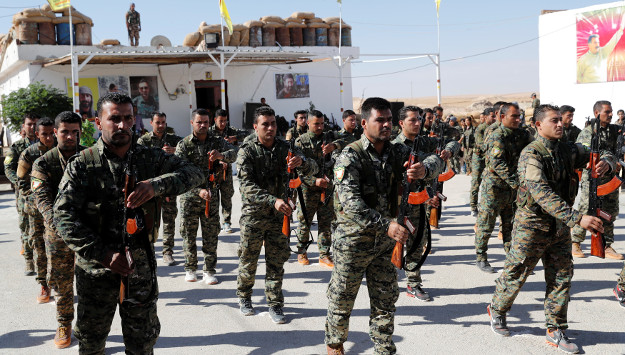
A senior Iranian official praised the Iraqi forces and Tehran-backed Popular Mobilization Forces (P.M.F.) for seizing the disputed province of Kirkuk and “thwarting” the Iraqi Kurdish leadership’s push for independence. Ali Akbar Velayati, a member of Iran’s Expediency Council, accused Masoud Barzani, the president of the Iraqi Kurdistan region, of advancing Israeli agenda in the region. “Barzani’s, and behind the scenes Israel’s, objective was seizing Kirkuk’s oil wells in favor of Israel.
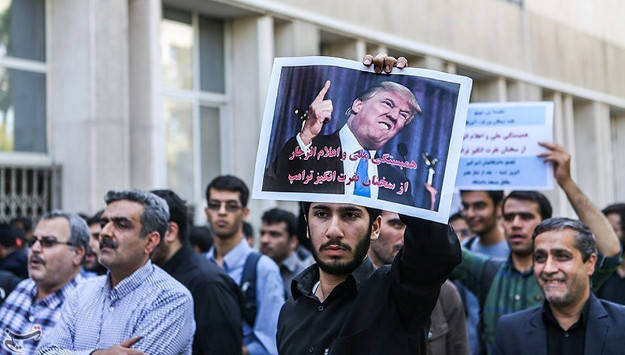
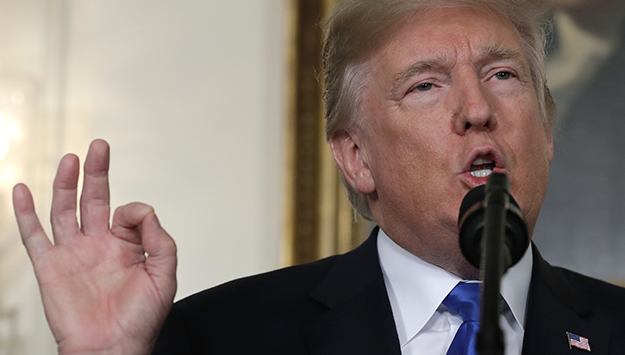
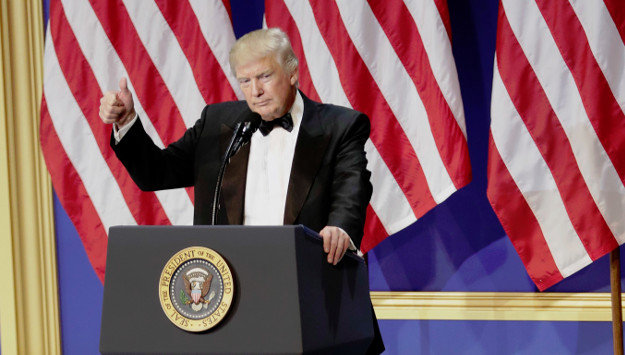
President Donald Trump declared today that he will not certify the Iran nuclear agreement, arguing the deal does not serve U.S. national security interests. “I am announcing today that we cannot and will not make this certification,” he said during a speech at the White House.
Iran Reacts Angrily to Trump’s Speech, Rules out Renegotiation of Deal
The Iranian government has released a statement in reaction to President Donald Trump’s speech today, accusing the United States of violating its commitments under the 2015 nuclear accord and emphasizing that Tehran will not renegotiate the deal. “The JCPOA is a valid international instrument and an outstanding achievement in contemporary diplomacy. It cannot be renegotiated or altered. The nuclear deal is not a bilateral agreement that can be annulled by unilateral action.” The statement called on the international community not to allow the Trump administration to undermine the deal.
Iran Sees Iraqi Kurdistan’s Push for Independence as “Israeli Project”
Iranian officials and state-run media outlets continue to label the recent Iraqi Kurdish leaders’ push for independence as an “Israeli project” aimed at countering Iran’s influence in the region. Grand Ayatollah Hossein Nuri Hamedani, a senior Iranian cleric, said this week that Tehran would not “allow a new Israel to take shape in the region.” An article in Fars News Agency, which is affiliated with the Islamic Revolution Guards Corps (I.R.G.C.), echoed a similar view.
Iranian Outlet Assesses Russia's Options If U.S. Leaves Nuclear Deal
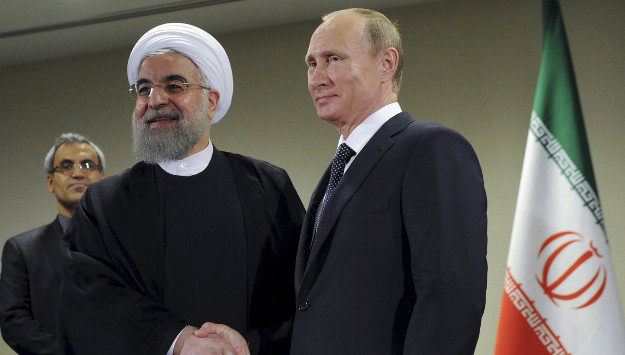
An article in hardline Javan Online analyzes Russia’s potential responses if the Trump administration walks away from the Joint Comprehensive Plan of Action – the nuclear deal Iran signed with the United States, Russia, China, Germany, France and Britain in 2015. The analysis piece, entitled “Russia and J.C.P.O.A.
Iran’s Central Bank Chief Visits Turkey to Finalize Currency Swap Deal
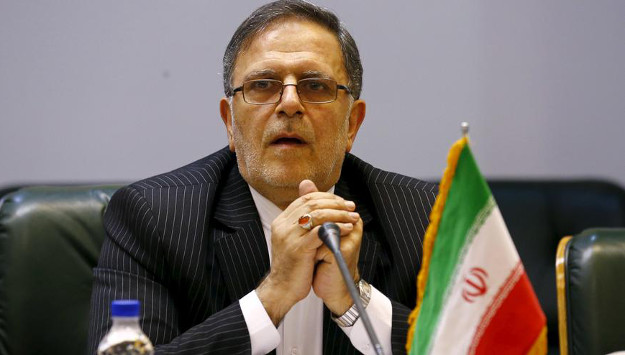
Valiollah Seif, the head of the Central Bank of Iran (C.B.I.), has traveled to Ankara to meet with his Turkish counterpart and finalize a plan to do trade exchanges based on currency swap, Tasnim News Agency reported. He expressed the hope that the move would help the two countries efforts to meet their goal of boosting the volume of annual bilateral trade to $30 billion.
Iran Warns Trump against Leaving J.C.P.O.A., Blacklisting I.R.G.C.
As the Trump administration is expected to decertify Iran’s compliance with the nuclear agreement this week, Iranian leaders are mulling their options on how to respond. While de-certification does not mean Washington is necessarily walking away from the accord and it will be up to Congress to decide whether to keep the deal or re-impose sanctions on Iran, Tehran is preparing for the worst-case scenario. Even if U.S. unilaterally abandons the deal, the Rouhani government appears willing to stay in the deal as long as European powers disregard U.S.
The Russians dramatically stepped up their involvement in the Middle East in 2015 when they intervened militarily in the Syrian conflict to support President Assad. Since then, Moscow has become a hot destination, with more heads of state from the Middle East visiting the Russian capital than Washington this year. MEI experts Robert Ford, Gerald Feierstein, and Gonul Tol join host Paul Salem to discuss what this trend means for the region.
The Syrian civil war is now well into its sixth year. Over the years, the conflict has passed through a series of distinct phases. Now it is entering a new one. More than any before it, however, the current situation is giving rise to a host of false conclusions.