Shahmahmood Miakhel is the Country Director in Afghanistan for the US Institute of Peace (USIP). Prior to that he was a Governance Advisor for the United Nations Assistance Mission in Afghanistan (UNAMA), and, from 2003–2005, a Deputy Minister of the Interior in the Government of Afghanistan. In 1994–1995 he worked for the United Nations Development Programme (UNDP) and United Nations Office for Project Services (UNOPS) in South and Southeast Afghanistan helping to establish District Rehabilitation Shuras (DRS). He also worked as a reporter for the Pashto service of the Voice of America from 1985–1990.
The Latest from Shahmahmood Miakhel

Rebuilding Security in the Persian Gulf
The Middle East Institute is proud to host Ambassador Robert E. Hunter, Senior Adviser at the RAND Corporation, to present a new study that lays out the criteria and parameters for a new security structure for the Persian Gulf region. His recent study, Building Security in the Persian Gulf, makes recommendations for a new security structure for the region in order to promote long-term stability while also reducing
The Struggle for a Democratic Future in Afghanistan: The 2010 Parliamentary Elections
The Middle East Institute is proud to host Marvin Weinbaum, scholar at the Middle East Institute, and Caroline Wadhams, Director for South Asia Security Studies at the Center for American Progress, for a discussion on the outcomes and impact of the recent parliamentary elections in Afghanistan. Recently returned from Afghanistan, where
The End of the Iraqi Government Impasse?
The government formation stalemate in Iraq—well into its seventh month and counting—may at last be nearing an end. The next few weeks could seal a deal between rival electoral blocs that will produce the next national government.
Two scenarios with very different outcomes appear to be jockeying for rail position in the race to produce the next Prime Minister.
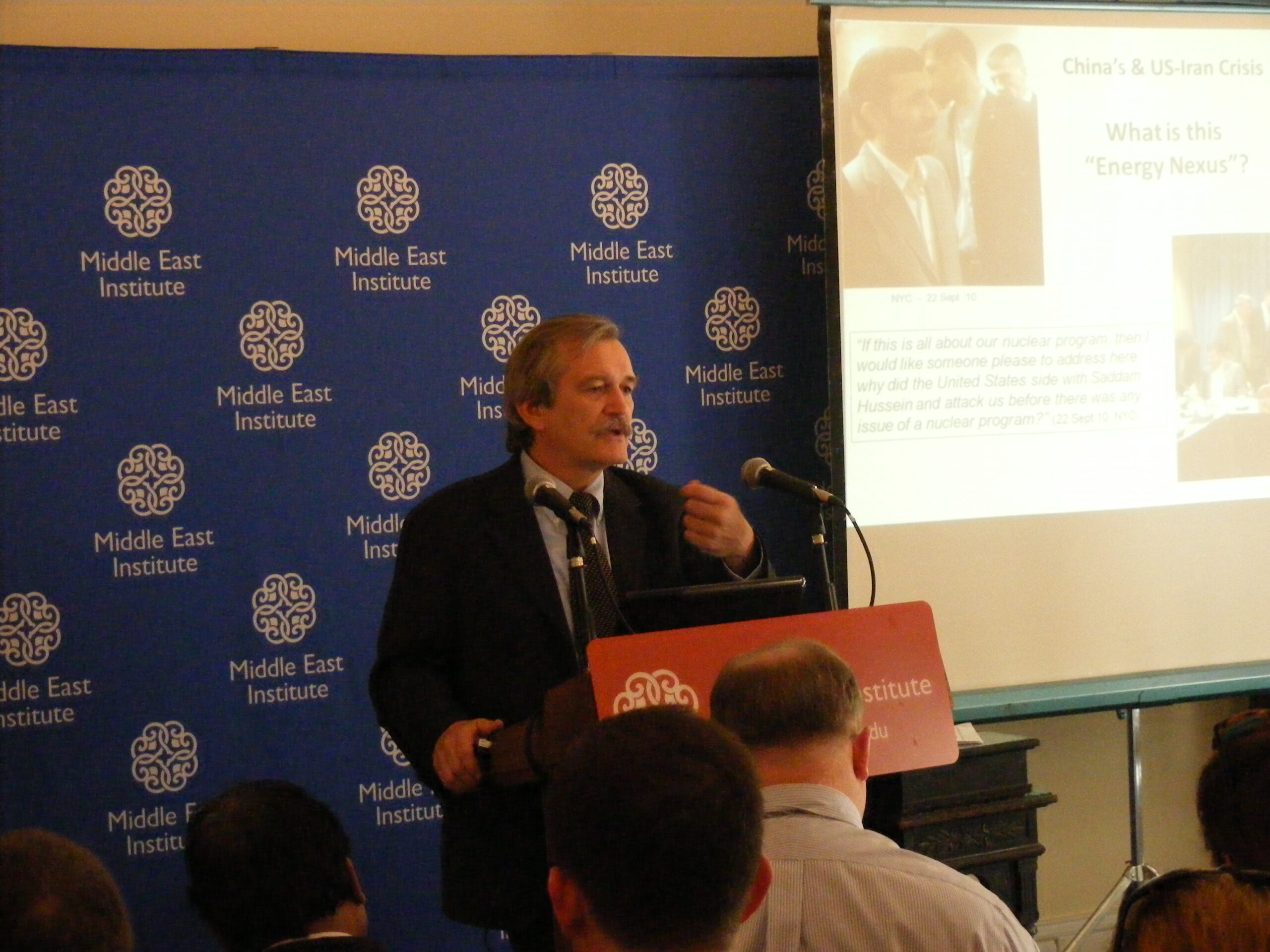
China's Angst Over Iran
The Middle East Institute is pleased to host Dr. Thomas O'Donnell,
lecturer in Graduate International Affairs at the New School in New
York, for a discussion on China's perception of the Iranian nuclear
issue. Drawing on his expertise in the global energy system, Dr.
O'Donnell will examine why Beijing, which was initially and very
vocally opposed to UN sanctions, ended up voting in favor of them. He
will outline the energy-security nexus underlying China's interests in
An Exploration of Egyptian Sufi Musical Traditions
Members Only: A Discussion with Libyan Ambassador Ali Suleiman Aujali
Terror's New Ally: Christian Radicals
This Commentary first appeared as an op-ed in the New York Daily News on September 10, 2010
The Mainstreaming of FATA
The Middle East Institute is proud to host Mr. Habibullah Khan, current head of the Federally Administered Tribal Areas (FATA) Secretariat, to discuss the security, policy, and cultural challenges surrounding the integration of FATA into Pakistan's mainstream political system. In his talk, Mr. Khan will highlight the primary characteristics of life in the tribal areas and outline the present governance system.
Turkey's Chance for Reconciliation
This piece first appeared as a op-ed in Foreign Policy's Middle East Channel on September 9, 2010
India's Israel Policy: From Non-Relations to Friendship
The Struggle for a Democratic Future in Afghanistan: The 2010 Parliamentary Elections
Where Does the US Stand After Its Retreat from Iraq?
This piece first appeared as a op-ed in The National on August 30, 2010
The last American combat troops rolled across the Kuwaiti border from Iraq on August 19, nearly two weeks ahead of schedule. The Obama administration has spoken of this milestone as a promise fulfilled and the first major step toward bringing a “responsible” end to the war in Iraq, setting the stage for the final withdrawal of American troops at the end of next year.