تمت ترجمة هذا النص بواسطة الذكاء الاصطناعي وقد يحتوي على أخطاء.
تخطي إلى المحتوى

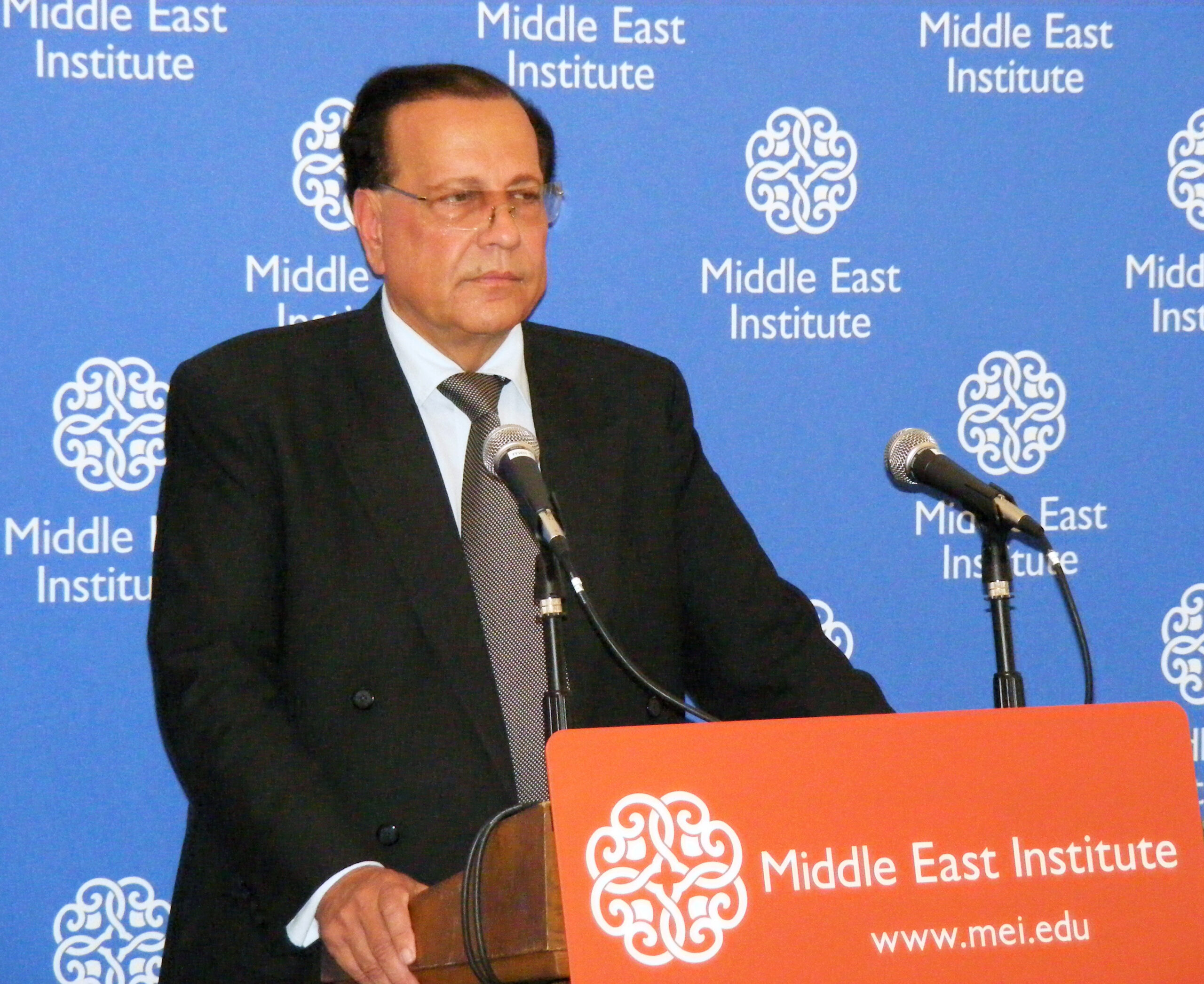
Shahmahmood Miakhel

Country Director, Afghanistan

الخبرة

أفغانستان

This individual is a guest contributor. MEI is not able to assist with contact requests.

Shahmahmood Miakhel is the Country Director in Afghanistan for the US Institute of Peace (USIP). Prior to that he was a Governance Advisor for the United Nations Assistance Mission in Afghanistan (UNAMA), and, from 2003–2005, a Deputy Minister of the Interior in the Government of Afghanistan. In 1994–1995 he worked for the United Nations Development Programme (UNDP) and United Nations Office for Project Services (UNOPS) in South and Southeast Afghanistan helping to establish District Rehabilitation Shuras (DRS). He also worked as a reporter for the Pashto service of the Voice of America from 1985–1990.

The Latest from Shahmahmood Miakhel

تصفية حسب
10021 Results
Iranian Migrants in the Arab Countries of the Persian Gulf
معهد الشرق الأوسط
  • التحليل
  • Iranian Migrants in the Arab Countries of the Persian Gulf

    This essay examines migration from the Iranian coastal region of the Persian Gulf to the nearby Arab countries. At the center of this research are questions of cross-border relationships, the construction of transnational spaces in border migration, and strategies for maintaining networks in both the home and host countries.

    February 2, 2010

    Labor Camps in the Gulf States
    معهد الشرق الأوسط
  • التحليل
  • Labor Camps in the Gulf States

    Over the past decade, migration to the wealthy states of the Arabian Peninsula has emerged as an increasingly central facet of scholarly attention to the region. This attention has resulted in the exponential expansion of our collective knowledge, and the near future promises even more nuanced and microcosmic analyses as recent and current fieldwork in the region bears fruit. Nevertheless, there has been little discussion of the “labor camps” in which many of the unskilled migrants dwell during their sojourn in the Gulf states.

    February 2, 2010

    Families and Bachelor: Visa Status, Lives, and Community Structure among Bahrain's Foreign Residents
    معهد الشرق الأوسط
  • التحليل
  • Families and Bachelor: Visa Status, Lives, and Community Structure among Bahrain's Foreign Residents

    Formal and informal practices of immigration and employment in the Gulf render inappropriate the classic image of an individual immigrant arriving to set stake and soon send for family. The majority of the foreigners in Bahrain reside there without family and until the 1980s were overwhelmingly male. Nonetheless, over the past century, the unique histories and circumstances of the various nationalities resident in Bahrain have led to the emergence and entrenchment of communities of foreigners.

    February 2, 2010

    Omanization Policy and International Migration in Oman
    معهد الشرق الأوسط
  • التحليل
  • Omanization Policy and International Migration in Oman

    The six states of the Gulf Cooperation Council (GCC)[1]have over five million migrant workers — one of the highest concentrations of migrant workers in the world. According to the World Migration Report (2003), 25% of the workers in Saudi Arabia, 65% in Kuwait, 67% in the UAE, and as much as 70% in Qatar are immigrants or non-nationals.

    February 2, 2010

    Paradigm Shifts in India's Migration Policy Toward the Gulf
    معهد الشرق الأوسط
  • التحليل
  • Paradigm Shifts in India's Migration Policy Toward the Gulf

    From fewer than 258,000 in 1975, the migrant Indian population in the Gulf rose to 3.318 million in 2001 and is now estimated at over four million. Indian migrant workers in the GCC countries belong to all three categories of labor: 1) professionals (e.g., doctors, nurses, engineers, architects, accountants, and managers), 2) semi-skilled workers (e.g., craftsmen, drivers, artisans, and other technical workers), and 3) unskilled laborers in construction sites, farmlands, livestock ranches, shops and stores, and households.

    February 2, 2010

    Labor Migration in the GCC Countries: Some Reflections on a Chronic Dilemna
    معهد الشرق الأوسط
  • التحليل
  • Labor Migration in the GCC Countries: Some Reflections on a Chronic Dilemna

    After four decades of successive waves of labor migration to the GCC states, three fundamental questions are still subject to debate: In what way can we better comprehend the role and functions in the Arab Gulf societies of this unique phenomenon? How should we assess the labor migrations policies adopted by the countries of this region? What are the possible outcomes of the current trends of this process?

    February 2, 2010

    Forgotten Futures: History, Memoir, Afghanistan
    معهد الشرق الأوسط
  • التحليل
  • Forgotten Futures: History, Memoir, Afghanistan

    Originally posted December 2009

    In his book From My Memories, Khaled Sediq recounts the following incident from the mid-1960s regarding a visit by him and some other members of his family to Mohammad Zahir, King of Afghanistan from 1933 to 1973:

    Finally, after uttering some conventional statements, such as, Afghanistan belongs to you and you belong to Afghanistan, he also added: ‘Even though unpleasant events have happened, yet, I have forgotten about them, you, too, try to forget.’[1]

    February 2, 2010

    What the US Can Learn from the Gulf States about Immigration: Visa Bonds and a Novel Proposal for Financing Them
    معهد الشرق الأوسط
  • التحليل
  • What the US Can Learn from the Gulf States about Immigration: Visa Bonds and a Novel Proposal for Financing Them

    Consider the following fact pattern regularly encountered by Iraqi immigration officers: a poor South Asian farmer submits an application for a temporary guest worker visa that would allow him to take a housekeeping position on an American military base. The Iraqi immigration officer is concerned about two potential difficulties with the application. First, the prospective migrant may overstay his visa. Second, the applicant may impose welfare costs on the state.

    February 2, 2010

    Introduction to Migration and the Gulf
    معهد الشرق الأوسط
  • التحليل
  • Introduction to Migration and the Gulf

    The flow of ideas, people, and commerce across national boundaries has been occurring with breathtaking rapidity in the broader Middle East, as elsewhere. These increasingly dense exchanges have generated new threats and vulnerabilities that have tended to impact women, children, and the poorest members of society disproportionately. At the same time, however, they have given people more resources and opportunities with which to shape their lives and their futures.

    February 1, 2010

    Russian-Iranian Relations in the Obama Era
    معهد الشرق الأوسط

    Russian-Iranian Relations in the Obama Era

    January 28 – January 1, 1970, January 28 - 1:57 PM – 12:00 AM
    January 1 - 1:57 PM – 12:00 AM

    1761 N Street NW, Washington, 20036

    Russian-Iranian Relations in the Obama Era
    معهد الشرق الأوسط
  • Video
  • Russian-Iranian Relations in the Obama Era

    The Middle East Institute is proud to host Dr. Mark Katz, professor at George Mason University, for a discussion of current relations between Iran and Russia. The Obama Administration has attempted to improve US relations both with both countries. However, neither Tehran nor Moscow has responded favorably toward the new administration's initiatives. While Tehran and Moscow continue to distrust Washington, they also distrust each other.

    January 28, 2010

    Addressing the Crisis in Yemen: Strategies and Solutions
    معهد الشرق الأوسط
  • Video
  • Addressing the Crisis in Yemen: Strategies and Solutions

    The Middle East Institute is proud to host two former Ambassadors to Yemen, Thomas Krajeski and David Newton, for a discussion about Yemen and the role of US foreign policy in a country some political analysts characterize as a failed state. As Yemen grapples with multiple crises, including the growing influence of Al Qaeda, a Houthi Rebellion in the north, a secessionist movement in the south and severe economic woes, what should the US do to help stabilize and secure one of the Arab world’s poorest countries?

    January 21, 2010

    Reforming Radical Islam: The Moroccan Model
    معهد الشرق الأوسط

    Reforming Radical Islam: The Moroccan Model

    January 14 – January 1, 1970, January 14 - 11:37 AM – 12:00 AM
    January 1 - 11:37 AM – 12:00 AM

    1761 N Street NW, Washington, 20036