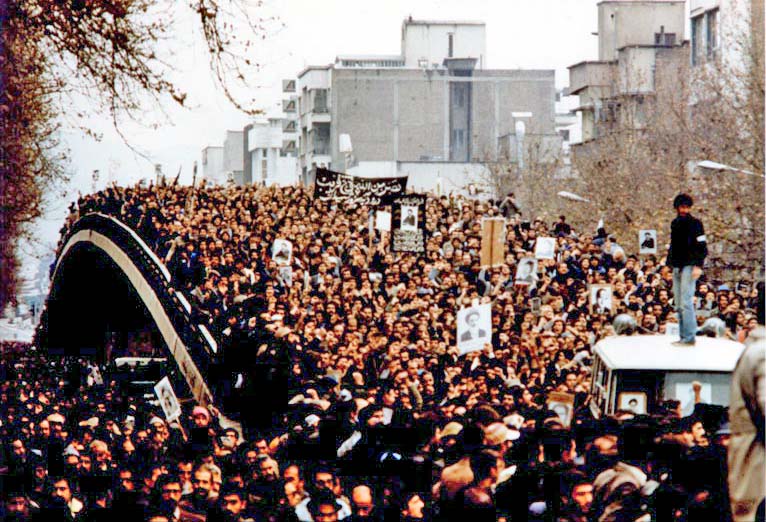
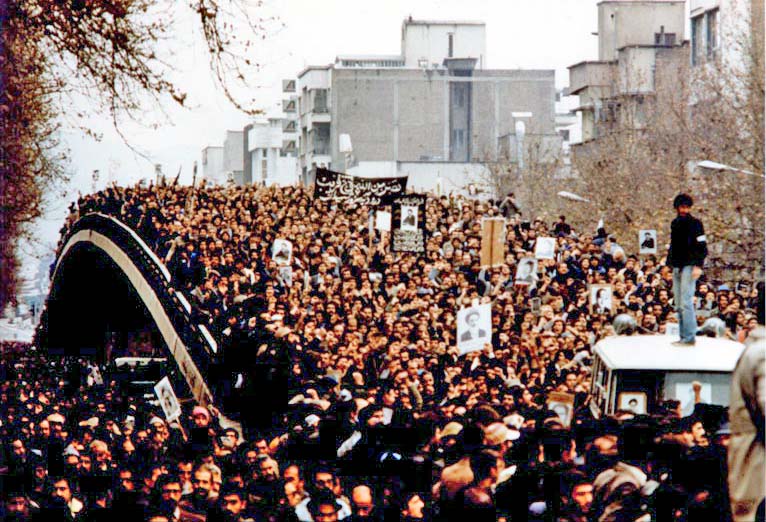
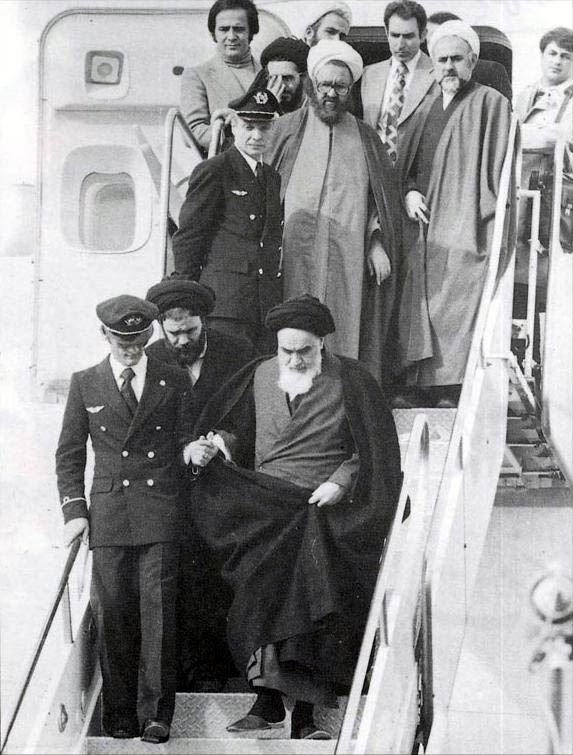
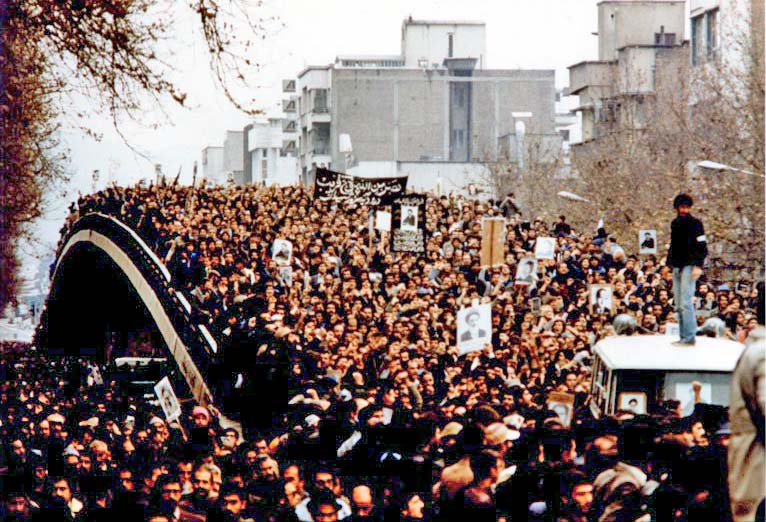
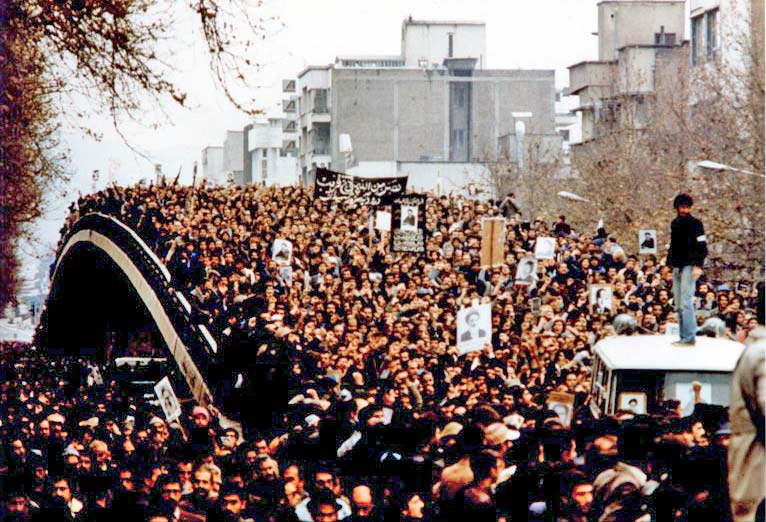
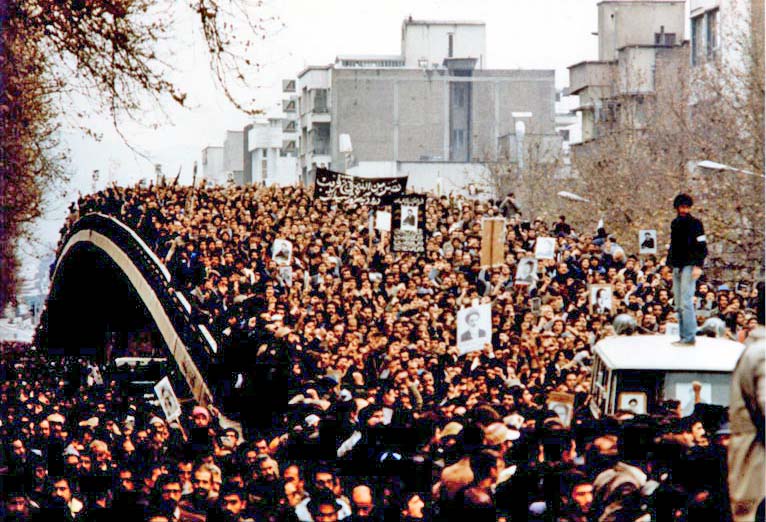
The term revolution has become a cliché — it is in such common usage that we have forgotten it started its linguistic life as a metaphor. The metaphor was that of a wheel turning upon its axis. The idea, derived from that, is of sweeping change, reminding perhaps of the older, medieval idea of the wheel of fortune (to be found on the tarot card with that name, for example); bringing the mighty low and raising the lowly up on high.
To write briefly about women in Iran since 1979 (and say something different from what is in my recent books Modern Iran and Women in the Middle East and my article on women in the December 2008 issue of Current History) is a challenge.
Elections as a Tool to Sustain the Theological Power Structure
In the 30-year history of the Islamic Republic of Iran (IRI), a total of 30 elections have been held. In spite of losing popular ground, and despite uninterrupted elections, the clerics in Iran still firmly hold the reins of power because elections are designed to serve the status quo rather than to change it.
Women and the Islamic Republic: Emancipation or Suppression?
This essay focuses on the differences between the pre- and post-revolutionary periods in legal interpretations regarding the treatment of female sexuality in marriage and its implications for the freedom of labor and the autonomy of women. I argue that under the monarchy, the theoretical commoditization of female sexuality in marriage was treated as negotiable and modifiable. By contrast, the Islamic Republic has treated the issue as non-negotiable and has reinforced it through the enhancement of women’s entitlements in marriage.
The Iranian Revolution and its aftermath have generated many debates, one of which pertains to the effects on women’s labor force participation and employment patterns. For over 20 years, Iran-born scholars have debated the extent of women’s post-revolutionary marginalization, emphasizing the impact of ideology or economic policy. For some, Islamization led to women’s labor marginalization, while others have argued that Islamization — and its attendant sex segregation — actually benefited women, in that conservative families allowed their daughters to be educated and to seek work.
Shi‘a Politics in Iran after 30 Years of Revolution
In the wake of the 1979 Iranian Revolution, Twelver Shi‘a Islam saw the crystallization of a major radical movement led by activist clerics and militant ideologues with a revolutionary agenda to establish an Islamist political order. The institutionalization of the political ideology of the velayat-e faqih or the “guardianship of the jurist,” advanced by Ayatollah Ruhollah Khomeini (1900-1989), brought to the fore a new conception of Shi‘a government.
Whether or not Muhammad Khatami decides to run again for President of Iran, his prominent legacy symbolizes an ongoing fertile debate inside Iran about political reform and adaptation. For Khatami, democracy and dialogue remain the essential path for Islamic Republic, a bridge between civilizations, a solid course for Iran to the future.
Observers, including this author, often emphasize apparent Iranian paradoxes to alert outsiders to Iran’s vibrant and dynamic society, beyond the static, enigmatic “black” clichés so commonly clung to in popular Western discourse.
Women have played a crucial role in the Iranian struggle for democracy. They have played an important role not only in the victory of the Islamic Revolution,[1]but also in the developments that have occurred since.
The religious make-up of Iran’s population is marked by a paradox: while many religions and sects are present, the overall picture is one of homogeneity, as over 99% of Iranians are Muslims, and of these somewhere between 75% and 90% adhere to Twelver Shi‘ism, Iran’s official state religion for the last five centuries. However, the exact numbers are unknown, since Iranian censuses ask citizens for their religious affiliation but allow only four choices: Islam, Christianity, Judaism, and Zoroastrianism, the latter three constituting the “recognized” minorities.
Azerbaijani Ethno-nationalism: A Danger Signal for Iran
By the Treaty of Turkmenchay in 1828, Iran was forced to cede its dependent khanates north of the river Aras to Russia. The majority population of both North (Russo-Soviet) and South (Iranian) Azerbaijan belong to the same ethnic group within the Turkic linguistic family. Many Azerbaijanis tend not to differentiate between the modern republic and Iranian Azerbaijan; they consider the Iranian Azeris “kith and kin.” In fact, many Azerbaijanis actually have family on the other side.
Iran’s International Relations: Pragmatism in a Revolutionary Bottle
Revolutions, though essentially domestic affairs, cause a tear in the very fabric of the prevailing international system, disrupting the balance of power and the normal flow of diplomacy. Iran’s religiously inspired revolution has been no exception. On the one hand, it undid the intricate international web that had sustained the Pahlavi monarchy, and on the other it brought forth a series of priorities more consistent with the perceptions and values of the new elite and the ideological regime that the revolution had spawned.
Culture and the Range of Options in Iran's International Politics
Iran’s political culture is most compatible with a proactive foreign policy based on “patriotic cosmopolitanism,” a kind of doctrine with two apparently antithetical components: the idea of global citizenship, regardless of people’s political affiliation; but also political committment to sustain one’s own values — in this case, Iranian values. Ideally, this formulation should appeal to religious intellectuals and pro-Mossadeq nationalists.
Revolutions either expand to export their ideologies or preserve themselves from the outside world. The 1979 Islamic revolution of Iran is no exception. A careful reading of Iran’s actions in the region shows how and why Iran has shifted its policies to meet the latter aim. Since the revolution, Iran’s leaders have faced the challenge of balancing their ideological (idealism) and geopolitical (pragmatism) approaches to foreign policy.
Iranian Foreign Policy: Concurrence of Ideology and Pragmatism
The Islamic Republic of Iran has pursued, as have other post-revolutionary states, certain principles and ideals that were revered in the movement that led to the revolution. Although Iran’s foreign policy during the past three decades has had an ideological component, this has not prevented it from translating ideology into operational policy in its foreign relations.
Educational attainment has improved considerably in the Islamic Republic of Iran over the past three decades. During this period the improvement for women has been greater than for men. In recent years, women have gained access to education at different levels and in many fields.