This individual is a guest contributor. MEI is not able to assist with contact requests.
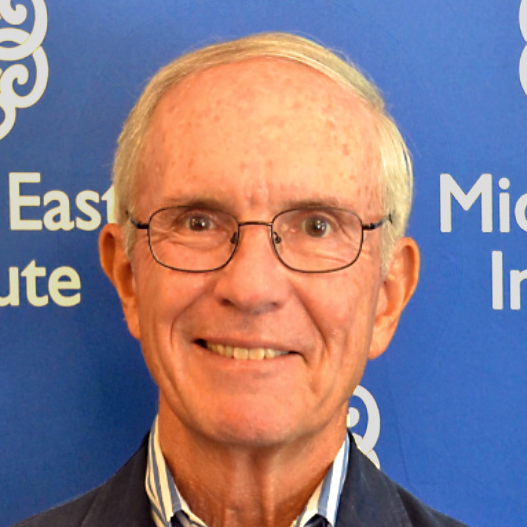
Thomas W. Lippman is an award-winning author and journalist who has written about Middle Eastern affairs and American foreign policy for more than three decades, specializing in Saudi Arabian affairs, U.S.- Saudi relations, and relations between the West and Islam. He is a former Middle East bureau chief of the Washington Post, and also served as that newspaper’s oil and energy reporter. Throughout the 1990s, he covered foreign policy and national security for the Post, traveling frequently to Saudi Arabia and other countries in the Middle East. In 2003 he was the principal writer on the war in Iraq for Washingtonpost.com. Prior to his work in the Middle East, he covered the Vietnam war as the Washington Post’s bureau chief in Saigon.
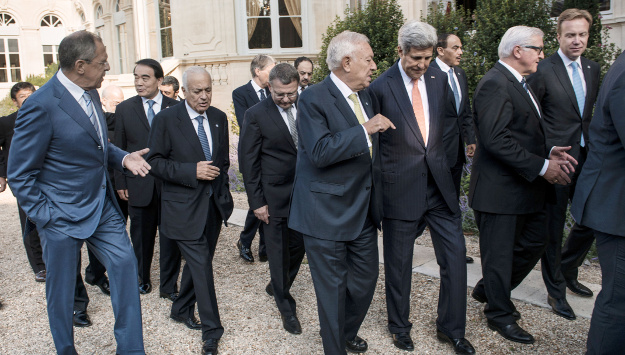
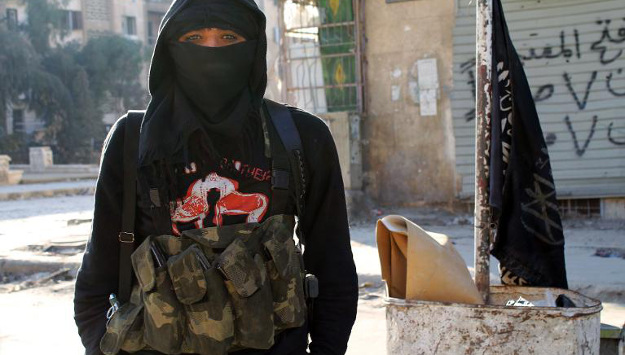
One way to grasp the immense difficulty facing President Obama as he tries to forge an effective international coalition to oppose the Islamic State is to examine the difference between this effort and the last time the United States led a diverse group of countries to take on a conflict in the Middle East: Operation Desert Storm, in 1991.
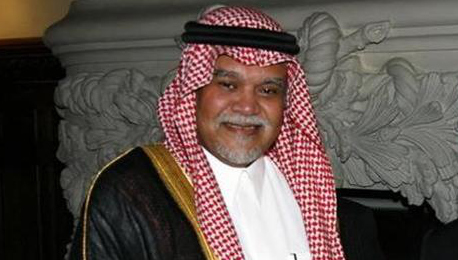
It might be a mistake to jump to conclusions about the removal of Prince Bandar bin Sultan from his post as chief of Saudi Arabian intelligence. When it comes to senior jobs held by the royals, the Kingdom’s decision-making process is entirely opaque and there is no way to know at this point whether the flamboyant former ambassador to the United States was pushed out or bailed out.
Osama bin Laden may be dead, but his ghost was in Riyadh the other day, hovering over Saudi Arabia’s King Abdullah as he issued a decree making it a crime for any Saudi citizen to take part in a war outside the kingdom.
The obvious motivator was the civil war in Syria, where hundreds of young Saudis have been spotted in the ranks of the most radical jihadi groups battling both the government and other less extreme rebels. But the roots of the king’s action, and the problem it was designed to address, can be traced to the 1980s war against the Soviet occupation of Afghanistan.
Collection Spotlight: America's Great Game: The CIA's Secret Arabists and the Shaping of the Modern Middle East
America’s Great Game: The CIA’s Secret Arabists and the Shaping of the Modern Middle East, by Hugh Wilford, 2013
A tale of how the CIA set sail into the Middle East with the best intentions, ran aground on its own failings, and was overwhelmed by forces and events it could not control.
Whenever a Saudi Arabian king or senior prince publicly criticizes U.S. policy, they inevitably touch off speculation about how the Saudis may be rethinking their security alliance with the United States.
When King Abdullah of Saudi Arabia and his foreign minister, Prince Saud al-Faisal, issued unequivocal pledges of support for Egypt’s military government and its crackdown on the Muslim Brotherhood, their move was widely depicted in the news media as a logical extension of the kingdom’s opposition to revolutionary movements in the Arab world. This simplistic view overlooks the fact that Saudi Arabia has responded differently to different uprisings—it supports the rebels in Syria, helped to crush them in Bahrain—and that aligning itself with Egypt’s new rulers could be a risky strategy.
When the young Shaykh Tamim bin Hamad al-Thani became ruler of Qatar last month after his father stepped aside in a seamless transition, one of his first official acts was to seal the generational shift by appointing a new prime minister.
The terse announcement on Monday that Prince Muhammad bin Nayef has been promoted to minister of interior in Saudi Arabia accelerates the long-awaited rise of a new generation of leaders to positions of real power in the Kingdom. At the age of 58, Muhammad succeeds his 72-year-old uncle, Prince Ahmed bin Abdul Aziz, a son of the founding king of modern Saudi Arabia, who had become minister only in June.
Saudi Professor Faces Charges After Fighting for Free Speech
This Opinion was first published on Al-Monitor.com on June 28, 2012
What are the limits of free speech and open dissent in the Kingdom of Saudi Arabia? They are often unclear and seemingly arbitrary, but there is no doubt that Dr. Mohammad al-Qahtani, a professor and activist, went well beyond them, and he knew it. He was hardly surprised when Saudi prosecutors, finally fed up with his vociferous denunciations of the regime, hit him with a long list of criminal charges. He had predicted it, and in the context of Saudi Arabia, he was asking for it.
Saudi Arabia Moves Closer to A New Generation of Leaders
This Opinion first appeared in Al-Monitor on June 16, 2012
The death Saturday (June 16) of Saudi Crown Prince Nayef bin Abdul Aziz is likely to have little short-term impact on the economic or political life of the kingdom or on its international relations. But it does accelerate the inevitable transition to a new generation of rulers who may have very different ideas about how the al-Saud should rule their people, deal with their neighbors and manage the critical relationship with the United States.
This Commentary was first published as an op-ed in the Washington Post on August 4, 2011
The political crisis in Bahrain appears to have subsided, even if the issues that provoked it remain unresolved. Now, the challenge before Washington is redefining the terms on which it deals with an important but seriously tarnished ally.
Cooperation under the Radar: The US-Saudi Arabian Joint Commission for Economic Cooperation (JECOR)
Economists and political analysts who write about Saudi Arabia often say that the most difficult part of their research is finding accurate statistics about the Kingdom. Population, food production, water resources, oil and gas reserves, industrial output — many kinds of data that are essential to sound planning and accurate evaluation cannot be taken at face value, especially if they are generated by Saudi government agencies.