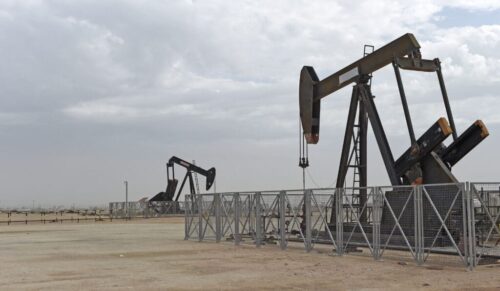
The Gulf Cooperation Council (GCC) states are confronting the greatest threat to their economic security and energy strategy since their formation. The economic fallout of the U.S.-Israeli war with Iran is severe, but uneven across the Gulf. So too is each state’s ability to sustain energy exports and protect critical infrastructure—both of which have been targeted unequally by Iran.
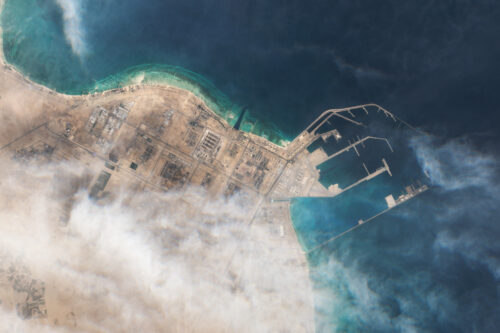
The war has produced the largest disruption to global oil and liquefied natural gas (LNG) supplies in modern history. Before February 28, roughly 20 percent of global oil and 20 percent of exported global LNG flowed through the Strait of Hormuz. Since then, traffic has dropped to around 5 percent of normal levels. Following Iran’s March 18 strike on Qatar’s Ras Laffan LNG facility—the largest of its kind in the world—Qatari exports have effectively halted. Even under optimistic assumptions, export capacity could remain at least 17 percent below pre-war levels for three to five years. Qatar Energy alone stands to lose roughly $20 billion annually—against a 2025 government revenue baseline of $54 billion.
Photo by AFP
The Middle East Institute (MEI) is an independent, non-partisan, not-for-profit, educational organization. It does not engage in advocacy and its scholars’ opinions are their own. MEI welcomes financial donations, but retains sole editorial control over its work and its publications reflect only the authors’ views. For a listing of MEI donors, please click here.
Jordan’s Economy Weathers Iran War’s Shocks and Finds New Opportunities

Special Episode: Saudi Oil After the East-West Pipeline Attack