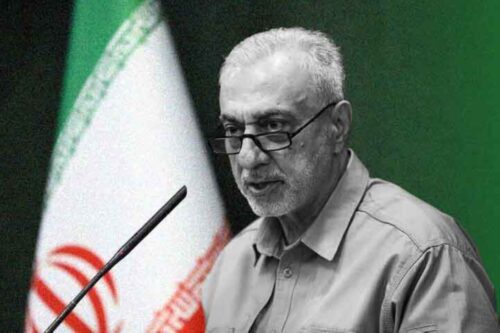
Mehrdad Akhlaghi was appointed defence minister in October 2026 by Iranian President Masoud Pezeshkian. He is an unusual choice, as, unlike most of his predecessors, he does not come from a uniformed military background. And his appointment comes arguably at the most sensitive time in the history of the Islamic Republic. He is a veteran of Iran’s military-industrial complex, with a particular association with missile development and production. That alone is quite revealing. The survival of Iran’s government is greatly dependent on the quantities and qualities found in its missile arsenal. Akhlaghi got the job at a time when Tehran faces the imminent prospect of another round of war with the US and Israel and at a moment when replenishment of its battered military arsenal is an urgent national priority.
Born in 1958 and native of the city of Rasht, not far from the Caspian Sea in Iran’s north, Akhlaghi is unfamiliar to the Iranian public, but he has been on the radar of Western intelligence services for at least two decades. In March 2007, the UN Security Council placed him under sanctions for his involvement in Iran’s ballistic missile programme. At the time, he headed the Shahid Bagheri Industrial Group, a key component of the country’s missile-manufacturing industry. Washington subsequently imposed its own sanctions, as did the European Union and Britain. In other words, his appointment merely brings a longtime behind-the-scenes figure into the public spotlight.
Photo via Al Majalla
The Middle East Institute (MEI) is an independent, non-partisan, not-for-profit, educational organization. It does not engage in advocacy and its scholars’ opinions are their own. MEI welcomes financial donations, but retains sole editorial control over its work and its publications reflect only the authors’ views. For a listing of MEI donors, please click here.