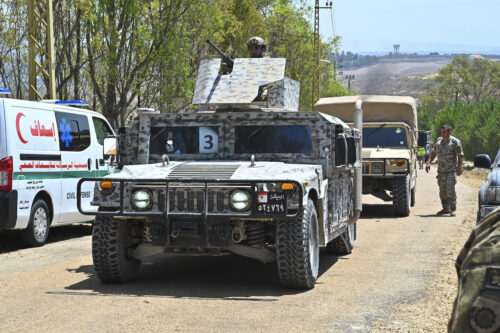
This article is part of a report outlining an actionable US roadmap to win in Lebanon, comprising eight chapters of specific policy interventions across the security, economic, and political dimensions needed to secure a sovereign Lebanon, lock in US gains against Iran, and permanently end the Israel-Lebanon conflict.
Key Takeaways
- Having taken on the role of facilitating a Lebanon-Israel cease-fire and hosting direct talks aimed at reconciling Israeli security with Lebanese sovereignty, the United States should also take the lead in helping to resolve outstanding territorial disputes between the parties.
- Differences between Lebanon and Israel on border matters include the Shebaa Farms and Kfar Chouba Hills, the village of Ghajar, and several points along the Line of Israeli Withdrawal (Blue Line) involving the disputed trace of the 1949 armistice demarcation line.
- Lebanon needs a mutually agreed boundary with its southern neighbor to enjoy full sovereignty, to end permanently the possibility of Israeli claims on Lebanese territory, and to fulfill its security responsibilities up to the line dividing Lebanon and Israel.
- Border-related mediation efforts should focus first on resolving Blue Line differences involving the disputed trace of the 1949 armistice demarcation line. Doing so would avoid complications involving Syrian interests.
Introduction
This paper examines how the United States might mediate the settlement of Israel-Lebanon differences over the line that divides them into separate jurisdictions. The absence of such an agreed line could produce misunderstandings and even armed clashes, undermining security coordination and cooperation. Indeed, it has done so in the past.
American mediation is essential. The United States has assumed the role of overseeing the reconciliation of Israeli security demands and Lebanese demands concerning sovereignty. The departments of State and Defense have already hosted several rounds of Israel-Lebanon direct talks. On June 26, 2026, a “Trilateral Framework” was signed in Washington by the United States, Israel, and Lebanon.
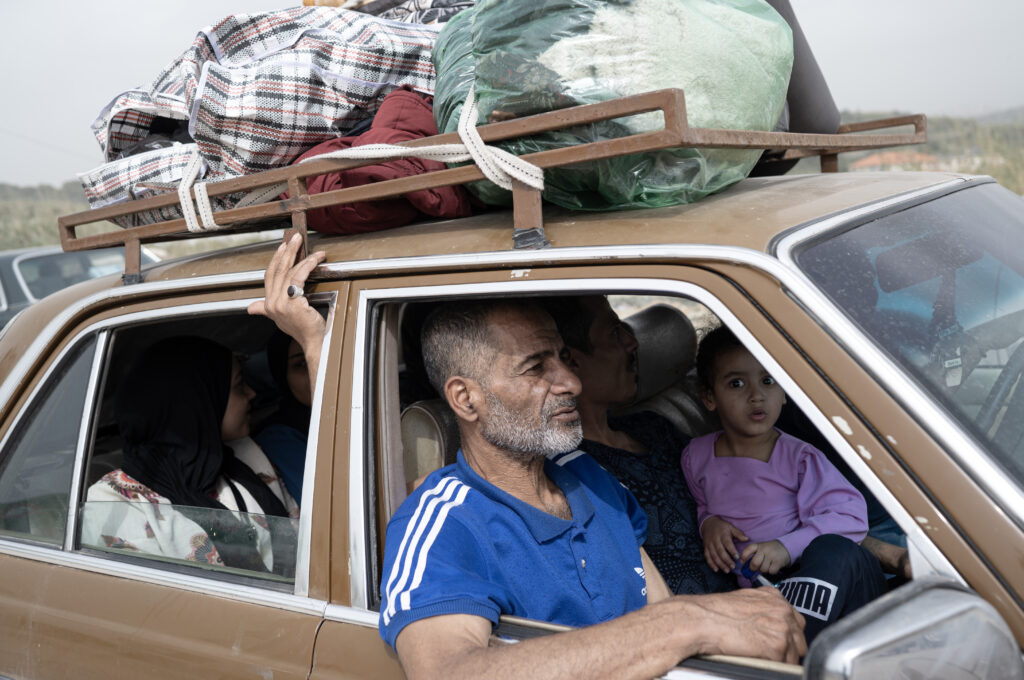
Washington hopes to see a genuine cease-fire in Lebanon, one that stops Hizballah attacks on Israel while permitting the Lebanese Armed Forces (LAF) to gradually replace units of the Israel Defense Forces (IDF) currently occupying much of southern Lebanon. But an agreement ending Hizballah’s threat to Israel and permitting over a million displaced Lebanese to return to their homes must include a territorial dimension if Lebanon-Israel cooperation focused on securing their common border is envisioned.
In Lebanon, concerns persist that Israel has designs on Lebanese territory. Some are framed in the context of history, often citing alleged Israeli claims on Lebanon’s Litani River. Others cite statements by current Israeli officials that Israel requires “security zones” on Lebanese territory from which Lebanese residents would be excluded. Still others cite calls from Israel’s far right that Jewish settlements be introduced into southern Lebanon. These concerns must be resolved if security cooperation is to become a feature of Lebanon-Israel relations. The concluding sentence in Article 5 of the recently signed Trilateral Framework is helpful in this regard: “Pursuant to the above, the Government of Israel declares that it has no territorial ambitions in Lebanon.”
Two of the disputes at issue — the Shebaa Farms and Kfar Chouba Hills and the village of Ghajar — involve the interests of a third party: Syria. Both places were occupied by Israel when it seized the Golan Heights in 1967. Syria considers both to be occupied Syrian territory. The third issue involves several points of dispute concerning the exact trace of the 1949 armistice line separating Israel and Lebanon, a line that was supposed to be replicated by the 2000 “Blue Line” confirming Israel’s withdrawal from Lebanon. This issue is strictly bilateral (Lebanon-Israel) in nature.
Background
Lebanon and Israel have been in a legal state of war since May 1948. When a United Nations-mediated armistice was signed in March 1949, the two neighbors agreed that their armistice demarcation line would coincide with the 1923 Palestine-Lebanon international boundary created by British and French surveyors.
The armistice line was re-demarcated under the authority of the United Nations in 1950, except for its last three miles at the eastern end, where Israel lodged a dispute. Notwithstanding this disagreement, the line remained unfenced and violence-free for nearly 20 years.
In June 1967, Israel terminated its armistices with Egypt, Jordan, and Syria after occupying significant territories in each of the three. Israel also renounced its armistice with Lebanon, even though Lebanon had not participated in the June 1967 War. Still, the armistice demarcation line continued to mark where Israel ended and Lebanon began. Yet one line-related change emerged when Israel occupied the Golan Heights. The border dividing Lebanon and Syria in the Golan Heights now separated Lebanon from an area occupied by the IDF.
Soon after Israel’s renunciation of the 1949 armistice, Lebanon began to lose control of its southern districts to non-state actors. From 1982 until 2000, the Iran-created Hizballah resisted the Israeli occupation of significant parts of Lebanon south of the Litani River. In May 2000, the IDF withdrew from Lebanon under fire.
The United Nations directed its chief cartographer, Miklos Pinther, to oversee drawing a line to verify the completeness of Israel’s withdrawal in accordance with Security Council Resolution 425. In principle, all that should have been required was to confirm the trace of the 1949 armistice demarcation line. But no record of the 1950 re-demarcation project could initially be found.
Pinther tried instead to use the survey that had produced the 1923 international boundary, but it proved overly vague. It was not until late in the Blue Line creation process that a document seemingly reflecting the 1950 re-demarcation of the armistice line emerged. And even that document — regarded by Pinther as genuine — contained discrepancies between written descriptions of boundary pillar locations and accompanying map coordinates.
With most of the pillars long gone, Pinther, for the sake of consistency, relied on the written descriptions because they — as opposed to accompanying map coordinates — enabled him to avoid drawing a line that would have left the western edge of Kibbutz Misgav Am inside Lebanon. Indeed, the line drawn adjacent to Misgav Am left a small piece of a Lebanese village (Addaissah) on the Israeli side, an inconvenience offset by the IDF security fence being located just to the east of the affected Lebanese houses.
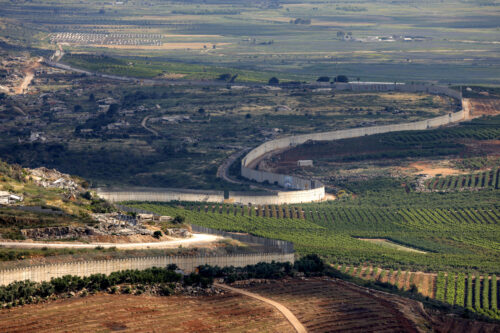
In the end, Pinther pieced together what he called “a practical line,” one officially designated “The Line of Israeli Withdrawal,” or (less officially) “The Blue Line.” Lebanon objected to 13 Blue Line points where it claimed the trace of the 1949 armistice line was being violated, including where it spared Misgav Am from partition. The area covered by the 13 points amounted to about two square miles, a seemingly inconsequential amount. Clearly, however, some of the disputed points raised sensitive issues.
There were, to be sure, instances where the Blue Line required the IDF to withdraw several meters from its forward positions. But in his quest to create “a practical line,” Pinther avoided putting Israel in difficult situations wherever possible. Faced with strong Israeli objections to the Blue Line placing two-thirds of the Israeli-occupied village of Ghajar in Lebanon, Pinther did what he could to avoid creating inconveniences for Israel elsewhere.
Indeed, Ghajar — an Alawite village of some 2,500 souls — still accounts for Israel’s strongest objection to the Blue Line. Lying at the base of the Golan Heights next to the Hasbani River, Ghajar was administered by Syria until June 1967. Using what he considered the best available cartography, Pinther decided he could not avoid bisecting the village on paper. Still, the entire village remained under Israeli control, and it does so today. There is no Lebanese presence in Ghajar north of the Blue Line and, by all accounts, the residents of Ghajar support Israeli rule. Indeed, Lebanon has never administered the village. In 2000, after the Blue Line came into effect, Syria objected to the partition and asserted that the entire village was occupied Syrian territory.
Scholars disagree about the history behind Ghajar’s paper partition, one that is invisible on the ground. Some say that Pinther relied on faulty French and British cartography produced before and during World War II. Others maintain that the village crept northward into Lebanon, beginning as early as the 1960s.
The Ghajar situation presents a vexatious riddle over how a village invisibly divided on a map should be governed. Israel has permitted no Lebanese presence in northern Ghajar. The people of the village move about the jurisdiction freely. And yet, every time the Blue Line is crossed south to north, the line is violated. Moreover, from the point of view of Syria, Ghajar remains Syrian territory occupied by Israel.
But it was farther to the east where the most significant objection to the Blue Line was lodged, initially by a third party. Iran’s Lebanese proxy, Hizballah, with the verbal support of Syria, declared in 2000 that a small (fewer than 10 square miles) strip of the Golan Heights adjacent to Lebanon — the Shebaa Farms and Kfar Chouba Hills — was, in fact, Lebanese territory occupied by Israel. According to Hizballah, Israeli occupation continued, thus justifying its self-proclaimed right to bear arms as “The Lebanese Resistance.” Quickly, the Government of Lebanon (GOL) fell into line with Hizballah’s claim.
The United Nations rejected the claim, pointing out that Lebanon had never, from June 1967 until June 2000, disputed that the area was occupied Syrian territory. Never did Lebanon demand, until June 2000, that the Shebaa Farms and Kfar Chouba Hills be folded into the area of operations of the United Nations Interim Force in Lebanon (UNIFIL), created in 1978. Never did Lebanon dispute that the area was, in fact, under the operational purview of the Golan Heights-based United Nations Disengagement Observer Force (UNDOF).
When Lebanon first made its claim, Syrian Foreign Minister Farouq al-Shara telephoned United Nations Secretary-General Kofi Annan to endorse it, an endorsement flatly contradicted by Syrian President Bashar al-Assad (in a conversation with the author of this paper) in 2011. Assad insisted that the farms and hills were Syrian. The current Syrian government (like its predecessor) considers the Golan Heights (presumably including the area in question) as Syrian territory occupied by Israel.
Israel considers the tiny strip to be part of the Golan Heights, and the Golan Heights to be part of Israel. Washington, during President Donald Trump’s first term, recognized Israel’s sovereignty in the Golan Heights. The current GOL has not formally revoked Lebanon’s claim to the Shebaa Farms and Kfar Chouba Hills, but, as a practical matter, has refrained from addressing the issue. Faced with the challenges of Iranian intervention in its internal affairs, Hizballah’s arms, and Israel’s displacement of over a million Lebanese civilians, the GOL has had higher priorities to address.
The Way Forward
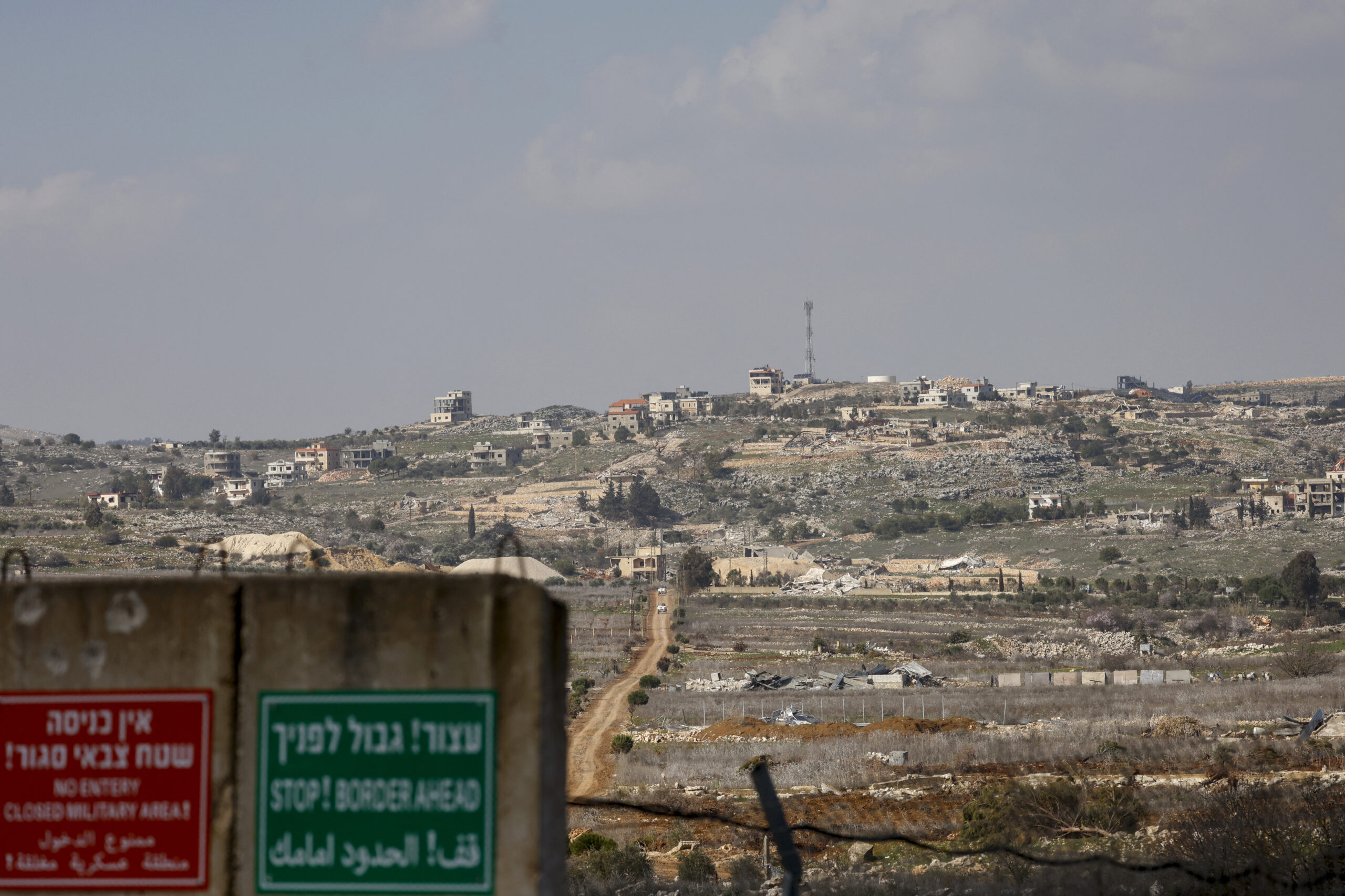
The immediate task of American mediation between Lebanon and Israel is to halt violence and to assist the parties in establishing procedures leading to the full evacuation of the IDF from Lebanon under enabling security conditions. The recently signed Trilateral Framework may prove to be a significant step in that direction. That process could emerge from Israel-Lebanon direct talks hosted by and in Washington. American mediation of border issues, which took place in 2025 under the auspices of the cease-fire mechanism established in November 2024, can resume in Lebanon-Israel direct talks. Indeed, Article 12 of the Trilateral Framework states that Lebanon and Israel “will work to establish working groups to draft the full comprehensive peace and security agreement.” No doubt one of these working groups would focus on resolving border issues.
This resumption should begin where it left off: by seeking to resolve disputed Blue Line points from the Mediterranean Sea to southeast of Metulla. The advantage of focusing initially on this portion of the Blue Line is that it involves no parties other than Israel, Lebanon, and the American mediator. There are no complications arising from Golan Heights-related Syrian interests.
Indeed, there are reports that seven of the 13 Lebanese objections alluded to above were resolved informally by Lebanon and Israel under the auspices of the UNIFIL Tripartite Mechanism, an entity replaced by the US-France-led cease-fire mechanism in November 2024. There have, however, been no formal announcements of agreement on the seven agreed-upon points. Among the Blue Line points reportedly still under dispute are Misgav Am, the beginning of the line at Ras al-Naqoura/Rosh Hanikra, and the final three miles southeast of Metulla.
American mediation of whatever disputes remain might do well to incorporate what seems to have been Pinther’s guiding principle: wherever possible, draw a line that does the least practical harm. In Ghajar, Pinther felt compelled by cartographic evidence to draw a line right through the place. Elsewhere, he found ways to avoid impacting people.
In 2022, the US brokered a Lebanon-Israel accommodation in the Mediterranean Sea, one permitting each country to exploit petroleum resources in its own exclusive economic zone. Perhaps that agreement could be amended to compensate Lebanon for concessions on Blue Line points, particularly those affecting Israeli civilians. Perhaps Israel could also relax its traditional objections to greater Lebanese exploitation of the Hasbani River. Perhaps the longstanding dispute over the armistice line’s final three miles could be settled in Lebanon’s favor.
As noted above, the dispute over the sovereignty of the Shebaa Farms and Kfar Chouba Hills involves a third party: Syria.
Lebanon, for the first time in its history as an independent state, is dealing with a government in Damascus that explicitly recognizes its sovereignty. It would, therefore, be strongly disinclined, absent a Syrian green light, to arrive at a strictly bilateral agreement with Israel over the Shebaa Farms and Kfar Chouba Hills, whether directly or through American mediation.
There is, therefore, a question as to the utility of American mediation between Israel and Lebanon in the Shebaa Farms and Kfar Chouba Hills matter. Yet surely there is a creative role to be played by American diplomacy in the Lebanon-Syria context.
The two Arab neighbors formed, in 2025, a Joint Boundary Commission. The principal work of the Commission is to delineate and demarcate the Syria-Lebanon boundary adjoining the Beqaa Valley. But there is no reason why that commission, with American encouragement, could not produce a useful exchange of statements on the issue in question.
Syria, for example, could reaffirm the pertinent facts of the matter: the area in question was administered by Syria ever since its independence in 1946; there had been inconclusive Syria-Lebanon talks about a potential boundary adjustment before 1967; Israel occupied the area in June 1967; Syria considers the Shebaa Farms and Kfar Chouba Hills to be occupied Syrian territory; and once the occupation ends Syria would resume discussions with Lebanon about a potential transfer.
Lebanon, without renouncing its claim to sovereignty over the farms and hills, could recognize that Syria administered the area from 1946 until 1967 and would welcome resuming negotiations for a potential formal transfer once the occupation cited by Syria ends.
Even in the absence of Syria’s cooperation, Lebanon and Israel could agree to defer addressing the issue until the onset of formal peace talks, pledging in the interim to respect the inviolability of the Blue Line as it is. But a Syrian assertion of sovereignty would make it easier domestically for the GOL to drop a bogus Hizballah claim that, sadly, over the past quarter-century has been internalized as valid by many Lebanese.
The second issue containing a Syrian dimension is the village of Ghajar. As noted above, in 2000, Syria objected to the Blue Line dissection and claimed the entire village as occupied Syrian territory.
Again, it might be possible for catalytic American diplomacy to help bring about a Lebanon-Syria understanding on the status of Ghajar and how Lebanon might reach an accommodation with Israel.
If the issue of Ghajar were tabled at the Syria-Lebanon Joint Boundary Commission, Syria might acknowledge the two-thirds of the village north of the Blue Line to be Lebanese territory. Then, either at the same meeting or separately, Syria — citing the practical and humanitarian needs of Ghajar’s inhabitants on both sides of the line for adequate, well-run municipal services — might authorize Lebanon to arrive at practical arrangements with Israel preserving the unified governance of the village.
If Lebanon were armed with such flexibility, American mediators might explore the possibility of the United Nations adjusting the Blue Line northward to place the entire jurisdiction under Israeli control. If critics of the cartography can make a persuasive case, the US could press for a United Nations resurvey of the Blue Line vis-à-vis Ghajar. Alternatively, Washington might suggest a mutually agreed adjustment of the Blue Line at Lebanon’s expense, perhaps compensating Lebanon through concessions by Israel elsewhere along the Blue Line or in the Mediterranean Sea. Such an adjustment would be complicated, however, by the requirement for Lebanon’s parliament to approve any transfer of sovereign Lebanese territory.
Alternatively, Washington might suggest that Lebanon and Israel agree to keep the Blue Line in place, but that unified local governance and the services associated with it be preserved for the entire jurisdiction. The Blue Line would remain free of physical obstacles and villagers would be entitled to move throughout the village. Israel and Lebanon would respect the Blue Line in Ghajar as inviolable militarily. The Parties could form a “Ghajar Coordination Committee” consisting of Lebanese and Israeli military and police personnel whose mission would be to ensure the smooth functioning of a municipality bisected invisibly by the Blue Line.
Conclusion
Settling Lebanon-Israel territorial disputes will not require diplomacy rising to the skills exhibited at the Congress of Vienna. But these disputes must be resolved if the two states are to arrive at stable, peaceful relations and ultimately peace itself.
Both parties and their American facilitator have other, more pressing priorities now. Military violence must cease. The parties must engage intensively in direct talks aimed at reconciling Israel’s security with Lebanon’s sovereignty. That reconciliation ultimately must feature an inviolable Blue Line, with northern Israelis living in peace and security, southern Lebanese returning to rebuild their lives and their homes, and two militaries cooperating closely to keep the peace.
American mediation will be required to address the pressing priorities and achieve the requisite results. That mediation and associated diplomacy could, sooner rather than later, also resume addressing the territorial issues discussed in this paper.
Indeed, an expeditious resolution of the disputed Blue Line points related to the 1949 armistice demarcation line could establish attitudes of cooperation and compromise very useful elsewhere, and not just on territorial issues. Perhaps tackling the more difficult territorial issues — Shebaa Farms and the Kfar Chouba Hills and Ghajar — could be deferred. In the end, however, a bilateral agreement on where Lebanon ends is a precondition for entering the promised land of peace and normalization. Effective American mediation will be essential for getting there.
Ambassador Frederic C. Hof is a Senior Fellow at the Bard College Center for Civic Engagement. He has written on Lebanon-Israel-Syria boundary issues since the 1980s and has extensive official and Track II experience mediating those issues.
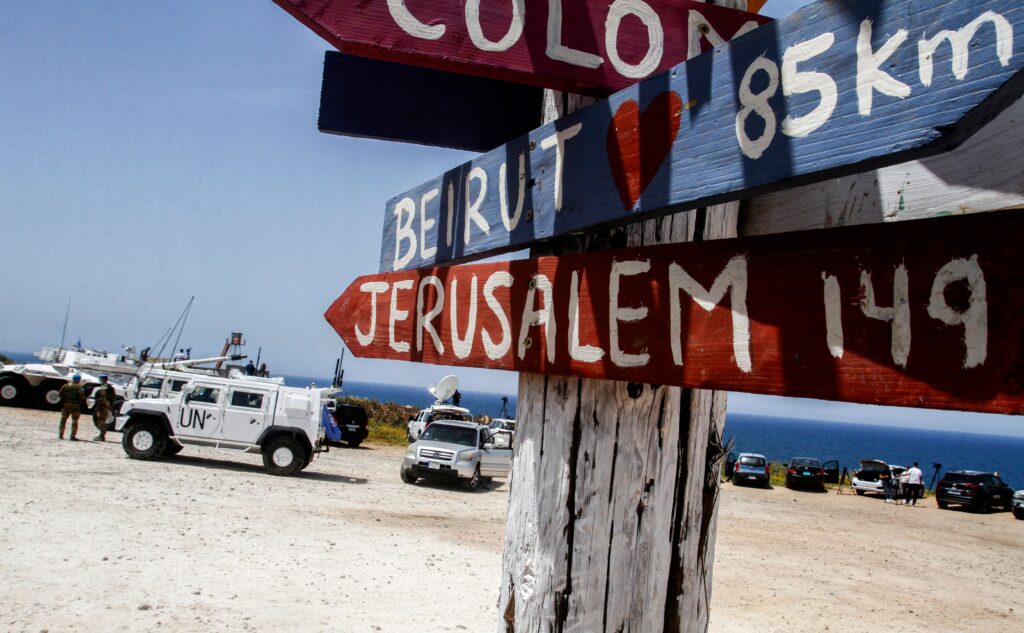
To photo by Jalaa Marey/AFP via Getty Images.
The Middle East Institute (MEI) is an independent, non-partisan, not-for-profit, educational organization. It does not engage in advocacy and its scholars’ opinions are their own. MEI welcomes financial donations, but retains sole editorial control over its work and its publications reflect only the authors’ views. For a listing of MEI donors, please click here.
How Lebanon can be Trump’s first success in a troubled region

Kim Ghattas on a Murder That Explains the Middle East