
Summary
This report outlines an actionable US roadmap to win in Lebanon, comprising eight chapters of specific policy interventions across the security, economic, and political dimensions needed to secure a sovereign Lebanon, lock in US gains against Iran, and permanently end the Israel-Lebanon conflict.

Contents
Lebanon Is Washington’s Next Win
by Fadi Nicholas Nassar
Setting the Lebanese Armed Forces Up for Success
by Kenneth M. Pollack
Operationalizing the Trilateral Framework Agreement
by Matthew Levitt
Hizballah’s Deep State: The Real Challenge of Disarmament in Lebanon
by Hanin Ghaddar
From Player to Referee: Dismantling the Culture of Entitlement and Cartelization in Lebanon
by Walid Marrouch
Owning the Recovery: Supporting Lebanese-Led Reconstruction Without Repeating the Past
by Ferid Belhaj
Lebanon-Israel Border Disputes: A Guide for American Mediation
by Frederic C. Hof
Achieving a Permanent End to the Israel-Lebanon Conflict
by David Hale
Executive Summary
Lebanon stands to be America’s next foreign policy win — if Washington chooses to claim it. The United States has committed significant resources, in war and diplomacy, to neutralize Iran’s ability to project power and destabilize the Middle East. Lebanon is now the clearest opening to convert those investments into strategic gains and permanently dislodge the Islamic Republic from its most important regional foothold.
- Winning in Lebanon means securing a sovereign Lebanese state, ending the Israel-Lebanon conflict for good, and dismantling Iran’s proxy model at its source.
- Achieving this would unlock the wider transformation of the Levant and consolidate a new regional order led by America’s partners before Iran has a chance to reverse its losses.
- Doing so would be an irreversible loss for Tehran, weakening both the regime’s regional threat and its domestic tyranny.
The conditions for success in Lebanon have never been more favorable.
- Washington has a willing partner in the Lebanese state and people, who have already taken courageous steps to outlaw Hizballah’s military activities, deepen their partnership with the United States, and negotiate peace with Israel.
- America’s regional allies share our interest in achieving a Lebanese state with exclusive authority over its territory.
Hizballah has never been weaker. It remains militarily degraded, its leadership decimated, and its legitimacy eroded after fighting Iran’s wars at Lebanon’s expense.
- Most Lebanese now see Hizballah as an Iranian occupation of Lebanon — not a Lebanese resistance — and look to America to help them restore their sovereignty.
- If confronted by a determined Lebanese state with decisive US backing, Hizballah can be extirpated.
But the window to defeat it permanently will not last. Tehran is pouring resources into Lebanon to rebuild the crown jewel of its proxy network.
A Blueprint for Victory in Lebanon
Organize the effort as a single campaign focused on restoring Lebanese sovereignty. Because Hizballah casts every move against it as a foreign plot, only a campaign Lebanese recognize as their own can defeat it.
- Lebanese must own the campaign, with America as their backer in their fight, rather than the owner of it.
- It names Iran and Hizballah as the primary obstacle to reclaiming the country.
- It legitimizes the difficult but necessary steps sovereignty demands, transforming disarmament from a foreign demand into a national cause.
- And it reaches beyond Lebanon, offering a model for every state reclaiming sovereignty from Iran’s proxies.
Increase US assistance to the Lebanese Armed Forces. Ensuring Lebanese state sovereignty requires the disarmament of Hizballah, and Hizballah will not give up its arsenal without a fight. If the Lebanese Armed Forces (LAF) are going to force or coerce Hizballah into doing so, it will require greater support from the United States than currently envisioned, albeit still very modest relative to the scale of other recent American military operations in the Middle East.
- While there is a range of options the US could employ, the optimal approach would entail deploying American advisors and trainers to improve LAF capabilities, backed by intelligence, logistics, special forces, and fire support (air, artillery, and helicopters).
- This would replicate the model the US employed to help the Iraqi armed forces destroy ISIS in 2014-17 without the deployment of US combat troops.
Target Hizballah’s finances and institutions. To prevent Hizballah reconstituting over time, Washington should:
- Sanction the exchange houses and facilitators moving Iranian funds to Hizballah and the compromised judges shielding the group from prosecution.
- Raise the cost for the allies who allow it to capture state institutions from within, and block any bargain trading disarmament for integration into the LAF or other state institutions.
Reform the Lebanese economy. Because Hizballah feeds off Lebanon’s pervasive corruption, the United States and its allies must support Lebanese efforts to:
- Retake control of its ports, airport, and border crossings, shut down the illicit financing fueling the cartels, and reform the state so it enforces neutral rules on the market.
- Once those chokeholds are broken and the rule of law enforced, businesses can compete fairly, trade will reconnect Lebanon to the global economy, and competition can unlock the country’s potential.
Ramp up external assistance. The United States and its allies need to pledge considerable assistance to Lebanon, both in cash and in kind to demonstrate the advantages of restoring Lebanon’s sovereignty.
- However, such support should only be provided after Hizballah is disarmed and economic reforms have begun.
- Washington and its partners should further align behind a single recovery plan owned by the Lebanese government and designed to finance reconstruction through Lebanese institutions.
- The plan should channel financing through a ring-fenced multi-donor trust fund — one with an independent board, civil society representation, and procurement rules stricter than Lebanese law requires.
- Funds should be disbursed only as milestones are met, measured against the International Monetary Fund’s June 2026 Diagnostic.
Resolve Lebanon’s border disputes. Because Hizballah justifies its arsenal by claiming that Israel continues to occupy Lebanese land, restoring Lebanese state sovereignty requires establishing the country’s borders.
- Resolving the disputed Blue Line first would build the confidence to negotiate a final settlement of remaining territorial disputes with both Israel and Syria.
Implement the verification mission established by the June 2026 Trilateral Framework Agreement. Doing so will ensure that the Israel Defense Forces have withdrawn and that the LAF has prevented Hizballah from moving in.
- Fulfilling both conditions will build the confidence each side needs for disarmament and withdrawal to succeed, ensuring Lebanon’s sovereignty and Israel’s security.
Make peace between Israel and Lebanon. Build on the Trilateral Framework Agreement to engineer a permanent peace between the parties, guaranteed by the United States.
- The Trilateral Framework Agreement, signed by the US, Israel, and Lebanon, established that a durable peace requires a sovereign Lebanese state and American participation to achieve it.
- President Donald Trump has an opportunity to achieve what no American president has before: a lasting peace agreement between Israel and Lebanon.
About the Editor
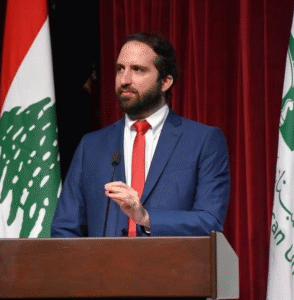 Fadi Nicholas Nassar is a Senior Fellow at MEI specializing in US foreign policy, state capacity in fragile states, and Levant geopolitics. From 2019 to 2025 he worked in Lebanon through its financial collapse, the 2020 Beirut Port explosion, and the Hizballah-Israel conflict, directing the Institute for Social Justice and Conflict Resolution and teaching at the Lebanese American University. He served on the World Bank’s Beirut damage assessment team and has led initiatives for Carnegie, UNDP, UNICEF, and the EU. He authored UN Mediators in Syria (Cambridge, 2024) and holds degrees from King’s College London, Columbia, and Georgetown.
About the Middle East Institute
The Middle East Institute is a center of knowledge dedicated to narrowing divides between the peoples of the Middle East and the United States. With over 70 years’ experience, MEI has established itself as a credible, nonpartisan source of insight and policy analysis on all matters concerning the Middle East. MEI is distinguished by its holistic approach to the region and its deep understanding of the Middle East’s political, economic and cultural contexts. Through the collaborative work of its three centers — Policy & Research, Arts & Culture, and Education — MEI provides current and future leaders with the resources necessary to build a future of mutual understanding.
Intellectual Independence
MEI maintains strict intellectual independence in all of its projects and publications. MEI as an organization does not adopt or advocate positions on particular issues, nor does it accept funding that seeks to influence the opinions or conclusions of its scholars. Instead, it serves as a convener and forum for discussion and debate, and it regularly publishes and presents a variety of views. All work produced or published by MEI represents solely the opinions and views of its scholars.
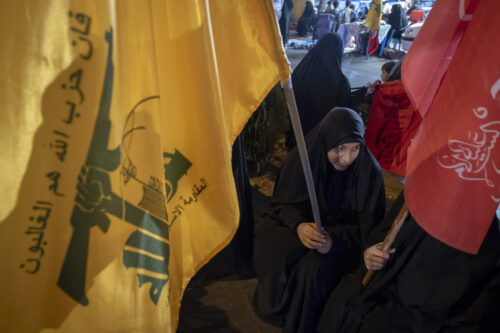
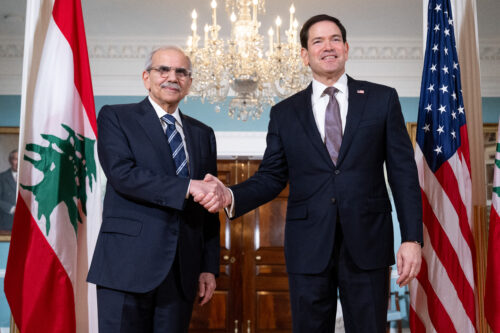
How Lebanon can be Trump’s first success in a troubled region

Kim Ghattas on a Murder That Explains the Middle East