The Americans Are Gone. Will Iraq’s Militias Disarm?
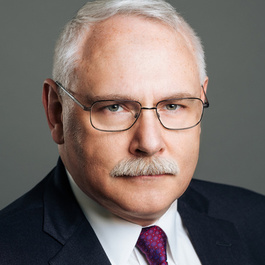
On September 30, the US completed its military withdrawal from Iraq, ending a 12-year-long mission to combat ISIS that began in 2014. The date was also meant to be the deadline for disarming the largely Iranian-backed militias known as the Popular Mobilization Forces (PMF), but Prime Minister Ali al-Zaidi has now pushed that cutoff back to June 30, 2027. MEI Distinguished Diplomatic Fellow Amb. (ret.) Robert S. Ford joins hosts Alistair Taylor and Matthew Czekaj to discuss what the US military withdrawal means for Iraqi security and the nature of the bilateral relationship going forward. They also speak about what it will take for Baghdad to bring the PMF militias to heel, and how Iraq may navigate the post-Iran war era.
Jordan’s Economy Weathers Iran War’s Shocks and Finds New Opportunities
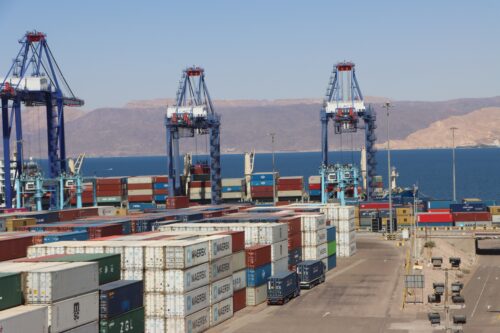
In the summer of 2003, King Abdullah II told Bloomberg Jordan sits “between Iraq and a hard place,” a play on words designed to describe the kingdom’s challenging environment to an American audience amid the US-led Iraq war to the east and the lingering Palestinian-Israeli conflict to the west. Jordan is grappling with a much “harder place” today.
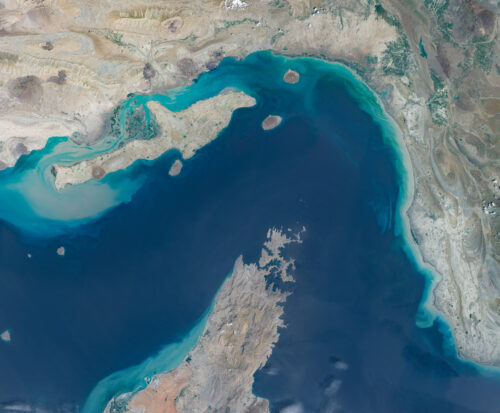
Proponents of the war with Iran have taken recent increases in crude-oil flows through the Strait of Hormuz as proof that the US strategy is finally working. President Trump is so confident in this that he recently rejected a seven-day plan, set forward by Iran’s foreign ministry, to end the war and open the strait. The United States is “winning tremendously,” Trump boasted.
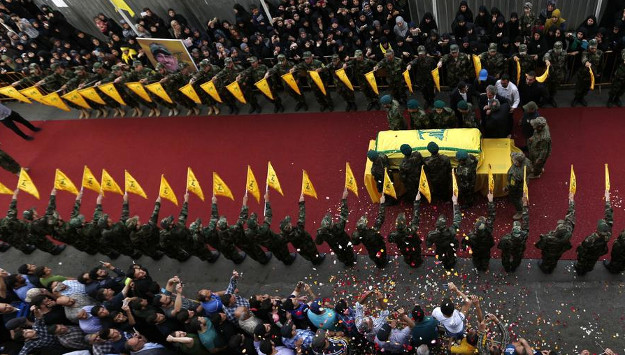
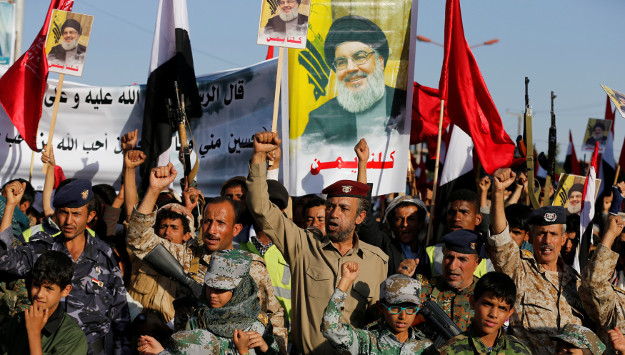
There was a time when Lebanon was a Syrian protectorate occupied by the Syrian Army. The Syrian war over the past six years, however, has somewhat reversed the roles – transforming Lebanese Hezbollah into a leading military force in Syria. Hezbollah has not only deployed thousands of its forces to fight in Syria, but it has also begun recruiting Syrian nationals.
Iran: Debt Payment Not Related to British Mother’s Release
The Iranian Foreign Ministry spokesman has rejected media reports that the British government’s willingness to pay Iran a decades-long debt of about $600 million is related to the potential release of a British mother jailed by the Islamic Republic. “The case of Nazanin Zaghari and the issue of the debt payment to Iran by the British government are separate matters,” Bahram Ghassemi told the Islamic Students’ News Agency today. “Ms.
I.R.G.C. Beating The Drums of War against U.S. in Syria
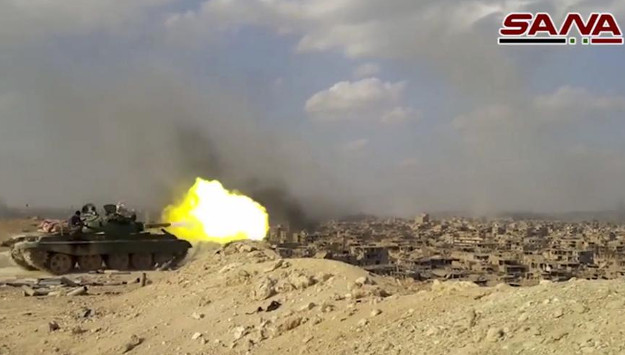
With ISIS on the brink of defeat, Tehran and Damascus say the next phase of the conflict in Syria is for the “resistance forces” to confront the U.S. military and its local allies, particularly the Syrian Democratic Force (S.D.F.). They have dialed up anti-American propaganda and warn that a “direct confrontation” with the U.S. will be necessary if Washington decides to keep its troops in Syria for the long haul.
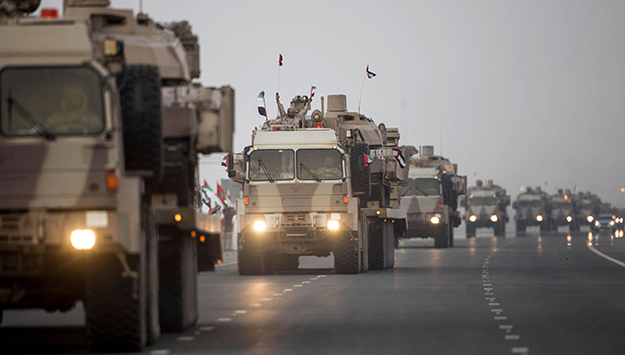
The war in Yemen is reshaping the armed forces of Arab Gulf states. It is the first time that Emirati and Saudi elite units are leading a war effort in their bid to counter Yemeni Houthi rebels and forces loyal to former President Ali Abdullah Saleh, as well as a counterterrorism campaign against jihadi groups, mainly Al-Qaeda in the Arabian Peninsula (AQAP).
Bahrain Claims Iran Plotted Pipeline Blast near Manama
The Bahraini government’s claim that Iran was directly involved in an oil pipeline explosion near the Bahraini capital of Manama is the latest sign of heightening tension in the Gulf region. Bahrain’s Interior Minister Sheikh Rashid bin Abdullah al-Khalifa said the blast was the latest example of a “terrorist act” under instructions from Tehran, the state-run Bahrain News Agency reported.
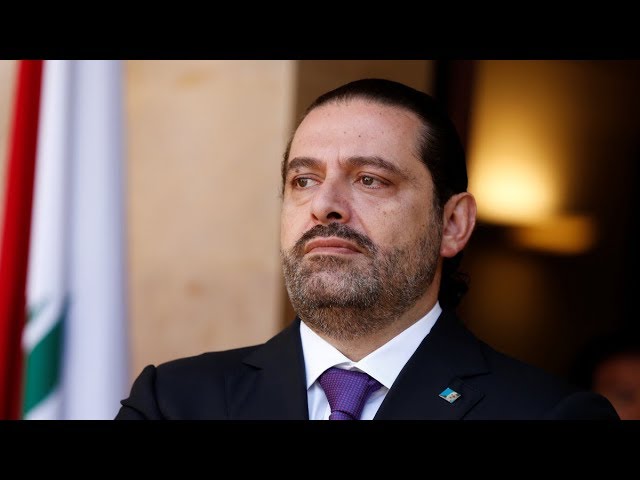
Khamenei’s Aide: We Hope Hariri Remains Lebanon’s Prime Minister
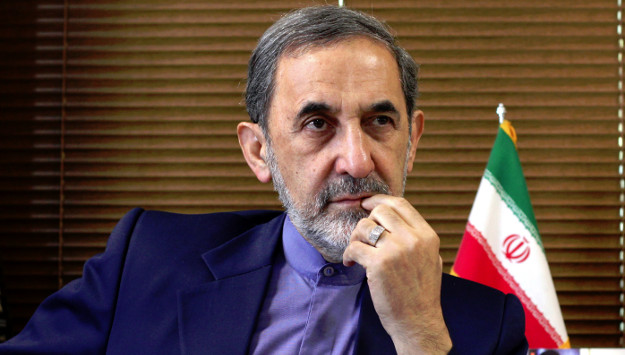
Ali Akbar Velayati, a top aide to Iranian Supreme Leader Ali Khamenei, said Tuesday that Tehran hopes Saad Hariri will return from Saudi Arabia and resume his position as Lebanon’s prime minister. “We support the unity between the March 8 and March 14 [alliances], which reached an agreement to form a government after a long time, and acted in unison to make Lebanon one of the region’s peaceful countries. This is the result of the understanding and logic of the [Lebanese] people and Islamic resistance.
Pakistan’s Army Chief: We’re Interested in Learning Experience of Basij from Iran
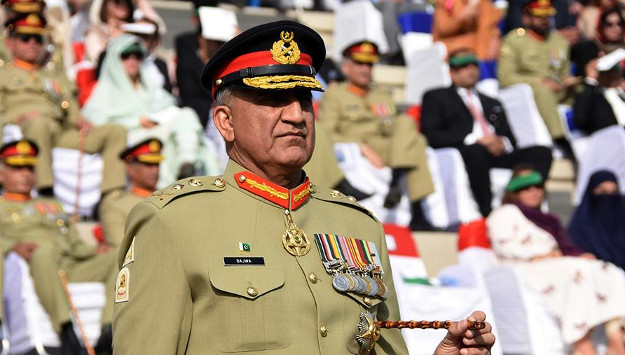
When the chief of the Pakistani Army visited Tehran last week, he told the commander of Iran’s Islamic Revolution Guards Corps (I.R.G.C.) that Pakistan is interested in learning from Iran’s experience of creating the Basij Organization and using “popular forces” to counter enemy threats, according to the Iran
November 13, 2017 – The crisis between Saudi Arabia and Lebanon and the resignation of Prime Minister Saad Hariri appears to be largely about Yemen, says Paul Salem, Sr. Vice President for Policy Analysis, Research, and Programs at the Middle East Institute.
The Lebanon Crisis Pivots on Hezbollah’s Presence in Yemen | Monday Briefing
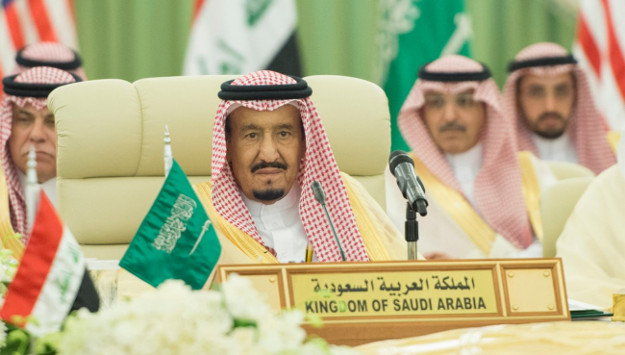
In this week’s Monday Briefing, contributors Paul Salem, Eran Etzion, Alex Vatanka, and Bilal Saab provide analysis on recent and upcoming events including the rising tension between Saudi Arabia and Lebanon over Hezbollah’s presence in Yemen, rumors that an Israeli attack on Lebanon is imminent, the Saudis’ latest attempt to round up collective action against Iran, and the new phase in the Saudi-Iran proxy war following the recent explosion of a pipeline in Bahrain.
Hariri’s Resignation and the Saudi Corruption Crackdown
Last weekend’s arrests of prominent Saudi government officials and leading businessmen on charges of corruption has sent shockwaves through Saudi society as well as global center of finance and commerce. The developments also impacted Lebanon, with Prime Minister Saad Hariri announcing his resignation from the Saudi capital of Riyadh. MEI experts Gerald Feierstein, Jean-Francois Seznec, and Randa Slim join Paul Salem to discuss these developments.
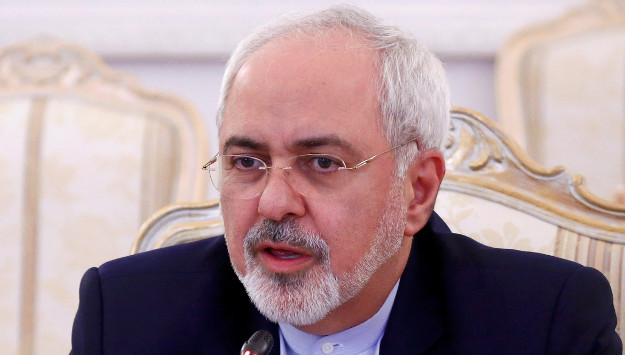
Iranian Foreign Minister Javad Zarif met with Tajikistan’s President Emomali Rahmon today in the capital city of Dushanbe to discuss ways to improve economic and trade relations between the two countries and coordinate their counterterrorism efforts in the region. The Iranian foreign minister arrived in Dushanbe on Wednesday and held meetings with his Tajik counterpart and participated in the inauguration ceremony of Iran’s new embassy building in the Tajik capital.
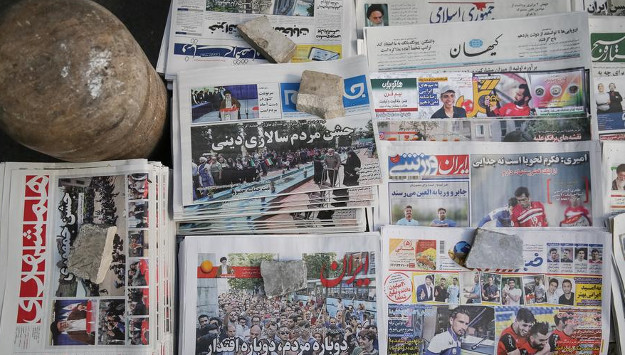
Yesterday’s edition of Jameeh-ye Farda, a reformist Iranian outlet, was published without an article written by its lead columnist Morteza Simiyari. The article, “Are We Hearing the Echo of the War? Russia, Instigator of War between Iran and Saudi Arabia,” was censored by the government, but it later surfaced on Gooya News, an independent news outlet in the Netherlands.
The oldest peer-reviewed publication dedicated to the study of the modern Middle East, MEI’s flagship journal covers politics, society, and culture in the region.