The Americans Are Gone. Will Iraq’s Militias Disarm?
On September 30, the US completed its military withdrawal from Iraq, ending a 12-year-long mission to combat ISIS that began in 2014. The date was also meant to be the deadline for disarming the largely Iranian-backed militias known as the Popular Mobilization Forces (PMF), but Prime Minister Ali al-Zaidi has now pushed that cutoff back to June 30, 2027. MEI Distinguished Diplomatic Fellow Amb. (ret.) Robert S. Ford joins hosts Alistair Taylor and Matthew Czekaj to discuss what the US military withdrawal means for Iraqi security and the nature of the bilateral relationship going forward. They also speak about what it will take for Baghdad to bring the PMF militias to heel, and how Iraq may navigate the post-Iran war era.
Jordan’s Economy Weathers Iran War’s Shocks and Finds New Opportunities
In the summer of 2003, King Abdullah II told Bloomberg Jordan sits “between Iraq and a hard place,” a play on words designed to describe the kingdom’s challenging environment to an American audience amid the US-led Iraq war to the east and the lingering Palestinian-Israeli conflict to the west. Jordan is grappling with a much “harder place” today.
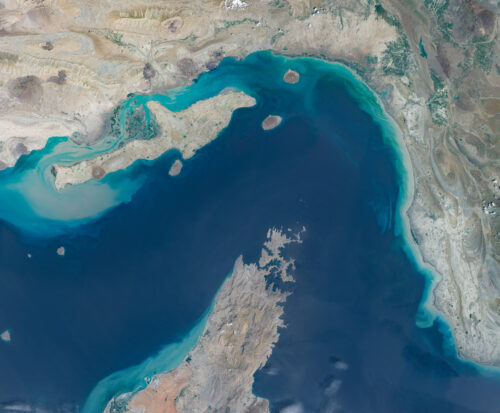
Proponents of the war with Iran have taken recent increases in crude-oil flows through the Strait of Hormuz as proof that the US strategy is finally working. President Trump is so confident in this that he recently rejected a seven-day plan, set forward by Iran’s foreign ministry, to end the war and open the strait. The United States is “winning tremendously,” Trump boasted.
Europe Eyes Further Cooperation with Iran under Rouhani
European leaders welcomed the re-election of Iranian President Hassan Rouhani with a sigh of relief. The European Union’s foreign affairs chief, Federica Mogherini, congratulated Rouhani and highlighted the high electoral turnout. It is worth noting that both Donald Tusk, the president of the European Council, and Mogherini had developed a good working relationship with Rouhani in face-to-face talks during the Iranian president’s first term.
Iran Denies Saudi Claims about Arrest of I.R.G.C. Members Plotting Attacks
On Tuesday, a senior Islamic Revolution Guards Corps (I.R.G.C.) official refuted claims by Saudi Arabia that it had detained three I.R.G.C. members plotting attacks against the kingdom. “The claim lacks any value … and looks more like a joke,” General Rassoul Sanaeerad, the deputy I.R.G.C. head for political affairs, said in an interview with Tasnim News Agency. He claimed Riyadh was fabricating the allegations for psychological warfare purposes against Iran.
U.S. Shoots Down Second Iran-Made Drone in Southern Syria
An American aircraft today shot down an Iranian-made armed drone approaching U.S.-led coalition forces in southern Syria, the U.S. Central Command said in a statement.
Rouhani Administration Seeks to Expand Iran’s Relations with Africa
The Islamic Republic of Iran seeks to boost its relations with African countries, President Hassan Rouhani said on Tuesday in a meeting with Benin’s new ambassador to Tehran Naim A
Iran: Missile Strikes in Syria Carry Wider Warning to Regional States and U.S.
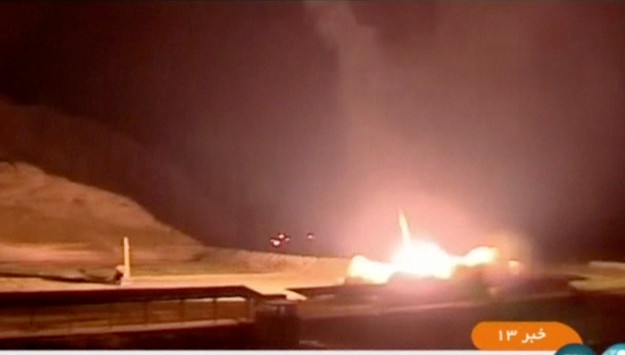
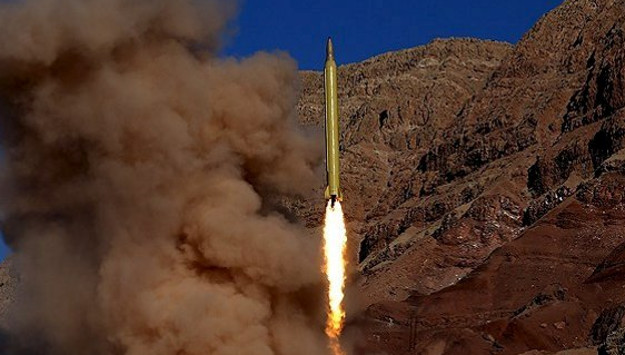
On Sunday, the Iranian military said it had launched six missiles at Islamic State positions in Syria in retaliation for the June 7 attacks in Tehran claimed by the terrorist group. A statement by the Islamic Revolution Guards Corps (I.R.G.C.) confirmed that it fired medium-range missiles from bases in the western Iranian provinces of Kermanshah and Kurdistan and killed a “large number” of Islamic State terrorists in Syria’s Deir Az Zour province.
Monday Briefing: Eastern Syria a Hotbed of Geopolitical Interests
In this week’s Monday Briefing, MEI experts Charles Lister, Alex Vatanka, Marvin G. Weinbaum, and Gerald Feierstein provide analysis on eastern Syria as a new hotbed of geopolitical competition, Iranian responses to the Islamic State attack, additional U.S. troops in Afghanistan, and renewed Saudi succession speculation.
I.R.G.C. Claims It Killed Leader of Sunni Militant Group in Southeast Iran
The Islamic Revolution Guards Corps (I.R.G.C.) announced today that its ground forces have killed the ringleader of a Sunni militant group in Iran’s restive province of Sistan and Baluchestan.
Iran-Backed Forces Link Up along Syrian-Iraqi Border near al-Tanf despite U.S. Warnings
Iranian-supported Shiite militia forces in Iraq and Syria have finally linked up along the shared border between the two countries, Fars News Agency reports.
Top Khamenei Aide Says U.S. Senate Sanctions Bill Violates Nuclear Deal
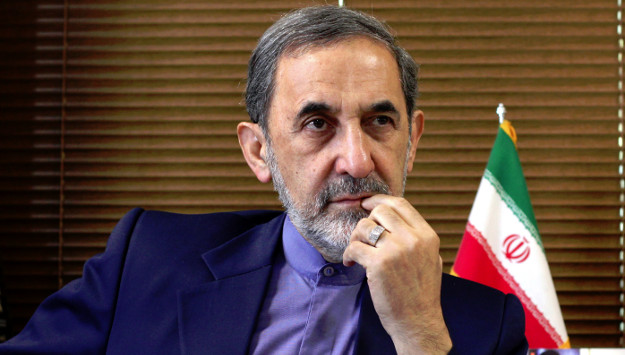
Iranian officials on Friday reacted angrily to the latest U.S. Senate decision to impose new sanctions against Iran. Ali Akbar Velayati, a senior aide to Supreme Leader Ali Khamenei, said the Senate bill was a violation of the Joint Comprehensive Plan of Action – the nuclear accord Iran signed with the United States and five other world powers in July 2015. “The U.S.
Senior Iranian Official Blasts Tillerson’s Remarks about Transition of Power in Iran
Mohsen Rezaei, the secretary of Iran’s Expediency Council, has strongly criticized U.S. Secretary of State Rex Tillerson’s comments about a peaceful transition of power in Iran.
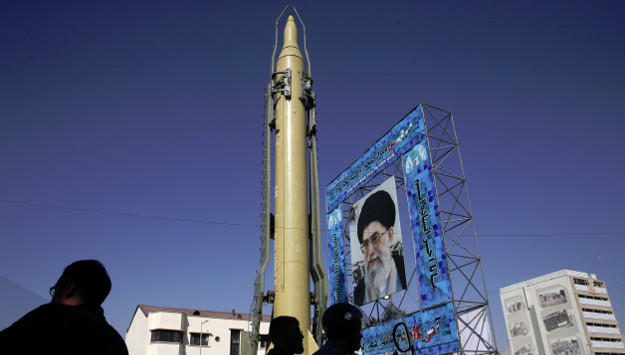
Iran Says Will Continue Missile Activity despite New U.S. Sanctions
Iran’s Foreign Ministry said new U.S. sanctions would not force Tehran to halt its missile program. The ministry’s spokesman argued that Iran’s missile program does not violate the 2015 nuclear deal or the U.N. resolution that endorsed the agreement.
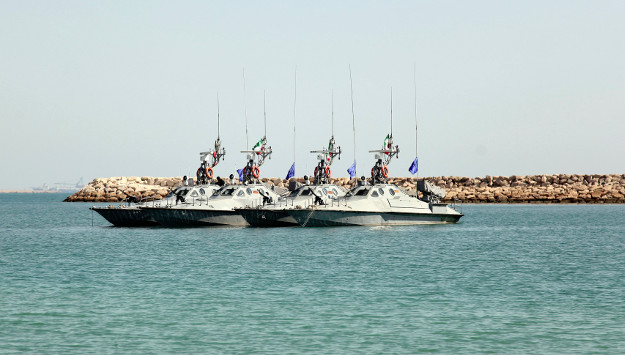
Iranian Missile Boat Harasses U.S. Warships, Points Laser at Marine Helicopter in Persian Gulf
U.S. military officials said on Wednesday that three U.S. Navy ships and a Marine helicopter had an “unsafe and unprofessional” encounter with an Iranian Navy vessel in international waters in the Persian Gulf. The amphibious assault ship U.S.S.
The oldest peer-reviewed publication dedicated to the study of the modern Middle East, MEI’s flagship journal covers politics, society, and culture in the region.