The Americans Are Gone. Will Iraq’s Militias Disarm?
On September 30, the US completed its military withdrawal from Iraq, ending a 12-year-long mission to combat ISIS that began in 2014. The date was also meant to be the deadline for disarming the largely Iranian-backed militias known as the Popular Mobilization Forces (PMF), but Prime Minister Ali al-Zaidi has now pushed that cutoff back to June 30, 2027. MEI Distinguished Diplomatic Fellow Amb. (ret.) Robert S. Ford joins hosts Alistair Taylor and Matthew Czekaj to discuss what the US military withdrawal means for Iraqi security and the nature of the bilateral relationship going forward. They also speak about what it will take for Baghdad to bring the PMF militias to heel, and how Iraq may navigate the post-Iran war era.
Jordan’s Economy Weathers Iran War’s Shocks and Finds New Opportunities
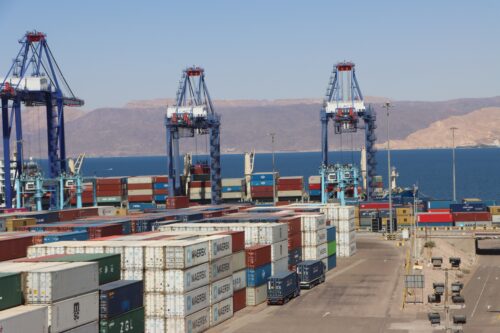
In the summer of 2003, King Abdullah II told Bloomberg Jordan sits “between Iraq and a hard place,” a play on words designed to describe the kingdom’s challenging environment to an American audience amid the US-led Iraq war to the east and the lingering Palestinian-Israeli conflict to the west. Jordan is grappling with a much “harder place” today.
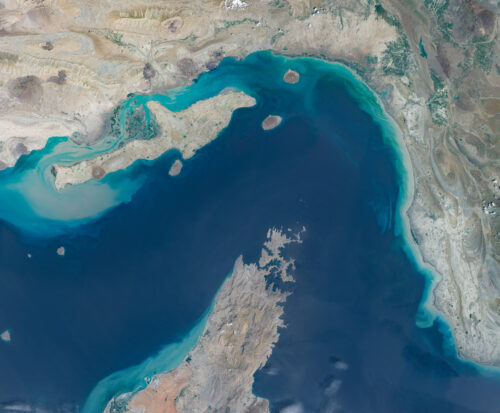
Proponents of the war with Iran have taken recent increases in crude-oil flows through the Strait of Hormuz as proof that the US strategy is finally working. President Trump is so confident in this that he recently rejected a seven-day plan, set forward by Iran’s foreign ministry, to end the war and open the strait. The United States is “winning tremendously,” Trump boasted.
The G.C.C. and China’s One Belt, One Road: Risk or Opportunity?
China’s One Belt, One Road (OBOR) initiative does not provide an equal opportunity for all states, and, in the case of the Gulf, it is Iran that will likely benefit over all others. The states of the G.C.C. also factor into Beijing’s plan, just not to the same degree―and that is the problem. Yet, as this essay shows, using OBOR and existing comparative advantages will allow the states of the G.C.C. to balance Iran’s potential windfall.
Monday Briefing: Erdogan Reaching Out to Russia; Update on Battle for Aleppo
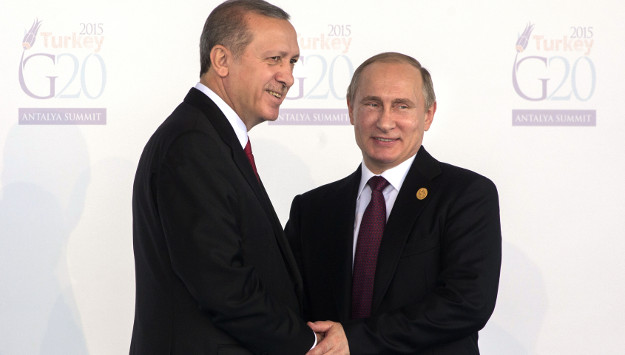
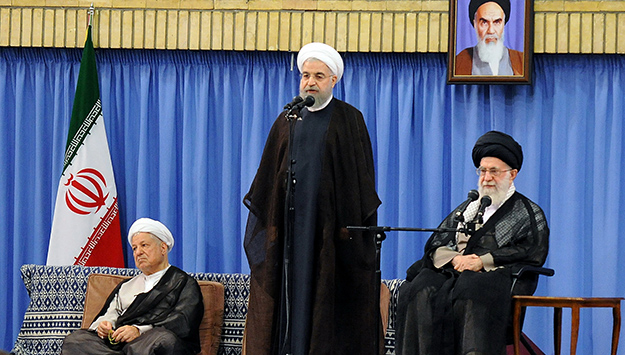
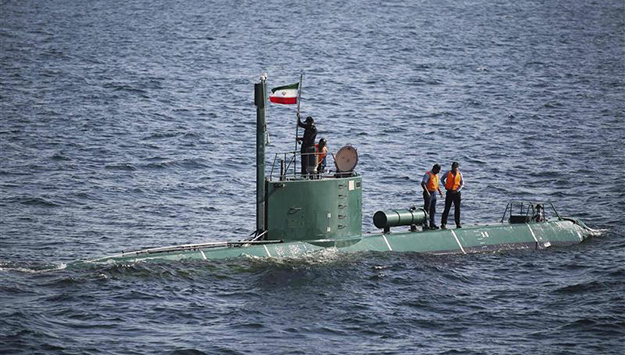
In this week’s Monday Briefing MEI experts provide analysis on recent and upcoming events including Turkish President Erdogan’s trip to Russia tomorrow, Iranian President Rouhani’s upcoming meeting with President Putin in Baku, the ongoing battle for Aleppo, strains in U.S.-Pakistan relations over the Haqqani Network, and what’s next for Tunisia’s political transition following the vote of no confidence in the current government.
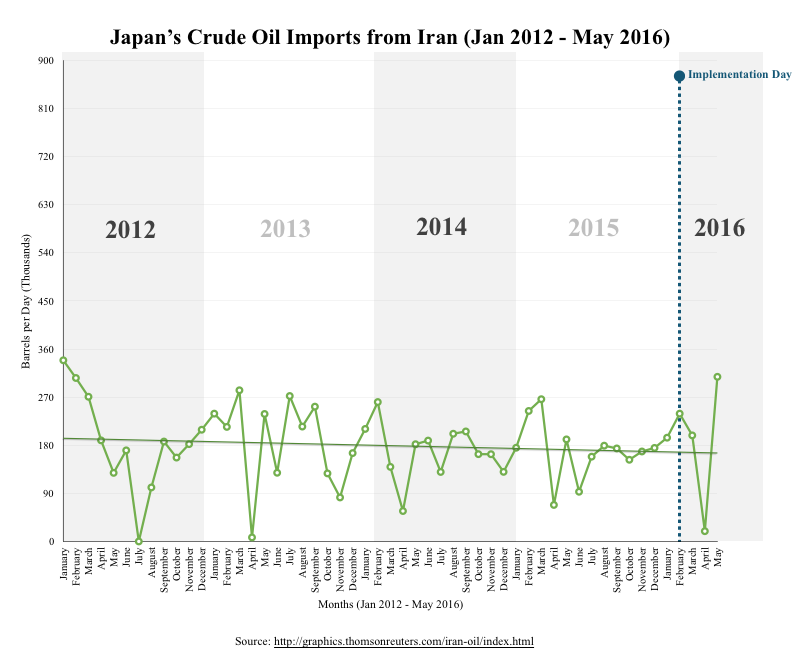
U.S.-European nuclear-related sanctions on Iran in 2011 resulted in a major reduction of Japanese crude oil imports from Iran, which were largely offset by increased purchases from other Middle Eastern producers. This pattern remained more or less intact through the end of 2015.[1]
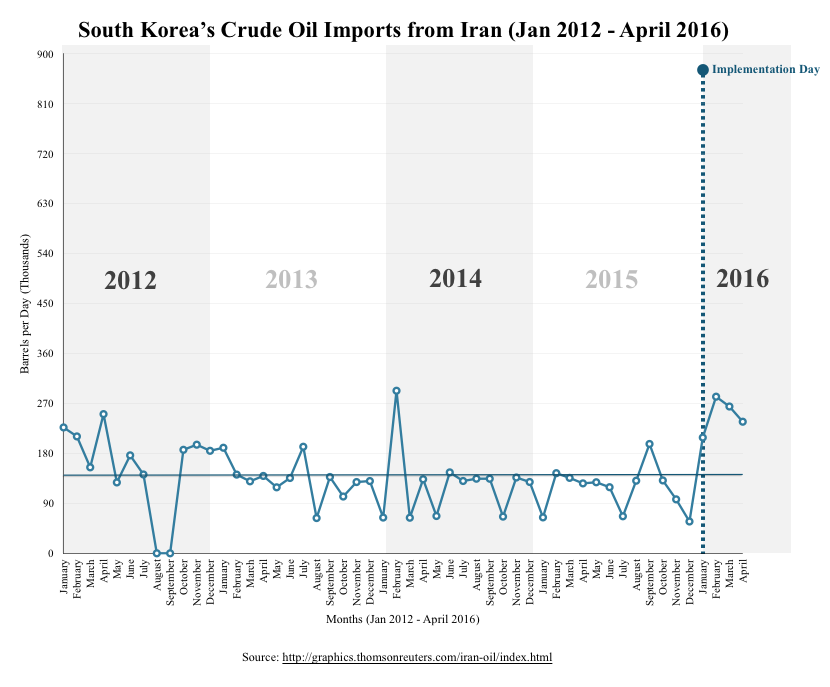
South Korea is the world’s fifth-largest crude oil importer and sixth-largest oil refining country. In June 2012, South Korea suspended all oil imports from Iran in response to a European Union insurance ban on tankers carrying Iranian crude oil.[1] South Korea subsequently obtained a waiver and resumed importing Iranian crude oil. However, the average annual volume of crude oil purchased by South Korea from Iran during the period 2012-2015 was 40% lower than in 2011.
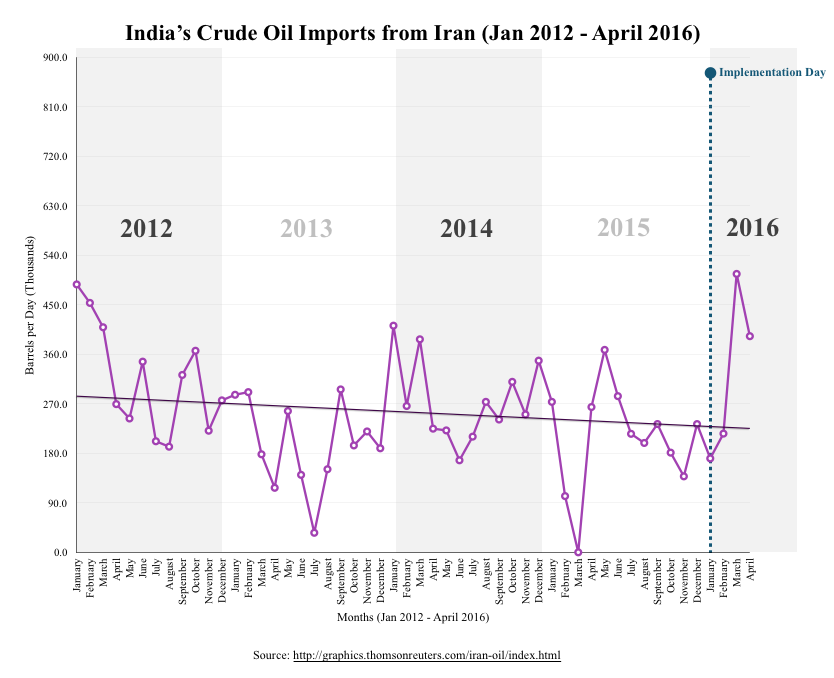
When U.S. and European nuclear-related sanctions against Iran took effect in 2011, India was compelled to reduce its crude oil imports from Iran and to diversify its sources of supply.[1] As a result, the country’s crude oil imports from Iran dropped by 1.33% and 37.81% in 2012 and 2013, respectively.
Much has been made, particularly by Israelis, of the expanding horizons for collaboration between the Jewish state and Arab Gulf states. Israeli ministers and business people lose no opportunity to tout Israel’s interest in expanding ties of all sorts in a region viewed as a valuable market for Israeli industry and an intelligence gold mine.
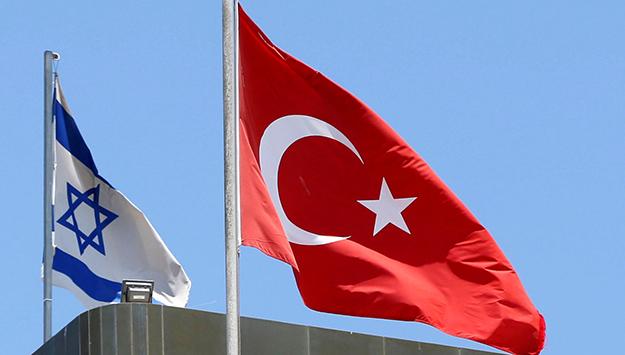
Monday Briefing: After Turkey's Failed Coup, How Far Will the Crackdown Go?
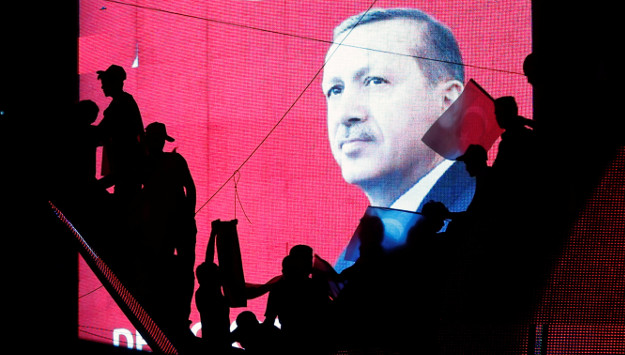
In this week’s Monday Briefing, MEI expert W. Robert Pearson provides analysis on the failed coup in Turkey and the impending crackdown on opposition. Marvin Weinbaum considers whether the unpopularity of Pakistan’s government could put it at risk of a military coup of its own. And Charles Lister looks at how ISIS is adapting in the face of territorial losses in Iraq and Syria.
Monday Briefing: Chilcot Report, French FM in Lebanon, Iran Economy
In this week’s Monday Briefing, MEI experts Daniel Serwer, Alex Vatanka, and Paul Salem provide analysis on recent and upcoming events including the recent Chilcot Report, European trade delegations visit to Iran, and France’s push to end the Lebanon stalemate.
Weekly Briefing: Baghdad Bombing, NATO Summit, Israel’s Africa Outreach, and Saudi Embassy Trial in Iran
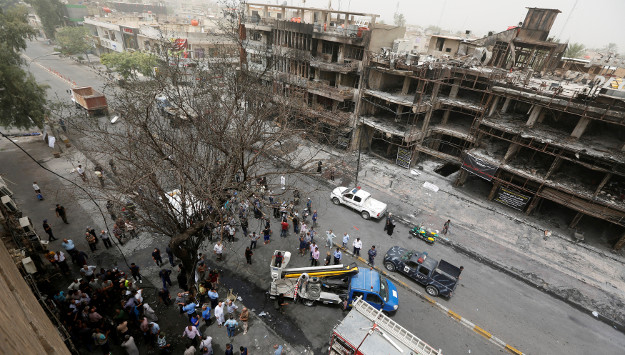
In this week’s briefing, MEI experts Hassan Mneimneh, Daniel Serwer, Paul Scham, and Alex Vatanka provide analysis on recent and upcoming events including the ISIS bombing in Baghdad, this week’s NATO summit in Warsaw, Israel’s outreach to Africa, and the trial in Iran over the ransacking of the Saudi embassy.
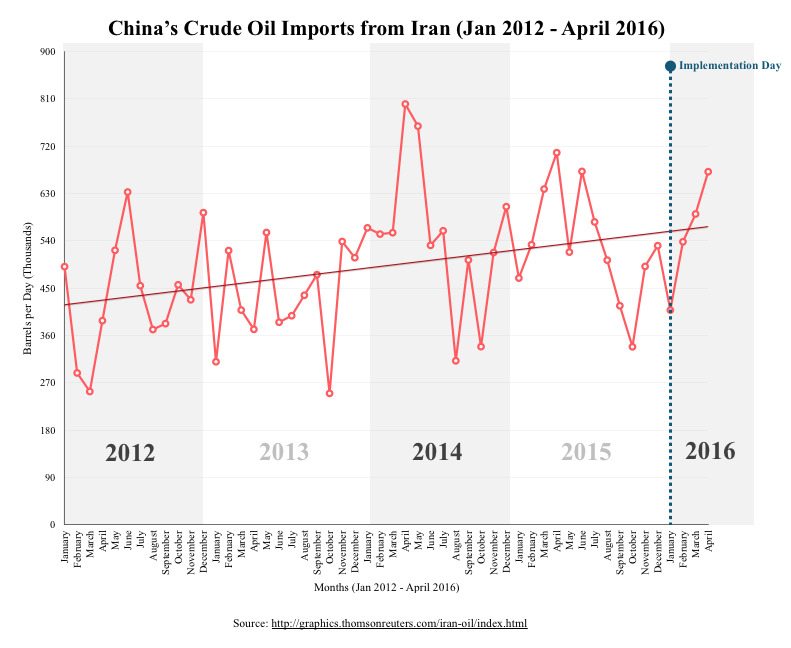
In 2011, China purchased 550,000 b/d, or 11% of its total crude oil imports, from Iran. However, the next year, China’s crude oil imports from Iran plummeted by 20% due to the imposition of nuclear-related sanctions on Iran by the U.S. and European countries. In 2012 and 2013 China’s purchases from Iran fell to just 8% of its total crude oil imports. Progress in the negotiations between Iran and the P-5+1 countries at the end of 2013 permitted China to restore crude imports from Iran to pre-sanction levels.
The oldest peer-reviewed publication dedicated to the study of the modern Middle East, MEI’s flagship journal covers politics, society, and culture in the region.