The Americans Are Gone. Will Iraq’s Militias Disarm?
On September 30, the US completed its military withdrawal from Iraq, ending a 12-year-long mission to combat ISIS that began in 2014. The date was also meant to be the deadline for disarming the largely Iranian-backed militias known as the Popular Mobilization Forces (PMF), but Prime Minister Ali al-Zaidi has now pushed that cutoff back to June 30, 2027. MEI Distinguished Diplomatic Fellow Amb. (ret.) Robert S. Ford joins hosts Alistair Taylor and Matthew Czekaj to discuss what the US military withdrawal means for Iraqi security and the nature of the bilateral relationship going forward. They also speak about what it will take for Baghdad to bring the PMF militias to heel, and how Iraq may navigate the post-Iran war era.
Jordan’s Economy Weathers Iran War’s Shocks and Finds New Opportunities
In the summer of 2003, King Abdullah II told Bloomberg Jordan sits “between Iraq and a hard place,” a play on words designed to describe the kingdom’s challenging environment to an American audience amid the US-led Iraq war to the east and the lingering Palestinian-Israeli conflict to the west. Jordan is grappling with a much “harder place” today.
Proponents of the war with Iran have taken recent increases in crude-oil flows through the Strait of Hormuz as proof that the US strategy is finally working. President Trump is so confident in this that he recently rejected a seven-day plan, set forward by Iran’s foreign ministry, to end the war and open the strait. The United States is “winning tremendously,” Trump boasted.
Gulf Governments Offer Financing for U.S. Strike on Syria
Like pieces fitting together in a jigsaw puzzle, Arab governments – presumably from the oil-rich Gulf Cooperation Council – offered to finance a U.S. military strike on Syria, according to comments made by Secretary of State John Kerry during testimony September 4 with the House Foreign Affairs Committee. In an exchange with Representative Ileana Ros-Lehtinen (R-FL) on the potential cost of U.S. military action in Syria, Kerry said,
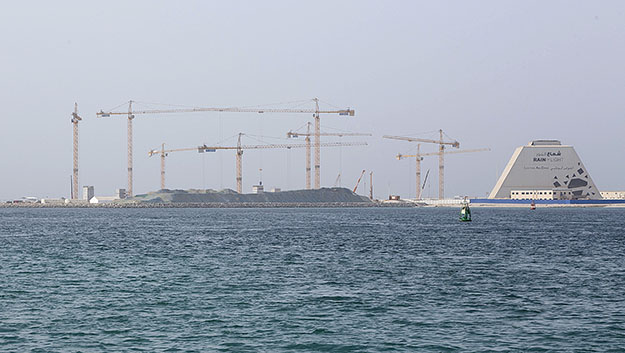
“Open Doors; Open Minds”—the tagline of the Sheikh Mohammed Center for Cultural Understanding (SMCCU), a non-profit organization advocating awareness and understanding among the various cultures that live in Dubai—epitomizes Dubai’s emergence as an international trade and transit hub as well as a place of cultural symbiosis that hosts diverse nationalities from almost all corners of the globe.
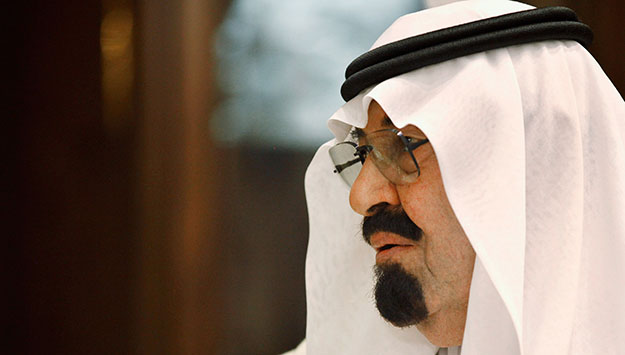
When King Abdullah of Saudi Arabia and his foreign minister, Prince Saud al-Faisal, issued unequivocal pledges of support for Egypt’s military government and its crackdown on the Muslim Brotherhood, their move was widely depicted in the news media as a logical extension of the kingdom’s opposition to revolutionary movements in the Arab world. This simplistic view overlooks the fact that Saudi Arabia has responded differently to different uprisings—it supports the rebels in Syria, helped to crush them in Bahrain—and that aligning itself with Egypt’s new rulers could be a risky strategy.
Art Dubai, Abu Dhabi Art, and the Sharjah Biennale: The Emergence of a Global Art Hub
While visiting Dubai, Sharjah, and Abu Dhabi frequently over the past 20 years, I couldn’t fail to notice that the three cities have increasingly, inexorably become a metropolitan area, ever merging as they build and develop in each other’s direction.
The UAE’s Strategic Trade Partnership with Asia: A Focus on Dubai
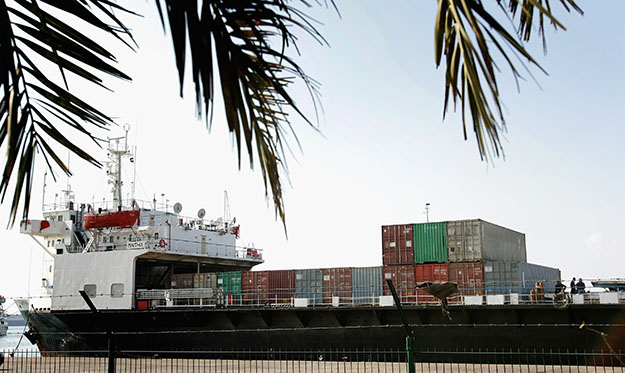
Over the past several decades, the United Arab Emirates (UAE) has been transformed into one of the world’s most robust economies. The key to the UAE’s success has been economic diversification; indeed, oil now accounts for only one-third of the country’s GDP. According to UAE Ministry of Foreign Trade Reports, the value of non-oil exports increased thirtyfold during the period 1981-2009. Dubai accounted for approximately 82 percent of non-oil exports in the UAE in 2010, while Abu Dhabi accounted for 14 percent. In particular, by setting up over two dozen free zones as platforms for nearly all industry sectors, the UAE has become far less dependent on oil.
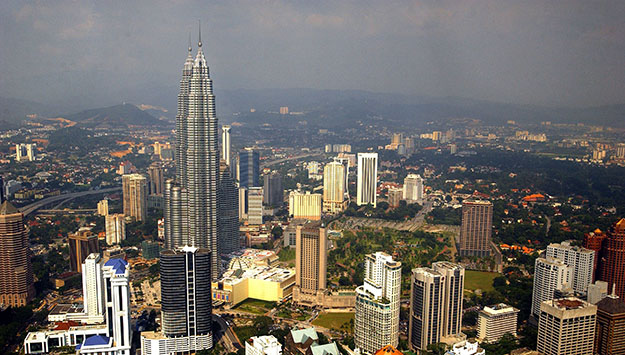
The Iranian diaspora in Malaysia is a diverse and vibrant community of educators, students, artists, and entrepreneurs. The following essays provide snapshots of the historical and cultural connections between Iran and Malaysia, as well as the personal and professional experiences and creative output of some of the members of this community.
Since the 1970s oil boom, the Gulf region has been one of the principal destinations for workers from South Asia, with the result that today Indians constitute a large percentage of the non-nationals living in the region. Indeed, at five million out of an estimated 15 million people, the Indian community forms the largest expatriate group in each of the Gulf countries. Most Indian immigrants are from the south Indian state of Kerala, while many of the rest originate from Tamil Nadu, Punjab, Uttar Pradesh, and Bihar.
Iranians in Malaysia: Artist Asghar Yaghoubi and His "Journey Within"
Artist Asghar Yaghoubi, who was born in Shiraz, Iran, moved to Malaysia in 2008. An accomplished painter and sculptor, he also teaches art at the Cube Gallery, of which he is the founder and director. The gallery is the first and only art gallery in Southeast Asia owned by an Iranian.
Iranians in Malaysia: Batik Artist Pegah Jahangiri
Artist Pegah Jahangiri hails from Tehran, but is currently a doctoral student in visual arts at the University of Malaya, Malaysia. She recently spoke to MEI about her work with batik, strikingly dyed cloth found all over the world, but particularly popular and refined in Southeast Asia.
The Iraqi Factor in the Syrian Crisis: Catalyst or Inhibitor?
Iraqis who cast their votes in postponed local elections in Anbar and Nineveh on 20 June had a lot on their plates. Beyond issues relating to the provision of services locally, the last weeks before the elections saw massive protests against the central government in Baghdad. The many angry slogans on display included calls for greater autonomy for the Sunni-majority areas of Iraq as well as expressions of solidarity with the mainly Sunni Syrian opposition movement.
When the young Shaykh Tamim bin Hamad al-Thani became ruler of Qatar last month after his father stepped aside in a seamless transition, one of his first official acts was to seal the generational shift by appointing a new prime minister.
The Iranian Diaspora in Malaysia: Emergent Pluralism
The Iranian diaspora in Malaysia is incredibly diverse. Supporters of the Green Movement, students, individuals who fast and pray and those who do not know the direction of the qibla, clerics who promote secularism and those who promote the authority of the vilayat-i faqih, Iranian Kurds, Turks, and Arabs, journalists, artists, and environmentalists: all these—and more—constitute the community of Iranians who have fled or quietly moved to Malaysia.
The oldest peer-reviewed publication dedicated to the study of the modern Middle East, MEI’s flagship journal covers politics, society, and culture in the region.