The Americans Are Gone. Will Iraq’s Militias Disarm?
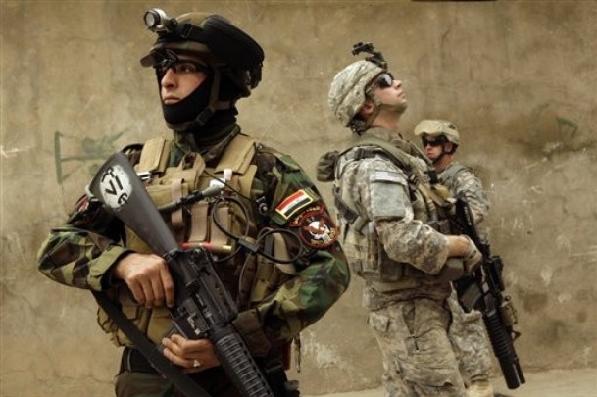
On September 30, the US completed its military withdrawal from Iraq, ending a 12-year-long mission to combat ISIS that began in 2014. The date was also meant to be the deadline for disarming the largely Iranian-backed militias known as the Popular Mobilization Forces (PMF), but Prime Minister Ali al-Zaidi has now pushed that cutoff back to June 30, 2027. MEI Distinguished Diplomatic Fellow Amb. (ret.) Robert S. Ford joins hosts Alistair Taylor and Matthew Czekaj to discuss what the US military withdrawal means for Iraqi security and the nature of the bilateral relationship going forward. They also speak about what it will take for Baghdad to bring the PMF militias to heel, and how Iraq may navigate the post-Iran war era.
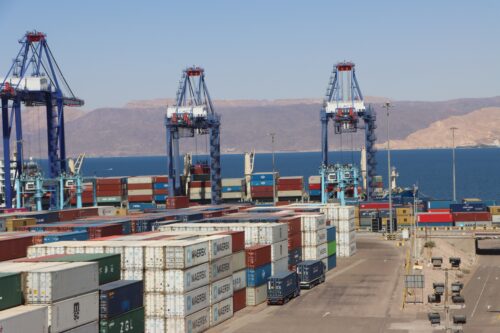
Jordan’s Economy Weathers Iran War’s Shocks and Finds New Opportunities
In the summer of 2003, King Abdullah II told Bloomberg Jordan sits “between Iraq and a hard place,” a play on words designed to describe the kingdom’s challenging environment to an American audience amid the US-led Iraq war to the east and the lingering Palestinian-Israeli conflict to the west. Jordan is grappling with a much “harder place” today.
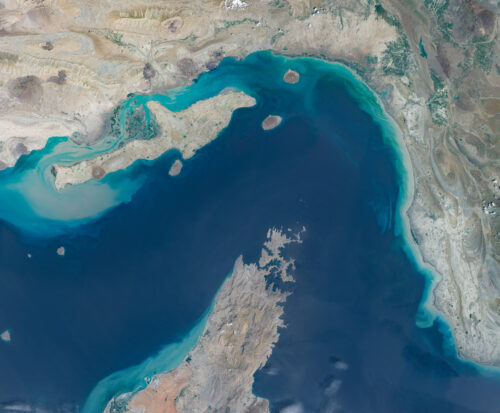
Proponents of the war with Iran have taken recent increases in crude-oil flows through the Strait of Hormuz as proof that the US strategy is finally working. President Trump is so confident in this that he recently rejected a seven-day plan, set forward by Iran’s foreign ministry, to end the war and open the strait. The United States is “winning tremendously,” Trump boasted.
Mark N. Katz, examines the impact of the current and future US withdrawals from Iraq and Afghanistan on Islamic radicals. Katz argues that the US withdrawals from both countries will lead radicals to conclude they have defeated the US in the "War on Terror" and that US regional strength is on the decline. This, he argues, will spur Islamic radicals to seek further gains elsewhere. But regardless of the boost to their cause that the withdrawals from Iraq and Afghanistan may provide, they will likely meet three key obstacles in their pursuit of increased power and influence.
Iran has two independent naval forces: the Islamic Republic of Iran Navy (IRIN), whose existence predates Iran’s 1979 Revolution, and the Islamic Revolutionary Guard Corps Navy (IRGCN), which evolved separately in midst of the Iran-Iraq war (1985).
One of the most enduring epithets for Hamas, right up there with “terrorist,” is “proxy.” If you Google “Hamas Iran proxy,” you get 1,750,000 hits. The idea that the relationship between Sunni Hamas, the Gaza affiliate of the Muslim Brotherhood, and Shia Iran was merely a marriage of convenience and not a true love match is rejected by those who forget that most enduring maxim of Middle East politics: “The enemy of my enemy is my friend.” And implicit in that maxim are two more words: “for now.”
To truly appreciate the political standing of Iran’s regular armed forces in today’s Islamic Republic, the key is to take into account the impact of the ongoing and unparalleled internal feud in the top ranks of the regime. The feud, pitching the factions of Supreme Leader Ayatollah ‘Ali Khamenei and President Mahmud Ahmadinejad against one another in a bitter contest for power, has turned the Artesh into an inescapable entity that neither faction can afford to ignore.
Crisis in the Yemeni Economy: A Troubled Transition to Post-Hydrocarbon Growth
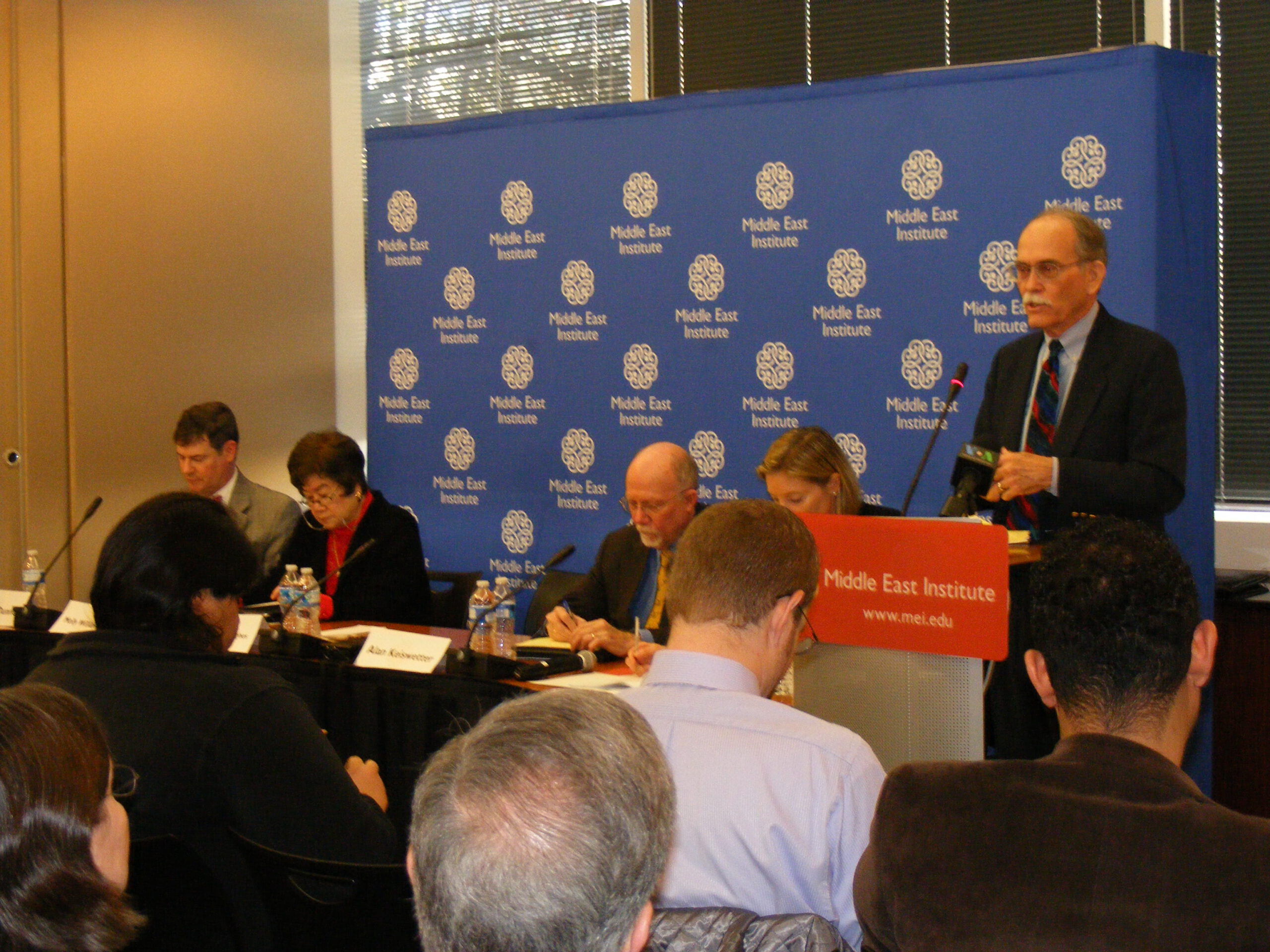
The Middle East Institute is proud to host MEI scholar Dr. Charles Schmitz for a discussion of his recent MEI policy paper entitled “Crisis in the Yemeni Economy: A Troubled Transition to Post-Hydrocarbon Growth.” Yemen has embarked on the arduous road to political reconciliation, but the economy remains a major challenge that contributes to all of Yemen’s crises. Professor Schmitz will examine the economic issues facing the new government and the possible outlines of the economy in the post-hydrocarbon era.
This Opinion piece first appeared in Frontline’s Tehran Bureau on January 19, 2012.
After months of frosty relations, Iran and Turkey are talking again. The ostensible reason for Turkish Foreign Minister Ahmet Davutoglu’s visit to Tehran two weeks ago was to try to jump start stalled nuclear talks with the so-called P5+1 group of nations. Davutoglu conveyed to Iranian chief nuclear negotiator Saeed Jalili the European Union’s invitation to resume the talks in Turkey that were suspended a year ago for lack of progress.
Saudi Arabia on the Edge: The Uncertain Future of an American Ally
The Middle East Institute is proud to host MEI scholar Thomas W. Lippman for a discussion of his new book, Saudi Arabia on the Edge: The Uncertain Future of an American Ally. Of all the countries that are vital to the strategic and economic interests of the United States, Saudi Arabia is the least understood by the American people.
More than three decades after the Revolution of 1979, the Islamic Republic of Iran Army [Artesh-e Jomhouri-ye Eslami-ye Iran] and the Islamic Revolutionary Guard Corps [Sepah-e Pasdaran-e Enqelab-e Eslami] (IRGC), remain entangled in a state of fierce rivalry.
The oldest peer-reviewed publication dedicated to the study of the modern Middle East, MEI’s flagship journal covers politics, society, and culture in the region.