This text has been translated by AI and may contain errors.
Skip to Content

Iran

A Strategic Conundrum: Pakistan’s Transit Corridor to Iran as Lifeline or Liability
  • Analysis
  • A Strategic Conundrum: Pakistan’s Transit Corridor to Iran as Lifeline or Liability

    The US-Iran standoff over the Strait of Hormuz — disruptive to global trade and energy flows, and devastating for debt-burdened economies — has handed Pakistan an unexpected geoeconomic opportunity, one that may persist even if the framework agreement announced on June 14 results in a lasting peace and permanent reopening of the strait. But seizing it will have interlocking consequences for Islamabad’s ties with Tehran, Washington, and the Gulf states.

    June 17, 2026

    Iran: What’s Next for US Policy as the Region Seeks to Move On
  • Analysis
  • Iran: What’s Next for US Policy as the Region Seeks to Move On

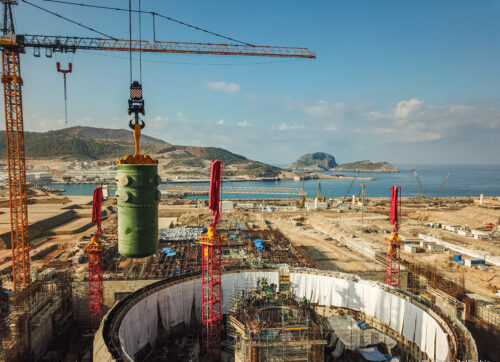
    As the US and Iran move to reopen the Strait of Hormuz, the war’s real lesson lies in how Gulf states rapidly adapted — building pipelines, ports, and rail to bypass the chokepoint. Washington should seize this momentum, pursuing a “long game” of regional connectivity that serves shared security and economic interests.

    Filter by
    2744 Results
    The Kurds of Iran
    Middle East Institute
  • Podcast
  • The Kurds of Iran

    Audio recording from The Kurds of Iran

    February 16, 2012

    The Artesh Navy: Iran's Strategic Force
    Middle East Institute
  • Analysis
  • The Artesh Navy: Iran's Strategic Force

    Iran has two independent naval forces: the Islamic Republic of Iran Navy (IRIN), whose existence predates Iran’s 1979 Revolution, and the Islamic Revolutionary Guard Corps Navy (IRGCN), which evolved separately in midst of the Iran-Iraq war (1985).

    January 31, 2012

    Hamas Out in the Cold?
    Middle East Institute
  • Analysis
  • Hamas Out in the Cold?

    One of the most enduring epithets for Hamas, right up there with “terrorist,” is “proxy.” If you Google “Hamas Iran proxy,” you get 1,750,000 hits. The idea that the relationship between Sunni Hamas, the Gaza affiliate of the Muslim Brotherhood, and Shia Iran was merely a marriage of convenience and not a true love match is rejected by those who forget that most enduring maxim of Middle East politics: “The enemy of my enemy is my friend.” And implicit in that maxim are two more words: “for now.”

    January 30, 2012

    Ayatollah Khamenei's Advances Toward the Artesh
    Middle East Institute
  • Analysis
  • Ayatollah Khamenei's Advances Toward the Artesh

    To truly appreciate the political standing of Iran’s regular armed forces in today’s Islamic Republic, the key is to take into account the impact of the ongoing and unparalleled internal feud in the top ranks of the regime. The feud, pitching the factions of Supreme Leader Ayatollah ‘Ali Khamenei and President Mahmud Ahmadinejad against one another in a bitter contest for power, has turned the Artesh into an inescapable entity that neither faction can afford to ignore.

    Turkey and Iran Find Common Ground in Iraq
  • Analysis
  • Turkey and Iran Find Common Ground in Iraq

    This Opinion piece first appeared in Frontline’s Tehran Bureau on January 19, 2012.

    After months of frosty relations, Iran and Turkey are talking again. The ostensible reason for Turkish Foreign Minister Ahmet Davutoglu’s visit to Tehran two weeks ago was to try to jump start stalled nuclear talks with the so-called P5+1 group of nations. Davutoglu conveyed to Iranian chief nuclear negotiator Saeed Jalili the European Union’s invitation to resume the talks in Turkey that were suspended a year ago for lack of progress.

    Eternal Rivals? The Artesh and the IRGC
    Middle East Institute
  • Analysis
  • Eternal Rivals? The Artesh and the IRGC

    More than three decades after the Revolution of 1979, the Islamic Republic of Iran Army [Artesh-e Jomhouri-ye Eslami-ye Iran] and the Islamic Revolutionary Guard Corps [Sepah-e Pasdaran-e Enqelab-e Eslami] (IRGC), remain entangled in a state of fierce rivalry.

    November 15, 2011

    The Iranian Army: Tasks and Capabilities
    Middle East Institute
  • Analysis
  • The Iranian Army: Tasks and Capabilities

    Much attention has been given to the IRGC’s asymmetric defense capabilities, its role in Iraq’s post-2003 insurgency, and its alleged hold over the Strait of Hormuz, but there is little scrutiny in open source literature on the significance of the Iranian Army (Artesh) to Iran’s national security.

    November 15, 2011

    The Artesh and Revolution
    Middle East Institute
  • Analysis
  • The Artesh and Revolution

    Since its inception in 1979, the Islamic Republic of Iran (IRI) has duplicated almost all state institutions. It retained the institutions that existed under the old regime while creating new Islamic agencies to perform the same tasks. The Iranian armed forces did not escape this process. Under the monarchy, the armed forces were called the Artesh Shahanshahi or Imperial Army. Although called the “Army,” or Artesh, the force consisted of the three main services (army, navy, and air force) plus the Imperial Guard Divisions (Gard-e Javidan) and the Army Aviation Command (Hawa Nirouz).

    November 15, 2011

    Living with the Artesh's Green Sympathies
    Middle East Institute
  • Analysis
  • Living with the Artesh's Green Sympathies

    In an official gathering in December 2010, Major General Attollah Salehi, Commander-in-Chief of the Iranian Army said that during his visits to Army barracks, he would see the pictures of the leaders of the “sedition” (The Islamic Republic’s present hard-line leadership refers to opposition leaders and 2009 presidential candidates Mir Hossein Moussavi and Mehdi Karrubi as leaders of sedition) hanging on the walls.

    November 15, 2011

    Read the Middle East Journal

    The oldest peer-reviewed publication dedicated to the study of the modern Middle East, MEI’s flagship journal covers politics, society, and culture in the region.