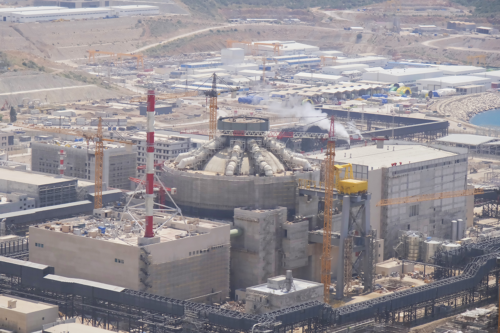
As a result of the Iran war, Turkish thinking about nuclear weapons appears to be shifting. Iran’s emergent ability to threaten regional states (and possible determination to acquire a nuclear weapon itself), growing concern about Israeli aggressiveness, doubts about US security guarantees, and greater Saudi nuclear autonomy are all pushing Ankara to consider a future nuclear option.
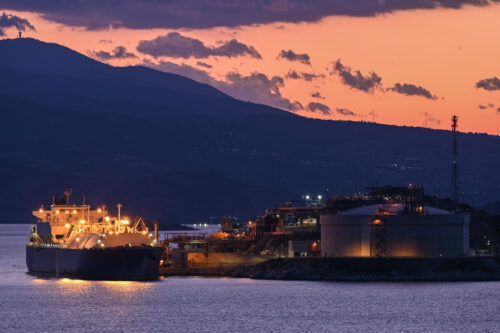
In less than two decades, a string of offshore discoveries has turned the Eastern Mediterranean into a significant gas-producing region, making Israel an exporter, twice lifting Egypt into the ranks of liquefied natural gas (LNG) exporters, and giving Cyprus finds it has yet to bring to market. This backgrounder explores the potential and challenges of exploiting and managing LNG resources in the region.
The Mecca Joint Défense Agreement: A New Geometry of Middle Eastern Power?
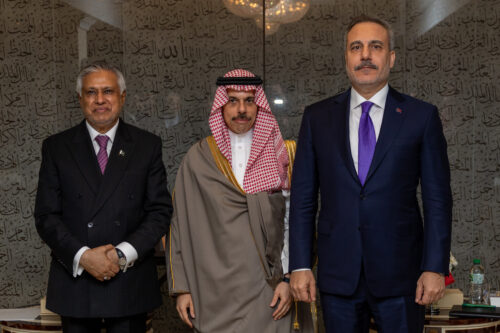
On August 7, 2026, Saudi Arabia, Turkey, and Pakistan signed the Mecca Joint Défense Agreement, a collective-defense pact widely compared to NATO’s Article 5. This essay argues that the comparison is misleading. Mecca borrows NATO’s language of solidarity without yet possessing NATO’s institutional machinery, and the Houthi offensive against Saudi Arabia in September 2026 provided an early and revealing test of what the agreement actually means in practice. Neither Pakistan nor Turkey automatically entered the fight on Saudi Arabia’s behalf, and Washington, despite an initial reluctance to strike directly, remained indispensable through intelligence support and a major proposed F-35 sale. Drawing on realist alliance theory — Hans Morgenthau, Kenneth Waltz, Stephen Walt, Glenn Snyder, and Steven David — and on the precedent of the Central Treaty Organization (CENTO), the essay contends that the Middle East is not dividing into rival blocs but moving from hierarchy toward a looser, overlapping geometry of hedged partnerships, in which American exclusivity is eroding considerably faster than American primacy.
Women in Turkey: New Opportunities, New Challenges
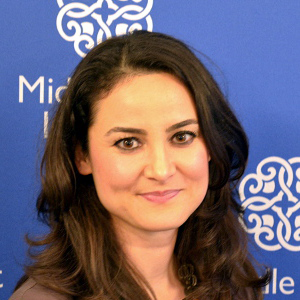
The Middle East Institute is proud to host three women changemakers in Turkey for a discussion about women in business and women’s rights. In recent years, women in Turkey have made inroads in fields where women have not traditionally been present. They are now successful business owners, managers, entrepreneurs, politicians, engineers, and academics. Their voices have become part of the public debate as they increasingly participate in all aspects of public life.
This article was originally published in the December, 2012 issue of Current History
Assertions and opinions in this publication are solely those of the above-mentioned author(s) and do not necessarily reflect the views of the Middle East Institute, which expressly does not take positions on Middle East policy
Religious & Secular Elite Cooperation: Democratization in Turkey & the Middle East
Fri, 11/9/2012 12:30 pm to 2:00 pmThe Middle East Institute’s Center for Turkish Studies and the Institute of Turkish Studies at Georgetown University are proud to present a discussion with Professor Murat Somer of Koc University in Istanbul. Somer will examine how countries with semi-democratic or authoritarian centers, such as Turkey or the Arab Spring polities, must rely on cooperation between religious and secular actors to achieve greater democratization.