This summer, brutally hot temperatures, deepening water scarcity, and spiking fertilizer costs have put North Africa’s agricultural sector under intense pressure. Host Alistair Taylor is joined by Mohammed Mahmoud, CEO and founder of the Climate and Water Initiative and lead for Middle East Climate and Water Policy at the United Nations University Institute for Water, Environment, and Health, to unpack the region’s food and water security challenges. Drawing on Mahmoud’s new report card on agricultural sustainability in North Africa, they explore the diverging picture across the region, why some countries have weathered the strain better than others, and what it will take to build a more resilient and secure food system.
After over a decade of division between rival factions in eastern and western Libya, the Trump administration has put forward a plan to unite the two sides through a power-sharing agreement. Hosts Alistair Taylor and Matthew Czekaj are joined by MEI Distinguished Diplomatic Fellow Jonathan M. Winer to unpack the details of this proposal and its potential consequences for the Libyan people. Winer, who served as United States Special Envoy for Libya, offers analysis of the plan’s viability, the response of various actors on the ground, and whether it can stabilize the country and help resolve its deep-seated challenges.
Libya’s Fragile Equilibrium: Succession Risk and Energy Stability
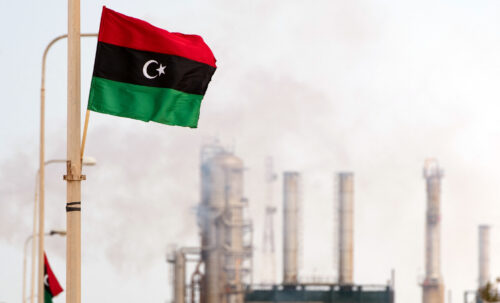
Libya’s stability has taken on renewed strategic importance as the impact of the US and Israeli war with Iran reverberates through global energy markets. Sustaining existing Libyan oil production depends on a governing arrangement capable of keeping ports open, pipelines flowing, and revenues distributed without triggering conflict.
Libya, the ICC, and Securing Post-Conflict Justice
Since questions of post-atrocity accountability began to surface in regard to the “Arab Spring,” there has been interest in the pursuit of international-led justice in countries that have experienced uprisings, such as Bahrain, Libya, Syria, and Yemen. There were calls for the involvement of the International Criminal Court (ICC) in both Libya and Syria. The ICC has become involved only in Libya. However, this involvement has become mired in struggles that expose the challenges of a system that some regard as simply another expression of a profoundly undemocratic international order.
The Lessons of Benghazi: One Year Later, Never More Urgent
The situation in Libya one year after the attack on the U.S. Special Mission in Benghazi on September 11, 2012 is chaotic, dysfunctional and disheartening. It remains not as abjectly horrible as it could be—the General National Congress did this summer finally approve a framework (however imperfect) for electing a constitutional assembly, and UN-backed efforts are under way to create an unofficial dialogue of national reconciliation—but these advances paper over ever-deeper failings, many of which were not inevitable.
Interview with Indian Ambassador (ret.) Ranjit Gupta: Cairo, Egypt — The First Posting (1965-1968)
Even before I left India for Cairo, I had the impression that there was a special relationship between India and Egypt. Indeed, within a few weeks of my arrival in Cairo, I found tangible manifestations that it was indeed so and discovered many more in due course.
Migration Agreements between Italy and North Africa: Domestic Imperatives versus International Norms
The upheavals which spread across North Africa in 2011 changed the political map of the region. With the downfall of longstanding rulers, the European Union has sought to re-launch a policy dialogue informed by an awareness of human rights issues and to support the process of democratic transition in its Mediterranean neighbors.
This Opinion was first published on Reuters.com on October 11, 2012
Assertions and opinions in this policy paper are solely those of the above-mentioned author(s) and do not necessarily reflect the views of the Middle East Institute, which expressly does not take positions on Middle East policy.
After Benghazi: Diplomacy With a State; War Within
This article was first published by The Huffington Post on October 2, 2012
Assertions and opinions in this publication are solely those of the above-mentioned author(s) and do not necessarily reflect the views of the Middle East Institute, which expressly does not take positions on Middle East policy.
Libya, the third largest country in the African continent (1.75 million km²), shares 4,400 km of border with six other countries, four of which are Arab countries. It has a vast coastal area on the Mediterranean (nearly 2,000 km). For such a large country, its population density is very thin — there are barely six million inhabitants.
Slain U.S. Ambassador Thrived On Tough Assignments
This story first appeared on NPR.com on September 12, 2012
Chris Stevens, the U.S. ambassador killed in an attack on the U.S. consulate in Benghazi, Libya, was a very special diplomat. He made a career of going to difficult places and insisting that he witness tumultuous events firsthand.