A Middle East NATO? Regional Security Options After Doha
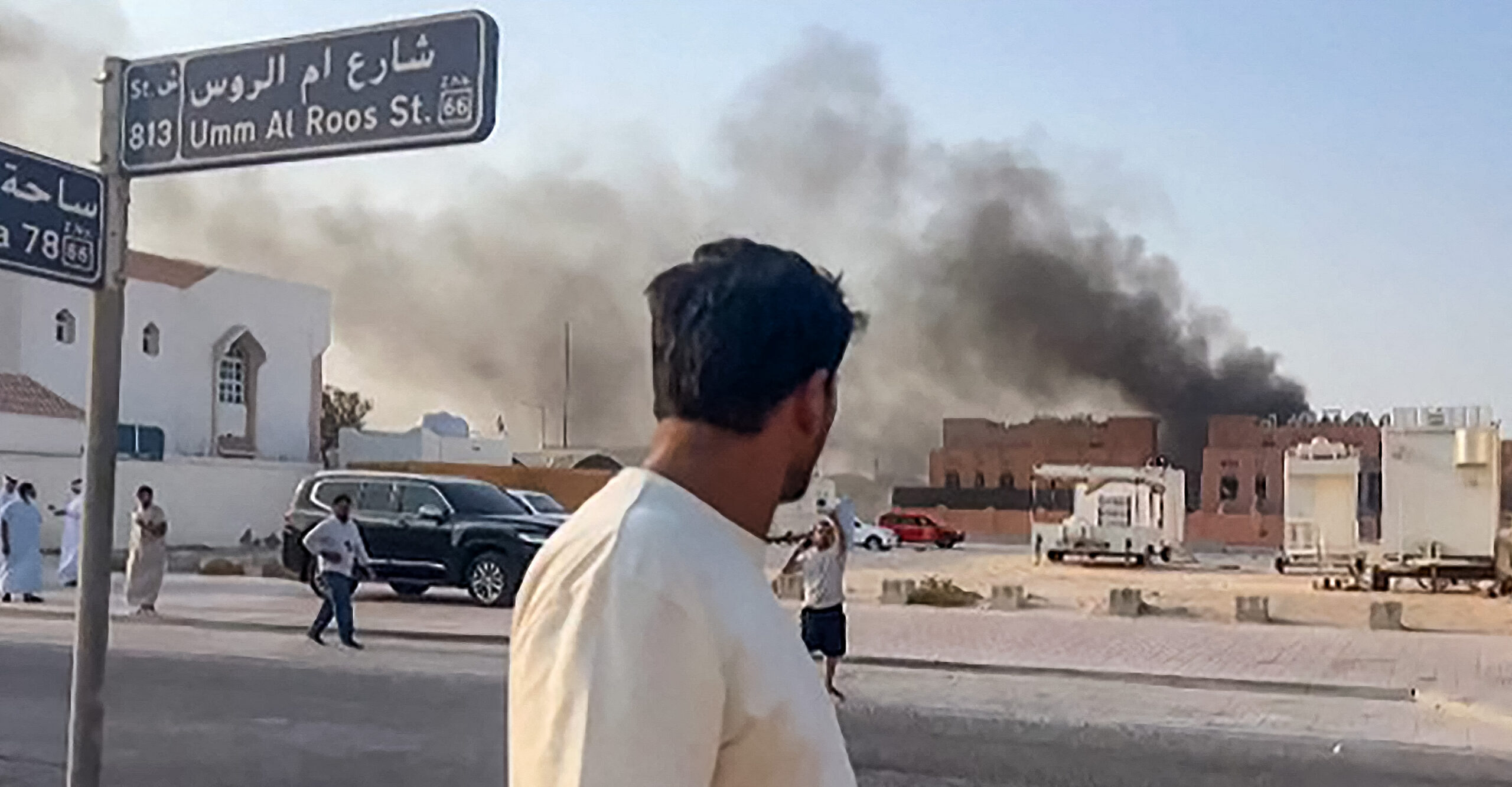
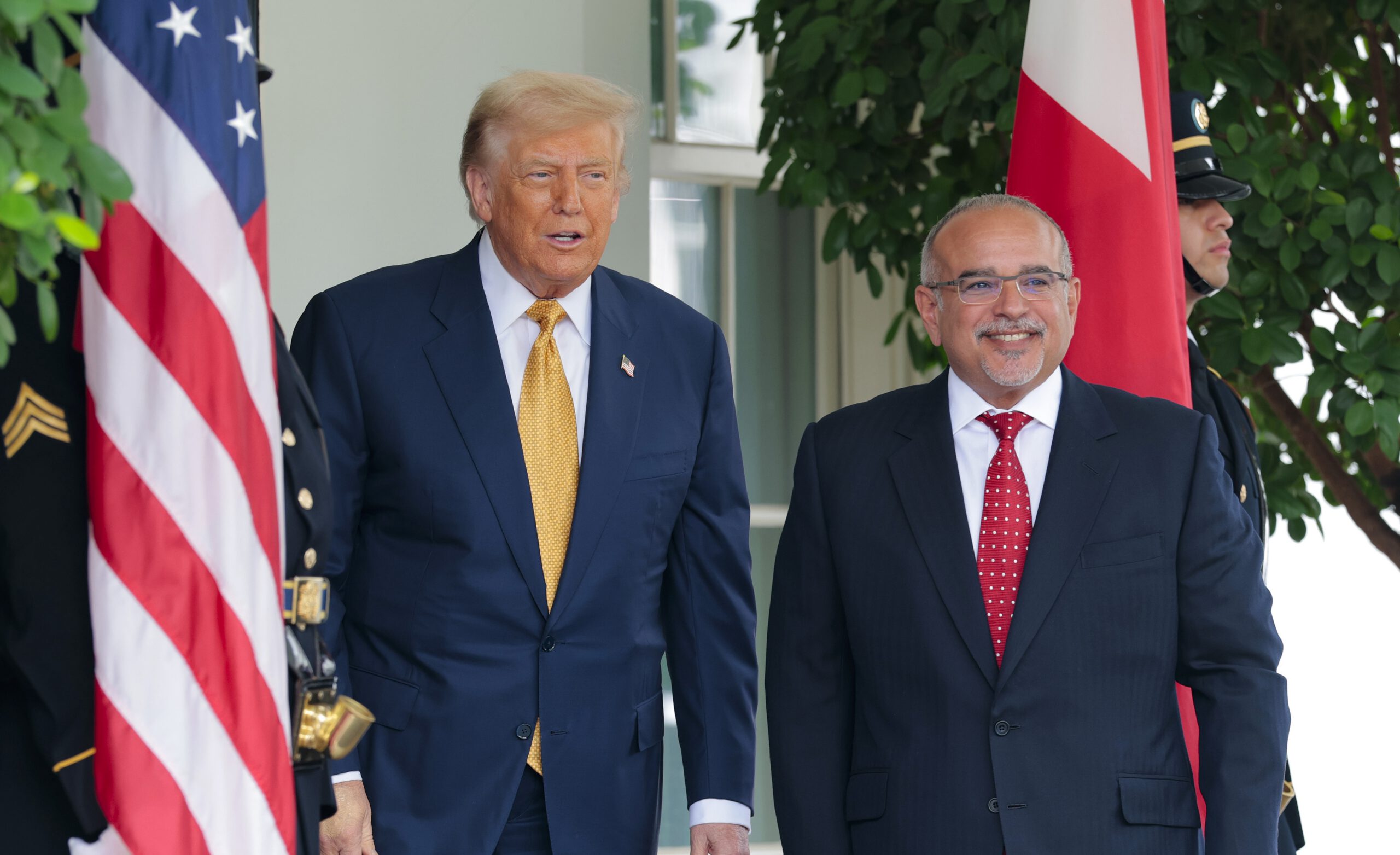
Israel’s September 9 strike on Hamas leaders in Doha rattled Gulf capitals and revived a decades-old debate over whether the region needs a NATO-style defensive alliance. MEI Senior Fellow Jason Campbell joins hosts Alistair Taylor and Matthew Czekaj to unpack why past attempts at collective defense have fallen short, whether this moment is different, and what the crisis means for US security strategy in the Middle East.
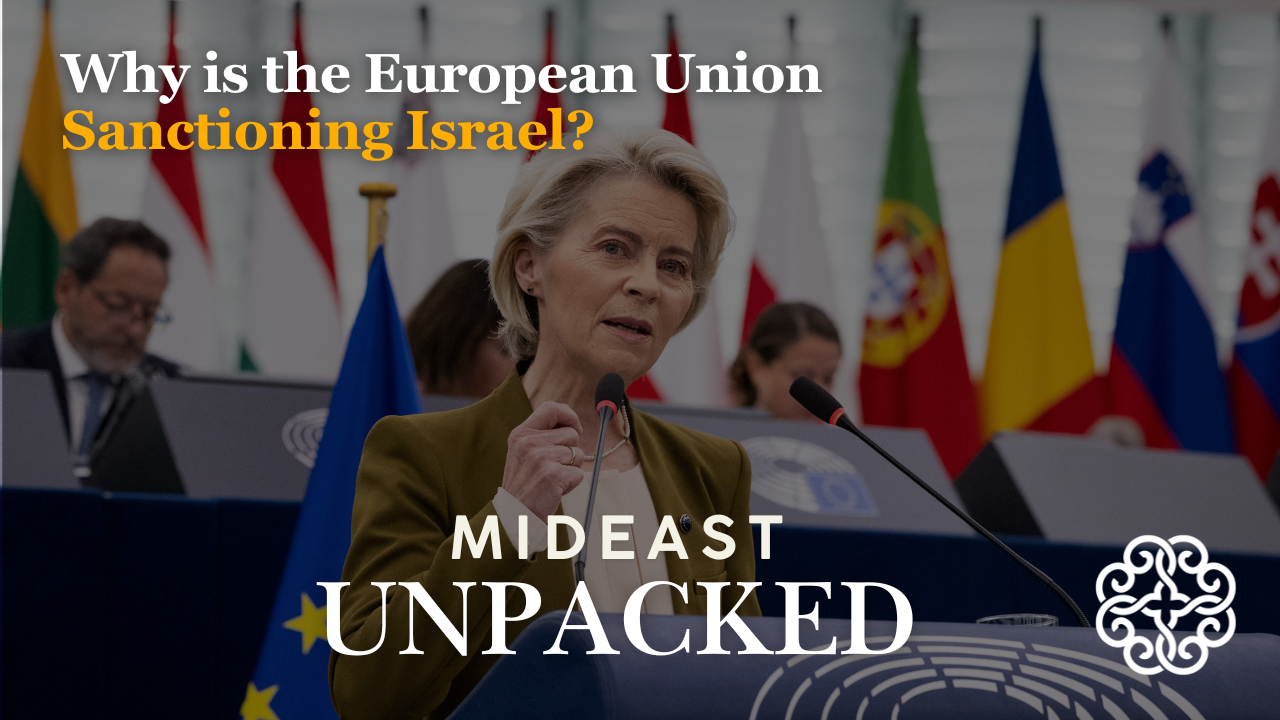
The European Union has announced plans to sanction Israel over the humanitarian crisis in Gaza. If adopted, the move would mark a historic shift in EU-Israel relations. MEI’s Iulia Joja unpacks the proposal’s background, what the sanctions would entail, and their potential impact on the EU’s position in the Middle East.
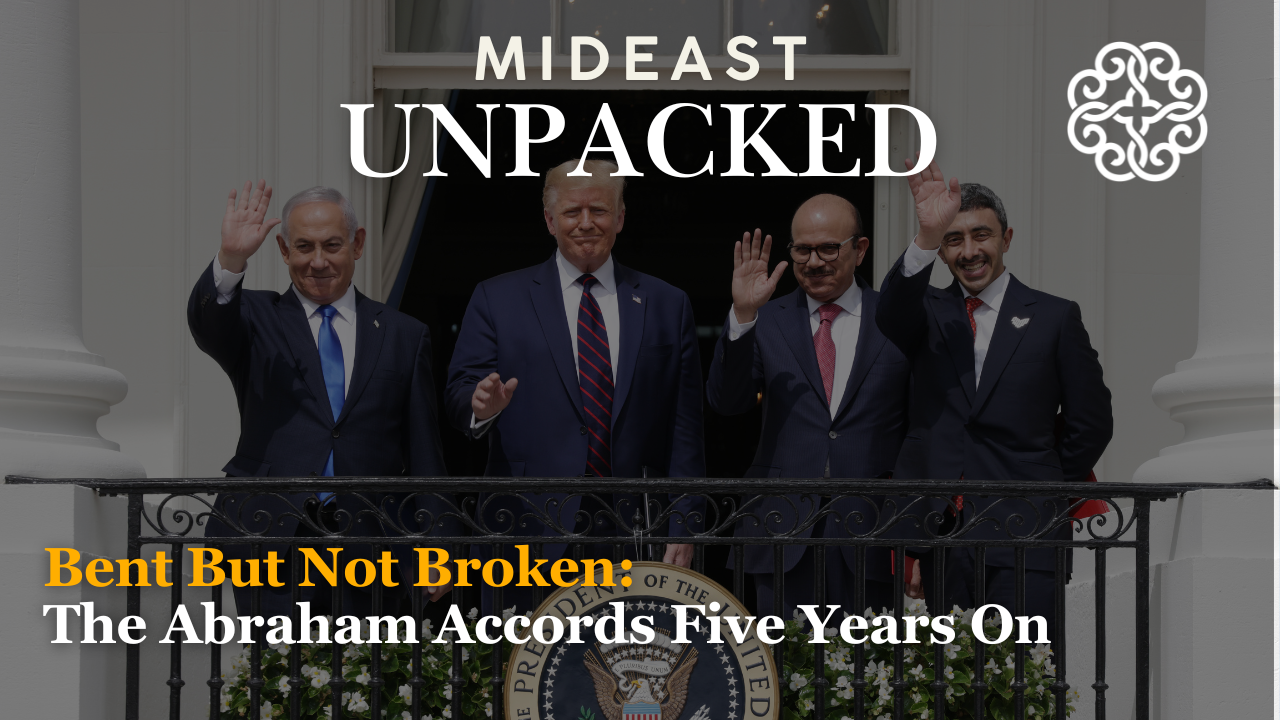
Bent But Not Broken: The Abraham Accords Five Years On
On the fifth anniversary of the Abraham Accords, MEI’s Brian Katulis reflects on their durability and future: “These Abraham Accords will not be broken. They’ll be bent, but I think they’ll stay in place. But they won’t expand in any way until there’s progress on the Palestinian question.” He unpacks the origins of the agreements, their strengths and limitations, and the key challenges that must be addressed for them to grow stronger.
Israel’s Doha strike could further destabilize region, undermine US security partnerships
The reverberations of Israel’s strike on the Hamas negotiating team in Doha yesterday are still rippling across the globe and will continue to for the foreseeable future. Its ramifications are profound and will alter the geopolitical landscape not just in the Middle East but likely on a global scale.
Trump desperate for progress in his sound and fury foreign policy
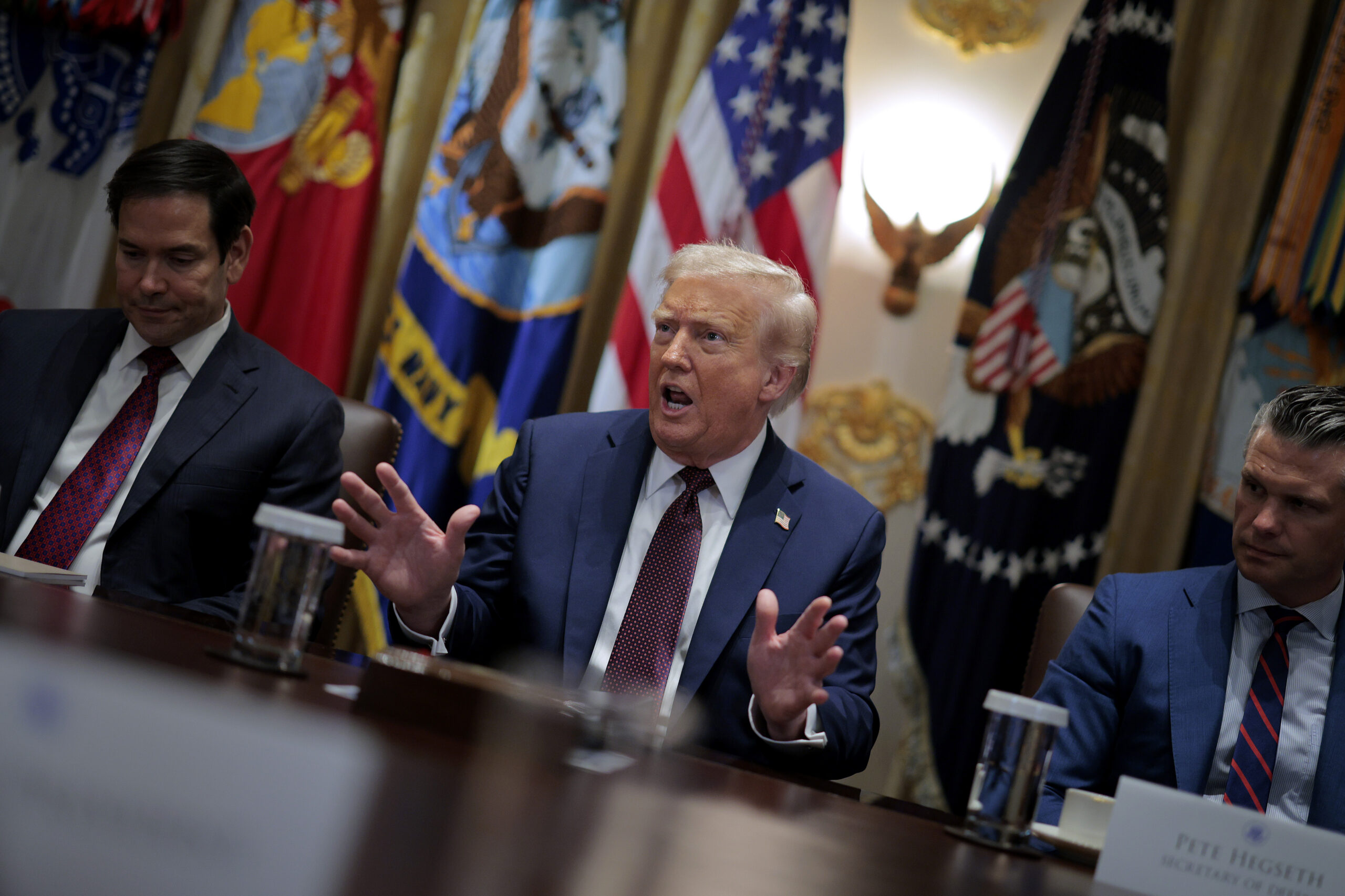
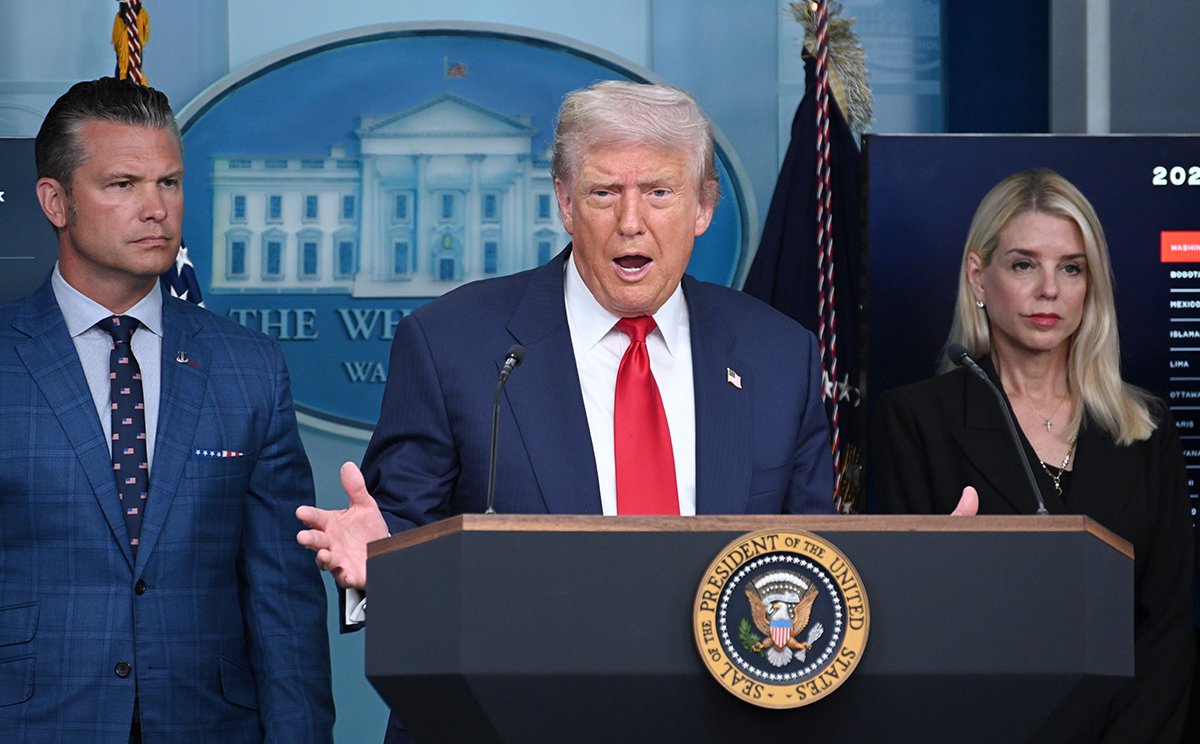
The most striking thing about Donald Trump’s foreign policy at the seven-month mark of his second administration is how it has failed to improve America’s overall strategic position in the world. It is still early days, but the Trump team’s frenetic flurry of actions, coupled with attention-seeking and often incendiary rhetoric, has served to obscure a poor record of scoring significant international wins for America.
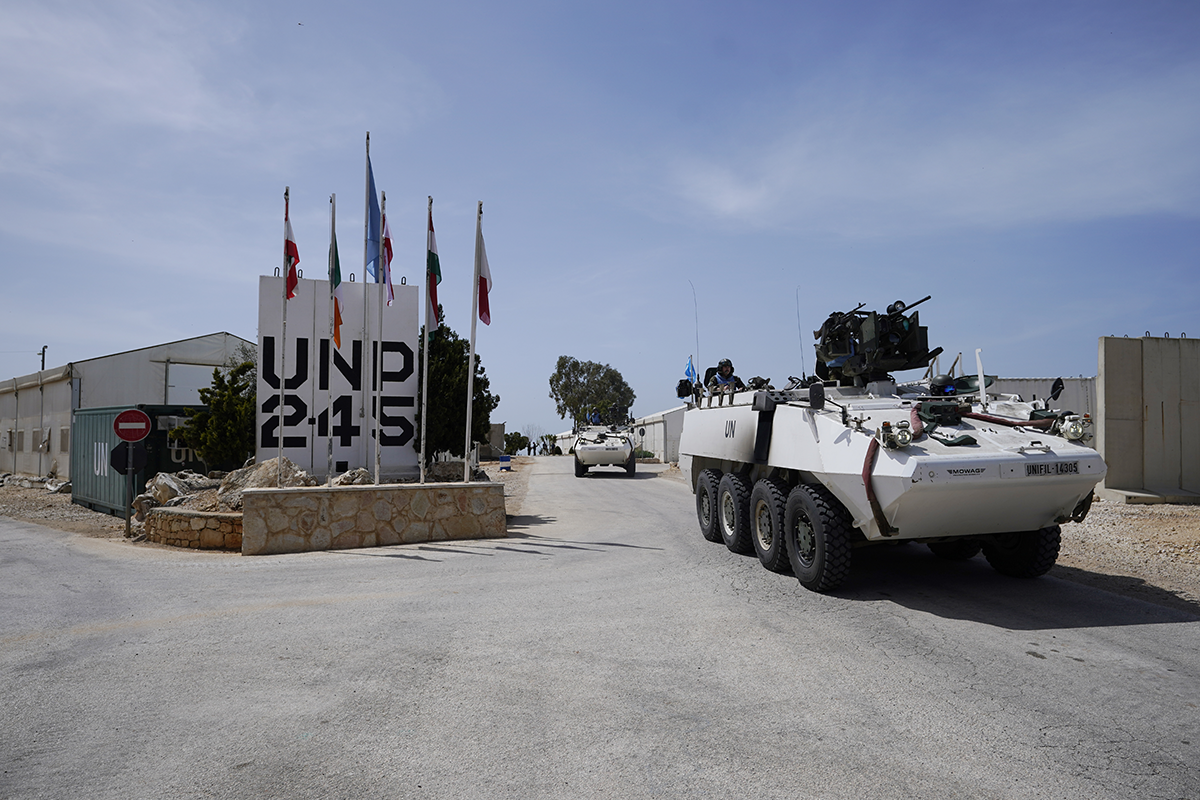
At the end of August, the future of the United Nations Interim Force in Lebanon (UNIFIL), established nearly 50 years ago, goes on trial in New York, where the Security Council will debate the renewal of its mandate. Nearly two decades after its transformation under UN Security Council Resolution 1701, UNIFIL is now part of the problem it was created to solve. Ten thousand blue helmets from almost 50 countries, including major North Atlantic Treaty Organization (NATO) members, failed to stop the latest conflict between Israel and Hizballah, and, if business continues as usual, will fail to prevent the next.
Trump’s unpredictable diplomacy of distraction mostly comes up empty
All eyes this week are on Alaska, where US President Donald Trump will hold a pivotal meeting with Russian President Vladimir Putin to discuss ending the Ukraine war. But the United States remains consumed by several domestic issues, including continued strains over policing, immigration, and checks and balances inside America’s system of government. All of this comes at a time when Trump’s domestic political standing continues to slip lower, including among members of his own party.
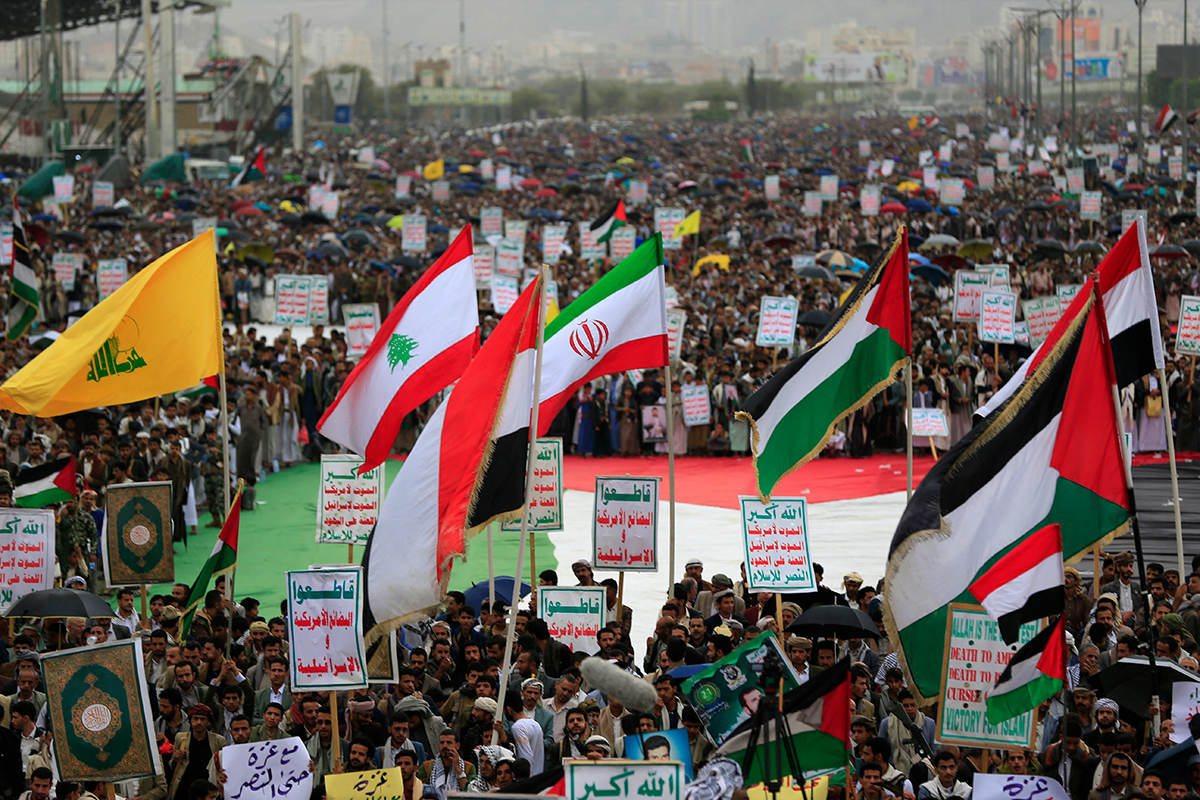
As the Trump administration pushes to expand the Abraham Accords in the Middle East and into the Caucasus and Central Asia, it overlooks a dramatic shift in perception across the Arab and Muslim world. Where once Israel might have been viewed as David battling a Goliath-like Arab world, today the roles appear reversed. Israel, empowered by unchecked military might and unwavering US support, is increasingly seen not just as a regional power but as a US-backed regional hegemon. For Gulf Arab states, this transformation presents a dilemma: Can a Goliath be a partner in peace?
Lebanon and the UNIFIL Mandate: Disarming Hizballah and Reclaiming Sovereignty
With its new government at the half-year mark and the UNIFIL international peacekeeping force’s mandate due for reauthorization at month’s end, Lebanon stands at a pivotal moment. In this episode of Middle East Focus, hosts Alistair Taylor and Matthew Czekaj are joined by MEI Senior Fellow Fadi Nicholas Nassar to evaluate whether the Lebanese state can reclaim its sovereignty, starting with the disarmament of Hizballah and the enforcement of a cease-fire.
Post-Oct. 7 divergent paths: Israel’s military maximalism and Saudi Arabia’s strategic de-escalation
The Hamas attack on Oct. 7, 2023, shattered Israel’s long-standing security paradigm, replacing limited deterrence with an ambitious campaign aimed at dismantling Hamas, confronting Hizballah and other Iranian proxies, and directly targeting Iran’s nuclear program with the support of the United States. In stark contrast, Saudi Arabia has prioritized regional stability and de-escalation, restoring relations with Iran, and focusing on its Vision 2030 economic transformation.
Digital frontlines: What the 12-day war revealed about the evolution of Iran’s cyber strategy
During June’s Israel-Iran war, a quieter but significant battle played out in cyberspace, highlighting how Tehran has refined its use of digital tools to shape the battlespace, control domestic narratives, and project influence abroad. While largely ineffective in operational terms, Iran’s cyber response marked a new phase in its strategic evolution.
Egypt and Gaza: Conflict, Crisis, and the Path to a Ceasefire
With the dire humanitarian crisis in Gaza in the global spotlight, Egypt faces mounting pressure both at home and abroad. In this episode of Middle East Focus, hosts Alistair Taylor and Matthew Czekaj speak with MEI Senior Fellow Mirette Mabrouk about how Cairo is handling the crisis in the neighboring coastal strip. What are the Egyptian government’s main concerns as conditions there continue to deteriorate? How is Egypt responding to domestic outrage and changing international dynamics?
Inflection point or continuing spiral in the Middle East?
After almost two years of fighting in Gaza, and after the decimation of Hizballah, the fall of Bashar al-Assad’s regime in Syria, and the 12-day Israeli-American war on Iran, the Middle East is in new strategic and political territory. Two pathways lie ahead: the first is one in which the gains and changes brought about by war are turned, through intense diplomacy and negotiation, into new international and political arrangements that bring about a period of security and stability in the region; the second is one in which that corner is not turned, and the wars in Gaza, Iran, and potentially Yemen, Syria, and Lebanon, continue indefinitely. The trajectory will depend on the choices of key actors — above all Iran, Israel, and the United States.
Probably few if any Middle East analysts had Israeli airstrikes targeting key government installations of the Syrian state on their summer 2025 bingo cards. And yet that is precisely what happened on Wednesday, as Israeli jets hit Syria’s military headquarters and an area near the presidential palace in Damascus.
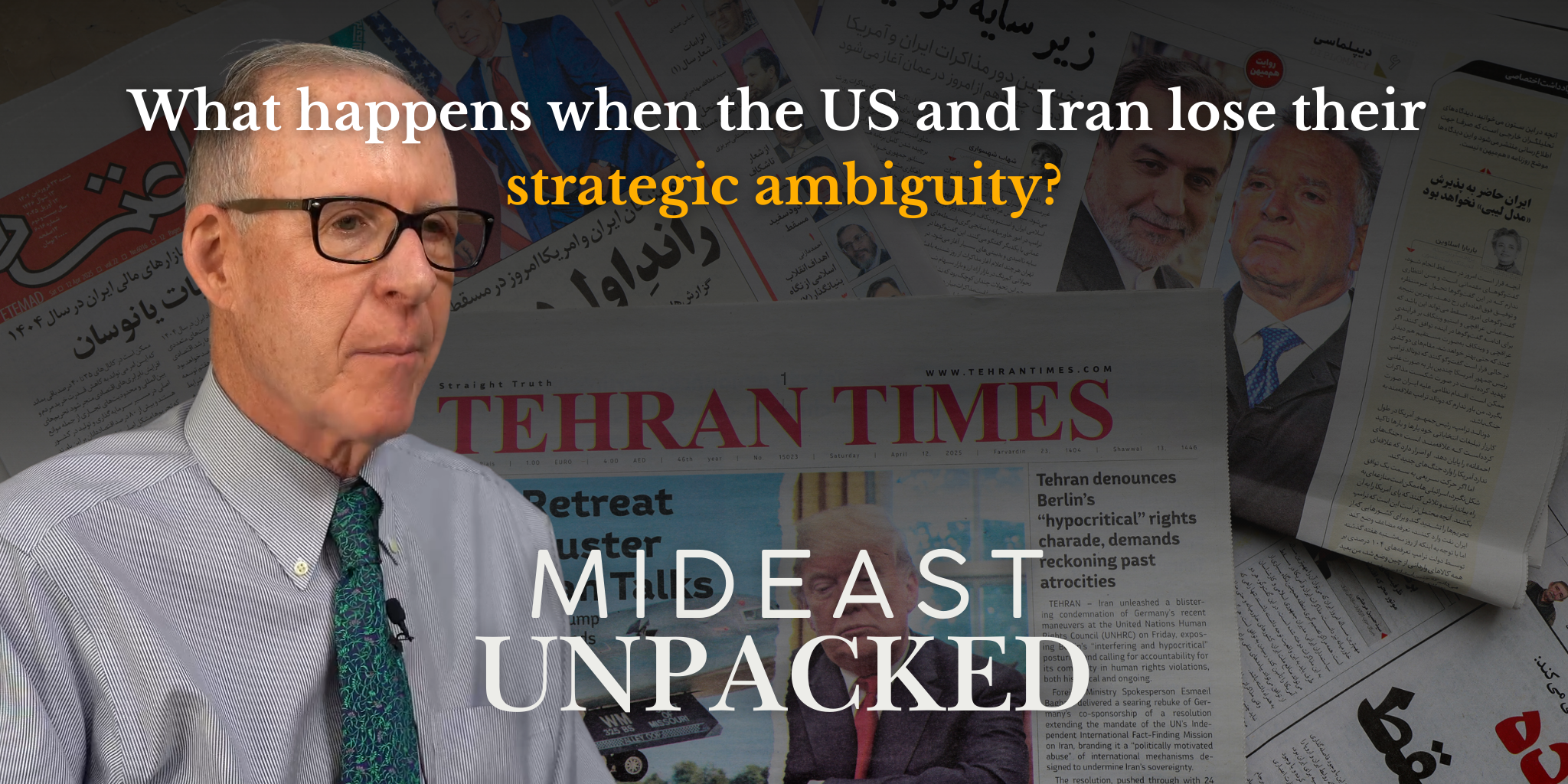
What happens when the US and Iran lose their strategic ambiguity?
MEI Senior Fellow Ross Harrison breaks down how this foreign policy approach can help mitigate conflict—and how both Washington and Tehran may have undermined their own ambiguity during the recent 12-day war, with potentially lasting consequences for regional stability.