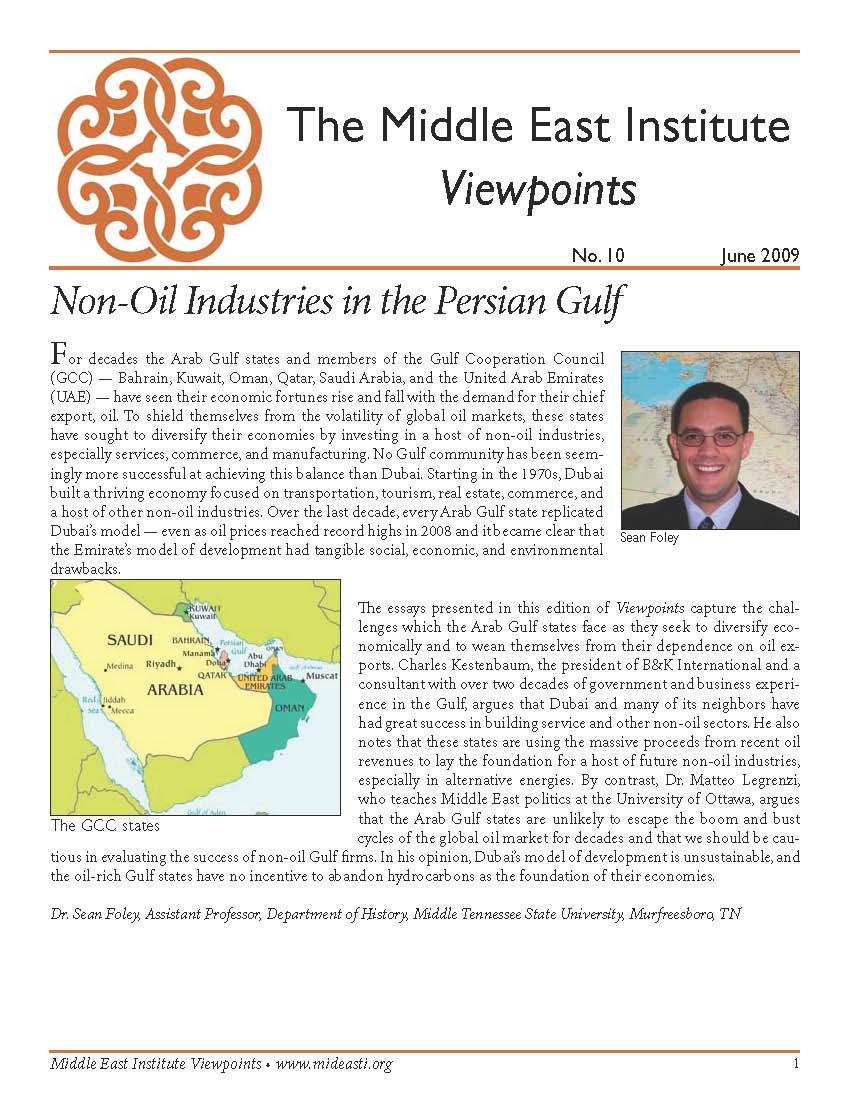
Introduction to Non-Oil Industries in the Persian Gulf
Originally posted June 2009
This Opinion was first published on Reuters.com on October 11, 2012
Assertions and opinions in this policy paper are solely those of the above-mentioned author(s) and do not necessarily reflect the views of the Middle East Institute, which expressly does not take positions on Middle East policy.
This article was first published by The Huffington Post on October 2, 2012
Assertions and opinions in this publication are solely those of the above-mentioned author(s) and do not necessarily reflect the views of the Middle East Institute, which expressly does not take positions on Middle East policy.
Libya, the third largest country in the African continent (1.75 million km²), shares 4,400 km of border with six other countries, four of which are Arab countries. It has a vast coastal area on the Mediterranean (nearly 2,000 km). For such a large country, its population density is very thin — there are barely six million inhabitants.
This story first appeared on NPR.com on September 12, 2012
Chris Stevens, the U.S. ambassador killed in an attack on the U.S. consulate in Benghazi, Libya, was a very special diplomat. He made a career of going to difficult places and insisting that he witness tumultuous events firsthand.
Is Libya Really on the Path to Democracy? Christopher Blanchard, Karim Mezran, Daniel Serwer, David Mack
This infographic explains one facet of the argument posed in MEI Scholar Zubair Iqbal‘s recent article The Economic Determinants of Arab Democratization, posted March 13.
Click the image to enlarge
Originally posted June 2011
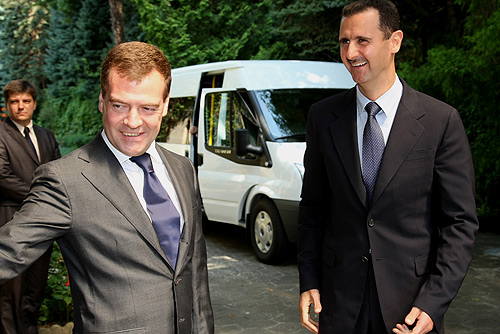
The Russian government, like its counterparts in the West, the Middle East, and elsewhere, was caught off guard by the outburst of Arab uprisings beginning in January 2011 that swept away long-ruling authoritarian regimes in Tunisia, Egypt, Libya, and (it appears) Yemen, and have threatened to topple those in Bahrain and Syria. The response of the Russian government to these events has, like that of Western governments, often been confused and inconsistent. Just as Western governments have done, Moscow has sought to protect its interests in the region.
Originally posted August 2011
Originally posted September 2011
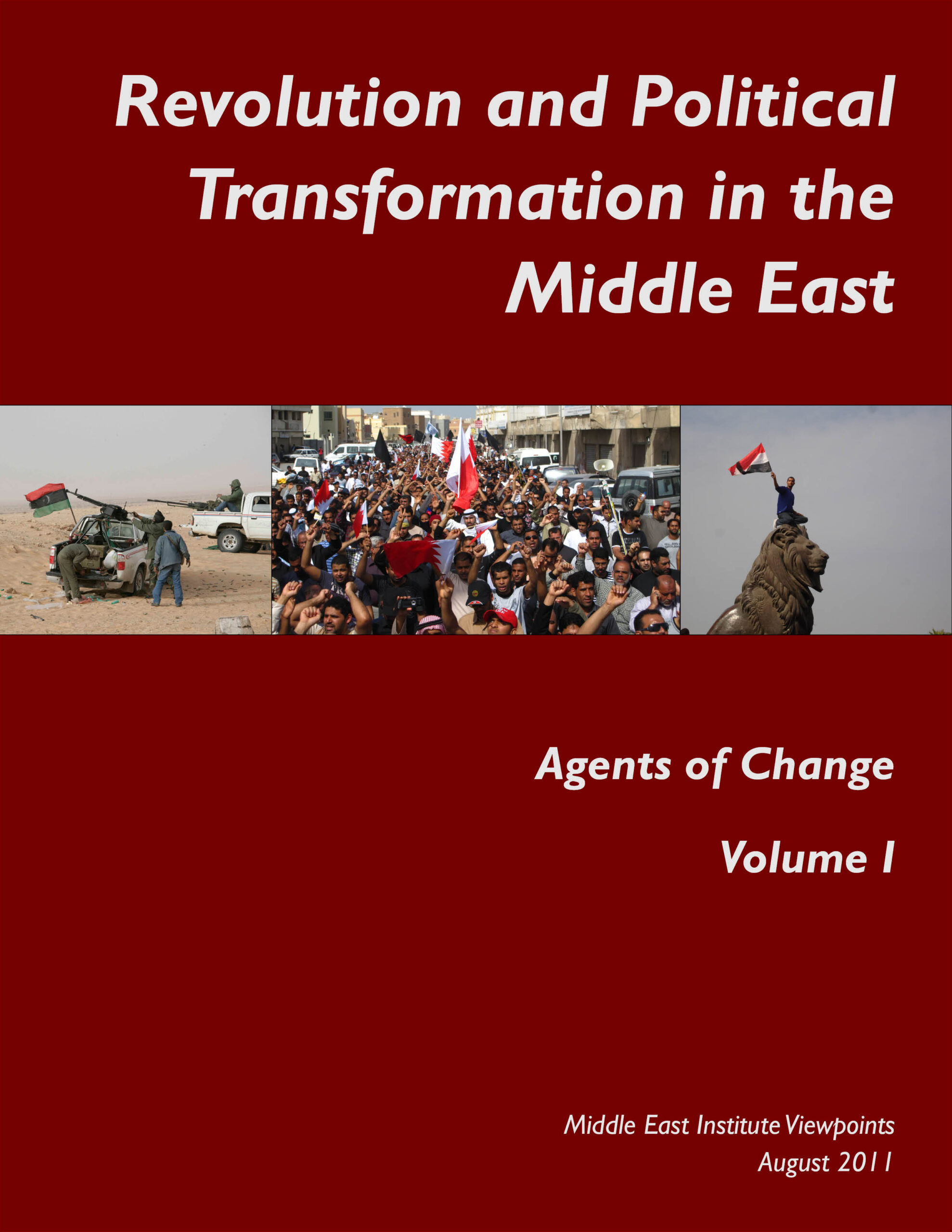
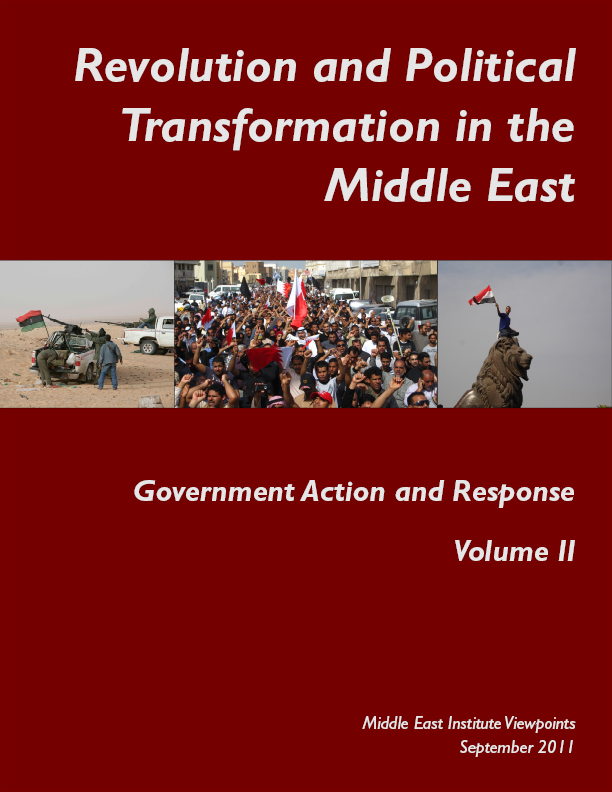
On August 21, 2011, rebel forces in Libya rolled into the capital Tripoli, seemingly finishing off months of armed combat and foreign intervention and bringing down yet another Arab head of state. At the same time, sporadic but violent repression of protests in Syria continues, while other states remain calm or have seen their protest movements fizzle. We open this second volume of our series, Revolution and Political Transformation¸ at a time of uncertainty and transition for the region.