Monday Briefing: Senate moves to end US engagement in Yemen conflict
In this week’s Monday Briefing, MEI experts Gerald Feierstein, Alex Vatanka, Nathan Stock, and Randa Slim provide analysis on recent and upcoming events including the Senate’s decision to pull out of Yemen, enduring Iran-Pakistan political strain, Egypt’s role in Palestinian reconciliation, and America’s dissolving influence in Syria.
Sub-Saharan Africa must respect North Africa's water rights
The Middle East is the world’s most arid region and the one most dependent on renewable freshwater resources that originate outside its territories. These resources are largely contained in the Nile, Euphrates-Tigris, and Jordan river basins. An international law-based approach to transboundary watercourse development and management is vital for human security and regional stability. Applying legal principles in the Nile Basin is imperative, as unilateral actions by upstream countries can harm livelihoods on a large scale in downstream countries and destabilize their economies.
Reevaluating U.S. security assistance to the Middle East
Since 9/11, American security strategy has focused on building the military capabilities of global allies in order to advance shared goals and address joint threats. In the Middle East, the results of this approach have been mixed at best. Frustration over U.S. security assistance to the region has grown in Washington, as funding and arms transfers to various state and non-state partners have led to unintended consequences, prompting the Trump administration to reevaluate U.S. aid to Egypt, Pakistan, and the Palestinians.
Israel-Egypt gas deal: politics, or business as usual?
On Feb. 19, a consortium of oil companies led by the U.S.’s Noble Oil and Israel’s Delek signed a contract to supply the Egyptian energy company Dolphinus with up to 32 billion cubic meters of Israeli gas over ten years.
As the slow wheels of government inch toward policies that lead to cleaner air, Egyptian drivers could be provided with faster results by an unlikely partner—Chinese auto companies.
Democracy, Inclusion and Political Moderation: Lessons from Religious Movements in the Middle East and Indonesia
There is a longstanding argument that inclusion in the political process can moderate Islamist groups. Looking at the evolution of Islamic movements in Egypt and in Indonesia, this essay suggests that patterns of informal inclusion, the nature of regime repression and the role of state ideology can all have significant impacts on the diversity of religious life and mass appeal of reformist voices.
After the 2014 Israel-Gaza war, I tried and failed to convince Hamas to hand over a key border crossing between Gaza and Israel to the control of the Palestinian Authority (P.A.).
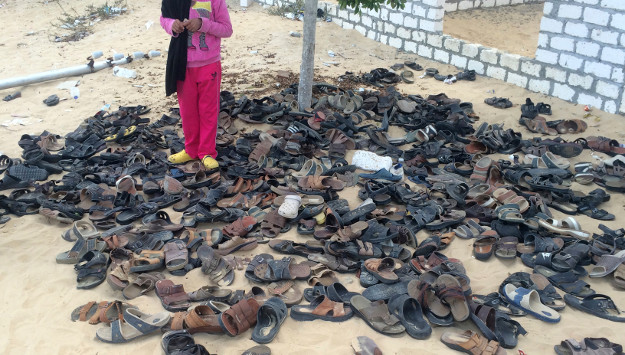
In this week’s Monday Briefing, MEI experts Charles Lister, Randa Slim, and Alex Vatanka provide analysis on recent and upcoming events including Egypt’s ongoing struggle with terrorism following the recent attack in Rawda mosque, the next round of intra-Syrian Geneva negotiations, and Iran’s anxiety over Russia’s plans in Syria.
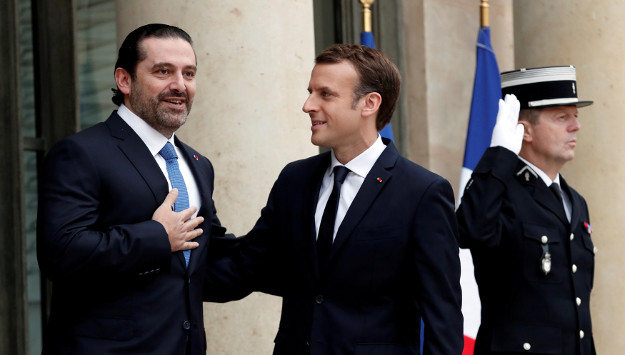
France and Egypt Try to Moderate Saudi-Iran Escalation | Monday Briefing
In this week’s Monday Briefing, MEI experts Paul Salem, Alex Vatanka, Randa Slim, Marvin G. Weinbaum, and Eran Etzion provide analysis on recent and upcoming events including the Arab League meeting in Cairo to moderate the Saudi-Iran escalation, Iran’s view of the Sochi Summit as a turning point, Putin’s effort to reach an agreement on Syria before presidential elections, Afghanistan’s response to the increase of US troops on their ground, and the political upheaval in Israel as Netanyahu’s corruption case continues.
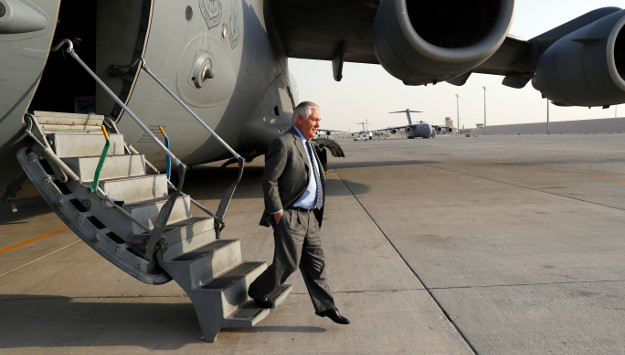
Tillerson Promotes Stronger Saudi-Iraq Ties | Monday Briefing
In this week’s Monday Briefing, MEI experts Gerald Feierstein, Marvin G. Weinbaum, Randa Slim, Paul Salem, and Gonul Tol provide analysis on recent and upcoming events including Secretary Tillerson’s visit to Riyadh and Doha as well as his visit to India and Pakistan, Abadi’s regional tour to promote positive relations with neighbors, Sisi’s visit to Paris to boost Egypt-France relations , and German Chancellor Merkel’s threat to cut European Union funding to Turkey due to its crackdown on democratic institutions.
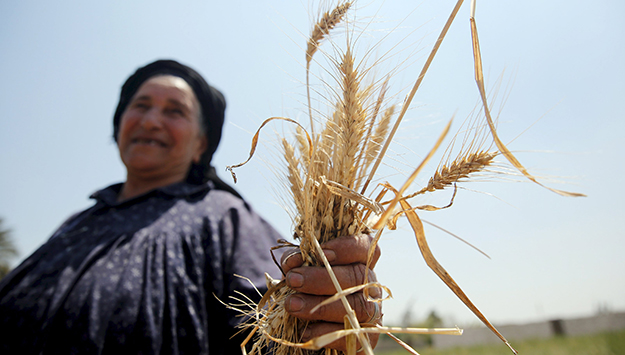
Millions of Rural Working Women in Egypt at Risk from Climate Change
The impacts of climate change on Egypt’s agriculture are likely to be substantial, and will affect the millions of Egyptian women reliant on this economic activity for their livelihoods. The agricultural sector employs a large percentage of Egypt’s working women, a sector known for its low and unstable earnings. Millions of rural Egyptian women working in agriculture already suffer from poverty, and climate change will make matters worse.
The view from El Gouna, the luxury Red Sea resort constructed in the late 1980s by Egyptian business tycoon Samih Sawiris, can be misleading. The plush yachts, pricey food menus and grand parties present an alternative reality to the financially-strapped, religiously conservative one of the capital. In other words, El Gouna is not Egypt. The industry’s muted, skeptic reaction to the establishment of an international film festival in Hurghada’s most affluent town this year was thus quite expected.
Iraqi Forces Turn Attention to Hawija | Monday Briefing
In this week’s Monday Briefing, MEI experts Paul Salem, Robert S. Ford, Alex Vatanka, and Bilal Y. Saab provide analysis on recent and upcoming events including the Iraqi military’s new operation to take back the town of Hawija from ISIS, the operation by the Syrian regime and U.S.-backed forces in Deir Ezzor, the Pakistani foreign minister’s visit to Iran, and the resumption of U.S. and Egyptian war games after being suspended since the 2011.
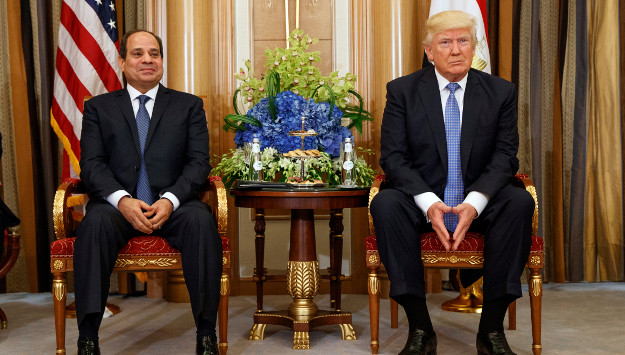
A Return to Ambiguity in U.S.-Egyptian Relations | Monday Briefing
In this week’s Monday Briefing, MEI experts Paul Salem, Gerald Feierstein, Randa Slim, Bilal Y. Saab, and Jean-François Seznec provide analysis on recent and upcoming events including tensions between Washington and Cairo over Egypt’s excessive authoritarian crackdown, Russia’s attempt to help mediate the G.C.C. crisis, the likely postponement of the Kurdish independence referendum, the performance of the Lebanese Army in anti-ISIS operations, and the Iraqi oil minister’s trip to Moscow to discuss oil production cuts.