Read the full article on the Huffington Post.
Much has been made of China’s grand building plan for the Belt and Road Initiative, but little attention is focused on the “green” standards that China is proposing to receive this investment. Launched in 2013 by China’s President Xi Jinping, the B&R is a one-trillion-dollar plan to finance infrastructure investments spanning over 60 countries and covering three quarters of the world’s population. As the world’s leader in developing green financial products and standards, China is raising standards for international lending, which could be transformational for countries like Egypt.
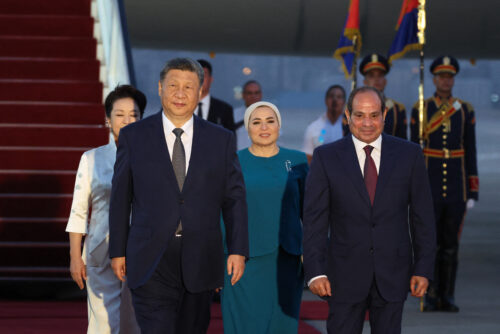
Egypt has the opportunity to serve as the “hub” for the BRI into the Middle East and Africa. The Chinese have already designated it as one of the top five countries for mergers and acquisitions potential over the next five years. The two countries have also elevated their relationship to a “strategic partnership” which provides the political underpinnings what is a now a growing new commercial relationship between the two countries.
As part of attracting Chinese capital, under the BRI, however, interested countries must comply with new standards to define “green” development. In fact, China’s policy banks – such as the Industrial and Commercial Bank and development banks like Asia Infrastructure Investment Bank and China Development Bank – have been instructed to apply green lending standards for any monies being provided to support BRI projects.
China is quickly moving to define a “green” infrastructure project – a definition that the international community has yet to reach agreement upon. China does not need to wait for the rest of the world, however, as it can define these standards, projects, and programs to suit its own purposes for the massive BRI. There are few in the developing world – eager for financing – who will object.
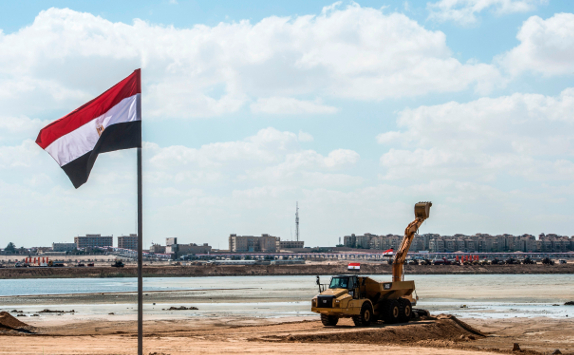
Image: KHALED DESOUKI/AFP/Getty Images
The Middle East Institute (MEI) is an independent, non-partisan, not-for-profit, educational organization. It does not engage in advocacy and its scholars’ opinions are their own. MEI welcomes financial donations, but retains sole editorial control over its work and its publications reflect only the authors’ views. For a listing of MEI donors, please click here.

Egypt: How the Iran War Has Affected Egypt’s Calculations