تمت ترجمة هذا النص بواسطة الذكاء الاصطناعي وقد يحتوي على أخطاء.
تخطي إلى المحتوى

Research & Commentary Results

تصفية حسب
630 Results
Black Sea Connectivity and the South Caucasus
  • التحليل
  • Black Sea Connectivity and the South Caucasus

    Black Sea Connectivity in the South Caucasus is the latest report from MEI’s Frontier Europe Initiative. Dr. Mamuka Tsereteli, explores the potential for greater trade connectivity between Europe and wider Central Asia via the Black Sea and the South Caucasus.

    March 15, 2021

    Turkey’s energy relations with Russia: How should the West respond?
  • التحليل
  • Turkey’s energy relations with Russia: How should the West respond?

    While the security relationship between Russia and Turkey has seen ups and downs throughout the years, energy ties have remained stable. But Turkey has made strides toward reducing its dependence. Changes in global energy markets have tipped the power away from producers toward consumers like Turkey, which have greater room for maneuver. Turkish interests remain largely aligned with those of the West, even if Ankara sees itself as an independent player which has links to both Russia and the EU and the US.

    March 10, 2021

    The Biden Administration and the Middle East: Policy Recommendations for a Sustainable Way Forward
    Photo by Jim Lo Scalzo/EPA/Bloomberg via Getty Images
  • التحليل
  • The Biden Administration and the Middle East: Policy Recommendations for a Sustainable Way Forward

    In a new policy briefing book, entitled The Biden Administration and the Middle East: Policy Recommendations for a Sustainable Way Forward, MEI scholars tackle a large number of country-specific and region-wide issue areas, laying out both the abiding U.S. interests and specific recommendations for Biden administration policies that can further U.S. interests amid a region in turmoil.

    March 10, 2021

    America’s Black Sea strategy in 2021 and beyond: The case of Ukraine
  • التحليل
  • America’s Black Sea strategy in 2021 and beyond: The case of Ukraine

    Today, there are five conflicts that share similar features in the Black Sea. That is, they are protracted, separatist Russia-supported frozen and active conflicts in the former Soviet space. Deeply rooted in the history of Soviet territorial reorganization and ethnic mixing, conflicts in Transnistria (Moldova), Crimea and Donbas (Ukraine), and Abkhazia and South Ossetia (Georgia) are the result of violations to state borders that were integrated into the Soviet system.

    March 9, 2021

    Alternative Futures for the Black Sea Region
  • التحليل
  • Alternative Futures for the Black Sea Region

    Relations between the U.S. and Black Sea countries are complex. The Western-oriented Georgia and Romania have shown unconditional support for greater U.S. involvement. Others, like Turkey and Russia, will continue to challenge Western involvement. And while relations between Black Sea countries reflect similarly complex cooperation and conflict patterns, common among them is a hope that the Biden Administration will bring a shift in U.S. policy in the region.

    Frontier Europe Initiative’s new report, Alternative Futures for the Black Sea Region, is designed to inform the development of a U.S. strategy for the Black Sea region by considering a range of alternative future scenarios.

    March 4, 2021

    Georgia should not fear new transit routes in the South Caucasus
  • التحليل
  • Georgia should not fear new transit routes in the South Caucasus

    For years, Georgia has played a vital role in East-West trade through the South Caucasus. With tensions high in Nagorno-Karabakh, Georgia was the only show in town when it came to stable, secure, and predictable transport linking Azerbaijan with Turkey. Therefore, it is not surprising that some in Georgia are concerned that new transit corridors passing through the Nakhchivan Autonomous Republic, Armenia (Syunik province), and Azerbaijan might take away from Georgia’s strategic importance. However, this is unlikely to be the case.

    March 2, 2021

    The EU’s East: A Way Forward
  • التحليل
  • The EU’s East: A Way Forward

    President Joe Biden’s victory was cheered in Europe as the Transatlantic news of the year, given the strained Transatlantic ties during the Trump Administration. But just one month into the Biden Administration, (Western) Europe’s enthusiasm is waning. This Administration has indicated that while reinforcing Transatlantic ties will be a priority, Washington will maintain its heightened threat perception of both Russia and China. While the U.S. sees enhanced deterrence as necessary, the European Union’s major powers see this as provocative and counterproductively hawkish. If the EU indeed prioritizes a reinforced West, it will need to carefully develop its own balanced and realistic Eastern European security policy.

    Now is not the time for the West to turn away from Georgia
  • تعليق
  • Now is not the time for the West to turn away from Georgia

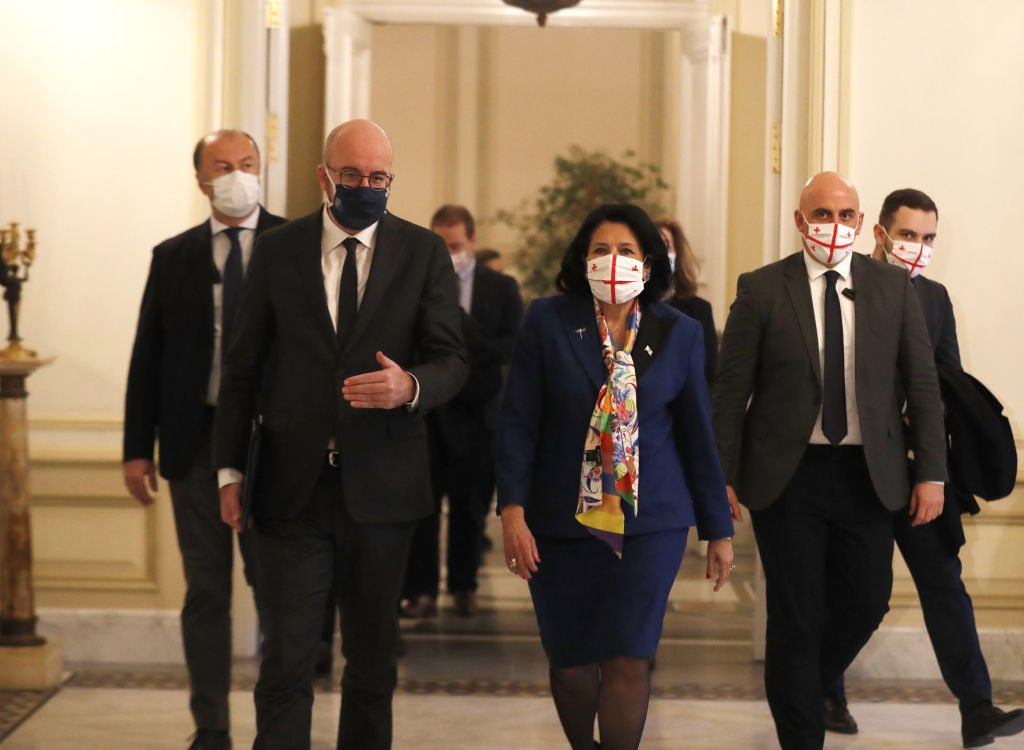
    Earlier this week, Georgian law enforcement arrested United National Movement (UNM) party chairman Nika Melia on charges of inciting violence during anti-government demonstrations in 2019. The arrest has left many outraged and is the latest event to deepen political divisions in the country. There are valid arguments as to how the government could have handled Melia’s arrest better. But more important is what’s at stake for the future of Georgia – both domestically and as a member of the international community.

    February 26, 2021

    Iran and the Black Sea region: Tehran’s forgotten bridge to Europe
  • التحليل
  • Iran and the Black Sea region: Tehran’s forgotten bridge to Europe

    There have been some Iranian advances in building relations with Black Sea states over the last 30 years. However, Tehran’s wavering commitment to deeper ties with its northern neighbors, with the exception of Russia, has considerably reduced the potential footprint Iran could have otherwise had in the Black Sea region. Tehran’s ongoing standoff with the United States, its ideologically driven preoccupation to make advances in the Arab world, and a gradual but clear submission to Russian hegemony has meant that the Black Sea region is a policy matter of secondary importance to decision-makers in Tehran.

    The tectonics of Middle Eastern geopolitics: Seismic signs in the Caucasus
  • التحليل
  • The tectonics of Middle Eastern geopolitics: Seismic signs in the Caucasus

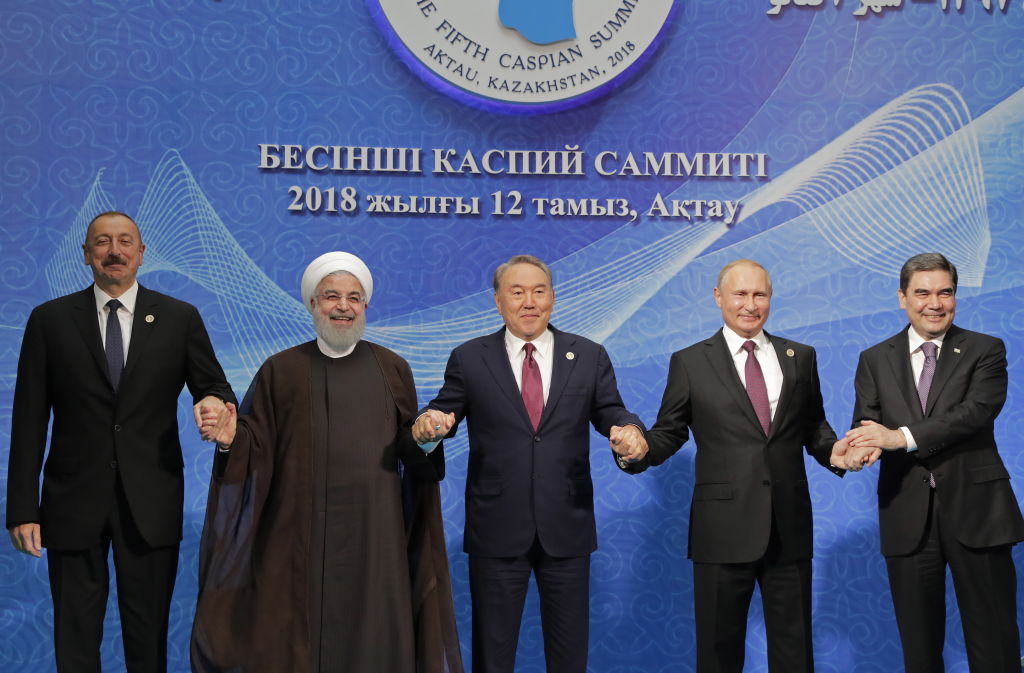
    Throughout 2020, the geopolitics between the Middle East and its northern frontier have converged further. Russia, Turkey, and Iran not only compete for influence (as states and through non-state actors) in core countries of the Middle East and North Africa like Syria, Iraq, Libya, Egypt and beyond in the Gulf. They also happen to be the three former imperial powers in the Caucasus – the crucial link between the Black and Caspian Seas on the seam of Europe, the Middle East, and Central Asia.

    February 24, 2021

    Palestinian Refugees: Myth vs Reality
  • التحليل
  • Palestinian Refugees: Myth vs Reality

    On January 14, 2021, outgoing Secretary of State Mike Pompeo tweeted about Palestinian refugees, proclaiming “(less than) 200,000 Arabs displaced in 1948 are still alive and most others are not refugees by any rational criteria.” A month earlier, on December 11, a group of 22 Republican members of Congress sent a letter to President Trump requesting that he instruct the Bureau of Population, Refugees and Migration to declassify a report on the approximate number of Palestinian refugees, with the intention of redefining and disenfranchising millions of Palestinian refugees of their refugee status. The intent behind the request is made evident by the letter, which states, “The issue of the so-called Palestinian ‘right of return’ of 5.3 million refugees to Israel as part of any ‘peace deal’ is an unrealistic demand, and we do not believe it accurately reflects the number of actual Palestinian refugees

    February 22, 2021

    Turkey-NATO ties are problematic, but there is one bright spot
    Photo by Isa Terli/Anadolu Agency/Getty Images
  • التحليل
  • Turkey-NATO ties are problematic, but there is one bright spot

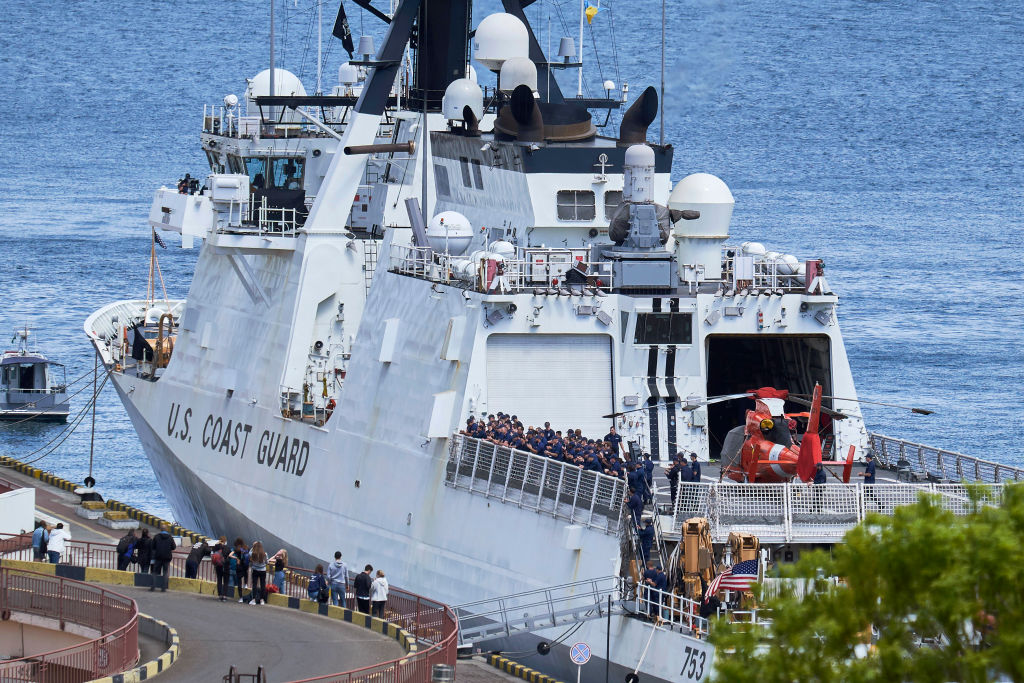
    When it comes to Turkey-NATO ties, Ankara is regarded as more of a problem than an ally these days. Not only did it purchase a Russian S-400 air defense system, but its gunboat diplomacy in the eastern Mediterranean also raised the specter of military conflict between NATO allies when Greek and Turkish naval flotillas steamed directly toward each other this past summer. There is one region, however, where Turkey can help NATO efforts: the Black Sea.

    Conflict and Rivalry in the South Caucasus
    معهد الشرق الأوسط
  • Podcast
  • Conflict and Rivalry in the South Caucasus

    Paul Goble, Gonul Tol, and Alex Vatanka join host Alistair Taylor to discuss the Nagorno-Karabakh conflict and the role of Russia, Turkey, and Iran in the South Caucasus.

    February 11, 2021

    Georgia’s historic victory: Implications of the ECHR ruling
  • التحليل
  • Georgia’s historic victory: Implications of the ECHR ruling

    Amidst the pandemic and global economic hardships, Georgia has had an eventful beginning to the year, scoring a long-awaited victory against Russia. On 21 Jan., 2021, the European Court of Human Rights (ECHR) announced its verdict on the interstate case brought by Georgia against Russia, holding Moscow responsible for breaching six articles of the European Convention of Human Rights.

    February 11, 2021