تمت ترجمة هذا النص بواسطة الذكاء الاصطناعي وقد يحتوي على أخطاء.
تخطي إلى المحتوى

Research & Commentary Results

تصفية حسب
2034 Results
The puzzling outcome of the Moscow Summit
Turkey's President Recep Tayyip Erdogan (L) and Russia's President Vladimir Putin at a press conference following their meeting at the Moscow Kremlin.
  • التحليل
  • The puzzling outcome of the Moscow Summit

    In changing the balance of power on the ground and forcing hostilities to a stalemate, Turkey’s military intervention in Idlib had produced its desired effect. On March 5, Vladimir Putin and Erdogan sat together for six hours and announced to the world a comprehensive cease-fire and the establishment of a secure corridor spanning six kilometers on the north and south sides of the M4 highway.

    US-Russia standoffs in northeast Syria: Just getting started
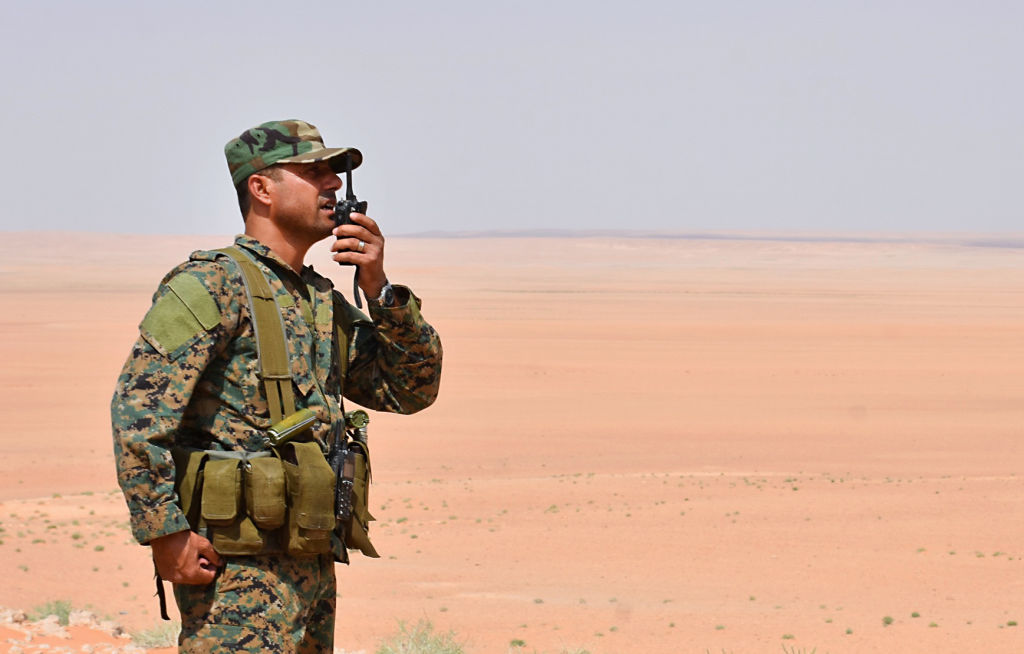
    A Russian soldier looks through binoculars on the key M4 highway in Syria's northeastern Hasakeh province on January 20, 2020. (Photo by Delil SOULEIMAN / AFP) (Photo by DELIL SOULEIMAN/AFP via Getty Images)
  • التحليل
  • US-Russia standoffs in northeast Syria: Just getting started

    As Syria’s war reaches its ninth anniversary, Russian and U.S. soldiers are increasingly finding themselves face to face — quite literally — in the country’s northeast. A spate of confrontations over the last two months has opened questions about the fate of Syria’s north in the coming year.

    March 16, 2020

    Israeli elections and the Joint List
    Ayman Odeh (C), leader of the Hadash party that is part of the Joint List alliance, gives an address with other alliance leaders at their electoral headquarters in Israel's northern city of Shefa-Amr on March 2, 2020, after polls officially closed.
  • تعليق
  • Israeli elections and the Joint List

    Whether or not Gantz succeeds in forming a government, the Joint List has cemented its role as “king makers” in Israeli politics.

    March 16, 2020

    Is Erdogan misreading Putin on Libya?
    Russian President Vladimir Putin and Turkish President Recep Tayyip Erdogan greet each other during their talks at the Kremlin on March 5, 2020 in Moscow, Russia. Erdogan is having a one day visit to Russia to discuss the war conflcit in Syria.
  • التحليل
  • Is Erdogan misreading Putin on Libya?

    After Turkish President Recep Tayyip Erdogan hammered out a deal with his Russian counterpart Vladimir Putin on March 5 to bring an end to the fighting in Idlib in northwestern Syria, he said he was hopeful that the two countries could extend their cooperation to Libya.

    Manufacturing Division: The Assad Regime and Minorities in South-west Syria
    A picture shows the new church of Sayyidet al-Beshara in Shaqra town in the southern Syrian province of Daraa on December 22, 2019. - Less than 10 kilometres (six miles) away lies the mainly Christian town of Shaqra, emptied of most of its Christian residents after a spate of attacks by rebels and jihadists during the conflict. Such attacks have stopped since the area came back under regime control, but very few Christian families remain. (Photo by MAHER AL MOUNES / AFP) (Photo by MAHER AL MOUNES/AFP via Ge
  • التحليل
  • Manufacturing Division: The Assad Regime and Minorities in South-west Syria

    Minority communities in south-west Syria have shrunk to a fraction of their pre-2011 size, and the regime’s repressive policies perpetuate a cycle of violence and chaos that prevents their safe return. The regime’s strategy of transforming minority communities into sources of militia fighters has not only led to the deaths of thousands of young Alawite and Shi’a men, but also created sectarian tensions between formerly interconnected communities in south-west Syria. So long as the regime’s policy in the south-west is characterized by violence, the safe and dignified return of displaced Syrians will not be possible. This paper studies current and former minority communities in south-west Syria, the security and economic challenges these groups face, and the manner by which the regime exploits and weaponizes these vulnerable Syrians.

    March 11, 2020

    Little hope for an end to Israel’s political turmoil
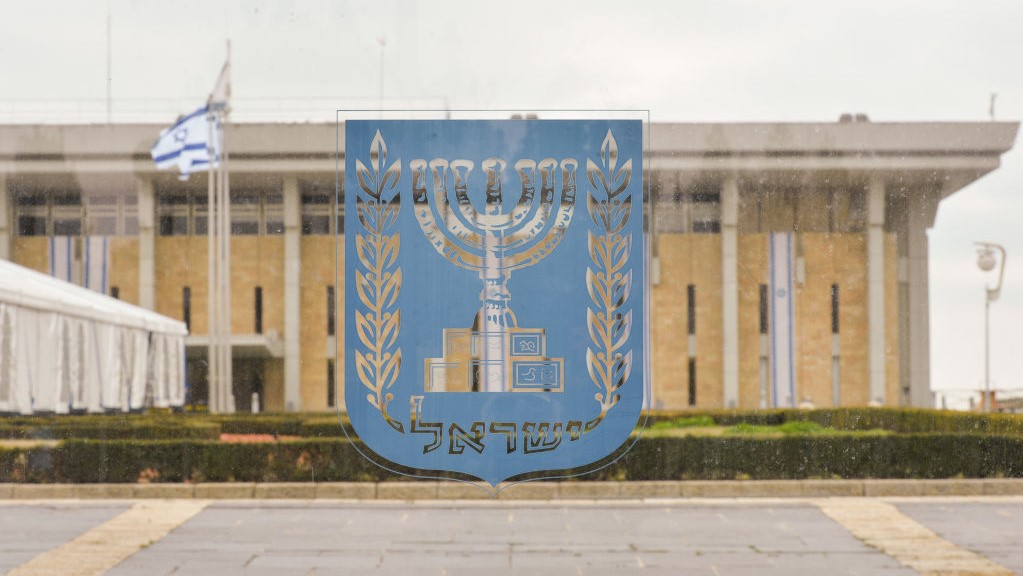
    An emblem of Israel with the Knesset in the background, seen on the day of Israeli Legislative Elections 2020, in Central Jerusalem.
  • تعليق
  • Little hope for an end to Israel’s political turmoil

    Neither Likud nor Kahol Lavan was able to break the political stalemate and clear the path to the immediate formation of a majority government.

    March 9, 2020

    Can Palestinian citizens of Israel teach other Arabs a lesson in democracy?
  • التحليل
  • Can Palestinian citizens of Israel teach other Arabs a lesson in democracy?

    While attention in the third Israeli general elections in a year has focused on the performance of the caretaker prime minister Binyamin Netanyahu, a powerful light must be shed as well on the successful performance of Israel’s Palestinian citizens, who again increased their representation in Israel’s parliament.

    March 6, 2020

    All eyes on Moscow as Erdogan and Putin meet for Syria talks
    Women in Istanbul hold banners which read murderer Russia, murderer Iran, murderer Esed during the protest on February 29, 2020 after 33 Turkish soldiers were killed in Idlib, Syria on 27 February.
  • التحليل
  • All eyes on Moscow as Erdogan and Putin meet for Syria talks

    Turkish President Recep Tayyip Erdogan typically never misses an opportunity to appear in front of the cameras. But after the airstrike last week that killed dozens of Turkish soldiers in Syria’s Idlib Province, he was unusually quiet. The local governor of the south-eastern Turkish province of Hatay, just across the border from Idlib, did the talking instead, providing information to the outraged public about Turkey’s worst day in the Syrian conflict so far. As the death toll rose, so did the public anger.

    The Crisis in Idlib
    معهد الشرق الأوسط
  • Podcast
  • The Crisis in Idlib

    An airstrike last Thursday, which killed 33 Turkish soldiers and wounded 60 more, was a game-changing development in the Syrian conflict. In the days since, Turkey has unleashed a major military response, carrying out scores of drone attacks on Syrian Army units and facilities. All of this is taking place against the backdrop of a massive and growing humanitarian crisis, with nearly a million people fleeing toward the Turkish border. Charles Lister and Sasha Ghost-Siminoff join host Alistair Taylor to discuss how events are unfolding.

    March 3, 2020

    And now what? A realistic approach to the Israeli-Palestinian impasse
    Thousands of protesters gather at Al-Manara Square to protest against U.S. President Donald Trump's Middle East plan, in Ramallah, West Bank on February 11, 2020.
  • التحليل
  • And now what? A realistic approach to the Israeli-Palestinian impasse

    The announcement of Donald Trump’s “deal of the century” was a rude shock, roundly condemned by almost everyone concerned with peace and justice between Israelis and Palestinians. But it also presents an urgent challenge for all those who reject it because they realize the dire implications of what it portends for the future of any peaceful negotiated solution. If a genuine two-state solution is truly dead, and an equitable one-state solution is even harder to achieve, then where does that leave us? What is, or should be, the agenda for the foreseeable future for those concerned with the Israeli-Palestinian issue.

    March 2, 2020

    Syria: What the US could do
    A Turkish soldier stands in front of a military vehicles convoy east of Idlib city in northwestern Syria on February 20, 2020 amid ongoing regime offensive on the last major rebel bastion in the country's northwest.
  • تعليق
  • Syria: What the US could do

    Turkey is running out of options in Idlib Province and in Syria. Aggressively taking on a task that is beyond its capabilities, the government in Ankara now is faced with doubling down on a high-risk gamble, hoping someone, somewhere will believe its bluff, or saving Turkey and the area from worse destruction. There are two things the U.S could do, working together with the EU, NATO, and the UN.