This text has been translated by AI and may contain errors.
Skip to Content

Research & Commentary Results

Filter by
1406 Results
Why now?
US President Donald Trump makes a statement on Iran at the Mar-a-Lago estate in Palm Beach Florida, on January 3, 2020.
  • Commentary
  • Why now?

    Just when we thought we had a good understanding of President Donald Trump’s Middle East policy — which boils down to “get out of the region and avoid another endless war there” — he pulls off something dramatic like this.

    January 3, 2020

    A new escalation in the US-Iran crisis
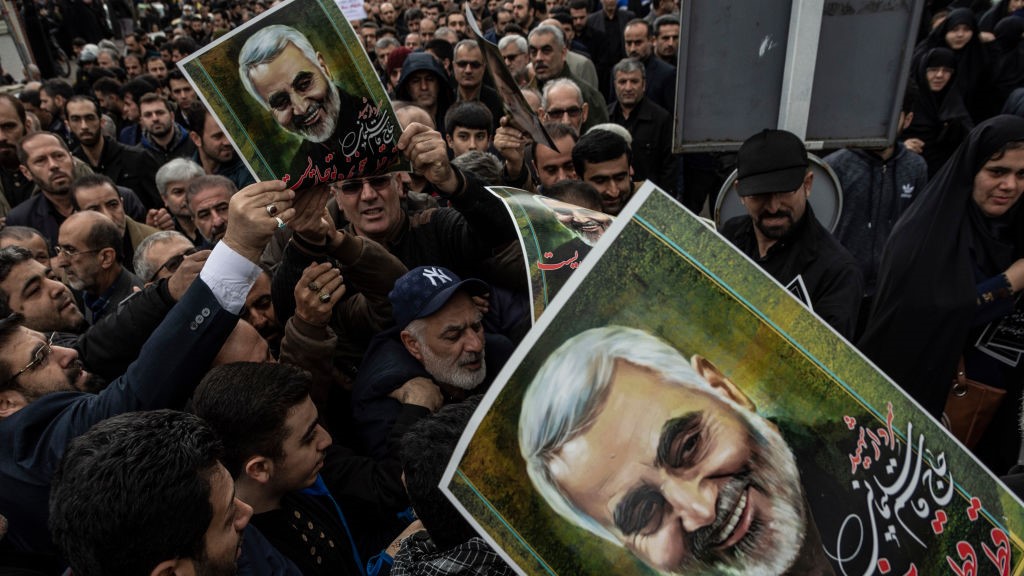
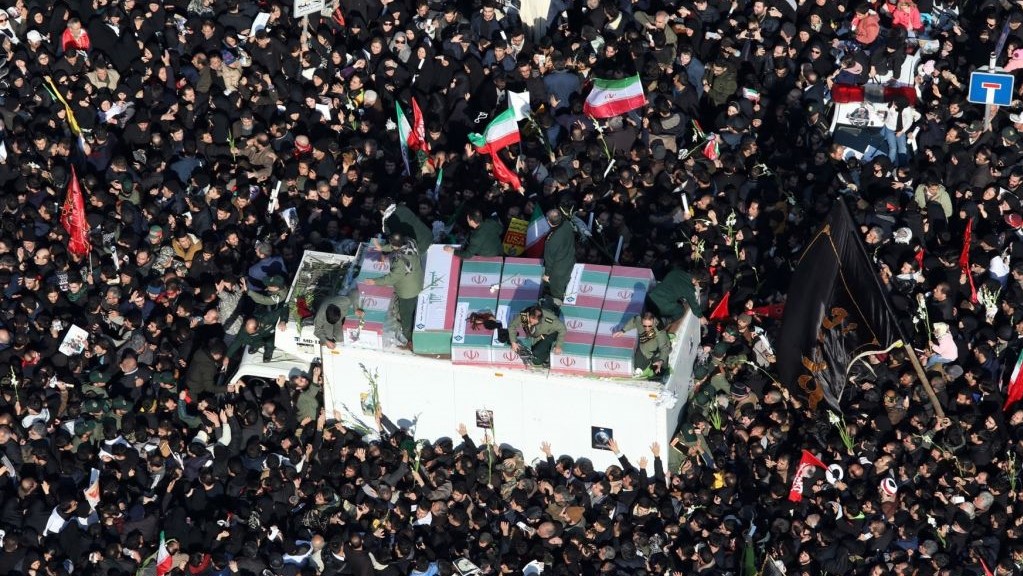
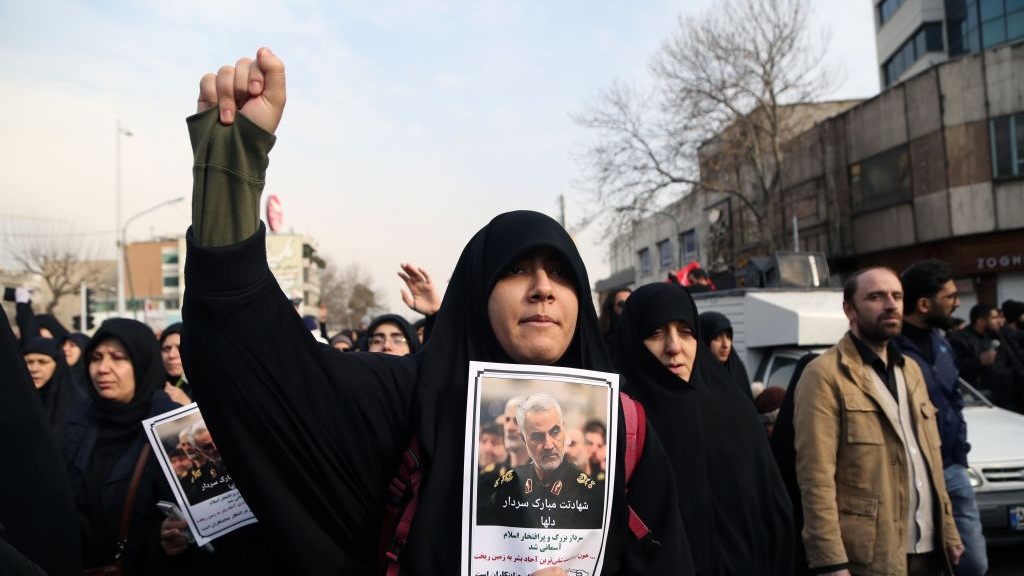
    People gather to stage a protest against the killing of Iranian Revolutionary Guards' Quds Force commander Qasem Soleimani by a US air strike in the Iraqi capital Baghdad, after Friday prayer in Tehran, Iran on January 3, 2020.
  • Commentary
  • A new escalation in the US-Iran crisis

    We must keep in mind that Iran exercises what Barack Obama liked to call “strategic patience.” They pursue strategies and tactics that serve their interests, not emotions. Their interests remain to get Trump to ease off on crippling economic sanctions; to maintain or increase their influence in Iraq, Syria, and Lebanon; and to maintain regime security at home. The death of a senior military officer of theirs is significant but doesn’t change their institutional relations, their interests, or their overall strategy. 

    January 3, 2020

    US airstrike prompts widespread Iraqi criticism
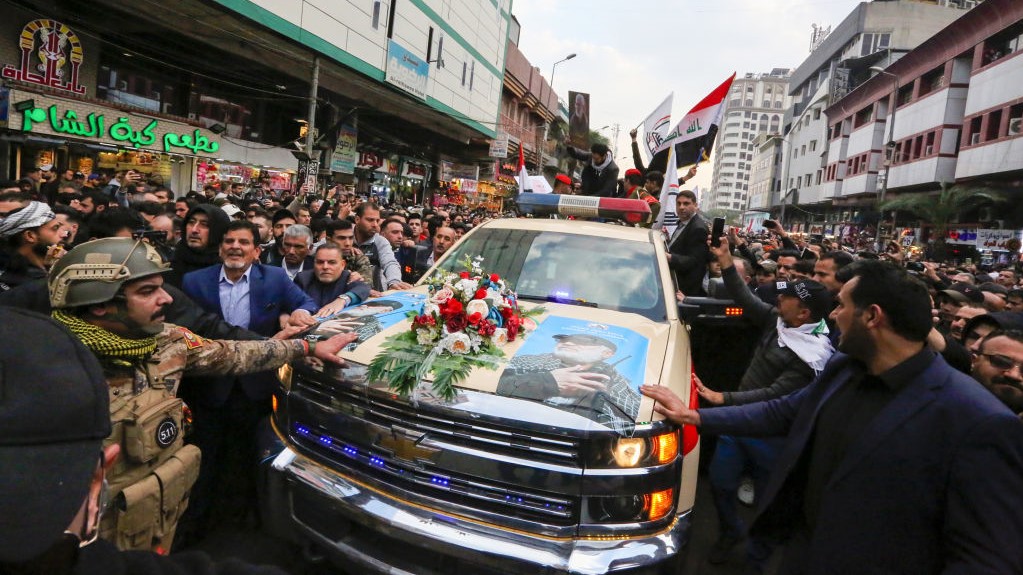
    Supporters of the predominantly Shia Muslim Popular Mobilization Forces (PMF) gather with flags and posters of the PMF deputy head Abu Mahdi al-Muhandis during an anti-US protest after the US airstrike in Baghdad
  • Commentary
  • US airstrike prompts widespread Iraqi criticism

    In the wake of the airstrike, there have been many calls inside Iraq for restraint among Iraqis and between the Americans and the Iranians, most notably from the Shi’a clerical establishment in Najaf. There is a wide consensus in Iraq that the country should not be at the center of an American-Iranian military fight.

    The old rules of the game have been shattered
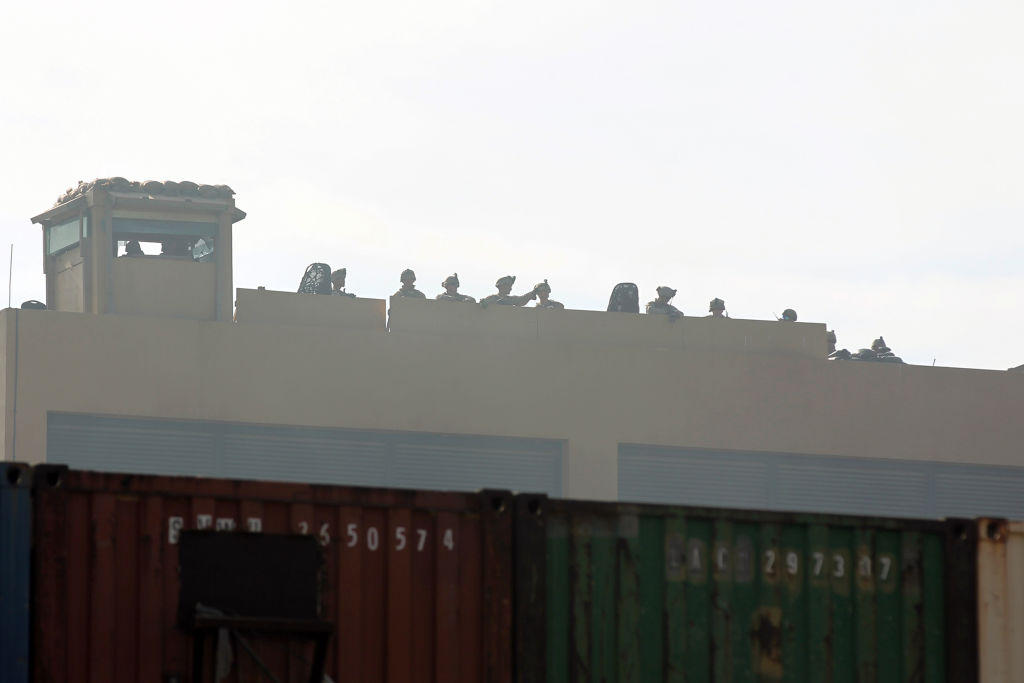
     A protester stands inside a burned checkpoint during the sit-in against deadly US airstrikes on sites of a Shiite militia in front of the US embassy. Iraqi mourners on Tuesday stormed the building of the US embassy in Baghdad's heavily fortified Green Zone.
  • Commentary
  • The old rules of the game have been shattered

    The killing of Gen. Qassem Soleimani, head of Iran’s Revolutionary Guards Quds Force, was a major and unexpected blow to the Iranian leadership. It punctured the aura of invincibility and the hubris that have characterized Soleimani and his colleagues’ behavior.

    January 3, 2020

    Soleimani's killing: A turning point, but not necessarily a prelude to war
    Middle East Institute
  • Commentary
  • Soleimani's killing: A turning point, but not necessarily a prelude to war

    No one in Tehran can now afford to test the limits of Donald Trump’s unpredictability. He is the man who for years lamented American interventions in the Middle East only to shock the Iranians by killing the leading symbol of Iran’s regional agenda. 

    What do recent successes against ISIS mean for a US withdrawal from Afghanistan?
    Member of the Islamic state ISIS militants stand alongside their weapons, as they surrendered to government in Jalalabad, Nangarhar, Afghanistan on November 17, 2019.
  • Analysis
  • What do recent successes against ISIS mean for a US withdrawal from Afghanistan?

    Afghan security forces, working in concert with U.S. airpower, have launched a series of successful attacks in eastern Afghanistan on ISIS forces, which operate locally under the banner of ISKP. Simultaneously, the Taliban has conducted its own military campaign against ISKP in the same region. These campaigns have significantly degraded ISKP’s position in eastern Afghanistan, a development that may well increase the likelihood of an eventual U.S.-Taliban peace deal.

    December 23, 2019

    Expect the expected: The new EU high representative and the MENA region
    MADRID, SPAIN - 2019/02/28: Josep Borrell, Spain's foreign minister, speaks about situation with Venezuela during a press briefing in Palacio de Viana. (Photo by Marcos del Mazo/LightRocket via Getty Images
  • Analysis
  • Expect the expected: The new EU high representative and the MENA region

    Spain’s foreign minister, Josep Borrell Fontelles, became the EU’s high representative for foreign affairs and security policy on Dec. 1. Borrell’s comments on EU foreign policy have often been controversial, and he has been highly critical of the union’s diplomatic actions in the past. What might this mean for EU-MENA affairs? What are Borrell’s views on key regional issues, such as the Israeli-Palestinian conflict, relations with Iran, the situation in Syria, and migration?

    December 18, 2019

    Three uprisings in search of a better future
    An Iraqi protester chants slogans during a demonstration against state corruption, failing public services and unemployment at Tayaran square in Baghdad on October 2, 2019.
  • Analysis
  • Three uprisings in search of a better future

    The three uprisings in Iran, Iraq, and Lebanon represent the revolt of a new generation seeking to build a better future for itself. Since 2011, there have been 11 uprisings in the Middle East and North Africa. All 11 uprisings have similar drivers: the explosive dysfunction of high demographic growth, low levels of economic development and job creation, poor government performance and services, and high levels of corruption and inequality.

    December 18, 2019

    Iraq in 2019: Protests, politics, and a struggle for power
    An Iraqi woman raises her fist as she takes part in an anti-government march in the center of the southern city of Basra on December 2, 2019.
  • Commentary
  • Iraq in 2019: Protests, politics, and a struggle for power

    The protestors are demanding a radical change of the ethno-sectarian power-sharing system put in place after the 2003 U.S. invasion of Iraq.

    December 16, 2019

    Libya’s descent into civil war
    A fighter of Libya's UN-backed Government of National Accord (GNA) of Fayez Serraj, fires his rifle during clashes with forces of the self-styled Libyan National Army (LNA) led by Libyan strongman Khalifa Haftar, at Al-Khalla frontline.
  • Commentary
  • Libya’s descent into civil war

    The question as 2019 ends is whether foreign forces supporting the conflict will rethink their commitment to military victory and instead work to secure political solutions through compromise.

    The Gulf looks over the cliff and retreats
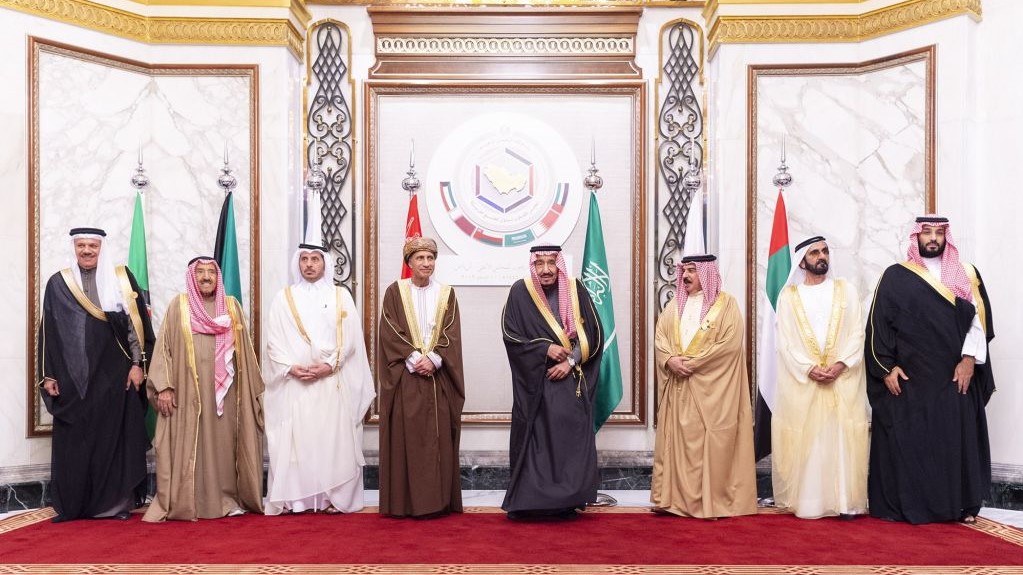
     Saudi Arabian King Salman bin Abdulaziz al-Saud chairs the 40th Gulf Cooperation Council (GCC) annual summit in Riyadh, Saudi Arabia on December 10, 2019.
  • Commentary
  • The Gulf looks over the cliff and retreats

    The steps the Saudis have taken in 2019 may help to ease international pressure on the kingdom’s leadership and restore its image as a constructive player in the world.

    December 16, 2019