Turkey’s Nuclear Ambitions in the Post-Iran War Environment
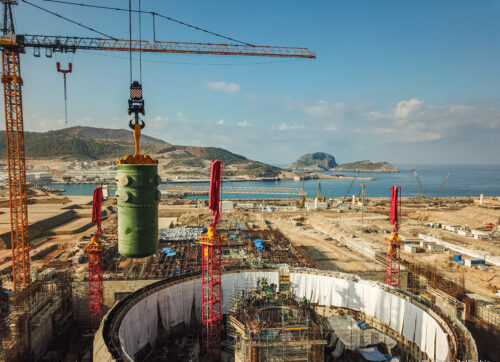
Turkish ambitions to develop nuclear weapons are not new, but the changing security environment is strengthening Ankara’s motivations and rationale for moving away from its longstanding role as a champion of nonproliferation and toward a strategy of preserving the option to build nuclear weapons without actually pursuing them. The challenge for Washington is to manage the nuclear trajectory of regional powers such as Turkey and Saudi Arabia rather than preventing them from acquiring greater nuclear capabilities altogether.
It is now clear the United States is sinking into the quagmire of its war with Iran with no clear idea of how to get out. More than five months of intermittent bombing of Iran have not brought Tehran any closer to surrender. Recurring threats by US President Donald Trump to launch a massive military campaign against the country aren’t causing Iran to submit to US demands.
As the US-Israel-Iran war enters its sixth month, the conflict has taken a sharp turn. After a brief lull in the fighting, Iran launched a surprise ballistic missile attack on US forces on July 28, and the US and Saudi Arabia struck back at Iran-backed militias in Iraq, marking Riyadh’s entry into the war. MEI Senior Fellow Alex Vatanka joins host Alistair Taylor to discuss the escalation, what may come next, and the state of talks over sharing the Strait of Hormuz.
US President Donald Trump recently proposed that Syria intervene militarily against Hizballah in Lebanon. Is that a good idea? This episode of Middle East Focus features a recent MEI Virtual Briefing. Director of Communications Zeina Al-Shaib is joined by Ambassador David Hale, MEI Distinguished Diplomatic Fellow and Charles Lister, MEI Senior Fellow. Together they examine the prospects and implications of renewed Syrian involvement in Lebanon, the potential impact on US relations with both countries, and how evolving dynamics in Lebanon and Syria could reshape the regional balance of power and affect countries such as Turkey and Israel.
A Post-War Model for Verifying Iran’s Missile Arsenal
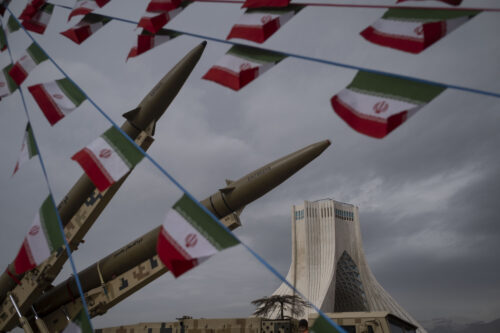
This study proposes a model for constraining and verifying Iran’s ballistic missile arsenal by employing a layered Strategic Verification Model with seven components: comprehensive baseline declarations; missile test and launch monitoring; intrusive inspections; quantitative and qualitative limits on missile capabilities; production controls, especially on solid-fuel manufacturing; a robust enforcement and compliance architecture; and regional confidence building measures.
After nearly four months of war, the US and Iran have signed a 14-point memorandum of understanding declaring the conflict over, reopening the Strait of Hormuz, and beginning talks toward a final deal. Alan Eyre, MEI Distinguished Diplomatic Fellow and a core member of the 2015 JCPOA negotiating team, joins host Alistair Taylor to unpack the deal’s implications for both countries, its ripple effects across the region, and what a lasting settlement would take.
Russia’s Taliban Embrace Signals a New Power Shift in Afghanistan
Sometimes the only thing more frightening than Afghanistan’s problems is the Taliban’s solutions and the recently signed Russia-Taliban military-technical agreement may be the most alarming one yet. The partnership signals that Afghanistan’s security architecture is being rebuilt without the United States, and increasingly by America’s rivals. Washington should pay close attention because the deal hands one of the world’s most repressive regimes a pathway to becoming more capable and deeply entrenched in a regional order where Russian influence is expanding at America’s expense.
A fragile cease-fire between Lebanon and Israel is barely holding as military delegations from both countries arrive in Washington for a new round of direct talks scheduled for this Friday. But diplomatic success could mean new strategic opportunities for the Lebanese nation. Guest host and MEI Senior Fellow Brian Katulis is joined by Lebanese Member of Parliament Fouad Makhzoumi to unpack the challenges facing the Lebanese government today, Hizballah’s influence over state institutions, and what all of this means for the country’s future. Makhzoumi also reflects on his personal journey and what inspired him to transition from business to politics in an effort to help shape a better life for his granddaughters in Lebanon.
As the world’s attention shifts to the Iran war, Gaza is increasingly disappearing from the international spotlight. But more than six months after the United Nations endorsed a peace plan for Gaza, the humanitarian catastrophe continues. Israeli strikes remain relentless, while major international NGOs and aid groups say critical supplies are still not entering Gaza at anywhere near the scale needed.
The Houthis are a political-military faction and Zaydi religious movement founded in northwestern Yemen in the 1980s. A key member of Iran’s Axis of Resistance with links to other militant organizations in the Arabian Peninsula and the Horn of Africa, the group has continued to pose a threat to Western interests on a global scale.
The Pakistani General Running Washington’s Backchannel to Tehran
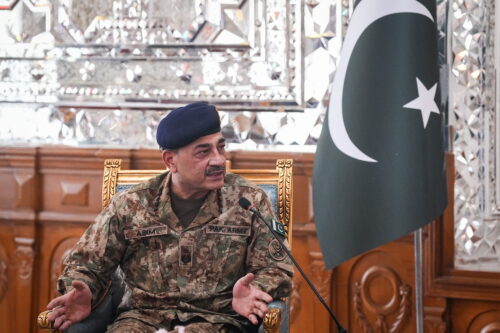
As Washington and Tehran edge closer to escalation, the most critical line of communication keeping the crisis from spiraling is being run not by polished diplomats, but by an unlikely figure: a Pakistani general. Field Marshal Asim Munir, Pakistan’s powerful army chief, has quietly become the key intermediary in the U.S.-Iran standoff, managing what may be the most important backchannel between the two sides. The mediation has thrust Pakistan to the center of the crisis while exposing it to enormous risk.
In 2025, jailed PKK leader Abdullah Öcalan made a historic call for the group to disarm and dissolve, raising hopes of ending a 40-year conflict that has shaped Turkey and the wider region. Months later, the PKK symbolically laid down arms in what many viewed as a breakthrough moment for the peace process.
Despite efforts to extend the cease-fire in Lebanon and disarm Iranian proxy Hizballah, fighting continues between the militant group and Israeli forces. Hosts Alistair Taylor and Matthew Czekaj are joined by MEI Senior Fellow Fadi Nicholas Nassar to examine what the renewed fighting means for attempts to counter Iranian influence in Lebanon and what could lie ahead. They discuss the prospects for a lasting agreement, Iran’s broader proxy strategy, and how Washington can help strengthen the sovereignty of the Lebanese state.
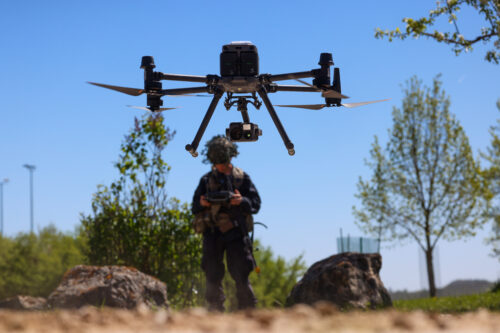
For two decades, US drones hunting terrorists across the mountains of South Asia were the symbol of American military power: precise, lethal, and unmatched. That era is now over. Drones are no longer exquisite tools of counterterrorism and have evolved into something far more common and destabilizing: cheap, expendable, and mass-produced tools of attrition.
Bonus Episode: Stalled Talks and Next Steps for the US and Iran
This bonus episode of Middle East Focus features a recent MEI Virtual Briefing. Director of Communications Zeina Al-Shaib is joined by MEI Distinguished Diplomatic Fellows Alan Eyre and Daniel Benaim to discuss the historic talks held in Pakistan last weekend between the United States and Iran. Tehran insists the US failed to gain its trust, while the US made its red lines clear and declared it would blockade Iranian ports in the Persian Gulf. What happens next? Eyre and Benaim offer insights into what goes on behind the scenes at such negotiations; identify the core issues at play; explore potential incentives to end the war; analyze the weaponization of energy; as well as assess the role of other regional players in this conflict.