Curb Your Enthusiasm: Why the Midterms Might Not Change Much in US Middle East Policy
With less than a week before the midterm elections in the United States, the spotlight is on the economy and cultural divides. US foreign policy remains mostly on the sidelines, but this year’s inconclusive Iran war and its effect on America’s economy have shaped the broader political environment in this electoral cycle.
The Multiple Costs of the US–Iran War – From Hormuz to Europe and South Asia: The Widening Economic and Political Geography of the Conflict
Wars are decided by those who hold military power, but their costs are increasingly borne by those who have little or no voice in the decisions that start them. The US–Iran war shows this imbalance very clearly. Its economic consequences have gone far beyond the battlefield and have disrupted energy markets, trade routes, food supplies, public finances and investment in the Gulf, Europe, Africa and Asia. The most striking feature of the conflict, however, is not only the size of the damage but its very unequal distribution.
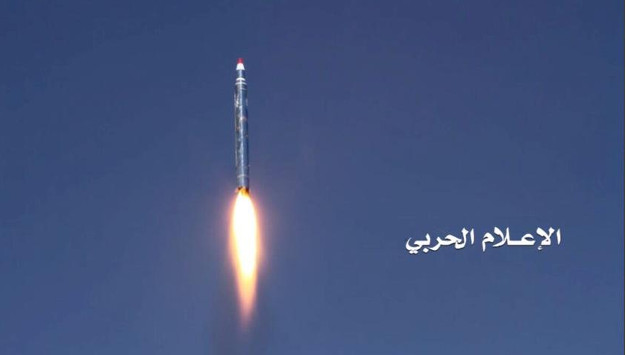
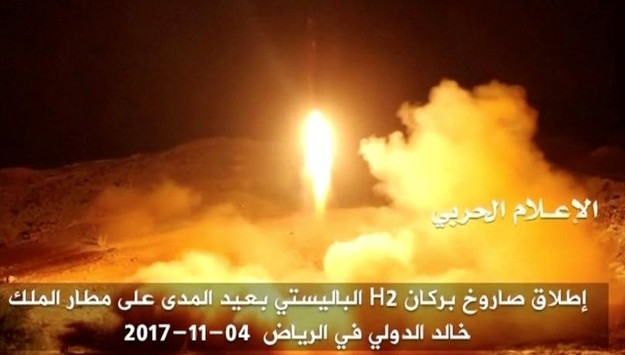
In recent weeks, the Iran-backed Houthis have fired missiles and drones deep into Saudi Arabia, striking high-profile targets, including Riyadh’s airport and Aramco’s headquarters. The attacks follow a rapid Houthi offensive in September to seize key parts of Yemen’s Red Sea coast, which Saudi-backed government forces are now trying to roll back. Fatima Abo Alasrar, an affiliated scholar at MEI and non-resident scholar at the Arab Gulf States Institute, joins hosts Alistair Taylor and Matthew Czekaj to unpack the latest phase of the conflict. They discuss what the Houthis want, Riyadh’s calculus and search for allies, and how this campaign ties into Iran’s confrontation with the United States.
Since 1967, Israeli settlements in the West Bank have been a contested feature of the Israeli-Palestinian conflict. The ultimate disposition of the settlements and ongoing activity related to their growth have repeatedly defied agreement in negotiations over a resolution to the conflict.
The Houthis are a political-military faction and Zaydi religious movement founded in northwestern Yemen in the 1980s. A key member of Iran’s Axis of Resistance with links to other militant organizations in the Arabian Peninsula and the Horn of Africa, the group has continued to pose a threat to Western interests on a global scale.
The India-Middle East-Europe Economic Corridor (IMEC) is a proposed multinational infrastructure initiative aimed at upgrading connectivity between the three regions through integrated trade, energy, and digital networks. Announced at the G20 summit in New Delhi in September 2023, IMEC is envisioned partially as a counterweight to China’s international infrastructure project, the Belt and Road Initiative.
After a decade of post-Arab Spring isolation, Turkey’s leaders have recognized that their ambition to position the country as an agenda-setter on the world stage requires active engagement in all directions. President Recep Tayyip Erdoğan’s consolidation of executive authority has centralized foreign policy decision-making and tied it to his domestic political priorities, transforming the country’s revisionist approach to one shaped primarily by personal and pragmatic interests.
MEI Senior Fellow Brian Katulis engages friends, colleagues, and policy experts in casual conversations on the most important happenings in the Middle East.
After ISIS, Iran's Afghan Proxy in Syria May Fight in Other Regional Conflicts
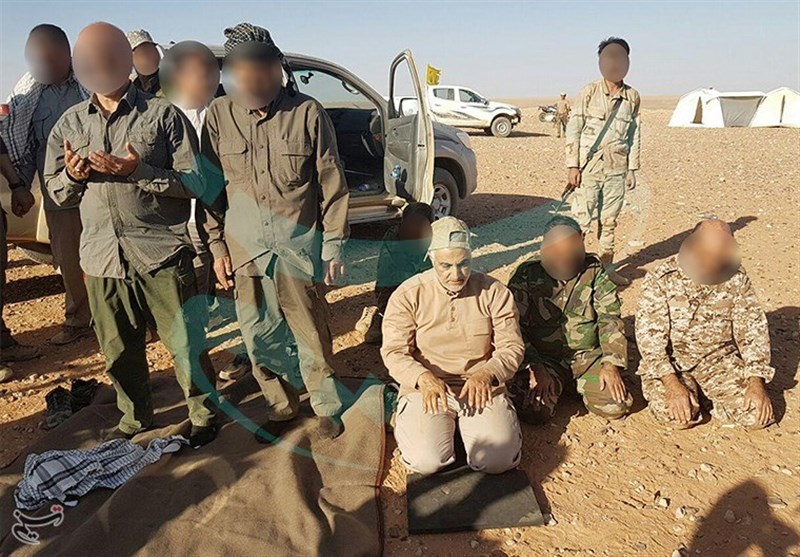
A commander of the Fatemiyoun Division, an Iranian-led Afghan Shiite militia group fighting in Syria, has said that the mission of his forces is not confined in Syria, and that the militiamen will be willing to fight in other regional conflicts and around the world if instructed by Supreme Leader Ali Khamenei.
In our final episode of the year, Paul Salem interviews several MEI scholars on the key events that transpired across the Middle East in 2017 including in Turkey, Saudi Arabia, Yemen, Syria, Iraq, and Iran. Guests include Gerald Feierstein, Charles Lister, Gonul Tol, and Alex Vatanka.
Iran Plans to Keep Long-Term Military Presence in Syria
A senior Iranian officials has said that Tehran will keep its military presence in Syria for the long haul, the Iranian media reported. “Based on the request of the legitimate government of Syria, we will continue our presence and advisory assistance until all terrorist groups in this country are destroyed,” said Ali Shamkhani, the secretary of Iran’s Supreme National Security Council.
Khamenei Aide: Iran Will Support “Resistance” to Confront U.S. in Region
A senior aide to Iran’s Supreme Leader Ali Khamenei has said that Iran will continue to aid the “resistance” forces in Yemen, Iraq, Syria and Lebanon to confront U.S. influence in the Middle East. “Victory in Iraq, Syria, Lebanon and Yemen will continue as long as the resistance coalition defends its achievements. And as long as necessary, we will have a presence in these countries. The Islamic Republic of Iran has an active presence [in these countries].
After the publication in 2017 of my book Warnings: Finding Cassandras to Stop Catastrophes, co-authored with RP Eddy, I have been often asked what my predictions are for possible trouble ahead. The point of the book was that there are recognized, data-driven experts who see things accurately before other experts, not that I am capable of seeing disasters coming.
Iran-Backed Iraqi Paramilitaries Gearing up for Next Year’s Elections
The leader of a prominent Iranian-backed unit within Iraq’s Popular Mobilization Forces (P.M.F.) said today that his group will hand over its heavy and medium weapons to the Iraqi security forces, Iran’s Fars News Agency reported. Qais al-Khazali, the head of the Asa’ib Ahl al-Haq, called on the Iraqi government to value P.M.F. forces as an asset and treat them fairly. The A.A.H.
Iranian Cleric Calls for Arming Palestinians for “Third Intifada”
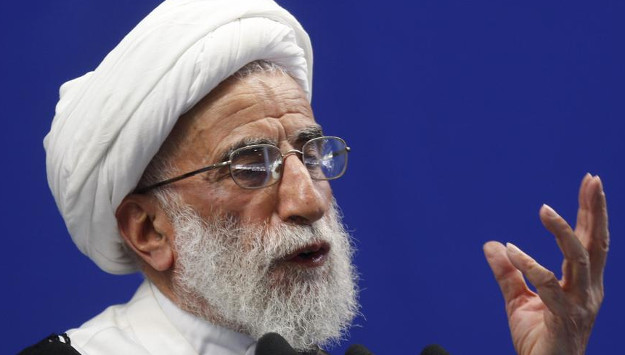
A senior Iranian cleric today called for arming Palestinians to wage a “third intifada” against Israel, Fars News Agency reported. The interim Friday prayer of Tehran told worshippers that the fight against ISIS in Iraq and Syria has further solidified Iran’s influence in the region and stressed that the creation of Iranian-led “resistance” forces in the region will lead to the destruction of Israel. “The enemies created Daesh [ISIS] so as to create a security shield for Israel.
After Iraq and Syria, I.R.G.C. Seeking to “Expand” Its Role in Yemen and Broader Region
Emboldened by its recent gains in Syria and Iraq, Iranian military leaders are seeking to play a more aggressive role in other regional conflicts in order to “expand” Iranian influence and export the “Islamic Revolution.” In particular, latest statements by commanders of the Islamic Revolution Guards Corps and commentaries in the Iranian media suggest that the I.R.G.C. is planning to further increase its support for its Houthi allies in Yemen.
All the President’s Militias: Assad’s Militiafication of Syria
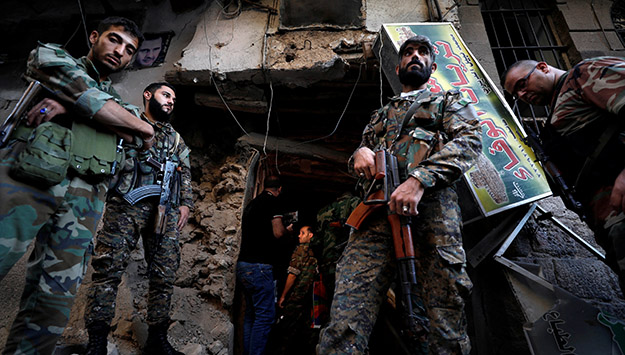
After nearly seven years of war, the military balance of power in Syria appears to have shifted in favor of President Bashar al-Assad and his allies, Russia and Iran. Since Russia’s military intervention in September 2015, Assad has managed to either retain or recapture most major population centers in the country encompassing so-called ‘Useful Syria’—including Damascus, Homs, Hama, Aleppo and Latakia. It most recently broke the ISIS siege on Deir Ezzor, paving the way for further gains in the city and its surrounding areas, leading to the Iraqi border town of Al-Bukamal.
Iran Poised to Test More Ballistic Missiles in Defiance of International Demands
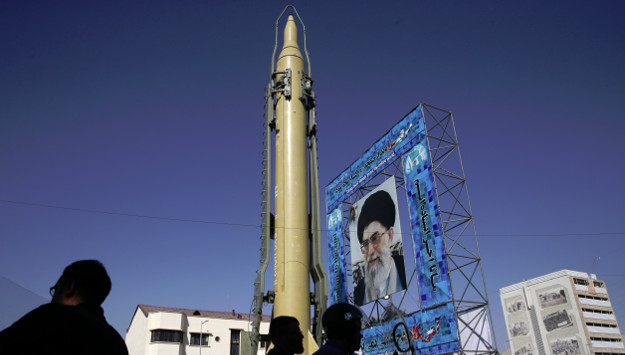
Iran’s leaders reiterate that the Islamic Republic will not negotiate over its controversial missile program despite mounting international pressure. Abbas Araghchi, deputy foreign minister of Iran, said the country will continue to test new ballistic missiles as planned. “Iran’s missiles exist with full force. And when needed, missile tests will be carried out. And if necessary, Iran will launch missile attacks as it did against Daesh [ISIS in Syria],” he added.
Iranian Leaders Say Israel's "Demise" Sooner after Trump's Jerusalem Plan
The chairman of Iran’s Assembly of Experts has said that President Donald Trump’s decision to recognize Jerusalem as Israel’s capital will mark the demise of Israel, according to the Iranian media.
I.R.G.C. May Seek to Expand Military Role beyond Syria and Iraq, Warns Reformist Daily
As the battle against ISIS is winding down in Iraq and Syria, some military leaders and hardliners in Iran call for not only keeping a long-term military presence in both countries but also expand the country’s “military advisory missions” to other conflict zones in the region, including Yemen and Palestine, warns reformist Iranian daily Bahar.
I.R.G.C.'s Khatam al-Anbia Eyes Leading Role in Syria’s Reconstruction
The head of Khatam al-Anbia Construction Base, the main engineering and construction arm of the Islamic Revolution Guards Corps (I.R.G.C.), has said that the conglomerate is ready to play a leading role in Syria’s reconstruction process, Tasnim News Agency reported.
The oldest peer-reviewed publication dedicated to the study of the modern Middle East, MEI’s flagship journal covers politics, society, and culture in the region.