Curb Your Enthusiasm: Why the Midterms Might Not Change Much in US Middle East Policy
With less than a week before the midterm elections in the United States, the spotlight is on the economy and cultural divides. US foreign policy remains mostly on the sidelines, but this year’s inconclusive Iran war and its effect on America’s economy have shaped the broader political environment in this electoral cycle.
The Multiple Costs of the US–Iran War – From Hormuz to Europe and South Asia: The Widening Economic and Political Geography of the Conflict
Wars are decided by those who hold military power, but their costs are increasingly borne by those who have little or no voice in the decisions that start them. The US–Iran war shows this imbalance very clearly. Its economic consequences have gone far beyond the battlefield and have disrupted energy markets, trade routes, food supplies, public finances and investment in the Gulf, Europe, Africa and Asia. The most striking feature of the conflict, however, is not only the size of the damage but its very unequal distribution.
In recent weeks, the Iran-backed Houthis have fired missiles and drones deep into Saudi Arabia, striking high-profile targets, including Riyadh’s airport and Aramco’s headquarters. The attacks follow a rapid Houthi offensive in September to seize key parts of Yemen’s Red Sea coast, which Saudi-backed government forces are now trying to roll back. Fatima Abo Alasrar, an affiliated scholar at MEI and non-resident scholar at the Arab Gulf States Institute, joins hosts Alistair Taylor and Matthew Czekaj to unpack the latest phase of the conflict. They discuss what the Houthis want, Riyadh’s calculus and search for allies, and how this campaign ties into Iran’s confrontation with the United States.
Since 1967, Israeli settlements in the West Bank have been a contested feature of the Israeli-Palestinian conflict. The ultimate disposition of the settlements and ongoing activity related to their growth have repeatedly defied agreement in negotiations over a resolution to the conflict.
The Houthis are a political-military faction and Zaydi religious movement founded in northwestern Yemen in the 1980s. A key member of Iran’s Axis of Resistance with links to other militant organizations in the Arabian Peninsula and the Horn of Africa, the group has continued to pose a threat to Western interests on a global scale.
The India-Middle East-Europe Economic Corridor (IMEC) is a proposed multinational infrastructure initiative aimed at upgrading connectivity between the three regions through integrated trade, energy, and digital networks. Announced at the G20 summit in New Delhi in September 2023, IMEC is envisioned partially as a counterweight to China’s international infrastructure project, the Belt and Road Initiative.
After a decade of post-Arab Spring isolation, Turkey’s leaders have recognized that their ambition to position the country as an agenda-setter on the world stage requires active engagement in all directions. President Recep Tayyip Erdoğan’s consolidation of executive authority has centralized foreign policy decision-making and tied it to his domestic political priorities, transforming the country’s revisionist approach to one shaped primarily by personal and pragmatic interests.
MEI Senior Fellow Brian Katulis engages friends, colleagues, and policy experts in casual conversations on the most important happenings in the Middle East.
Think West to Go West: Origins and Implications of India’s West Asia Policy Under Modi (Part II)
The first part of this article outlined how the newly-elected Narendra Modi government had no sense of where West Asia, including the Persian Gulf, fit into its larger foreign policy. However, this view changed radically following overtures from the Abu Dhabi royal family and the August 2015 state visit by Prime Minister Modi to the United Arab Emirates (U.A.E.). This second part details how, since that visit, India’s relations with West Asia, and particularly with the Gulf monarchies and Iran, have evolved.
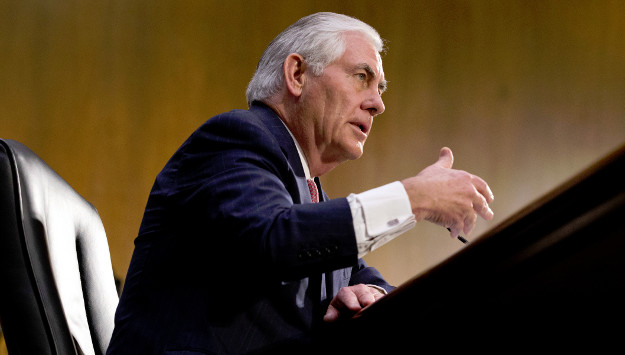
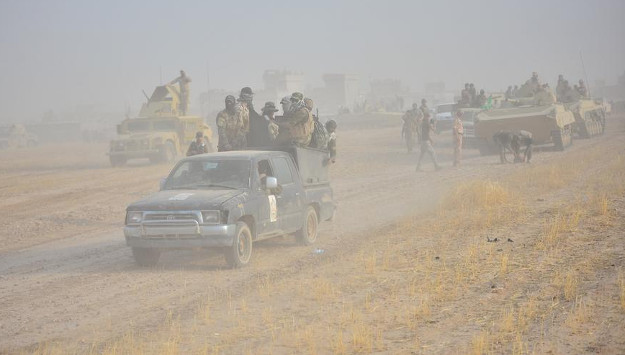
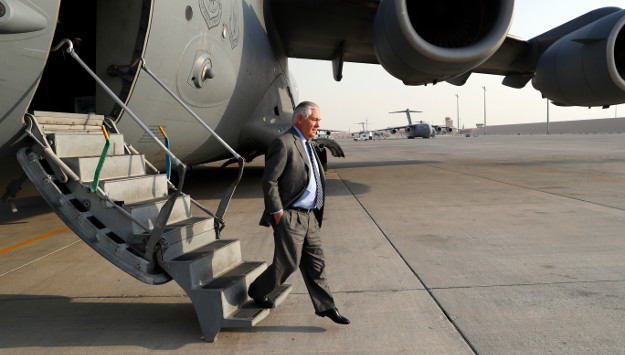
U.S. Secretary of State Rex Tillerson’s recent remarks about the role of Iranian-led militias in Iraq have sparked a lot of controversy. “Certainly, Iranian militias that are in Iraq, now that the fight against Daesh and ISIS is coming to a close, those militias need to go home,” Tillerson said at a press conference in Riyadh on October 22 just before departing for Baghdad.
Iran-Backed Iraqi Group Calls for American Troops to Leave Iraq
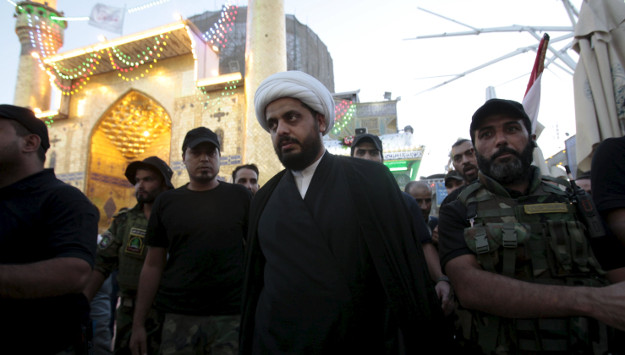
U.S. Secretary of State Rex Tillerson’s call for Iranian-sponsored militia forces in Iraq to be disbanded drew angry reactions from leaders of Popular Mobilization Forces (P.M.F.). Qais al-Khazali, the head of Asa’ib Ahl al-Haq, said Washington should immediately withdraw its troops from the Arab country as soon as the fight against the Islamic State is over.
Hojjatoleslam Mohammad Mohammadi Golpaigani, the head of Supreme Leader Ali Khamenei’s office, credited the Iranian leadership for preventing the establishment of a “second Israel” in northern Iraq. “America and Israel had planned to create a second Israel in the Iraqi Kurdistan region. And it is a shame that the Israeli flag was hoisted there,” Golpaigani said at the inauguration ceremony of 200 mosques and a cultural center today.
Tillerson Promotes Stronger Saudi-Iraq Ties | Monday Briefing
In this week’s Monday Briefing, MEI experts Gerald Feierstein, Marvin G. Weinbaum, Randa Slim, Paul Salem, and Gonul Tol provide analysis on recent and upcoming events including Secretary Tillerson’s visit to Riyadh and Doha as well as his visit to India and Pakistan, Abadi’s regional tour to promote positive relations with neighbors, Sisi’s visit to Paris to boost Egypt-France relations , and German Chancellor Merkel’s threat to cut European Union funding to Turkey due to its crackdown on democratic institutions.
The Growing Conflict between Iran’s Intelligence Agencies
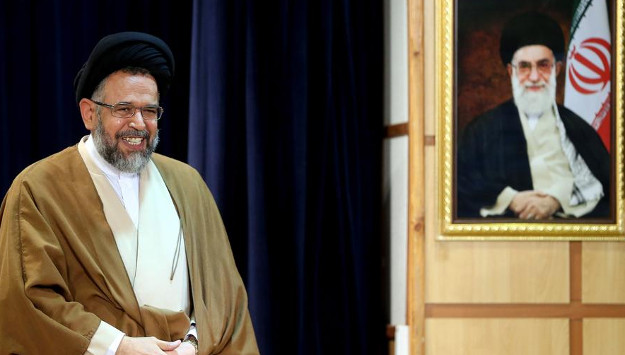
Competition between parallel government institutions with overlapping fields of responsibility is hardly a novelty in Iran. It predates the Islamic Republic and has traditionally helped Iranian rulers to play different power centers against each other and maintain control. Under Supreme Leader Ali Khamenei, however, the conflict between the country’s intelligence agencies has reached an unprecedented level, which undermines public confidence not only in the government but also in Khamenei’s competence.
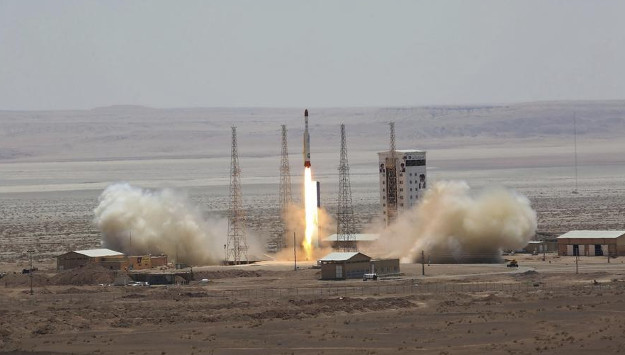
Iran Warns Europe against Siding with U.S. in Missile Dispute
The head of Iran’s powerful Judiciary ruled out any negotiations with the United States and other world powers over the country’s controversial missile program, and warned European countries not to side with Washington in the latest U.S.-Tehran standoff. “The Europeans should understand that if they cooperate with America, we will stand up against them the same way we have confronted the United States,” Ayatollah Sadegh Amoli Larijani said at a gathering of senior Iranian Judiciary officials.
Iran Seeks Closer Economic Ties with Africa to Minimize U.S. Sanctions
On Monday, Iran’s Foreign Minister Javad Zarif participated in the 13th Iran-South Africa Business Forum held in Pretoria, the Iranian media reported. Speaking at the event, the Iranian foreign minister called for expansion of economic and trade ties between the two countries and urged the South African government to resume banking relations with Iran.
Hamas: Tehran Visit “Practical Response” to Israeli Anger
The visit by the Hamas delegation to Tehran was a “practical response” to the Israeli government’s demand that Hamas cut its ties with Tehran, a senior spokesman for the Palestinian Hamas group said in an
Iran’s Double-Edged Track Record in Fighting Drug Trafficking
A senior Iranian officials claimed today that the country’s counter-narcotics police forces have captured more than 400 tons of illicit drugs in the past six months.
Iraqi Kurdish, Turkmen Leaders Accuse Iran-backed Group of Looting in Kirkuk
Asa’ib Ahl al-Haq (A.A.H.), an Iranian-backed Iraqi militia group, continues to play a role in political and security developments in the disputed province of Kirkuk. While the group is cultivating close relations with some leaders of the Patriotic Union of Kurdistan (P.U.K.), other Kurdish leaders and Kurdish residents of the disputed Kirkuk province accuse the militia group of looting government buildings in Kirkuk and promoting a sectarian agenda there.
Hamas Delegation Arrives in Tehran for High-Level Talks
A delegation of senior Hamas officials arrived in Tehran today to discuss bilateral issues as well as the latest Israeli-Palestinian developments, the Iranian media reported. Saleh al-Arouri, the deputy head of Hamas’ political bureau and a U.S.-designated founder of the group’s military wing, is heading the delegation. The two sides are also expected to discuss the implications of the latest reconciliation pact between Hamas and Fatah and the way forward. On Thursday, Yahya Sinwar, who was earlier this year appointed to lead Hamas in Gaza, said the group will not cut its ties with Iran.
Iran, Russia Discuss Ways to Boost Military Cooperation
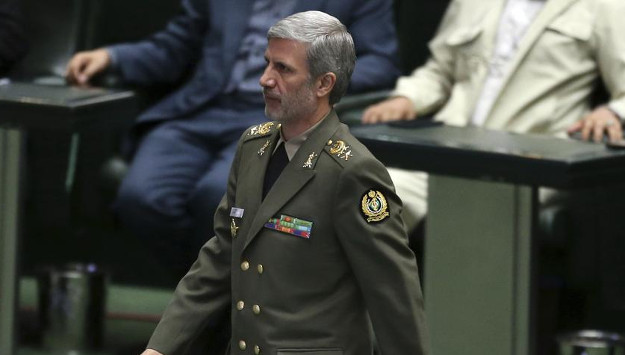
Iranian and Russian defense ministers discussed ways to further enhance military cooperation between the two countries in a telephone conversation on Thursday, the Iranian media reported.
Who will win the spoils from ISIS’ demise in Syria? The Syrian civil war is entering a new phase with the liberation of Raqqa, as well as the Turkish intervention in the north. MEI experts Paul Salem, Charles Lister, Ibrahim al-Assil and Gonul Tol discuss the latest developments in Syria.
The oldest peer-reviewed publication dedicated to the study of the modern Middle East, MEI’s flagship journal covers politics, society, and culture in the region.