Israelis turned out in their highest numbers in decades on October 27 for the country’s first election since the Hamas attacks of October 7, 2023. Prime Minister Benjamin Netanyahu’s bloc lost 15 seats and its Knesset majority, but Gadi Eisenkot’s opposition bloc also fell short, leaving Arab parties, with a record 19 seats, potentially decisive in forming the next government. MEI Senior Fellow Natan Sachs joins hosts Alistair Taylor and Matthew Czekaj to unpack the results, the coalition math, and what comes next for Israel’s security policy, the wider region, and US-Israeli relations.
Recent Elections and What They May Mean for the Middle East
Recent elections for the Israeli Knesset and American Congress may make less of a difference in the Middle East than some people think. Elections are significant indicators of national political trends, but do not always translate into changes in national security strategies. That is likely the case now in both nations.
The Coming Debate Over the US Military Presence in the Gulf
The war with Iran is hardly over, but the debate over the shape and nature of the post-conflict American posture in the Gulf region is just beginning. Undoubtedly, how the war ends will affect how the United States adjusts its role. While this debate is still in its early stages, something of a conventional wisdom is already developing in policy circles that could seriously compromise American influence in the Middle East.
Since 1967, Israeli settlements in the West Bank have been a contested feature of the Israeli-Palestinian conflict. The ultimate disposition of the settlements and ongoing activity related to their growth have repeatedly defied agreement in negotiations over a resolution to the conflict.
The Houthis are a political-military faction and Zaydi religious movement founded in northwestern Yemen in the 1980s. A key member of Iran’s Axis of Resistance with links to other militant organizations in the Arabian Peninsula and the Horn of Africa, the group has continued to pose a threat to Western interests on a global scale.
The India-Middle East-Europe Economic Corridor (IMEC) is a proposed multinational infrastructure initiative aimed at upgrading connectivity between the three regions through integrated trade, energy, and digital networks. Announced at the G20 summit in New Delhi in September 2023, IMEC is envisioned partially as a counterweight to China’s international infrastructure project, the Belt and Road Initiative.
After a decade of post-Arab Spring isolation, Turkey’s leaders have recognized that their ambition to position the country as an agenda-setter on the world stage requires active engagement in all directions. President Recep Tayyip Erdoğan’s consolidation of executive authority has centralized foreign policy decision-making and tied it to his domestic political priorities, transforming the country’s revisionist approach to one shaped primarily by personal and pragmatic interests.
South Korea: Reflecting on 25 Years of Transitional Justice
Prior to its first democratically elected government taking office in 1988, the Republic of Korea endured a peculiarly harsh twentieth century. The first decade saw Korea’s last dynasty struggle futilely to modernize amidst the specter of growing Japanese interference. From 1910 until 1945, the nation suffered through the traumatic and humiliating period of Japanese colonization, emerging upon Japan’s defeat in World War II only to face the division of the country into North and South Korea and the incredibly destructive Korean War of 1950-1953. The post-Korean War period was characterized by political divisions, human rights abuses, and economic growth, presided over by a series of authoritarian rulers.
Toward Victim-centered Transitional Justice: Nepal and Timor-Leste
The first decade of the twenty-first century has been characterized by the emergence of a new politics of human rights that has become the defining agenda of much national and international politics. This universalist discourse of rights has gained unprecedented leverage in global debate, propelled by narratives that rarely pause to question the evidence or ideology that underlies it. This is nowhere more true than in the practice of human rights after conflict or political violence, in which transitional justice has become a dominant approach to addressing legacies of violations, backed by an industry of practitioners and donors.
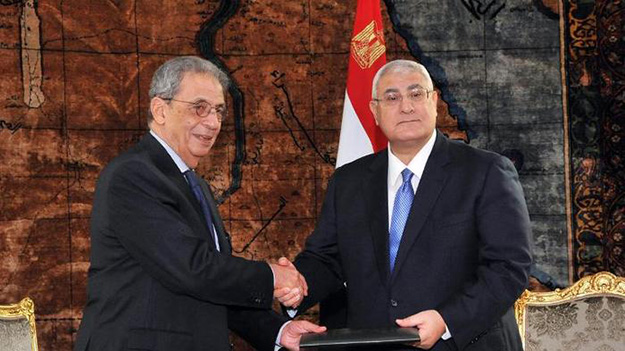
On December 1, a 50-member panel given the task of amending Egypt’s constitution approved a draft of the document. It now goes to Interim President Adly Mansour for his approval and will then go to the public in a referendum. MEI spoke with its Senior Fellow, Khalil al-Anani, about the draft, how it differs from the 2012 constitution passed under Mohamed Morsi, and how the Muslim Brotherhood has reacted to it.
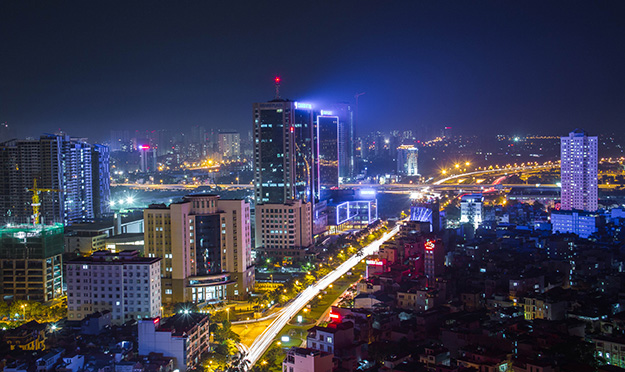
During the 1970s the Communist Party dominated almost all walks of life in Vietnam. This strict control, especially in regard to the economy, failed to achieve sustainable development. Vietnamese authorities then began to pursue a policy of openness to the outside world, and the Doi Moi, or “renovation,” was launched in 1986. As a result of this and other gradual reforms, Vietnam has become one of the fastest-growing economies in Asia, with annual GDP growth averaging 7.1 percent between 2000 and 2012—a rate that the country is expected to sustain over the next decade. In this context, Gulf Cooperation Council (GCC)-Vietnam relations are promising and may develop steadily over the coming years.
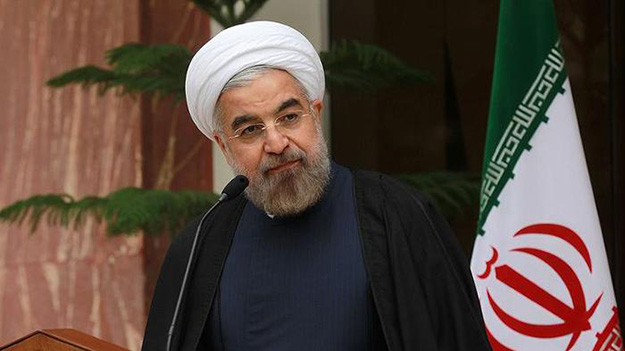
Earlier this week, Iran and world powers reached a deal in which Iran will curb its nuclear program for six months in exchange for a drop in some sanctions. MEI spoke with one of its experts, Alex Vatanka, to gain an understanding of how hardliners in Iran are reacting to the deal as well as other internal dynamics in the Islamic Republic.
How have hardliners in Iran, such as the Revolutionary Guards, responded to the news of the interim agreement?
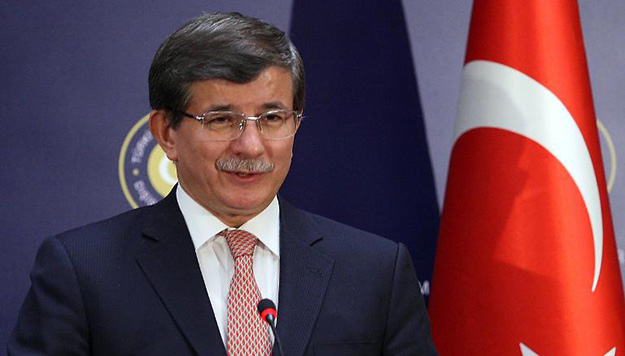
Turkish Foreign Minister Ahmet Davutoglu’s visit to Washington, D.C. last week came on the heels of a year of soul searching for Turkish foreign policy. After the Arab uprisings shook Turkey’s guiding principle of “zero problems with neighbors,” the country now seems intent on resuming the leadership role it enjoyed in the pre-Arab Spring Middle East.
Turkey-Pakistan Security Relations since the 1950s
The initial impulse for Pakistan and Turkey to pursue security cooperation stemmed from their common opposition to Communism in the 1950s. Over the past decade, Pakistan and Turkey have once again sought to cooperate in the security sphere, this time in countering terrorism and ensuring stability in Afghanistan.
The Iran Nuclear Deal: Risks and Opportunities for the Region
The nuclear deal with Iran, though still temporary and tentative, is ushering in a historic shift in the patterns of power, conflict, and diplomacy in the region. Like all historic shifts, it is laden with uncertainty and risk of new conflicts, but also carries with it potential opportunities for further diplomacy and finding common ground. Given the precedent of conflict and mistrust in the region, it is no surprise that the deal has raised concerns among many of America’s allies.
The Tortuous Route of the U.S.-Afghan Security Pact
Yesterday, the United States and Afghanistan completed a bilateral security pact ensuring that U.S. troops will remain in the country. It now goes to a council of elders—the loya jirga—for authorization. MEI spoke with Scholar-in-Residence Marvin Weinbaum about the pact’s sticking points, next steps for its approval, and what each country gains from the agreement.
What does the U.S.-Afghan security pact stipulate?
MEI 67th Annual Conference – Beyond the Street: Arab Youth in Post-Uprising Politics
Moderator: Brian Katulis, Center for American ProgressLina Khatib, Stanford UniversityAhmad Maher, April 6 MovementMabrouka Mbarek, Tunisian Constituent Assembly MemberAyat Mneina, Libyan Youth Movement
MEI 67th Annual Conference – In Search of Coherence: US Policy in the Arab World
Moderator: Michael Hudson, National University of SingaporeAaron David Miller, The Woodrow Wilson CenterFred Hof, Rafik Hariri Center at the Atlantic CouncilRoula Khalaf, Financial TimesSteven Simon, International Institute for Strategic Studies
MEI 67th Annual Conference – Keynote Luncheon: Breaking the Impasse
Moderator: Amb. Daniel Kurtzer, Middle East InstituteMunib Masri, PADICO HoldingYossi Vardi, High-tech investor and entrepreneurMiroslav Dusek, World Economic Forum
MEI 67th Annual Conference – Sectarianism and the Balkanization of the Levant
Moderator: Kim Ghattas, BBCF. Gregory Gause, University of Vermont & Brookings DohaMohsen Milani, University of South FloridaPaul Salem, The Middle East InstituteMona Yacoubian, Stimson Center
تُعد المجلة الرئيسية لمعهد الشرق الأوسط أقدم مطبوعة محكّمة مكرّسة لدراسة الشرق الأوسط الحديث، وتغطي المجلة الرئيسية في المعهد السياسة والمجتمع والثقافة في المنطقة.