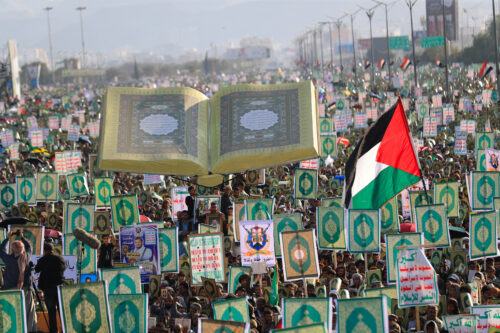
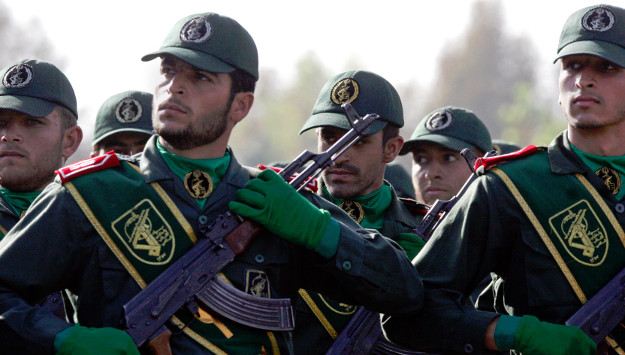
Washington says it doesn’t know who runs Iran. Tehran insists its leadership is united. MEI Senior Fellow Alex Vatanka joins hosts Alistair Taylor and Matthew Czekaj to sort out where the truth lies. They look at the small circle of political and military figures now steering the war effort in Tehran: who they are, how they make decisions, and how unified they really are. They also discuss the current state of US-Iran negotiations, the role of the upcoming midterm elections in the United States, and how the Islamic Republic is preparing for a potential renewal of conflict afterward.
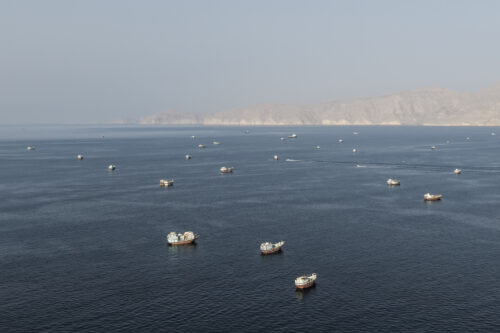
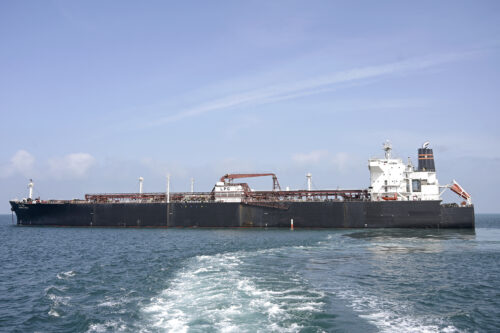
Crude oil is flowing out of the Gulf again, but the market is no better prepared for another disruption in the Strait of Hormuz. It has assembled a temporary system for managing one. Crude exports from the Gulf, excluding Iran, returned to pre-war levels in September, while total Gulf shipments reached 15.5 million barrels a day, more than 80% of the pre-conflict volume.
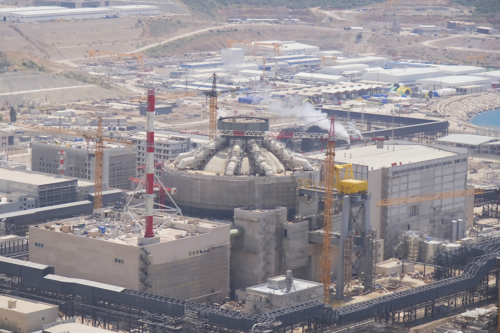
As a result of the Iran war, Turkish thinking about nuclear weapons appears to be shifting. Iran’s emergent ability to threaten regional states (and possible determination to acquire a nuclear weapon itself), growing concern about Israeli aggressiveness, doubts about US security guarantees, and greater Saudi nuclear autonomy are all pushing Ankara to consider a future nuclear option.
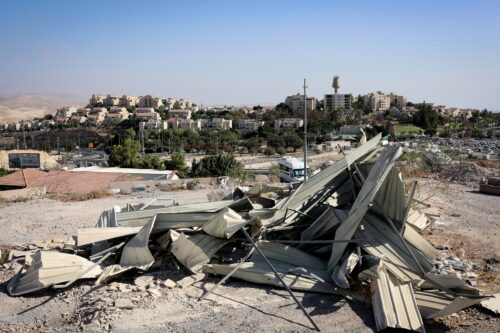
Since 1967, Israeli settlements in the West Bank have been a contested feature of the Israeli-Palestinian conflict. The ultimate disposition of the settlements and ongoing activity related to their growth have repeatedly defied agreement in negotiations over a resolution to the conflict.
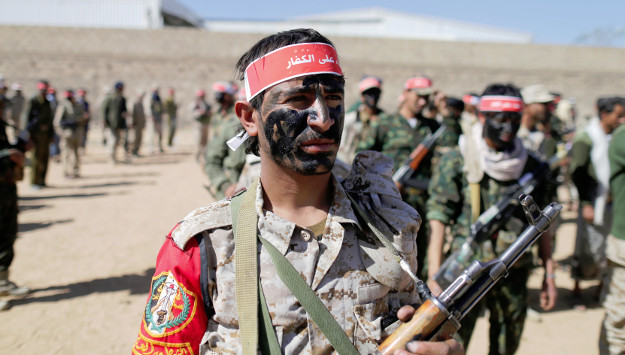
The Houthis are a political-military faction and Zaydi religious movement founded in northwestern Yemen in the 1980s. A key member of Iran’s Axis of Resistance with links to other militant organizations in the Arabian Peninsula and the Horn of Africa, the group has continued to pose a threat to Western interests on a global scale.
The India-Middle East-Europe Economic Corridor (IMEC) is a proposed multinational infrastructure initiative aimed at upgrading connectivity between the three regions through integrated trade, energy, and digital networks. Announced at the G20 summit in New Delhi in September 2023, IMEC is envisioned partially as a counterweight to China’s international infrastructure project, the Belt and Road Initiative.
After a decade of post-Arab Spring isolation, Turkey’s leaders have recognized that their ambition to position the country as an agenda-setter on the world stage requires active engagement in all directions. President Recep Tayyip Erdoğan’s consolidation of executive authority has centralized foreign policy decision-making and tied it to his domestic political priorities, transforming the country’s revisionist approach to one shaped primarily by personal and pragmatic interests.
MEI Senior Fellow Brian Katulis engages friends, colleagues, and policy experts in casual conversations on the most important happenings in the Middle East.
IRGC's role in Iran's economy growing with its engineering arm set to execute 40 mega-projects
The commander of Khatam al-Anbia Construction Base, the main engineering arm of the Islamic Revolution Guards Corps (IRGC), has said that the conglomerate will complete 40 mega-projects in the current Iranian year, which began on March 21.
What impact will the Trump administration’s new arms sales policy, named “Buy American,” have on the Middle East, historically one of the major destinations for U.S.-made weapons? Michael O’Hanlon, senior fellow and director of research for the Foreign Policy program at Brookings, and Bilal Saab, director of MEI’s Defense and Security program, join host Paul Salem to discuss.
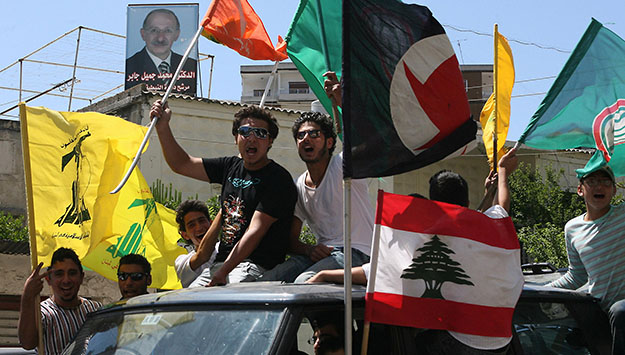
With Lebanon’s parliamentary elections just around the corner, Washington will be watching closely how its Lebanese nemesis, the powerful Shi‘a party Hezbollah, sets itself up for the future.
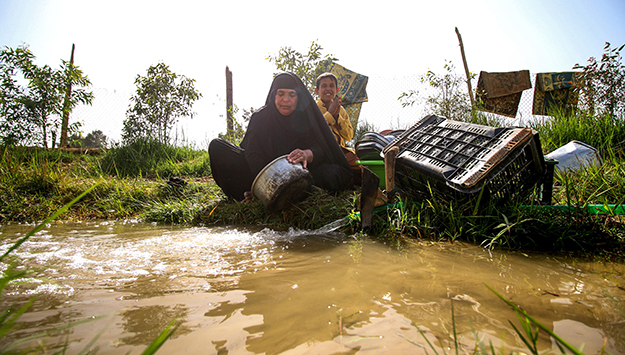
Iraq wilting: How creeping drought could cause the next crisis
Nabil Musa learned how to swim and fish in the Tanjero River in the city of Sulaymaniyah, Iraq. The Tanjero eventually joins the Tigris River, which, together with the Euphrates River, gave life to Mesopotamia.
Iranian leaders say “axis of resistance” will retaliate against Israel for Syria strikes
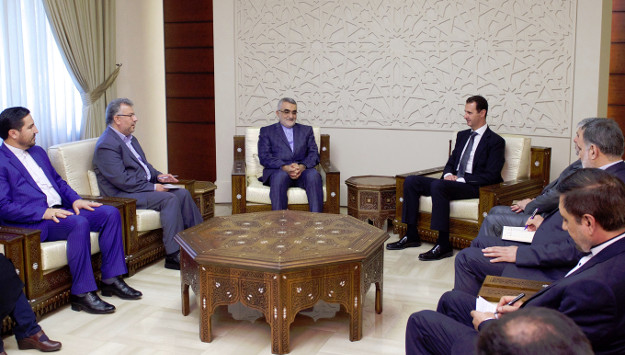
On an official visit to Damascus this week, the chairman of the Iranian Parliament’s National Security and Foreign Policy committee said that the Islamic Republic would retaliate against Israel for last month’s strikes on an air Syrian military base that killed several Iranian nationals. “We will respond to any aggression on Iran at the appropriate time and place,” Alaeddin Boroujerdi said at a news conference in the Syrian capital on Tuesday. The senior Iranian lawmaker made the remarks after meeting with President Bashar al-Assad and top Syrian officials and parliamentarians.
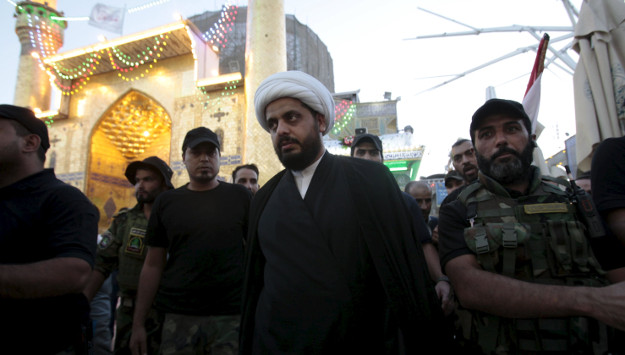
Iran-backed Fateh Alliance seeks to win or play kingmaker in upcoming Iraqi elections
With Iraq’s May 12 parliamentary elections nearing, the coalition of Iranian-supported militia groups called Fateh Alliance is confident that it can translate its military gains into a political victory by either winning the premiership or playing kingmaker in the post-election government formation process, according to Tasnim News Agency, an outlet affiliated with Iran’s Revolutionary Guards.
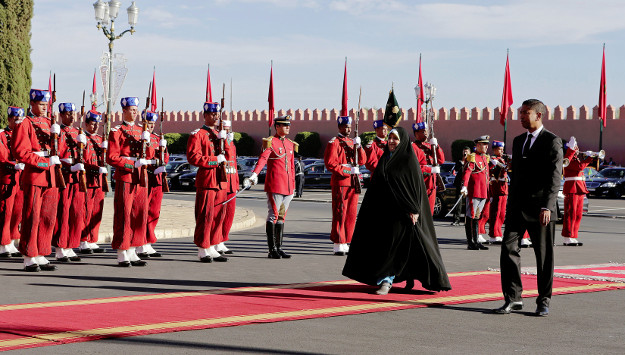
Morocco cuts ties with Tehran, accusing Iran and Hezbollah of arming Polisario Front
The Moroccan government announced yesterday that it has severed its diplomatic relations with Iran over Tehran’s support for the Polisario Front, a separatist movement in Western Sahara,
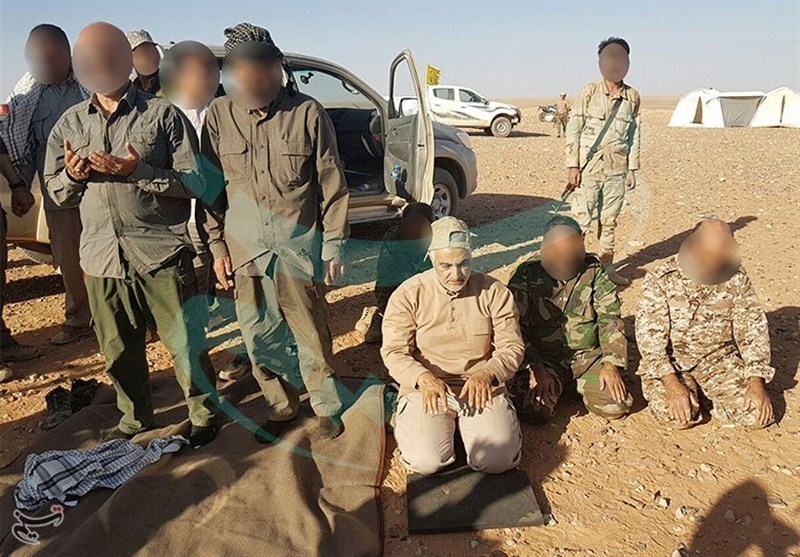
Conflicting reports on suspected Israeli strikes targeting Iranian-backed Afghan militia in Syria
The commander of the Fatemiyoun Division, an all-Afghan militia unit fighting under the Iranian Revolutionary Guards’ leadership in Syria, has rejected media reports that missiles hit its military base near Syria’s northwest over the weekend. “The military base of this Division is near the city of Aleppo. No combatants from this force have been martyred by an attack as reported in the media,” Tasnim News Agency, a Revolutionary Guards mouthpiece, quoted the Afghan Shiite commander as saying in an exclusive interview, without disclosing his name.
In the midst of a series of diplomatic crises in the Gulf region, Oman stands out as a widely-respected regional mediator. The small country has remained neutral and facilitated economic transactions between Qatar and other GCC countries. The Sultanate has used its balanced relationships with all of the major parties both within and outside Yemen to work towards resolving the Yemen conflict. While managing these delicate diplomatic tensions, Oman has also led working groups in China and India on bilateral economic ties as well as maintained cordial relations with Iran.
Turkey is going to the polls, again. On Apr. 18, President Recep Tayyip Erdogan called for snap elections, bringing forward presidential and parliamentary polls scheduled for November 2019 to this June. The vote will seal the country’s transition from a parliamentary system to a supercharged executive presidency. If Erdogan wins, many think it will be the final nail in the coffin of Turkish democracy. Should Erdogan lose, he will lose more than his grip on power. Stakes are high and all parties are bent on fighting tooth and nail.
In this week’s Monday Briefing, MEI experts Charles Lister, Gerald Feierstein, W. Robert Pearson, and Marvin G. Weinbaum provide analysis on recent and upcoming events including the escalating deterrence between Israel and Iran, Pompeo’s pressure to resolve the Gulf crisis, Turkey’s increasing isolation, and the Pashtun protests in Pakistan.
The White House last week released a new plan—called “Buy American”—to shore up U.S. arms sales to global friends and allies. It’s borne out of President Donald Trump’s desire, which he articulated during his presidential campaign, to sell more American weapons as a means to boost the U.S. economy and create more jobs.
Iran’s regional allies threaten Saudi Arabia and US after Houthi leader’s death
Iran’s regional militia allies have vowed retaliation for the death of Houthi leader Saleh al-Sammad in Yemen, the Iranian media reported. The Houthi rebels as well as Iran’s regional militia proxies said they would hold not only Saudi Arabia but also the United States accountable for the killing of al-Sammad. The Iraqi Hezbollah said the Houthi leader’s assassination will open a new chapter in the fight against Saudi Arabia, which it said is “mired in the Yemeni quagmire.” It also accused Washington of complicity.
European-US cooperation on nuclear deal unnerves Tehran
French President Emanuel Macron’s proposal to his US counterpart Donald Trump for a “new deal” with Iran has caused a great deal of anxiety in Tehran. Headlines in the Iranian media today, most in conservative outlets, accused France and Europe of betraying Tehran and siding with Washington. “Europe kneeled down,” read the headline of Vatan-e Emrooz. The paper wrote that the French president was the last ray of hope to save the nuclear accord and convince Trump to stick to the deal rather than scrap it.
The oldest peer-reviewed publication dedicated to the study of the modern Middle East, MEI’s flagship journal covers politics, society, and culture in the region.