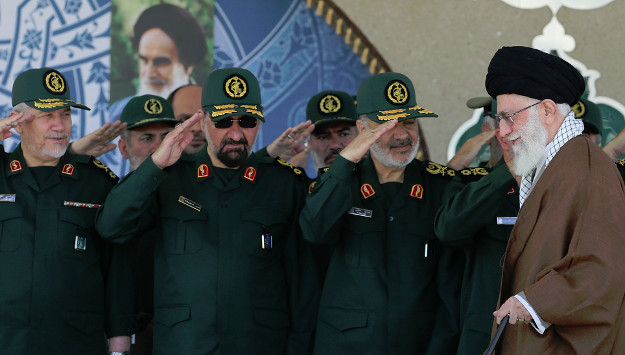
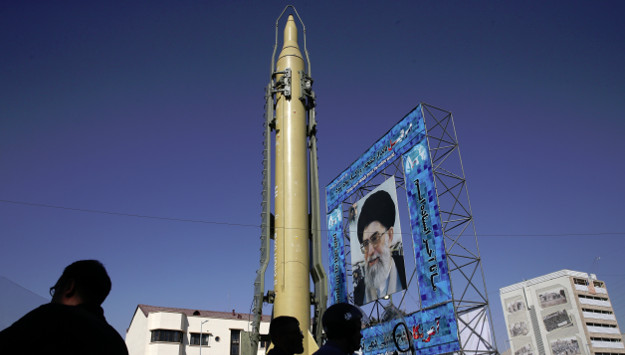
Washington says it doesn’t know who runs Iran. Tehran insists its leadership is united. MEI Senior Fellow Alex Vatanka joins hosts Alistair Taylor and Matthew Czekaj to sort out where the truth lies. They look at the small circle of political and military figures now steering the war effort in Tehran: who they are, how they make decisions, and how unified they really are. They also discuss the current state of US-Iran negotiations, the role of the upcoming midterm elections in the United States, and how the Islamic Republic is preparing for a potential renewal of conflict afterward.
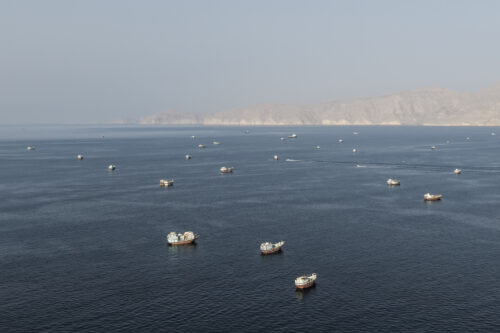
Crude oil is flowing out of the Gulf again, but the market is no better prepared for another disruption in the Strait of Hormuz. It has assembled a temporary system for managing one. Crude exports from the Gulf, excluding Iran, returned to pre-war levels in September, while total Gulf shipments reached 15.5 million barrels a day, more than 80% of the pre-conflict volume.
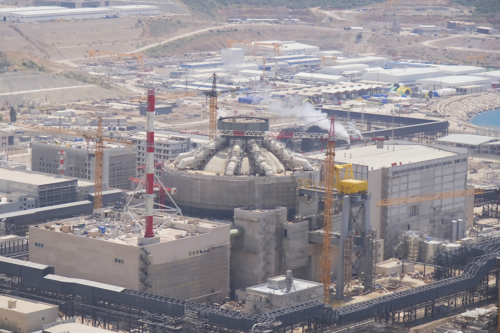
As a result of the Iran war, Turkish thinking about nuclear weapons appears to be shifting. Iran’s emergent ability to threaten regional states (and possible determination to acquire a nuclear weapon itself), growing concern about Israeli aggressiveness, doubts about US security guarantees, and greater Saudi nuclear autonomy are all pushing Ankara to consider a future nuclear option.
Since 1967, Israeli settlements in the West Bank have been a contested feature of the Israeli-Palestinian conflict. The ultimate disposition of the settlements and ongoing activity related to their growth have repeatedly defied agreement in negotiations over a resolution to the conflict.
The Houthis are a political-military faction and Zaydi religious movement founded in northwestern Yemen in the 1980s. A key member of Iran’s Axis of Resistance with links to other militant organizations in the Arabian Peninsula and the Horn of Africa, the group has continued to pose a threat to Western interests on a global scale.
The India-Middle East-Europe Economic Corridor (IMEC) is a proposed multinational infrastructure initiative aimed at upgrading connectivity between the three regions through integrated trade, energy, and digital networks. Announced at the G20 summit in New Delhi in September 2023, IMEC is envisioned partially as a counterweight to China’s international infrastructure project, the Belt and Road Initiative.
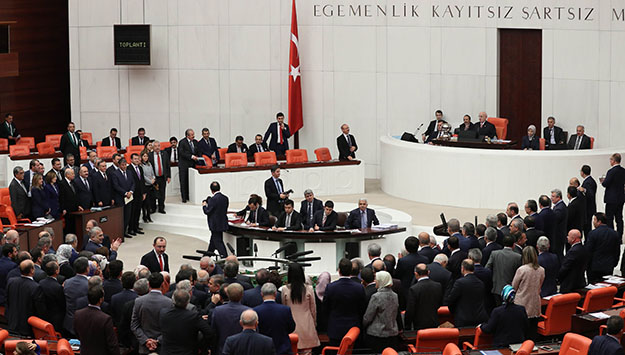
After a decade of post-Arab Spring isolation, Turkey’s leaders have recognized that their ambition to position the country as an agenda-setter on the world stage requires active engagement in all directions. President Recep Tayyip Erdoğan’s consolidation of executive authority has centralized foreign policy decision-making and tied it to his domestic political priorities, transforming the country’s revisionist approach to one shaped primarily by personal and pragmatic interests.
MEI Senior Fellow Brian Katulis engages friends, colleagues, and policy experts in casual conversations on the most important happenings in the Middle East.
Turkey’s snap elections and issues in U.S. relations
MEI’s Gonul Tol and Amb. Robert Pearson join Paul Salem to discuss the domestic political scene heading into Turkey’s snap presidential and parliamentary elections in early June and the state of its relations with the United States after the departure of Secretary of State Rex Tillerson and pending arrival of Mike Pompeo.
Iraqi oil law puts elections before state-building
Since the ratification of Iraq’s constitution in 2005, Iraq has struggled to interpret clauses 111 and 112, which stipulate that oil is the property of the Iraqi people and its revenues should be shared equitably. Several draft laws on hydrocarbon management, energy sector regulation, and oil revenue distribution have remained stalled because of differences between the federal government and the Kurdistan region over the interpretation of those clauses.
Iran revokes Telegram license as authorities step up Internet crackdown
In the latest measure to restrict Internet and disrupt foreign messaging apps, the Iranian government today announced that it has revoked Telegram’s license to host servers inside the country, the Iranian media reported. The Supreme Cyberspace Council, an agency tasked with monitoring and filtering Internet in Iran, said the license cancellation means Telegram, used by more than a half of Iran’s 80 million population, has to transfer all its servers outside Iran, and that all incoming traffic will now have to be channeled through Iran’s gove
Iran threatens to leave NPT and resume high-level enrichment as US and Europe mull "new deal"
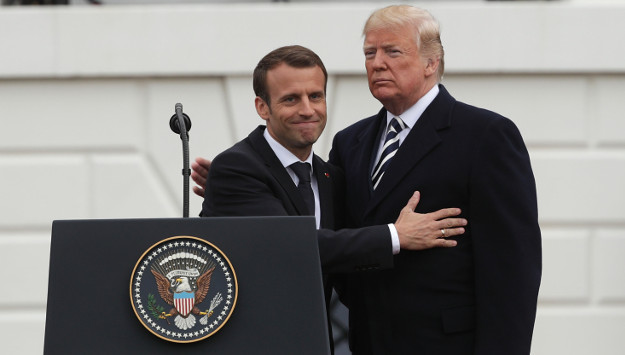
On Tuesday, President Donald Trump and his French counterpart Emmanuel Macron signaled that they will work on a “new deal” to supplement the 2015 Iran nuclear agreement and address the Islamic Republic’s ballistic missile program and destabilizing role in the region. Tehran’s response was loud and clear: The Islamic Republic will defy Western pressure and will not renegotiate the nuclear deal or make any compromises over its defense programs and regional posture.
Over the last few months, Iran has experienced a series of street protests in rural areas and social arenas once seen as the key support base for the Islamic Republic. Politically active youth are voicing their frustrations with the country’s political, social, and economic prospects. Many of these protests as well as online activism have been met with pushback from conservatives and crackdown from the government.
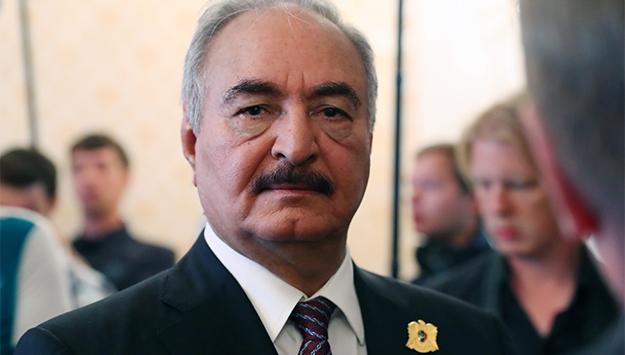
The issue for Libya is not whether 75-year-old Gen. Khalifa Hifter returns to normal health following the medical crisis that led to his hospitalization in Paris. No matter what happens to Hifter, the country must find ways to build an inclusive government in which integrated security forces at the national level are under the command of civilian, elected leaders.
Sectarianism without Borders: Copts and Genocide Recognition
In this essay, the author contends that the violence against Copts has been misleadingly characterized as alien to Egyptian culture, and discusses how some diaspora Copts and Church leaders have sought to portray the attacks that have taken place since the Arab Spring.
Iran defies Western demands over nuclear, missile and regional issues
Iranian leaders on Tuesday said they will defy Western pressure and will not renegotiate the Joint Comprehensive Plan of Action (JCPOA), the nuclear accord Tehran signed with world powers nearly three years ago. Several top Iranian officials also threatened to take drastic measures, including leaving the Treaty on the Non-Proliferation of Nuclear Weapons (NPT), if the Trump administration terminates the nuclear accord and re-imposes sanctions on Tehran. “We increased the cost for the enemy over the past five years. And if the JCPOA collapses, we have a plan.
Top Iranian official says retaliation against Israel is “inevitable”
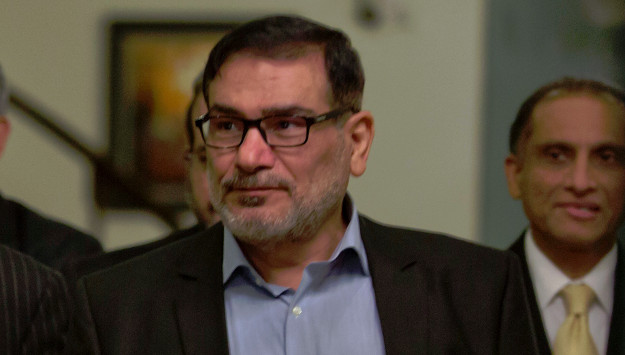
The Secretary of Iran’s Supreme National Security Council said today that the Islamic Republic is determined to punish Israel for the latest strikes on a Syrian air base in which several Iranian military personnel were killed.
In this week’s Monday Briefing, MEI experts Gonul Tol, Paul Salem, Nathan Stock, Alex Vatanka, Gerald Feierstein, and Marvin G. Weinbaum provide analysis on recent and upcoming events including upcoming snap elections in Turkey, Lebanon’s Free Patriotic Movement party, protests in Gaza, the future of the Iran nuclear deal, Yemeni peace talks, and the ISKP attack on Shiite Hazaras.
IRGC general: Any future war will result in Israel’s annihilation
The deputy commander of Iran’s Islamic Revolutionary Guards today threatened to annihilate Israel in an apparent reaction to the latest Israeli military strikes against Syrian and Iranian military targets in Syria. “Listen!
Rouhani urges military to bolster defense power as Iran unveils new missiles
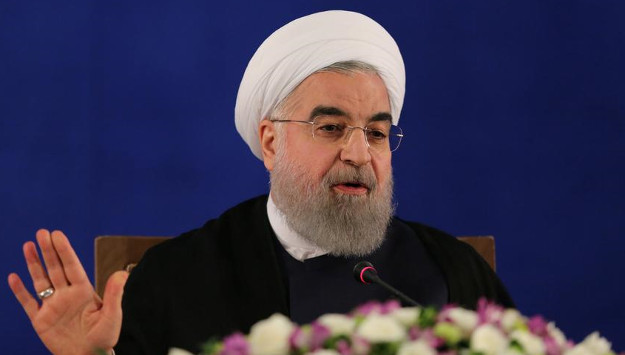
Iranian President Hassan Rouhani voiced support for the country’s military forces to develop advance weapons, including missiles, to enhance the Islamic Republic’s deterrence capabilities. “I am support the Artesh [Iran’s regular army] and Sepah [Islamic Revolution Guards Corps] to make any weapons needed for defense,” the Iranian media quoted the president as saying at a ceremony marking the anniversary of the Iranian Army. He emphasized that the Iranian Army and the IRGC do not need the permission of any foreign power to bolster the country’s defense capabilities.
After Khamenei, Rouhani leaves Telegram amid looming shutdown of foreign apps
The office of Hassan Rouhani today announced that the Iranian president has suspended his official account in Telegram, Iranian media reported. Rouhani’s decision came after Supreme Leader Ali Khameni’s office said yesterday that the Iranian leader would no longer use Telegram to “safeguard” Iran’s national security and “remove the monopoly of Telegram messenger”.
Amb. Robert Ford and Charles Lister join host Paul Salem to discuss last week’s U.S. airstrikes in Syria in response to the Assad government’s ongoing use of chemical weapons, what the Trump administration is signaling about America’s plans there, and the escalating standoff between Israeli and Iranian forces in the country.
The oldest peer-reviewed publication dedicated to the study of the modern Middle East, MEI’s flagship journal covers politics, society, and culture in the region.