Bonus Episode: Previewing Israel’s First Post-October 7 Election
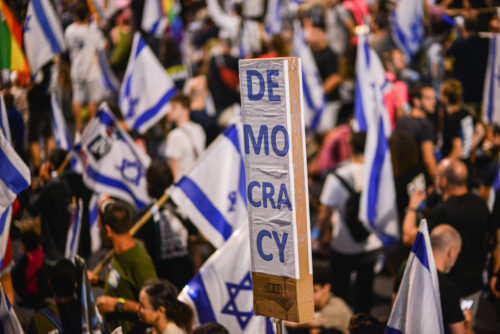
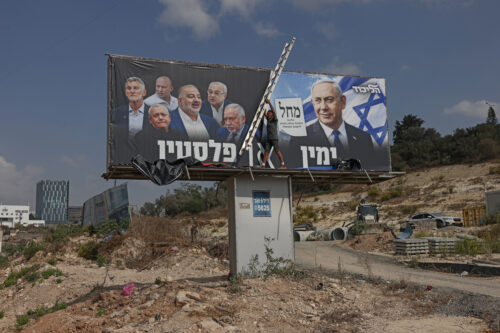
Israel is preparing to hold what may be its most consequential election in decades. On October 27, Prime Minister Benjamin Netanyahu will face his first electoral test since October 7, 2023. In this bonus episode of Middle East Focus, we present the audio from a recent MEI webinar, hosted in Israel on the eve of the vote. Senior Fellow Natan Sachs is joined by Dr. Shira Efron, Distinguished Chair for Israel Policy and senior fellow at the RAND Corporation, and Neri Zilber, veteran journalist and Financial Times correspondent. They explore what’s at stake in this historic election and how different outcomes could reshape Israel’s domestic politics and the wider region.
Israel Was Built on Hope. This Election May Be Our Last Chance to Save It
Israel’s national anthem, Hatikva, means “the hope.” Israel is not just another country, but the culmination of a 2,000-year-old dream of national redemption. The rebirth of the Jewish people’s ancestral homeland, just three years after the Holocaust, was a miraculous triumph of hope over all odds.
Today, that hope has been shattered and the elections on October 27 have become the most consequential in Israel’s history.
One striking thing about US President Donald Trump’s endorsement of Israeli Prime Minister Benjamin Netanyahu this past week is how isolated he was in making this call. The Israeli Prime Minister has become a widely detested figure worldwide following Israel’s war in Gaza—where Israel committed war crimes. This disdain was clearly on display in New York in September when dozens of diplomats streamed out of the hall during Netanyahu’s speech.
Since 1967, Israeli settlements in the West Bank have been a contested feature of the Israeli-Palestinian conflict. The ultimate disposition of the settlements and ongoing activity related to their growth have repeatedly defied agreement in negotiations over a resolution to the conflict.
The Houthis are a political-military faction and Zaydi religious movement founded in northwestern Yemen in the 1980s. A key member of Iran’s Axis of Resistance with links to other militant organizations in the Arabian Peninsula and the Horn of Africa, the group has continued to pose a threat to Western interests on a global scale.
The India-Middle East-Europe Economic Corridor (IMEC) is a proposed multinational infrastructure initiative aimed at upgrading connectivity between the three regions through integrated trade, energy, and digital networks. Announced at the G20 summit in New Delhi in September 2023, IMEC is envisioned partially as a counterweight to China’s international infrastructure project, the Belt and Road Initiative.
After a decade of post-Arab Spring isolation, Turkey’s leaders have recognized that their ambition to position the country as an agenda-setter on the world stage requires active engagement in all directions. President Recep Tayyip Erdoğan’s consolidation of executive authority has centralized foreign policy decision-making and tied it to his domestic political priorities, transforming the country’s revisionist approach to one shaped primarily by personal and pragmatic interests.
MEI Senior Fellow Brian Katulis engages friends, colleagues, and policy experts in casual conversations on the most important happenings in the Middle East.
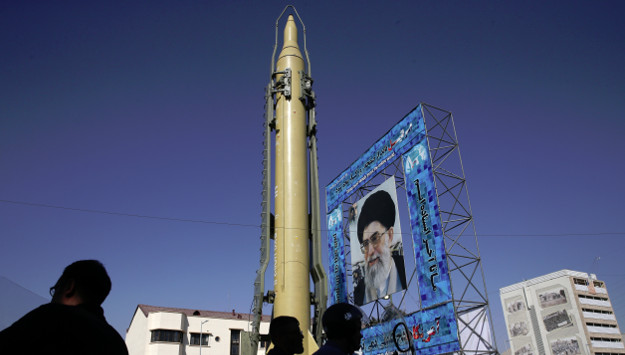
I.R.G.C. Media Defends Assad as U.S. Mulls Military Responses to Syrian Chemical Attack
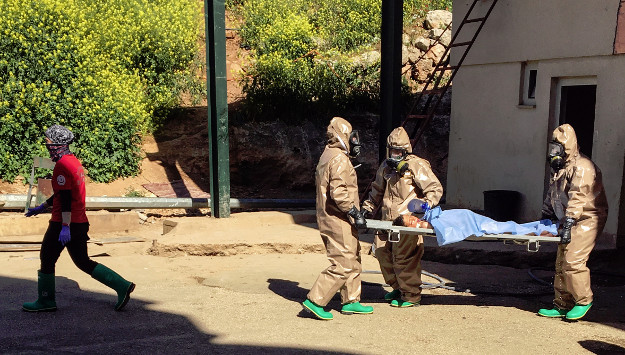
While more evidence is surfacing that suggests the Syrian army may have been behind the chemical attack that killed scores of civilians in Syria, Iranian media outlets affiliated with the Islamic Revolution Guards Corps (I.R.G.C.) continue to defend the regime of Bashar al-Assad. They argue that Damascus was not responsible for the killings. “Without doubt, the claims by Syrian opposition groups and some western and Arab countries that the Syrian army has used chemical weapons in Idlib can be categorically rejected.
Protecting India’s Interests in the Middle East: Militancy and Non-state Actors
This essay discusses the threat that ISIS has posed to India, which has significant stakes in the Gulf but remains an ambivalent presence in the region. The future trajectory of the world’s largest democracy’s relations with the Middle East remains a grey area, but one that in the future, could become a defining relationship for global security.
British Premier’s Remarks in Riyadh Prompt Angry Reaction from Tehran
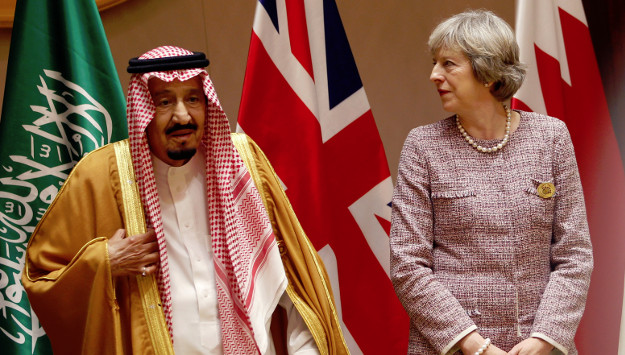
The Iranian Foreign Ministry has reacted angrily to British Prime Minister Theresa May’s latest comments about Tehran’s destabilizing role in the Middle East, the ministry’s official website re
Afghan, Iranian Officials Spar over Tehran’s Support for Taliban
The Iranian and Afghan delegations to the 136th assembly of the Inter-Parliamentary Union have had acrimonious exchanges over Tehran’s support for the Taliban, the Iranian media reports.
Authorities in Iran Detain Sunni Leader for Opposing I.R.G.C.’s Role in Syria
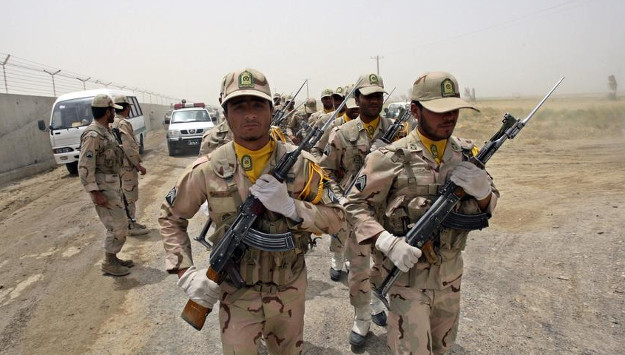
Scores of Sunni Balochs demonstrated in Iran’s southeastern Sistan and Baluchestan Province on Tuesday to protest the detention of a Sunni religious leader, the Iranian media reports.
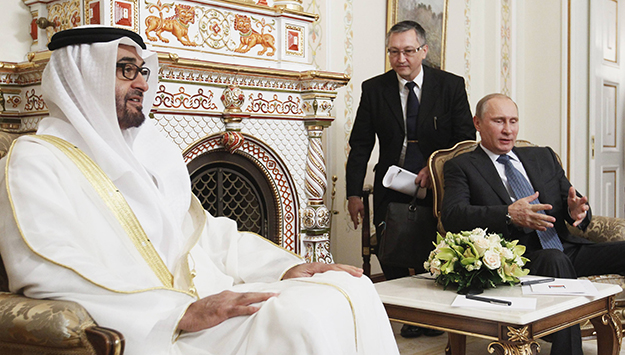
Russia and the United Arab Emirates (U.A.E.) are developing a unique bilateral relationship. The latest manifestation of growing ties occurred at the biennial International Defense Exhibition & Conference (IDEX) in February when Russia and the U.A.E. announced a deal to co-produce a fifth-generation jet fighter in the Emirates. Although Moscow and Abu Dhabi have been cooperating on a range of economic and security issues for years, this was an unprecedented move.
India has become Israel’s largest arms export market in the world over the last decade (replacing China); and Israel has become one of India’s largest arms supplier. Why did India develop a strong military partnership with a country it had ignored for 42 years? What can explain the development of defense ties in spite of limited political leadership involvement over the past decade? Finally, what are the prospects for defense relations as India grows to become one of the world’s largest defense importer? This essay answers these questions by providing an account of the evolution of Indo-Israeli defense cooperation over the past 25 years.
While the U.S. and Pakistani counterterrorism efforts have degraded al-Qaeda and the Pakistani Taliban in the Federally Administered Tribal Areas (FATA), sectarian violence across the country continues unabated and threatens to further destabilize Pakistan and the broader region.
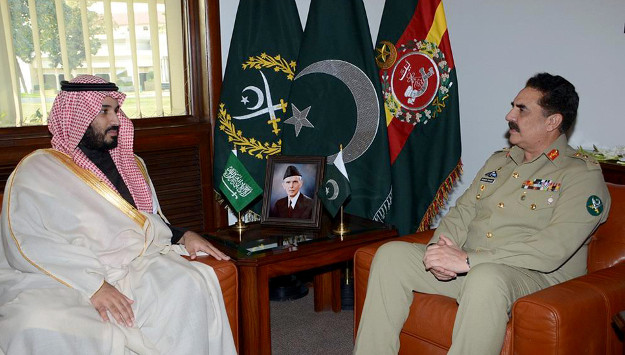
Pakistani General's Role in Saudi-Led Coalition Troubles Iran
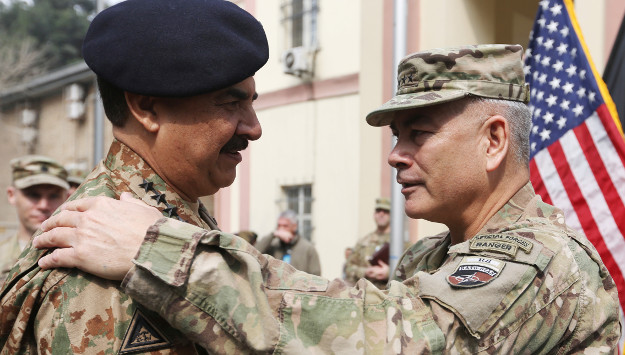
The Iranian government has said it has “reservations” about the appointment of Pakistan’s former army chief, retired Gen. Raheel Sharif, as the head of the Saudi-led coalition.
The oldest peer-reviewed publication dedicated to the study of the modern Middle East, MEI’s flagship journal covers politics, society, and culture in the region.