Bonus Episode: Previewing Israel’s First Post-October 7 Election
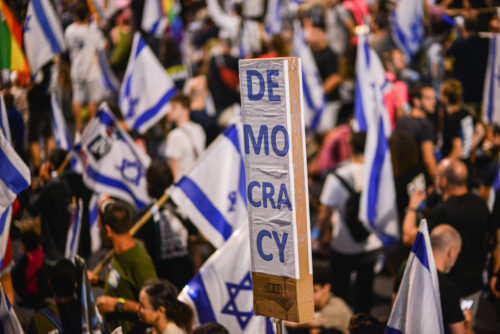
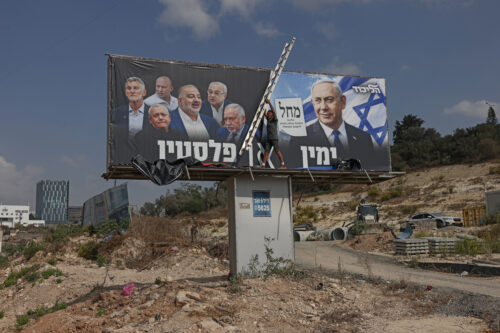
Israel is preparing to hold what may be its most consequential election in decades. On October 27, Prime Minister Benjamin Netanyahu will face his first electoral test since October 7, 2023. In this bonus episode of Middle East Focus, we present the audio from a recent MEI webinar, hosted in Israel on the eve of the vote. Senior Fellow Natan Sachs is joined by Dr. Shira Efron, Distinguished Chair for Israel Policy and senior fellow at the RAND Corporation, and Neri Zilber, veteran journalist and Financial Times correspondent. They explore what’s at stake in this historic election and how different outcomes could reshape Israel’s domestic politics and the wider region.
Israel Was Built on Hope. This Election May Be Our Last Chance to Save It
Israel’s national anthem, Hatikva, means “the hope.” Israel is not just another country, but the culmination of a 2,000-year-old dream of national redemption. The rebirth of the Jewish people’s ancestral homeland, just three years after the Holocaust, was a miraculous triumph of hope over all odds.
Today, that hope has been shattered and the elections on October 27 have become the most consequential in Israel’s history.
One striking thing about US President Donald Trump’s endorsement of Israeli Prime Minister Benjamin Netanyahu this past week is how isolated he was in making this call. The Israeli Prime Minister has become a widely detested figure worldwide following Israel’s war in Gaza—where Israel committed war crimes. This disdain was clearly on display in New York in September when dozens of diplomats streamed out of the hall during Netanyahu’s speech.
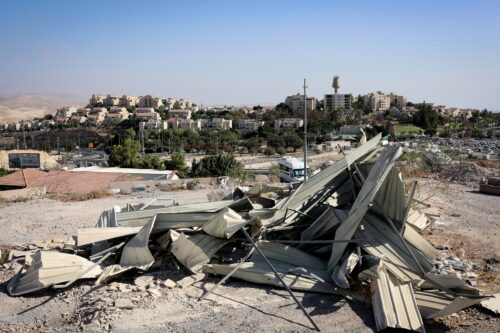
Since 1967, Israeli settlements in the West Bank have been a contested feature of the Israeli-Palestinian conflict. The ultimate disposition of the settlements and ongoing activity related to their growth have repeatedly defied agreement in negotiations over a resolution to the conflict.
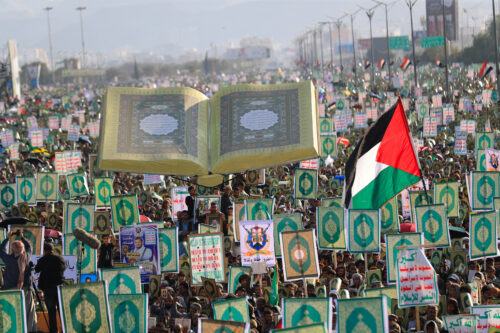
The Houthis are a political-military faction and Zaydi religious movement founded in northwestern Yemen in the 1980s. A key member of Iran’s Axis of Resistance with links to other militant organizations in the Arabian Peninsula and the Horn of Africa, the group has continued to pose a threat to Western interests on a global scale.
The India-Middle East-Europe Economic Corridor (IMEC) is a proposed multinational infrastructure initiative aimed at upgrading connectivity between the three regions through integrated trade, energy, and digital networks. Announced at the G20 summit in New Delhi in September 2023, IMEC is envisioned partially as a counterweight to China’s international infrastructure project, the Belt and Road Initiative.
After a decade of post-Arab Spring isolation, Turkey’s leaders have recognized that their ambition to position the country as an agenda-setter on the world stage requires active engagement in all directions. President Recep Tayyip Erdoğan’s consolidation of executive authority has centralized foreign policy decision-making and tied it to his domestic political priorities, transforming the country’s revisionist approach to one shaped primarily by personal and pragmatic interests.
MEI Senior Fellow Brian Katulis engages friends, colleagues, and policy experts in casual conversations on the most important happenings in the Middle East.
Iran Tells British Woman to Keep Toddler in Jail or Lose Custody
Iranian officials have told a British-Iranian mother held in Tehran’s notorious Evin Prison that she should either keep her toddler with her in jail or give up custody.
Saudi Female Conservationist Fights to Preserve Islamic Heritage
The Middle East’s descent into chaos has been accompanied by a growing threat to the region’s historic sites. The breakdown of states and growth in extremism have exposed these ancient sites to looting and destruction. The drivers, however, are varied. Extremist groups like ISIS profit from the smuggling of antiquities, but there are also religious motivations. Extremist movements such as ISIS and al-Qaeda, which adhere to a strictly puritanical view of Islam, perceive heritage sites, including Islamic, as a sinful distraction from faith.
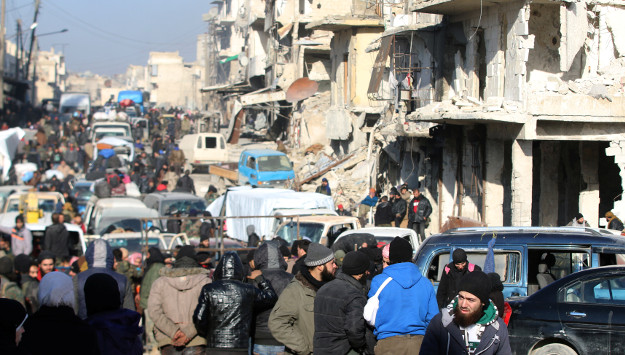
The Iranian media reports that the evacuation of Syrian rebels and civilians from eastern Aleppo has come to an end, and that the entire city is now under the control of the Syrian army.
The long, turbulent history of Lebanese cinema is one fraught with financial precariousness, thwarted potentials, and colonialist impediments. Fighting for decades to break away from the hegemony of Egyptian cinema, Lebanon finally came of age in the 1960s and 1970s, reaching a peak with a series of hugely popular mainstream flicks that included the popular Rahbani/Fairuz folk musicals. The rise of what was once deemed as the most exciting Arab cinema at the time proved to be short lived, coming to a premature halt with the outbreak of the Lebanese Civil War.
For the Assad regime in Damascus, displacement has become an essential tactic in shaping the terms of its encounter with dissent, alongside violence and detention. At the same time, the process of displacement has not unfolded in a coherent or predictable manner. Rather, displacement in the Syrian conflict is a product of choices, chief among them the regime’s choice to erase, rather than accommodate, political Opposition in Syria. It is also the result of how the Opposition responds to these challenges. This essay explores how Opposition networks have adapted pragmatically to displacement and exile. Far from accepting the terms of the conflict passively, Syria’s diverse opposition continues to mobilize in the face of ongoing state oppression.
Iran Shows No Concern for Safety of Civilians in Aleppo
A senior Iranian security official has slammed a United Nations Security Council resolution that calls for international observers to monitor the evacuation of civilians trapped in the besieged Syrian city of Aleppo.
Iranian Official Admits Role in Syria’s Destruction
A top Iranian official admitted on December 21 that Tehran and Moscow shared a base in Syria to coordinate their military support for the country’s embattled President Bashar al-Assad.
The China-Pakistan Economic Corridor (CPEC): Underway and Under Threat
China is already Pakistan’s largest trade and defense partner. But the coming into operation of the CPEC lends a new meaning to, and could transform the relationship between these two “all-weather allies,” including insofar as their ties to the Middle East are concerned — provided that the territorial and maritime security challenges associated with the completion and use of this corridor can be satisfactorily addressed.
The oldest peer-reviewed publication dedicated to the study of the modern Middle East, MEI’s flagship journal covers politics, society, and culture in the region.