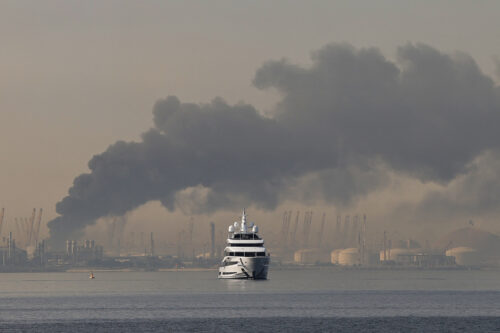
Geopolitical influence over trade increasingly rests on controlling the systems that make them work. The Middle East illustrates the stakes. US ports, cable corridors, cloud facilities, artificial intelligence (AI) investments, and maritime routes connect regional economies to global commerce while exposing them to external decisions and disruptions. For the United States, the challenge is to translate technological advantage into resilient networks rather than rely on centrality that can itself become a source of vulnerability and coercion.
Bonus Episode: Previewing Israel’s First Post-October 7 Election
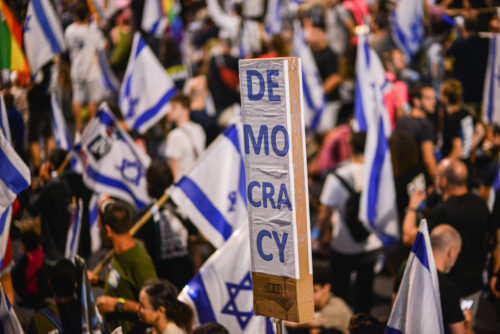
Israel is preparing to hold what may be its most consequential election in decades. On October 27, Prime Minister Benjamin Netanyahu will face his first electoral test since October 7, 2023. In this bonus episode of Middle East Focus, we present the audio from a recent MEI webinar, hosted in Israel on the eve of the vote. Senior Fellow Natan Sachs is joined by Dr. Shira Efron, Distinguished Chair for Israel Policy and senior fellow at the RAND Corporation, and Neri Zilber, veteran journalist and Financial Times correspondent. They explore what’s at stake in this historic election and how different outcomes could reshape Israel’s domestic politics and the wider region.
Israel Was Built on Hope. This Election May Be Our Last Chance to Save It
Israel’s national anthem, Hatikva, means “the hope.” Israel is not just another country, but the culmination of a 2,000-year-old dream of national redemption. The rebirth of the Jewish people’s ancestral homeland, just three years after the Holocaust, was a miraculous triumph of hope over all odds.
Today, that hope has been shattered and the elections on October 27 have become the most consequential in Israel’s history.
Since 1967, Israeli settlements in the West Bank have been a contested feature of the Israeli-Palestinian conflict. The ultimate disposition of the settlements and ongoing activity related to their growth have repeatedly defied agreement in negotiations over a resolution to the conflict.
The Houthis are a political-military faction and Zaydi religious movement founded in northwestern Yemen in the 1980s. A key member of Iran’s Axis of Resistance with links to other militant organizations in the Arabian Peninsula and the Horn of Africa, the group has continued to pose a threat to Western interests on a global scale.
The India-Middle East-Europe Economic Corridor (IMEC) is a proposed multinational infrastructure initiative aimed at upgrading connectivity between the three regions through integrated trade, energy, and digital networks. Announced at the G20 summit in New Delhi in September 2023, IMEC is envisioned partially as a counterweight to China’s international infrastructure project, the Belt and Road Initiative.
After a decade of post-Arab Spring isolation, Turkey’s leaders have recognized that their ambition to position the country as an agenda-setter on the world stage requires active engagement in all directions. President Recep Tayyip Erdoğan’s consolidation of executive authority has centralized foreign policy decision-making and tied it to his domestic political priorities, transforming the country’s revisionist approach to one shaped primarily by personal and pragmatic interests.
MEI Senior Fellow Brian Katulis engages friends, colleagues, and policy experts in casual conversations on the most important happenings in the Middle East.
Iran Admits over 1,000 Combat Fatalities in Syrian Conflict
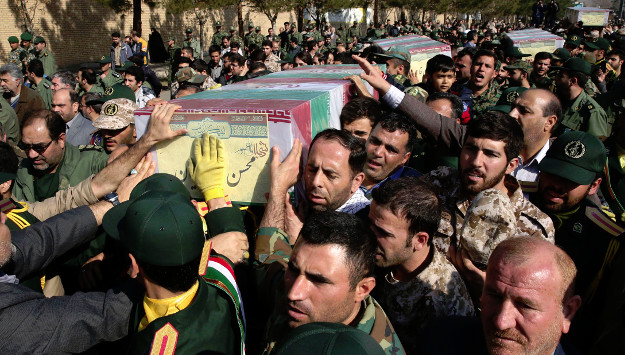
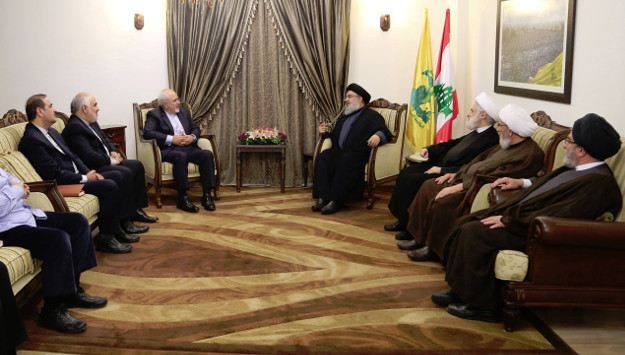
On November 22, a senior Iranian official admitted that more than 1,000 combatants dispatched by Iran to fight alongside President Bashar al-Assad’s forces have been killed in the Syrian war.
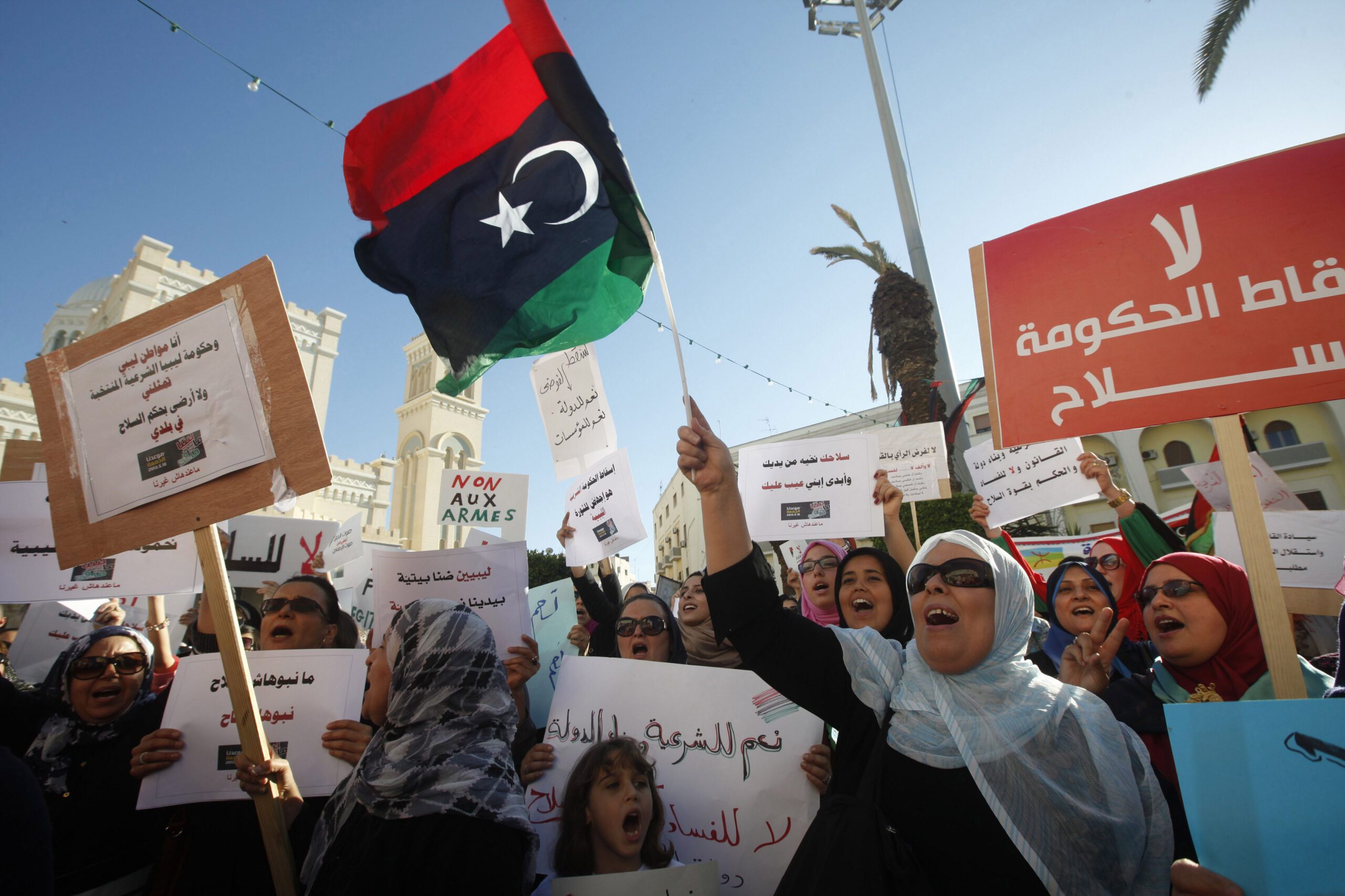
This essay, which draws upon extensive field research in Libya over the period 2011-2013, seeks to shed light on an under-theorized area of research, namely the forces that challenge an emerging civil society during a political transition. In doing so, the essay makes two contributions to knowledge, first by arguing the value and inevitable role of civil society in a divided or conflict-ridden society, and second by helping readers better understand and unpack the case of Libya’s disrupted and dispersed civil society.
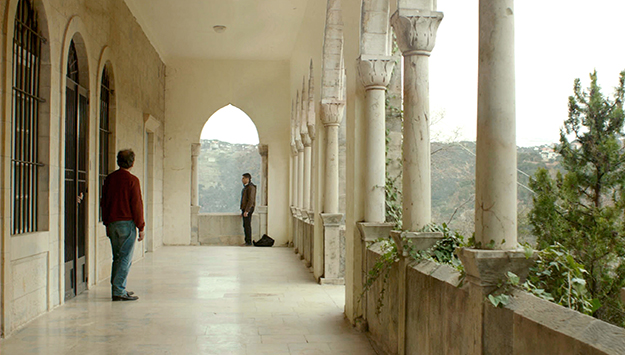
Countless films have been made about the Lebanese Civil War, the dominant subject of Lebanese cinema for the past 40 years. But in Vatche Boulghourjian’s striking debut film Tramontane, he wanted to tell a different story and tackle the lingering legacy of the civil war.
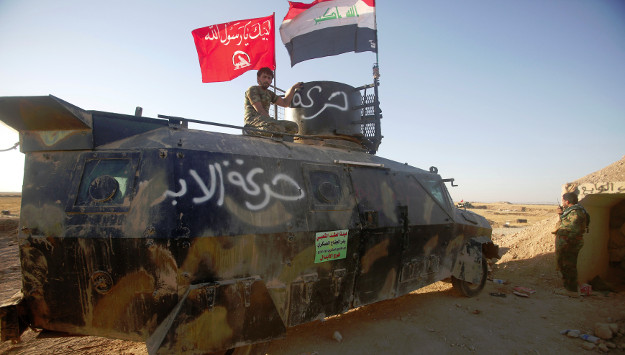
Growing Worries over Iran-Backed Militias’ Military Advances in Iraq
The increasing role of Iran-backed Iraqi Shiite militia forces in the battle of Mosul has alarmed the Iraqi Sunni minority as well as many countries in the region.
Monday Briefing: Contradictions in Trump's MidEast Policy
In this week’s Monday Briefing, MEI experts Paul Salem, Randa Slim, and Gonul Tol provide analysis on recent and upcoming events including the vulnerabilities in Trump’s Middle East policy, Russia’s plan in Syria after Trump’s election, and Erdogan’s hopes for Gulen’s extradition under the next administration.
On November 15, the US House of Representatives almost unanimously approved a 10-year extension of the Iran Sanctions Act. Lawmakers argued that the move would put pressure on Iran to comply with the 2015 nuclear agreement. The ISA is set to expire by this year’s end. And while the Senate is expected to pass the bill, it is unclear whether President Obama will sign or veto it.
Turkey Warns against Iran-Backed Militias’ Role in Mosul
The battle for influence in Iraq between Iran and Turkey appears to be escalating to a dangerous level as Iran-backed Iraqi Shiite militia forces are set to capture the Turkmen-majority city of Tal Afar from the Islamic State. Tal Afar is located about 40 miles west of Mosul.
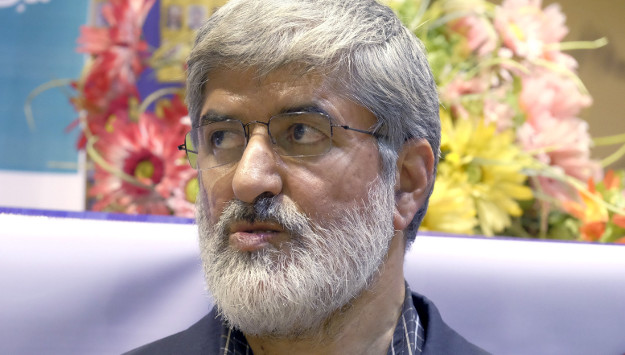
Political Wrangling Intensifying in Iran as Election Looms
A last-minute cancellation of a pro-government event in the Iranian city of Mashhad has sparked a bitter conflict between hardliners and reformists and is likely to further undermine the Rouhani government. Mashhad is Iran’s second populous city and the capital of northeastern Khorasan-e Razavi Province.
Iran in Talks with Alternative Companies to Replace Boeing, Airbus
On November 17, the US House of Representative passed a legislation that would prohibit the sale of commercial aircraft to Iran. If approved by the Senate and signed into law by President Obama, the bill would bar the Department of Treasury from permitting Airbus and Boeing to do business with Tehran.
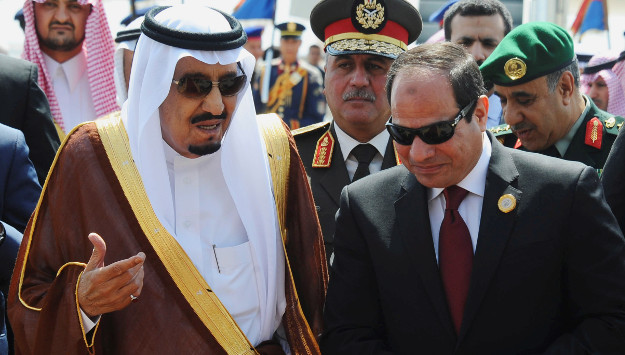
Iran Trying to Exploit Cairo-Riyadh Rift for Political Gains
On November 21, Iran’s Foreign Ministry Spokesman Bahran Ghasemi praised Egypt as a leading country in the Arab world and stressed that Tehran sought closer ties with Cairo.
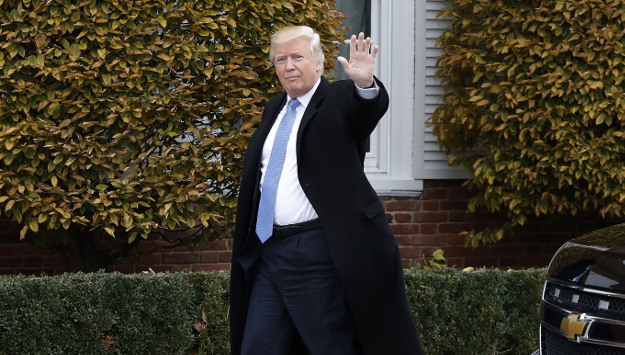
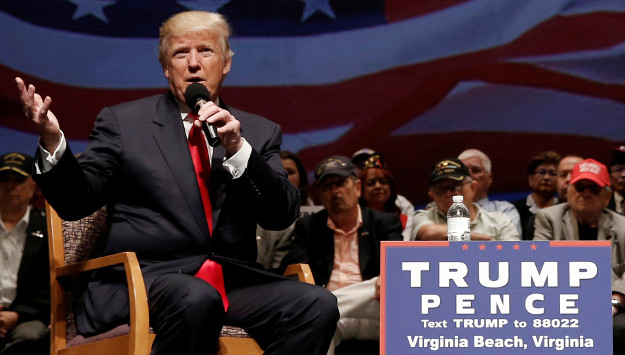
Late last week, President-elect Donald Trump explained for the first time since his election victory his position on the crisis in Syria. In his remarks, he laid out his determination to ramp up the fight against the Islamic State and to cease support to those fighting President Bashar al-Assad’s regime:
On November 17, Amnesty International published a report that condemned the “macabre propaganda videos” aired on Iranian state-run media outlets that featured “forced confessions” of 25 Sunni men Iran execu
Iran-backed Militia Group Seizes Key Military Base West of Mosul
As the US-backed Iraqi security forces and Kurdish peshmerga fighters are advancing into Mosul from the east, an Iranian-backed militia group claimed a major victory over the Islamic State in western part of the city on November 16.
The oldest peer-reviewed publication dedicated to the study of the modern Middle East, MEI’s flagship journal covers politics, society, and culture in the region.