تمت ترجمة هذا النص بواسطة الذكاء الاصطناعي وقد يحتوي على أخطاء.
تخطي إلى المحتوى

الأبحاث والتعليقات

اقرأ الأبحاث والتحليلات والتعليقات المتعمقة من زملاء وخبراء معهد الشرق الأوسط عن الشرق الأوسط. 

Trump’s South Caucasus Peacemaking Is His Most Successful, but It Remains Unfinished
  • تعليق
  • Trump’s South Caucasus Peacemaking Is His Most Successful, but It Remains Unfinished

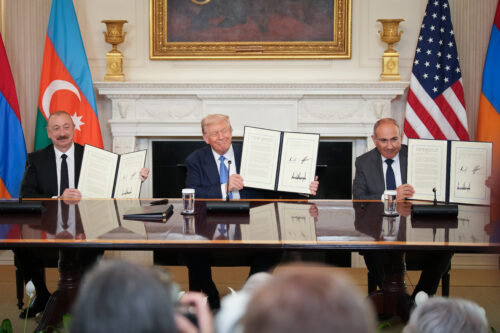
    Of all the fronts in President Trump’s peacemaking agenda, the South Caucasus has delivered the most concrete results. The August 2025 Washington Declaration, signed between Armenia and Azerbaijan and witnessed by Trump, marked an important step toward peace in the region. The two sides initialed a peace agreement and advanced plans to unblock regional connectivity, including through the establishment of the Trump Route for International Peace and Prosperity (TRIPP), which would connect Azerbaijan to its Nakhijevan exclave through southern Armenia. Implementation of TRIPP has since made notable progress, but construction has yet to start. A breakthrough on those two tracks would, in turn, unlock Armenia–Türkiye normalization, transforming a long-fractured region into an area of trade and interdependence.
    The Iran War Was Always About Regime Change
  • تعليق
  • The Iran War Was Always About Regime Change

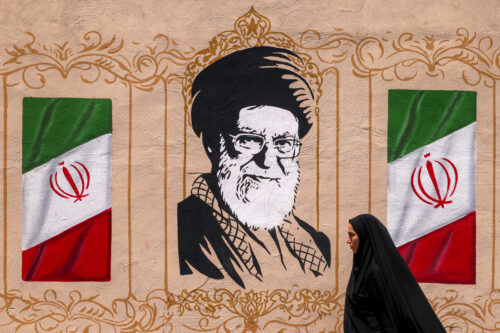
    Wars don’t just end. They get interpreted, reinterpreted, and turned into strategic doctrine. That is what happened after the Iran-Iraq War of the 1980s, a conflict that saw the United States back Tehran’s Iraqi adversaries. The war taught Tehran three lessons it never unlearned: that Washington wants the Islamic Republic gone, that Iran stands essentially alone in the world, and that it cannot survive a direct, overt fight with the U.S. and Israel.

    Iran’s New War Cabinet Is Really an Old One
  • التحليل
  • Iran’s New War Cabinet Is Really an Old One

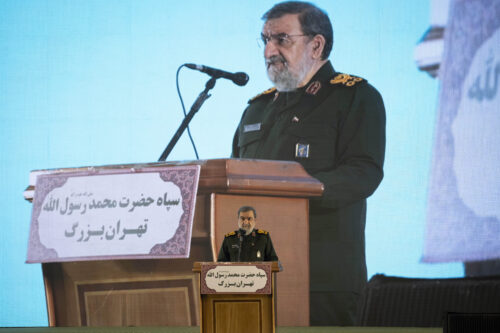
    Within 48 hours this week, Iran filled six of the most important posts in its battered military and security establishment. Read together with the biographies and mandates behind them, the appointments show how Tehran is drawing lessons from successive wars and preparing for a prolonged period of insecurity, without proving it has abandoned negotiation.

    Additional Research & Commentary

    معلومات أساسية

    Israeli Settlements in the West Bank
  • معلومات أساسية
  • Israeli Settlements in the West Bank

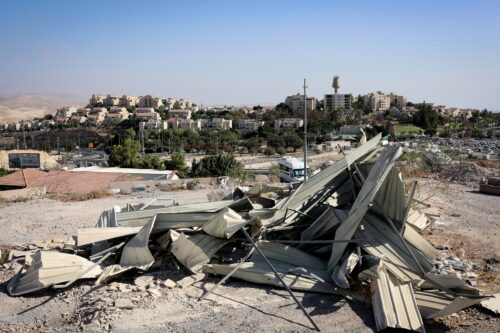
    Since 1967, Israeli settlements in the West Bank have been a contested feature of the Israeli-Palestinian conflict. The ultimate disposition of the settlements and ongoing activity related to their growth have repeatedly defied agreement in negotiations over a resolution to the conflict.

    June 9, 2026

    The Houthis
  • معلومات أساسية
  • The Houthis

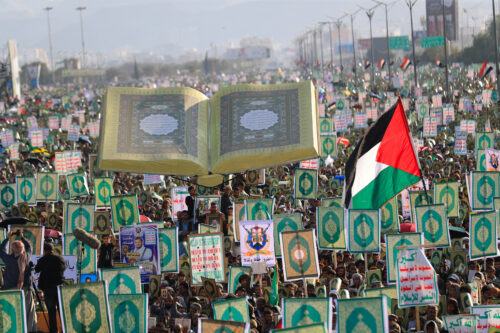
    The Houthis are a political-military faction and Zaydi religious movement founded in northwestern Yemen in the 1980s. A key member of Iran’s Axis of Resistance with links to other militant organizations in the Arabian Peninsula and the Horn of Africa, the group has continued to pose a threat to Western interests on a global scale.

    May 15, 2026

    The India-Middle East-Europe Economic Corridor
  • معلومات أساسية
  • The India-Middle East-Europe Economic Corridor

    The India-Middle East-Europe Economic Corridor (IMEC) is a proposed multinational infrastructure initiative aimed at upgrading connectivity between the three regions through integrated trade, energy, and digital networks. Announced at the G20 summit in New Delhi in September 2023, IMEC is envisioned partially as a counterweight to China’s international infrastructure project, the Belt and Road Initiative.

    June 3, 2026

    Turkish Foreign Policy
  • معلومات أساسية
  • Turkish Foreign Policy

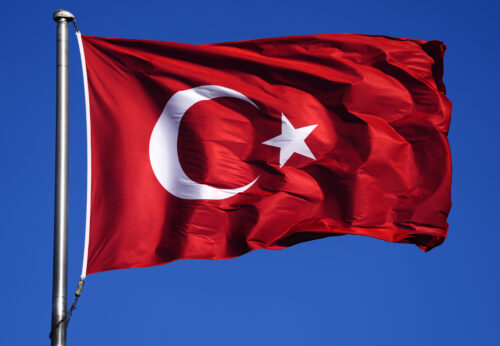
    After a decade of post-Arab Spring isolation, Turkey’s leaders have recognized that their ambition to position the country as an agenda-setter on the world stage requires active engagement in all directions. President Recep Tayyip Erdoğan’s consolidation of executive authority has centralized foreign policy decision-making and tied it to his domestic political priorities, transforming the country’s revisionist approach to one shaped primarily by personal and pragmatic interests.

    April 23, 2026

    المدونات الصوتية

    التركيز على الشرق الأوسط

    البودكاست الأسبوعي الرائد لمعهد الشرق الأوسط حول السياسة الخارجية الأمريكية والقضايا السياسية والاجتماعية المعاصرة في الشرق الأوسط.

    إزالة الحافة من الشرق الأوسط

    براين كاتوليس، زميل أول في معهد الشرق الأوسط كاتوليس يشارك الأصدقاء والزملاء وخبراء السياسة في محادثات غير رسمية حول أهم الأحداث في الشرق الأوسط. 

    إعادة التفكير في الديمقراطية

    زميل أول في معهد الشرق الأوسط غونول تول تستضيف كبار العلماء وقادة الفكر حول اتجاهات الديمقراطية العالمية وحالة النظام الدولي الليبرالي. 

    تصفية حسب
    8783 Results
    Turkey’s Achilles Heel: The Economy
  • التحليل
  • Turkey’s Achilles Heel: The Economy

    In Turkey today, as President Recep Tayyip Erdogan and Prime Minister Ahmet Davutoglu wrestle over who governs, the political uncertainty they are creating may be a ground tremor about to generate an earthquake. The earthquake, however, may not only be political in nature; it may also be economic. 

    Turkey’s remarkable economic growth is now in jeopardy. Its economy is drifting, beset by contrary winds of economic policies and political wrangling. There is a clear track forward, but to reach the next level of prosperity, the government must undertake a major new effort.

    The Middle East in China’s Silk Road Visions: Business as Usual?
    معهد الشرق الأوسط
  • التحليل
  • The Middle East in China’s Silk Road Visions: Business as Usual?

    Chinese President Xi Jinping’s 2013 proclamation of the Silk Road Economic Belt (“One Belt, One Road”) and Twenty-First Century Maritime Silk Road initiatives provided an overarching framework for understanding China’s strategic priorities over the coming decade. The land-based and sea-based Silk Roads will link Asia and Europe via the Middle East and Central Asia through a series of transcontinental railroads, pipelines, ports, airports, and other infrastructure projects.

    April 14, 2015

    The Hashd: Redrawing the Military and Political Map of Iraq
  • التحليل
  • The Hashd: Redrawing the Military and Political Map of Iraq

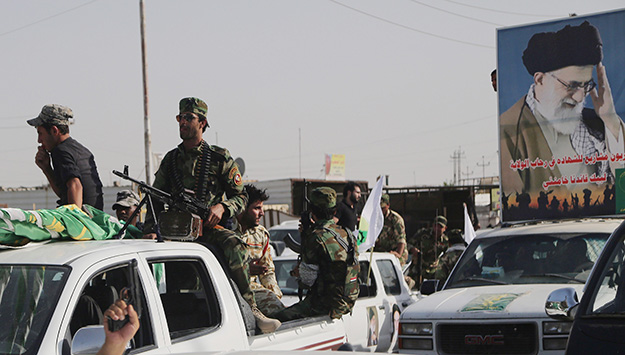
    Al-Hashd al-Sha‘bi—also known as the Popular Mobilization Units, the Shi‘i militias, or simply “the Hashd”—has joined Iraqi security forces and the Kurdish peshmerga to spearhead Iraq’s ongoing offensive against ISIS. The coordinated assault has scored significant successes in various parts of Diyala, Babil, and Salah al-Din, including the recapture of Tikrit. With this string of recent triumphs, the Hashd has provided a potent rallying point for a reinvigorated sense of Iraqi nationalism, albeit one with distinctly Shi‘i overtones.

    April 9, 2015

    Camp David, Dayton, Lausanne
  • التحليل
  • Camp David, Dayton, Lausanne

    Read the full article on LobeLog.

    In the past four decades, the greatest achievements of American diplomacy were probably the Camp David Accords and the Dayton Agreement. Camp David led to the end of the perpetual state of war between Israel and Egypt. Dayton ended the carnage of the war in the Balkans.

    April 9, 2015

    Searching for Continuity in Sino-Arab Relations
    معهد الشرق الأوسط
  • التحليل
  • Searching for Continuity in Sino-Arab Relations

    Too often, historians of Sino-Arab relations do not engage in a meaningful dialogue with the political scientists, economists, and anthropologists who are the most vocal commentators on China’s increasing role in the region. Today’s China, with its growing wealth and unprecedented ability to project political and economic power abroad, may appear at first glance to bear little resemblance to the China of the 1950s, when the Communist government of Mao Zedong was reaching out for the first time to the other countries of the developing world. Nevertheless, one can identify several continuities that have long informed China’s interactions with the Arab world. First, Beijing insists that its foreign policy is based on the same ironclad commitment to nonintervention in the affairs of other sovereign countries that it articulated in the 1950s. Second, China has long held special meaning for Arab politicians and intellectuals who wish to use the example of China to promote authoritarian order in their own societies. Finally, the Chinese government has relied on Chinese Muslims to mediate its relations with other Islamic countries for nearly a century. It is only by recognizing these longstanding hallmarks of Sino-Arab relations that commentators can fully appreciate the complexities of China’s interactions with the Arab world in the twenty-first century.

    April 8, 2015

    A Delayed Transition: Egypt’s Suspended Elections
  • التحليل
  • A Delayed Transition: Egypt’s Suspended Elections

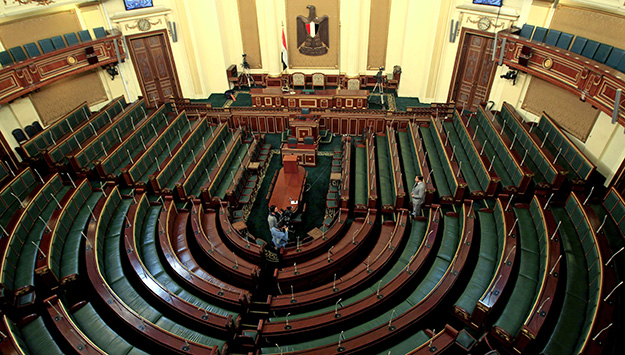
    In March, Egypt’s Supreme Administrative Court suspended the country’s long-awaited parliamentary elections,[1] originally scheduled to begin March 21.

    April 7, 2015

    Egypt’s Energy Potential
  • التحليل
  • Egypt’s Energy Potential

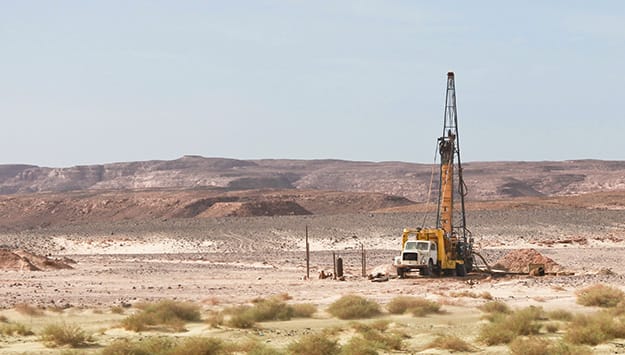
    Egypt is not out of the dark, but there is reason to be hopeful. The nation’s energy market reforms and consistent debt repayments have won the attention and approval of international energy companies and investors in the form of significant investment in the Egyptian energy sector. New upstream (exploration and production) oil and gas contracts, a recent increase in renewable energy ventures, and dozens of additional preliminary agreements in both the hydrocarbon and utility sectors are proof of the improved investment climate.

    April 7, 2015

    Collection Spotlight: See No Evil
    معهد الشرق الأوسط
  • التحليل
  • Collection Spotlight: See No Evil

    Robert Baer’s See No Evil presents a firsthand account of the life of a CIA case officer in the war on terror. From recruiting agents in the volatile Bekaa Valley in Lebanon to wiretapping Abu Nidal students in France, Baer provides a fascinating description of his CIA service.
    April 6, 2015

    Will the Nuclear Deal Help or Harm Regional Stability?
  • التحليل
  • Will the Nuclear Deal Help or Harm Regional Stability?

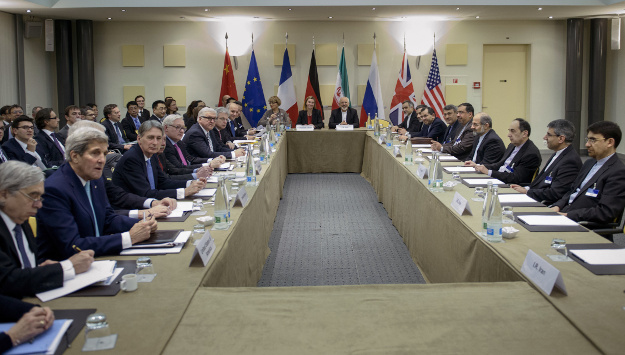
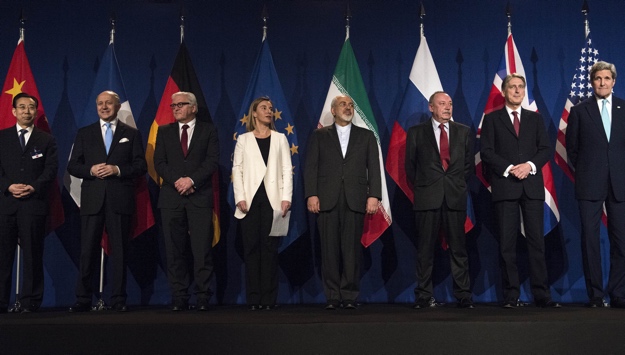
    As the United States and other world powers pursued nuclear negotiations with Iran over the past 18 months, the Middle East descended into one of the worst periods of chaos and proxy conflict in its modern history, with Iran engaged aggressively in many of the region’s hotspots. Most leaders in the region fear that a nuclear deal with Iran will abet its aggressive interventionism and lead to further geopolitical and sectarian confrontation. But could the agreement—if it is completed—also create conditions for rebuilding stability?

    April 3, 2015

    Mosques and Islamic Identities in China
    معهد الشرق الأوسط
  • التحليل
  • Mosques and Islamic Identities in China

    The great trading routes connecting medieval Eurasia by land and sea brought Islam, like Buddhism centuries earlier, to China. Somewhere between 20 and 40 million Muslims—reliable data remains elusive—now live in China. They acknowledge a variety of official and unofficial ethnic identities due to the diverse origins of Islam in China as well as the complexities of modern Chinese ethnic policies. The architecture of China’s mosques, both historic and modern, reflects this diversity. This essay examines the development of mosque architecture in southern China, in the old central capitals, and in the Xinjiang Uighur Autonomous Region from earliest times up to the present. In the twenty-first century, modern construction techniques allow patrons to choose from a variety of styles and materials as they design mosques to reflect a particular version of Islamic identity.

    April 2, 2015

    Misadventures in Violence in Yemen: Operation Resolute Storm
  • التحليل
  • Misadventures in Violence in Yemen: Operation Resolute Storm

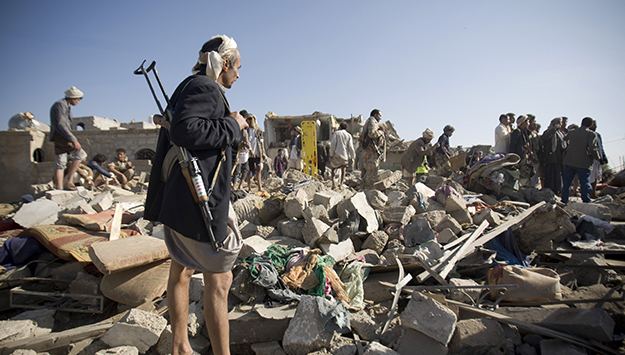
    Saudi Arabia’s military intervention in Yemen is a risky move motivated by various Saudi objectives in Yemen and in the region. The immediate objective is to save President Abdu Rabbu Mansour Hadi from Ansar Allah’s advance on Aden and reinstall him as head of state by forcing Ansar Allah to make major political concessions. But the operation also marks the increasing willingness of the Saudis to use their own military rather than rely on the United States.

    April 2, 2015

    Middle East Dialogue Report: Berlin
  • التحليل
  • Middle East Dialogue Report: Berlin

    The Middle East Dialogue is a regional Track 1.5 forum that meets twice a year under Chatham House rules. It brings together current and former officials as well as senior experts from the Middle East, the United States, Russia, China, and the EU to discuss emerging political & security trends in the region.  What follows is a report from the latest meeting of the Dialogue in Berlin, Germany, December 5-7, 2014.

    April 1, 2015

    اقرأ مجلة الشرق الأوسط

    تُعد المجلة الرئيسية لمعهد الشرق الأوسط أقدم مطبوعة محكّمة مكرّسة لدراسة الشرق الأوسط الحديث، وتغطي المجلة الرئيسية في المعهد السياسة والمجتمع والثقافة في المنطقة.