تمت ترجمة هذا النص بواسطة الذكاء الاصطناعي وقد يحتوي على أخطاء.
تخطي إلى المحتوى

الأبحاث والتعليقات

اقرأ الأبحاث والتحليلات والتعليقات المتعمقة من زملاء وخبراء معهد الشرق الأوسط عن الشرق الأوسط. 

Trump’s Family Business Deals Risk Further Undermining the Credibility of US Middle East Policy
  • التحليل
  • Trump’s Family Business Deals Risk Further Undermining the Credibility of US Middle East Policy

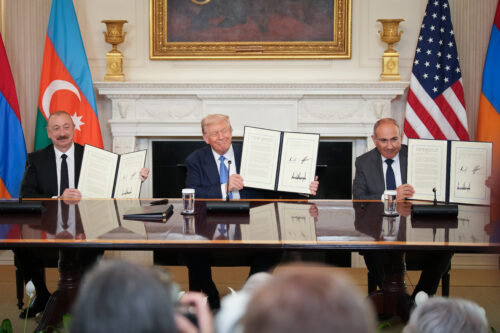
    President Trump’s family businesses are once again in the spotlight as a new financial disclosure showed they earned $2 billion in income in 2025 — a dramatic increase on the year before, with much of it coming from Gulf entities, raising emoluments concerns. Mounting perceptions of corruption, combined with unresolved crises in Iran and Israel-Palestine, are eroding trust among key partners in the Middle East. With the 2026 midterms approaching, these entanglements could represent a major political vulnerability and further undermine America’s already-strained standing in the region.

    Do the Gulf States Need a New Playbook?
  • Podcast
  • Do the Gulf States Need a New Playbook?

    After the US-Israel-Iran war — and the strikes that followed the cease-fire — the Gulf states find themselves dangerously exposed. Host Alistair Taylor is joined by MEI Associate Fellow Gregory Gause to discuss the war’s impact on the Gulf, their partnership with the United States, and whether the turmoil of recent months will push Gulf leaders to reassess their alliances and international engagement.

    July 2, 2026

    Additional Research & Commentary

    معلومات أساسية

    The Houthis
  • معلومات أساسية
  • The Houthis

    The Houthis are a political-military faction and Zaydi religious movement founded in northwestern Yemen in the 1980s. A key member of Iran’s Axis of Resistance with links to other militant organizations in the Arabian Peninsula and the Horn of Africa, the group has continued to pose a threat to Western interests on a global scale.

    May 15, 2026

    The Abraham Accords
    الصورة من تصوير أليكس وونغ/Getty Images
  • معلومات أساسية
  • The Abraham Accords

    تقدم هذه الوثيقة المعلوماتية لمحة عامة عن كيفية التوصل إلى اتفاقيات أبراهام، والمصالح الأمريكية المعنية، وعواقبها الاقتصادية والاستراتيجية، وآفاق التوسع في المستقبل.

    17 نوفمبر 2025

    Turkish Foreign Policy
  • معلومات أساسية
  • Turkish Foreign Policy

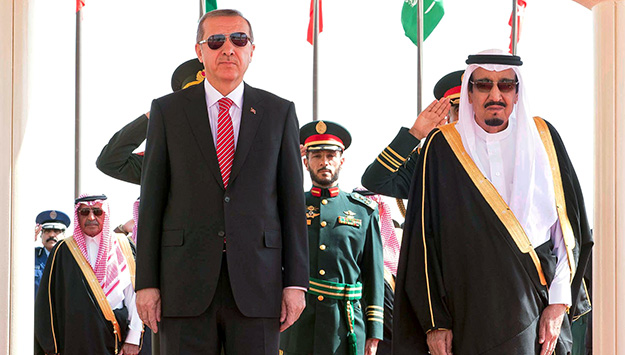
    After a decade of post-Arab Spring isolation, Turkey’s leaders have recognized that their ambition to position the country as an agenda-setter on the world stage requires active engagement in all directions. President Recep Tayyip Erdoğan’s consolidation of executive authority has centralized foreign policy decision-making and tied it to his domestic political priorities, transforming the country’s revisionist approach to one shaped primarily by personal and pragmatic interests.

    April 23, 2026

    الصحراء الغربية: لماذا لا يزال الصراع مهمًا
  • Video
  • الصحراء الغربية: لماذا لا يزال الصراع مهمًا

    مع دخول نزاع الصحراء الغربية عقده الخامس، لا يزال النزاع الإقليمي دون حل وغير معروف إلى حد كبير. تحلل إنتصار فقير من معهد الشرق الأوسط (MEI) التاريخ المعقد للصحراء الغربية والمطالبات المتنافسة من قبل المغرب والجمهورية العربية الصحراوية الديمقراطية. وتبحث في التطورات الأخيرة، مثل اعتراف الرئيس ترامب بسيادة المغرب على الإقليم وانهيار وقف إطلاق النار الذي دام 30 عامًا، بالإضافة إلى الأسئلة الجوهرية التي لا تزال دون إجابة بعد نصف قرن.

    7 أغسطس 2025

    المدونات الصوتية

    التركيز على الشرق الأوسط

    البودكاست الأسبوعي الرائد لمعهد الشرق الأوسط حول السياسة الخارجية الأمريكية والقضايا السياسية والاجتماعية المعاصرة في الشرق الأوسط.

    إزالة الحافة من الشرق الأوسط

    براين كاتوليس، زميل أول في معهد الشرق الأوسط كاتوليس يشارك الأصدقاء والزملاء وخبراء السياسة في محادثات غير رسمية حول أهم الأحداث في الشرق الأوسط. 

    إعادة التفكير في الديمقراطية

    زميل أول في معهد الشرق الأوسط غونول تول تستضيف كبار العلماء وقادة الفكر حول اتجاهات الديمقراطية العالمية وحالة النظام الدولي الليبرالي. 

    تصفية حسب
    8748 Results
    Notice: MEI Delegation Visit to Cairo, February 3-5, 2015
    معهد الشرق الأوسط
  • التحليل
  • Notice: MEI Delegation Visit to Cairo, February 3-5, 2015

    The Middle East Institute sponsored a bipartisan delegation of former high-level U.S. government officials to Cairo in early February.  The delegation included Stephen Hadley, former National Security Advisor to President George W. Bush; General Anthony Zinni, former Commander of U.S. Central Command; and Daniel Kurtzer, former Ambassador to Egypt and Israel.  They were accompanied by Middle East Institute President Wendy Chamberlin and Vice President Dr. Paul Salem.

    February 18, 2015

    The Rise of Solar Energy in Egypt
  • التحليل
  • The Rise of Solar Energy in Egypt

    At the Bahariya Oasis 235 miles southwest of Cairo, the mountains of the Western Desert are interrupted by vast circular patterns of greenery. On one of these large farms, in striking contrast to the ancient, wind-shaped sandstone in the background, solar panels stand in neat rows. Here at the center of the largest hyper-arid region on earth, KarmSolar, a three-year-old Egyptian solar energy start-up company, has built its headquarters.

    February 18, 2015

    Harm Reduction Responses to Drug Use: Cross-Regional Perspectives
    معهد الشرق الأوسط
  • التحليل
  • Harm Reduction Responses to Drug Use: Cross-Regional Perspectives

    Many people throughout the world continue to use psychoactive drugs despite strong efforts to prevent them from doing so. There is a wide range of adverse medical, public health, and social consequences associated with such use. People Who Inject Drugs (PWID) face, among other things, elevated rates of HIV, viral hepatitis and tuberculosis.

    February 15, 2015

    Yemen’s Ansar Allah: Causes and Effects of Its Pursuit of Power
  • التحليل
  • Yemen’s Ansar Allah: Causes and Effects of Its Pursuit of Power

    Observers can be excused for confusion over events in Yemen. In late January, Ansar Allah—the group often referred to as Houthis—kidnapped President Abdu Rabbu Mansour Hadi’s chief of staff, sacked the presidential palace, and effectively placed the president and government ministers under house arrest. Ansar Allah’s demands, strangely, were that the president and government stay in power rather than leave.

    February 14, 2015

    Sovereignty, the Hezbollah Model, or Dissolution: Managing Factional Forces in Iraq
  • التحليل
  • Sovereignty, the Hezbollah Model, or Dissolution: Managing Factional Forces in Iraq

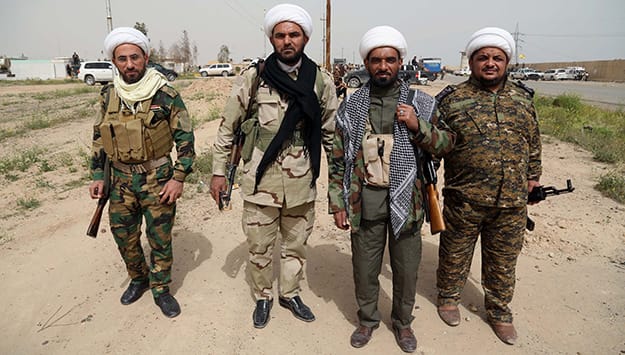
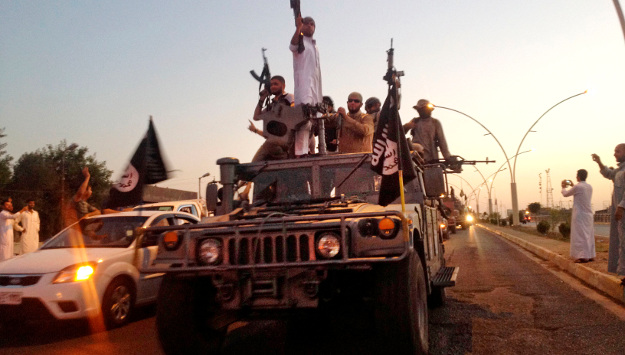
    When the Islamic State of Iraq and Syria (ISIS) overran Mosul last June, Grand Ayatollah Ali al-Sistani, the preeminent Shi‘i cleric in Iraq, called for voluntary jihad. The outlook for the central government was bleak. Reports from the battlefronts, as well as threatening statements by ISIS leaders, suggested that the capital Baghdad could also fall to ISIS. The group repeatedly massacred its captives and systematically destroyed important religious and cultural sites.

    February 13, 2015

    Drug Use and Harm Reduction in the MENA Region and in Lebanon
  • التحليل
  • Drug Use and Harm Reduction in the MENA Region and in Lebanon

    Repressive policies that stigmatize and punish drug users have tended to exacerbate social problems rather than mitigate them. In contrast, harm reduction (HR) approaches to drug use have been shown to prevent the spread of blood-borne viruses (such as HIV, HBV, and HCV), thereby lowering morbidity and mortality rates. Over the past 15 years, many HR initiatives have been launched in the MENA region, including Lebanon. However, continued progress in HIV prevention will require more structured and comprehensive HR interventions, adjusted to the needs of local populations.

    February 12, 2015

    Save the Date: MEI's 69th Annual Banquet and Conference
    معهد الشرق الأوسط
  • التحليل
  • Save the Date: MEI's 69th Annual Banquet and Conference

    Save the Date!
    The Middle East Institute’s 69th Annual Banquet and Conference
    November 12-13, 2015
    Capital Hilton Hotel
    1001 16th St. NW
    Washington, DC

    Watch this space for more information, or call 202-785-1141 ext.213 for details.

    February 11, 2015

    Civil Society and Harm Reduction in Thailand – Lessons Not Learned
    معهد الشرق الأوسط
  • التحليل
  • Civil Society and Harm Reduction in Thailand – Lessons Not Learned

    The Thai government was acclaimed in the 1990s for the bold approaches it supported to reduce HIV transmission among sex workers. Later, the Thai government’s leadership was internationally praised for providing generic antiretroviral treatment (ART) to people living with HIV. Today, global leaders applaud the Thai government’s decision to provide ART to everyone in an effort to prevent transmission, as well as for its decision to take full financial responsibility for HIV programming as of 2017, essentially weaning itself off external donor support. Indeed, there is much to celebrate, and the Thai government’s contributions to leadership and innovation in the area of HIV prevention, treatment, care, and support must be acknowledged—but not blindly.

    February 10, 2015

    ISIS and Syria’s Southern Front
  • التحليل
  • ISIS and Syria’s Southern Front

    Analysis of Syrian civil war dynamics tends to draw a sharp contrast between the southern front, referring to the southernmost provinces of Deraa, Quneitra, and Suwayda, and the north. Most observers point to the south, in contrast to the north, as lacking a significant Islamic State (ISIS) presence. How true does this general assessment hold? Are radical or extremist groups much less influential in the south?

    February 6, 2015

    The Current State of Harm Reduction Policy in the Middle East
    معهد الشرق الأوسط
  • التحليل
  • The Current State of Harm Reduction Policy in the Middle East

    In the late 1980s, Western governments began to adopt drug policies based on the strategy of “harm reduction” (HR), which concentrates on alleviating the negative effects of drug use rather than on reducing its prevalence. This policy shift, largely motivated by the recognition that injection drug use contributes to the spread of HIV/AIDS, soon paid off. Within a decade the countries that had adopted HR as their primary policy had managed to control the injection-related spread of HIV and other blood-borne infections such as hepatitis. The spread of HIV among substance users came almost to a halt in Australia and the Netherlands, which had implemented the strategy vigorously. HR was a victory for not only health systems, which had successfully controlled a viral infection with no known “infectious disease model” solution (that is, a vaccine or effective antiviral treatment), but also for society in that HR forestalled the adoption of ineffective strategies such as segregation, which instead marginalizes drug users and abandons them to their high-risk behaviors.

    February 5, 2015

    Looking at Armenian-Iranian Relations Through a Russian Lens
  • التحليل
  • Looking at Armenian-Iranian Relations Through a Russian Lens

    The late January visit to Armenia by Iranian Foreign Minister Javad Zarif got little media attention, but it could have significant ramifications for geopolitics in Eurasia. Specifically, the trip could help Russia gain a trade outlet that softens the blow of Western sanctions.
     

    The Decline of Coptic Activism in Egypt
  • التحليل
  • The Decline of Coptic Activism in Egypt

    During and immediately following the 2011 Egyptian uprising, Coptic activism reached new heights. Copts organized and came together to call for protection for their communities and rights more generally. However, particularly since the fall of the Muslim Brotherhood and the election of President Abdul-Fattah el-Sisi, such activism has declined. Today, the number of active, effective Coptic movements can be counted on one hand. This leaves the church carrying the mantle of Coptic identity, allowing the pope to decide whether or not to engage in politics.

    February 4, 2015

    Comparing Harm Reduction Advocacy Approaches in the Middle East, Central Asia, and Southeast Asia
  • التحليل
  • Comparing Harm Reduction Advocacy Approaches in the Middle East, Central Asia, and Southeast Asia

    For more than three decades, harm reduction initiatives for people who inject drugs (PWID) have focused on preventing the spread of HIV. The objectives of harm reduction activities have gradually expanded to include reducing the number of PWID through education programs, stopping the spread of hepatitis C and other infections, and preventing overdoses. However, the single greatest rationale for introducing or scaling up harm reduction remains HIV prevention and (to a lesser extent) treatment, care, and support for PWID living with HIV.

    February 3, 2015

    اقرأ مجلة الشرق الأوسط

    تُعد المجلة الرئيسية لمعهد الشرق الأوسط أقدم مطبوعة محكّمة مكرّسة لدراسة الشرق الأوسط الحديث، وتغطي المجلة الرئيسية في المعهد السياسة والمجتمع والثقافة في المنطقة.