تمت ترجمة هذا النص بواسطة الذكاء الاصطناعي وقد يحتوي على أخطاء.
تخطي إلى المحتوى

الأبحاث والتعليقات

اقرأ الأبحاث والتحليلات والتعليقات المتعمقة من زملاء وخبراء معهد الشرق الأوسط عن الشرق الأوسط. 

Trump’s Family Business Deals Risk Further Undermining the Credibility of US Middle East Policy
  • التحليل
  • Trump’s Family Business Deals Risk Further Undermining the Credibility of US Middle East Policy

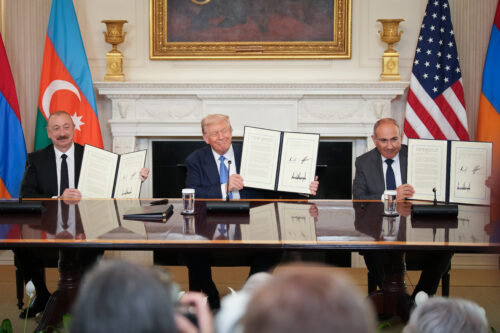
    President Trump’s family businesses are once again in the spotlight as a new financial disclosure showed they earned $2 billion in income in 2025 — a dramatic increase on the year before, with much of it coming from Gulf entities, raising emoluments concerns. Mounting perceptions of corruption, combined with unresolved crises in Iran and Israel-Palestine, are eroding trust among key partners in the Middle East. With the 2026 midterms approaching, these entanglements could represent a major political vulnerability and further undermine America’s already-strained standing in the region.

    Do the Gulf States Need a New Playbook?
  • Podcast
  • Do the Gulf States Need a New Playbook?

    After the US-Israel-Iran war — and the strikes that followed the cease-fire — the Gulf states find themselves dangerously exposed. Host Alistair Taylor is joined by MEI Associate Fellow Gregory Gause to discuss the war’s impact on the Gulf, their partnership with the United States, and whether the turmoil of recent months will push Gulf leaders to reassess their alliances and international engagement.

    July 2, 2026

    Additional Research & Commentary

    معلومات أساسية

    The Houthis
  • معلومات أساسية
  • The Houthis

    The Houthis are a political-military faction and Zaydi religious movement founded in northwestern Yemen in the 1980s. A key member of Iran’s Axis of Resistance with links to other militant organizations in the Arabian Peninsula and the Horn of Africa, the group has continued to pose a threat to Western interests on a global scale.

    May 15, 2026

    The Abraham Accords
    الصورة من تصوير أليكس وونغ/Getty Images
  • معلومات أساسية
  • The Abraham Accords

    تقدم هذه الوثيقة المعلوماتية لمحة عامة عن كيفية التوصل إلى اتفاقيات أبراهام، والمصالح الأمريكية المعنية، وعواقبها الاقتصادية والاستراتيجية، وآفاق التوسع في المستقبل.

    17 نوفمبر 2025

    Turkish Foreign Policy
  • معلومات أساسية
  • Turkish Foreign Policy

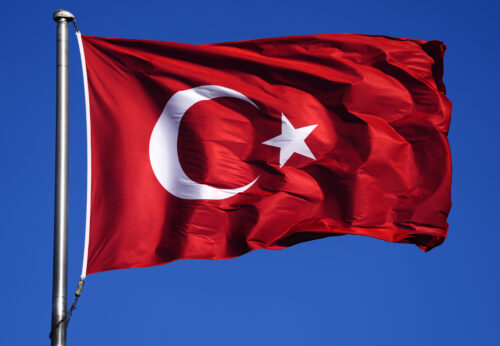
    After a decade of post-Arab Spring isolation, Turkey’s leaders have recognized that their ambition to position the country as an agenda-setter on the world stage requires active engagement in all directions. President Recep Tayyip Erdoğan’s consolidation of executive authority has centralized foreign policy decision-making and tied it to his domestic political priorities, transforming the country’s revisionist approach to one shaped primarily by personal and pragmatic interests.

    April 23, 2026

    الصحراء الغربية: لماذا لا يزال الصراع مهمًا
  • Video
  • الصحراء الغربية: لماذا لا يزال الصراع مهمًا

    مع دخول نزاع الصحراء الغربية عقده الخامس، لا يزال النزاع الإقليمي دون حل وغير معروف إلى حد كبير. تحلل إنتصار فقير من معهد الشرق الأوسط (MEI) التاريخ المعقد للصحراء الغربية والمطالبات المتنافسة من قبل المغرب والجمهورية العربية الصحراوية الديمقراطية. وتبحث في التطورات الأخيرة، مثل اعتراف الرئيس ترامب بسيادة المغرب على الإقليم وانهيار وقف إطلاق النار الذي دام 30 عامًا، بالإضافة إلى الأسئلة الجوهرية التي لا تزال دون إجابة بعد نصف قرن.

    7 أغسطس 2025

    المدونات الصوتية

    التركيز على الشرق الأوسط

    البودكاست الأسبوعي الرائد لمعهد الشرق الأوسط حول السياسة الخارجية الأمريكية والقضايا السياسية والاجتماعية المعاصرة في الشرق الأوسط.

    إزالة الحافة من الشرق الأوسط

    براين كاتوليس، زميل أول في معهد الشرق الأوسط كاتوليس يشارك الأصدقاء والزملاء وخبراء السياسة في محادثات غير رسمية حول أهم الأحداث في الشرق الأوسط. 

    إعادة التفكير في الديمقراطية

    زميل أول في معهد الشرق الأوسط غونول تول تستضيف كبار العلماء وقادة الفكر حول اتجاهات الديمقراطية العالمية وحالة النظام الدولي الليبرالي. 

    تصفية حسب
    8748 Results
    Obama Raises the Bar in Iraq
  • التحليل
  • Obama Raises the Bar in Iraq

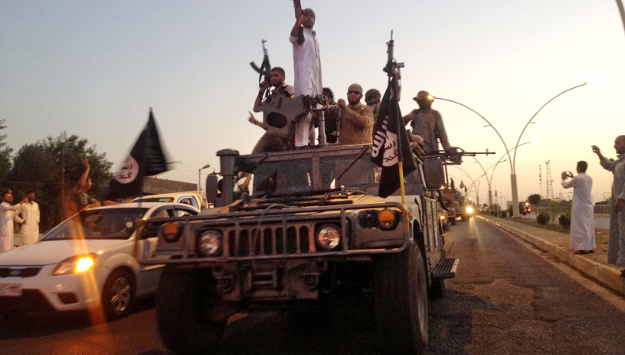
    Paul Salem, MEI’s vice president for policy and research, examines President Obama’s decision to step up US intervention against the Islamic State (also known as ISIS) in Iraq, and what it implies for broader US policy in the region, in this Expert Q&A.

    How do you read the import and impact of President Obama’s recent announcements of airstrikes and humanitarian intervention in Iraq?

    August 11, 2014

    Turkey's Presidential Elections
  • التحليل
  • Turkey's Presidential Elections

    On August 10, Turkish voters will go to the polls to choose a new president for the first time in the country’s history. The following candidates are on the ballot: Recep Tayyip Erdogan, the Prime Minister and leader of the governing Justice and Development Party (AKP); Ekmeleddin Ihsanoglu, joint candidate for the opposition Republican People’s Party (CHP) and Nationalist Action Party (MHP); and Selahattin Demirtas, the candidate of the pro-Kurdish People’s Democratic Party (HDP).

    Lebanese Presidential Election Unlikely to Alter Hezbollah’s Syria Calculus
    معهد الشرق الأوسط
  • التحليل
  • Lebanese Presidential Election Unlikely to Alter Hezbollah’s Syria Calculus

    The presidential vacuum in Lebanon since May 24, when president Michel Sleiman’s term ended without the Lebanese parliament having elected a successor, is likely to continue until an electable candidate is found who respects Hezbollah’s military autonomy and does not challenge its Syria policy.

    August 7, 2014

    Collection Spotlight: Pens and Swords: How the American Mainstream Media Report the Israeli-Palestinian Conflict By Marda Dunsky
    معهد الشرق الأوسط
  • التحليل
  • Collection Spotlight: Pens and Swords: How the American Mainstream Media Report the Israeli-Palestinian Conflict By Marda Dunsky

    Free media in a democratic society allows people to evaluate and challenge, to scrutinize honestly and debate accurately. But what happens when mainstream media unknowingly fails the public? Marda Dunsky argues that, when it comes to the Israeli-Palestinian conflict, a decade-old conflict at the center of U.S. interests in the Middle East, the American mainstream media has failed the public and even perpetuated violence.

    August 7, 2014

    Not Our Kind of Caliph: Syrian Islamists and the Islamic State
  • التحليل
  • Not Our Kind of Caliph: Syrian Islamists and the Islamic State

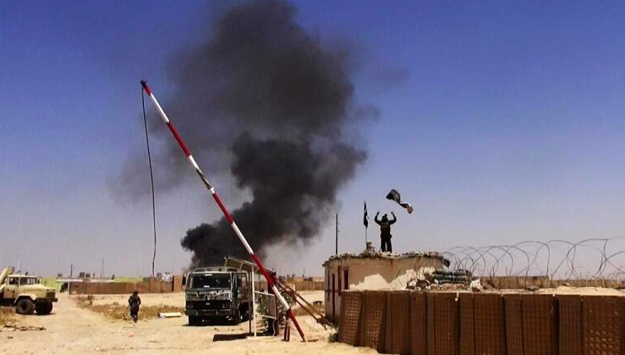
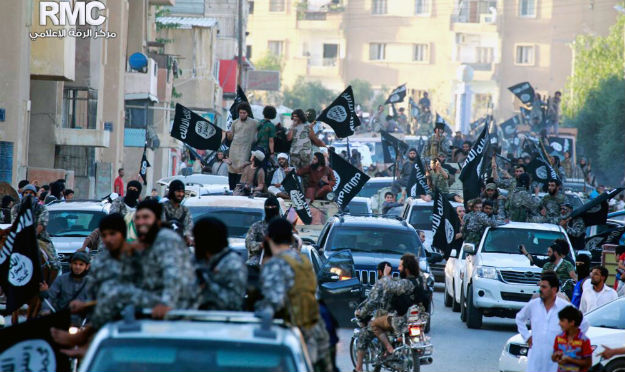
    On June 29, the al-Qaeda splinter faction known as the Islamic State (formerly the Islamic State of Iraq and Syria, ISIS)[1] declared its leader Abu Bakr al-Baghdadi to be the caliph, or successor to the Prophet Mohammed, a post that no one has claimed since 1924.[2]

    August 7, 2014

    The Cruel War in Gaza Calls for a New Approach to Peace
  • التحليل
  • The Cruel War in Gaza Calls for a New Approach to Peace

    The terrible war in Gaza, the third and worst of its kind in the last decade, is a product of Palestinian political disarray, Arab disunity, and division in Israel. Washington’s policy of “no direct talks” with Hamas and bitter partisanship between the White House and Congress have also limited effective U.S. intervention.  As such, this latest tragedy is yet another symptom of decades of failure to resolve the larger Israel-Palestine conflict, which, without major policy changes, will surely drag on regardless of the latest cease-fire.

    August 5, 2014

    How Vulnerable is Jordan?
  • التحليل
  • How Vulnerable is Jordan?

    Jordan has survived – and at times even prospered – for decades because of its ability to collect “strategic rents.” Unlike its Saudi neighbor, which has long collected oil rents from the global market for its energy resources, Jordan has sold its geographical location, stable domestic politics, and pro-Western orientation to the United States and its allies on the Arab side of the Gulf.  Considering Jordan’s dearth of other more tangible resources, the path to survival carved by the late King Hussein and his son King Abdullah II was essentially the only one

    August 5, 2014

    "Marked" for Exclusion: The Problem of Pluralism, State-building, and Communal Identities in Iraq and the Arab World
    معهد الشرق الأوسط
  • التحليل
  • "Marked" for Exclusion: The Problem of Pluralism, State-building, and Communal Identities in Iraq and the Arab World

    In this essay, the author argues that the dynamics of contemporary Sunni-Shi‘a relations in Iraq and elsewhere in the Arab world are not fundamentally different from those animating other societal cleavages. The modern Iraqi state’s awkwardness vis-à-vis its Shi‘a population, and indeed other outgroups and minorities, was most directly a product of exclusionary nation-building based on problematic conceptions of “unity” and “pluralism.” Rather than actually fostering unity or respecting and nurturing pluralism (politically or communally), these concepts have often been used to exclude dissenters whose non-conformity was deemed a threat to the body politic.

    August 5, 2014

    Sectarian Violence Involving Rohingya in Myanmar: Historical Roots and Modern Triggers
    معهد الشرق الأوسط
  • التحليل
  • Sectarian Violence Involving Rohingya in Myanmar: Historical Roots and Modern Triggers

    While the tangled roots of the Rohingya have played a critical role in the recent inter-religious violence between Rohingya and Buddhists, so too has the rise of Burman-Buddhist ethno-nationalism. This essay discusses the the salient narratives driving anti-Rohingya/anti-Muslim sentiments as well as the policies and reforms that have contributed to prolonging the violence.

    August 4, 2014

    War in Gaza: A chance for Iran, Hamas to turn a page?
  • التحليل
  • War in Gaza: A chance for Iran, Hamas to turn a page?

    Read full article on CNN.

    Israel’s ongoing military operation in Gaza — Protective Edge — has animated the Shia Islamist leadership in Tehran.

    The bloody conflict, and the global Muslim outrage it has provoked, is held by the Iranian regime as a chance to redeem itself in the eyes of the Sunni Muslim majority in the world.

    Democracy Cannot Exist without Social Cohesion: The Myanmar Challenge
  • التحليل
  • Democracy Cannot Exist without Social Cohesion: The Myanmar Challenge

    By emphasizing uniformity through laws to protect one class of race and religion, Myanmar legislators are advancing a device for oppression. If enacted, the Law on Protection of Race and Religion would not only breach international conventions; it would also preset the conditions for further sectarian violence.

    July 30, 2014

    اقرأ مجلة الشرق الأوسط

    تُعد المجلة الرئيسية لمعهد الشرق الأوسط أقدم مطبوعة محكّمة مكرّسة لدراسة الشرق الأوسط الحديث، وتغطي المجلة الرئيسية في المعهد السياسة والمجتمع والثقافة في المنطقة.