تمت ترجمة هذا النص بواسطة الذكاء الاصطناعي وقد يحتوي على أخطاء.
تخطي إلى المحتوى

الأبحاث والتعليقات

اقرأ الأبحاث والتحليلات والتعليقات المتعمقة من زملاء وخبراء معهد الشرق الأوسط عن الشرق الأوسط. 

Trump’s Family Business Deals Risk Further Undermining the Credibility of US Middle East Policy
  • التحليل
  • Trump’s Family Business Deals Risk Further Undermining the Credibility of US Middle East Policy

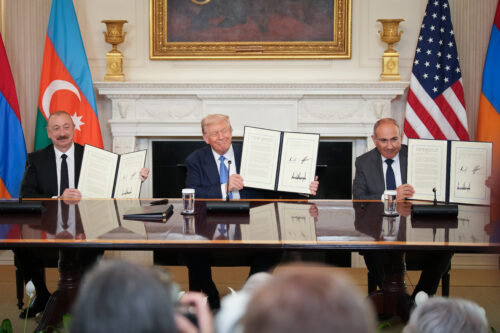
    President Trump’s family businesses are once again in the spotlight as a new financial disclosure showed they earned $2 billion in income in 2025 — a dramatic increase on the year before, with much of it coming from Gulf entities, raising emoluments concerns. Mounting perceptions of corruption, combined with unresolved crises in Iran and Israel-Palestine, are eroding trust among key partners in the Middle East. With the 2026 midterms approaching, these entanglements could represent a major political vulnerability and further undermine America’s already-strained standing in the region.

    Do the Gulf States Need a New Playbook?
  • Podcast
  • Do the Gulf States Need a New Playbook?

    After the US-Israel-Iran war — and the strikes that followed the cease-fire — the Gulf states find themselves dangerously exposed. Host Alistair Taylor is joined by MEI Associate Fellow Gregory Gause to discuss the war’s impact on the Gulf, their partnership with the United States, and whether the turmoil of recent months will push Gulf leaders to reassess their alliances and international engagement.

    July 2, 2026

    Additional Research & Commentary

    معلومات أساسية

    The Houthis
  • معلومات أساسية
  • The Houthis

    The Houthis are a political-military faction and Zaydi religious movement founded in northwestern Yemen in the 1980s. A key member of Iran’s Axis of Resistance with links to other militant organizations in the Arabian Peninsula and the Horn of Africa, the group has continued to pose a threat to Western interests on a global scale.

    May 15, 2026

    The Abraham Accords
    الصورة من تصوير أليكس وونغ/Getty Images
  • معلومات أساسية
  • The Abraham Accords

    تقدم هذه الوثيقة المعلوماتية لمحة عامة عن كيفية التوصل إلى اتفاقيات أبراهام، والمصالح الأمريكية المعنية، وعواقبها الاقتصادية والاستراتيجية، وآفاق التوسع في المستقبل.

    17 نوفمبر 2025

    Turkish Foreign Policy
  • معلومات أساسية
  • Turkish Foreign Policy

    After a decade of post-Arab Spring isolation, Turkey’s leaders have recognized that their ambition to position the country as an agenda-setter on the world stage requires active engagement in all directions. President Recep Tayyip Erdoğan’s consolidation of executive authority has centralized foreign policy decision-making and tied it to his domestic political priorities, transforming the country’s revisionist approach to one shaped primarily by personal and pragmatic interests.

    April 23, 2026

    الصحراء الغربية: لماذا لا يزال الصراع مهمًا
  • Video
  • الصحراء الغربية: لماذا لا يزال الصراع مهمًا

    مع دخول نزاع الصحراء الغربية عقده الخامس، لا يزال النزاع الإقليمي دون حل وغير معروف إلى حد كبير. تحلل إنتصار فقير من معهد الشرق الأوسط (MEI) التاريخ المعقد للصحراء الغربية والمطالبات المتنافسة من قبل المغرب والجمهورية العربية الصحراوية الديمقراطية. وتبحث في التطورات الأخيرة، مثل اعتراف الرئيس ترامب بسيادة المغرب على الإقليم وانهيار وقف إطلاق النار الذي دام 30 عامًا، بالإضافة إلى الأسئلة الجوهرية التي لا تزال دون إجابة بعد نصف قرن.

    7 أغسطس 2025

    المدونات الصوتية

    التركيز على الشرق الأوسط

    البودكاست الأسبوعي الرائد لمعهد الشرق الأوسط حول السياسة الخارجية الأمريكية والقضايا السياسية والاجتماعية المعاصرة في الشرق الأوسط.

    إزالة الحافة من الشرق الأوسط

    براين كاتوليس، زميل أول في معهد الشرق الأوسط كاتوليس يشارك الأصدقاء والزملاء وخبراء السياسة في محادثات غير رسمية حول أهم الأحداث في الشرق الأوسط. 

    إعادة التفكير في الديمقراطية

    زميل أول في معهد الشرق الأوسط غونول تول تستضيف كبار العلماء وقادة الفكر حول اتجاهات الديمقراطية العالمية وحالة النظام الدولي الليبرالي. 

    تصفية حسب
    8748 Results
    Reconciliation Efforts in Iraq—Reversals and Paradoxes
    معهد الشرق الأوسط
  • التحليل
  • Reconciliation Efforts in Iraq—Reversals and Paradoxes

    For the benefits of reconstruction to take hold in today’s Iraq, it is essential to avoid   oversimplified arguments that merely “fixing” ethno-sectarian tensions will be sufficient to attain the goal of political stability.   A broader approach, which recognizes the country’s current ethno-sectarian polarization as both a symptom and a cause of instability would be a far more appropriate means of addressing the deep-rooted problems faced by Iraqis since 2003.

    January 25, 2013

    Concluding Remarks on MEI's Western Sahara Series
  • التحليل
  • Concluding Remarks on MEI's Western Sahara Series

    Compromiseis the word repeated 25 times in this three-voice dialogue with opposing views on what could be the best solution to the Western Sahara dispute. The settlement options that emerged from the three contributors to this series have accepted either autonomy for the Western Sahara territory (subject to a referendum) or a referendum on self-determination that would include independence as well as other possibilities, including autonomy.

    January 15, 2013

    Tangle in the Caucasus
    معهد الشرق الأوسط
  • التحليل
  • Tangle in the Caucasus

    This piece was originally published by ForeignAffairs.com on January 15, 2013

    Assertions and opinions in this publication are solely those of the above-mentioned author(s) and do not necessarily reflect the views of the Middle East Institute, which expressly does not take positions on Middle East policy.

    China’s Relations with the Middle East: A Bibliography, 1950-2012
    معهد الشرق الأوسط
  • التحليل
  • China’s Relations with the Middle East: A Bibliography, 1950-2012

    This bibliography covers all aspects of modern China-Middle East ties—politics, energy, trade, investment, and the rare discussion of cultural exchange. Materials are divided into two categories, contemporary (2001-present) and historical.

    January 7, 2013

    War with Iran in 2013?
    معهد الشرق الأوسط
  • التحليل
  • War with Iran in 2013?

    This piece was originally published by Reuters on January 3, 2013 under the title Will This Be the Year That Israel Goes to War with Iran?

    Assertions and opinions in this publication are solely those of the above-mentioned author(s) and do not necessarily reflect the views of the Middle East Institute, which expressly does not take positions on Middle East policy.

    Israel did not bomb Iran last year. Why should it happen this year?

    January 4, 2013

    اقرأ مجلة الشرق الأوسط

    تُعد المجلة الرئيسية لمعهد الشرق الأوسط أقدم مطبوعة محكّمة مكرّسة لدراسة الشرق الأوسط الحديث، وتغطي المجلة الرئيسية في المعهد السياسة والمجتمع والثقافة في المنطقة.