Curb Your Enthusiasm: Why the Midterms Might Not Change Much in US Middle East Policy
With less than a week before the midterm elections in the United States, the spotlight is on the economy and cultural divides. US foreign policy remains mostly on the sidelines, but this year’s inconclusive Iran war and its effect on America’s economy have shaped the broader political environment in this electoral cycle.
The Multiple Costs of the US–Iran War – From Hormuz to Europe and South Asia: The Widening Economic and Political Geography of the Conflict
Wars are decided by those who hold military power, but their costs are increasingly borne by those who have little or no voice in the decisions that start them. The US–Iran war shows this imbalance very clearly. Its economic consequences have gone far beyond the battlefield and have disrupted energy markets, trade routes, food supplies, public finances and investment in the Gulf, Europe, Africa and Asia. The most striking feature of the conflict, however, is not only the size of the damage but its very unequal distribution.
In recent weeks, the Iran-backed Houthis have fired missiles and drones deep into Saudi Arabia, striking high-profile targets, including Riyadh’s airport and Aramco’s headquarters. The attacks follow a rapid Houthi offensive in September to seize key parts of Yemen’s Red Sea coast, which Saudi-backed government forces are now trying to roll back. Fatima Abo Alasrar, an affiliated scholar at MEI and non-resident scholar at the Arab Gulf States Institute, joins hosts Alistair Taylor and Matthew Czekaj to unpack the latest phase of the conflict. They discuss what the Houthis want, Riyadh’s calculus and search for allies, and how this campaign ties into Iran’s confrontation with the United States.
Since 1967, Israeli settlements in the West Bank have been a contested feature of the Israeli-Palestinian conflict. The ultimate disposition of the settlements and ongoing activity related to their growth have repeatedly defied agreement in negotiations over a resolution to the conflict.
The Houthis are a political-military faction and Zaydi religious movement founded in northwestern Yemen in the 1980s. A key member of Iran’s Axis of Resistance with links to other militant organizations in the Arabian Peninsula and the Horn of Africa, the group has continued to pose a threat to Western interests on a global scale.
The India-Middle East-Europe Economic Corridor (IMEC) is a proposed multinational infrastructure initiative aimed at upgrading connectivity between the three regions through integrated trade, energy, and digital networks. Announced at the G20 summit in New Delhi in September 2023, IMEC is envisioned partially as a counterweight to China’s international infrastructure project, the Belt and Road Initiative.
After a decade of post-Arab Spring isolation, Turkey’s leaders have recognized that their ambition to position the country as an agenda-setter on the world stage requires active engagement in all directions. President Recep Tayyip Erdoğan’s consolidation of executive authority has centralized foreign policy decision-making and tied it to his domestic political priorities, transforming the country’s revisionist approach to one shaped primarily by personal and pragmatic interests.
MEI Senior Fellow Brian Katulis engages friends, colleagues, and policy experts in casual conversations on the most important happenings in the Middle East.
Reconciliation Efforts in Iraq—Reversals and Paradoxes
For the benefits of reconstruction to take hold in today’s Iraq, it is essential to avoid oversimplified arguments that merely “fixing” ethno-sectarian tensions will be sufficient to attain the goal of political stability. A broader approach, which recognizes the country’s current ethno-sectarian polarization as both a symptom and a cause of instability would be a far more appropriate means of addressing the deep-rooted problems faced by Iraqis since 2003.
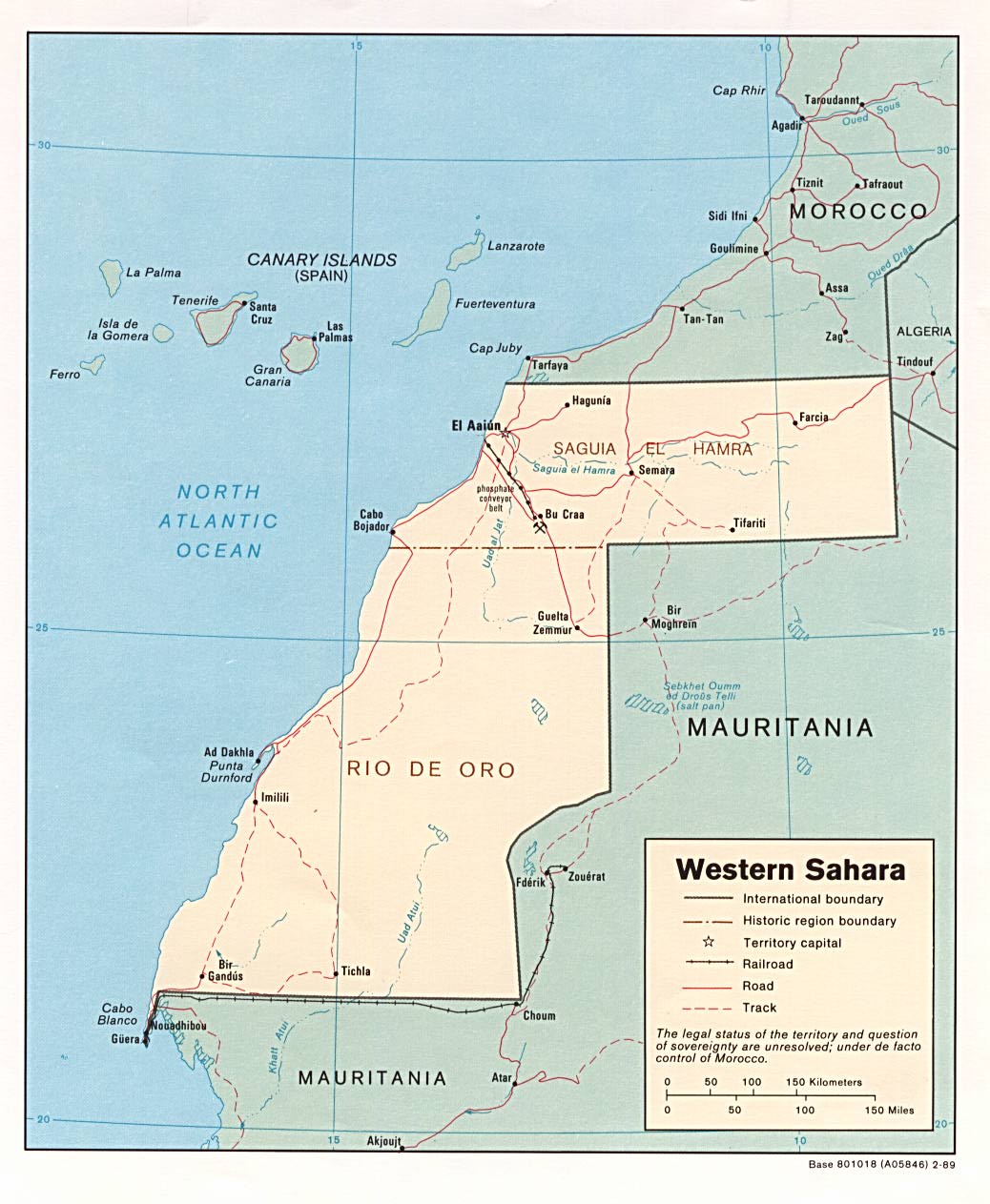
“Compromise” is the word repeated 25 times in this three-voice dialogue with opposing views on what could be the best solution to the Western Sahara dispute. The settlement options that emerged from the three contributors to this series have accepted either autonomy for the Western Sahara territory (subject to a referendum) or a referendum on self-determination that would include independence as well as other possibilities, including autonomy.
This piece was originally published by ForeignAffairs.com on January 15, 2013
Assertions and opinions in this publication are solely those of the above-mentioned author(s) and do not necessarily reflect the views of the Middle East Institute, which expressly does not take positions on Middle East policy.
China’s Relations with the Middle East: A Bibliography, 1950-2012
This bibliography covers all aspects of modern China-Middle East ties—politics, energy, trade, investment, and the rare discussion of cultural exchange. Materials are divided into two categories, contemporary (2001-present) and historical.
This piece was originally published by Reuters on January 3, 2013 under the title Will This Be the Year That Israel Goes to War with Iran?
Assertions and opinions in this publication are solely those of the above-mentioned author(s) and do not necessarily reflect the views of the Middle East Institute, which expressly does not take positions on Middle East policy.
Israel did not bomb Iran last year. Why should it happen this year?
The Middle East Institute is proud to present a paper based on a series of discussions with Middle East analysts sponsored by the Hollings Center for International Dialogue held in Istanbul and Washington about the regional implications of the Syria Crisis.
Could South Korea “Save” America’s Relations with Pakistan?
This piece was originally published by The Diplomat on December 21, 2012
Assertions and opinions in this publication are solely those of the above-mentioned author(s) and do not necessarily reflect the views of the Middle East Institute, which expressly does not take positions on Middle East policy.
This piece was originally published by Foreign Policy Blogs on December 20, 2012
Assertions and opinions in this publication are solely those of the above-mentioned author(s) and do not necessarily reflect the views of the Middle East Institute, which expressly does not take positions on Middle East policy.
Migration Agreements between Italy and North Africa: Domestic Imperatives versus International Norms
The upheavals which spread across North Africa in 2011 changed the political map of the region. With the downfall of longstanding rulers, the European Union has sought to re-launch a policy dialogue informed by an awareness of human rights issues and to support the process of democratic transition in its Mediterranean neighbors.
The Syrian Opposition Will Benefit from Integrating Its Civilian-Military Chain of Command
Assertions and opinions in this publication are solely those of the above-mentioned author(s) and do not necessarily reflect the views of the Middle East Institute, which expressly does not take positions on Middle East policy
Most Asian countries are success stories today. To varying degrees, they have emerged from the colonial experience and/or from destructive wars as far stronger and much more inclusive economically, socially, and politically. I suspect that many Arabs gravitate to Asia partly because they represent both the achievements and the possibilities of modernization.
The oldest peer-reviewed publication dedicated to the study of the modern Middle East, MEI’s flagship journal covers politics, society, and culture in the region.