Curb Your Enthusiasm: Why the Midterms Might Not Change Much in US Middle East Policy
With less than a week before the midterm elections in the United States, the spotlight is on the economy and cultural divides. US foreign policy remains mostly on the sidelines, but this year’s inconclusive Iran war and its effect on America’s economy have shaped the broader political environment in this electoral cycle.
The Multiple Costs of the US–Iran War – From Hormuz to Europe and South Asia: The Widening Economic and Political Geography of the Conflict
Wars are decided by those who hold military power, but their costs are increasingly borne by those who have little or no voice in the decisions that start them. The US–Iran war shows this imbalance very clearly. Its economic consequences have gone far beyond the battlefield and have disrupted energy markets, trade routes, food supplies, public finances and investment in the Gulf, Europe, Africa and Asia. The most striking feature of the conflict, however, is not only the size of the damage but its very unequal distribution.
In recent weeks, the Iran-backed Houthis have fired missiles and drones deep into Saudi Arabia, striking high-profile targets, including Riyadh’s airport and Aramco’s headquarters. The attacks follow a rapid Houthi offensive in September to seize key parts of Yemen’s Red Sea coast, which Saudi-backed government forces are now trying to roll back. Fatima Abo Alasrar, an affiliated scholar at MEI and non-resident scholar at the Arab Gulf States Institute, joins hosts Alistair Taylor and Matthew Czekaj to unpack the latest phase of the conflict. They discuss what the Houthis want, Riyadh’s calculus and search for allies, and how this campaign ties into Iran’s confrontation with the United States.
Since 1967, Israeli settlements in the West Bank have been a contested feature of the Israeli-Palestinian conflict. The ultimate disposition of the settlements and ongoing activity related to their growth have repeatedly defied agreement in negotiations over a resolution to the conflict.
The Houthis are a political-military faction and Zaydi religious movement founded in northwestern Yemen in the 1980s. A key member of Iran’s Axis of Resistance with links to other militant organizations in the Arabian Peninsula and the Horn of Africa, the group has continued to pose a threat to Western interests on a global scale.
The India-Middle East-Europe Economic Corridor (IMEC) is a proposed multinational infrastructure initiative aimed at upgrading connectivity between the three regions through integrated trade, energy, and digital networks. Announced at the G20 summit in New Delhi in September 2023, IMEC is envisioned partially as a counterweight to China’s international infrastructure project, the Belt and Road Initiative.
After a decade of post-Arab Spring isolation, Turkey’s leaders have recognized that their ambition to position the country as an agenda-setter on the world stage requires active engagement in all directions. President Recep Tayyip Erdoğan’s consolidation of executive authority has centralized foreign policy decision-making and tied it to his domestic political priorities, transforming the country’s revisionist approach to one shaped primarily by personal and pragmatic interests.
MEI Senior Fellow Brian Katulis engages friends, colleagues, and policy experts in casual conversations on the most important happenings in the Middle East.
Stabilizing the Sinai Peninsula – An Agenda For Action
MEI Podcast, 7 September, 2012 Foundation for Middle East Peace, Middle East Institute, Churches for Middle East Peace, and Americans for Peace Now invite you to a program Stabilizing the Sinai Peninsula – An Agenda For Action with Ambassador (ret.) Arthur Hughes Former Director General of the Sinai Multinational Forces and Observers (MFO) and Geoffrey Aronson Director for Research and Publications Foundation for Middle East Peace Friday September 7, 12:00-1:30 PM Carnegie Endowment for International Peace 1779 Massachusetts Ave., NW Washington, DC Rising lawlessness and violence and an inc
Podcast, 6 September, 2012 in the MEI Boardman room Turkey and Thailand: Unlikely Twins Ayse Zarakol This is the first of four events in a joint lecture series by Middle East Institute’s Center for Turkish Studies and the Institute of Turkish Studies at Georgetown University.
Podcast, 6 September, 2012 in the MEI Boardman room Turkey and Thailand: Unlikely Twins Ayse Zarakol This is the first of four events in a joint lecture series by Middle East Institute’s Center for Turkish Studies and the Institute of Turkish Studies at Georgetown University.
Podcast, 6 September, 2012 in the MEI Boardman room Turkey and Thailand: Unlikely Twins Ayse Zarakol This is the first of four events in a joint lecture series by Middle East Institute’s Center for Turkish Studies and the Institute of Turkish Studies at Georgetown University.
Podcast, 6 September, 2012 in the MEI Boardman room Turkey and Thailand: Unlikely Twins Ayse Zarakol This is the first of four events in a joint lecture series by Middle East Institute’s Center for Turkish Studies and the Institute of Turkish Studies at Georgetown University.
Podcast, 6 September, 2012 in the MEI Boardman room Turkey and Thailand: Unlikely Twins Ayse Zarakol This is the first of four events in a joint lecture series by Middle East Institute’s Center for Turkish Studies and the Institute of Turkish Studies at Georgetown University.
The first volume of the migration and the Arab World series dealt primarily with the trends in, consequences of, and policy responses to labor migration in the Gulf Cooperation Council (GCC) states since the “oil boom” period of the 1970s. This volume focuses on the countries of the Mashreq (i.e., Egypt and the Levant) as source and destination countries for various migrant groups, dating from the late 19th century up to the present day.
Western Sahara: It’s Time for the People to Choose
The latest diplomatic dance on whether or not former US Ambassador Christopher Ross should be allowed to continue to mediate UN-led talks between the Frente Polisario and Morocco on the future of Western Sahara is symptomatic of a much bigger problem ― the large powers’ unwillingness to advance an end to a dispute that they mistakenly see as peripheral to their strategic interests, and their resultant acquiescence in the brutal and illegal occupation of Western Sahara by Morocco for more than 35 years.
Israeli-Palestinian Peace: The Palestinian Refugee Challenge
Of the four core issues to resolve for an Israeli-Palestinian peace (security, borders/settlements, Jerusalem and Palestinian refugees) it is the refugee question that gets the least attention by non-specialists. And it is the core issue least addressed publically in detail by Israeli and Palestinian leaders.
Iran’s President Mahmoud Ahmadinejad had high hopes for the visit to Tehran by new Egyptian President Mohamed Morsi. His trip on Thursday for the Non-Aligned Movement (NAM) summit might have been brief — his spokesman emphasized ahead of time that he would spend only four hours on Iranian soil, including getting stuck in traffic — but Iran’s leaders relished the opportunity to demonstrate progress in overcoming its isolation in the Arab world and to gain some democratic and revolutionary legitimacy by proxy.
Afghanistan: Where Chaos Is King and Plunder Is Privilege
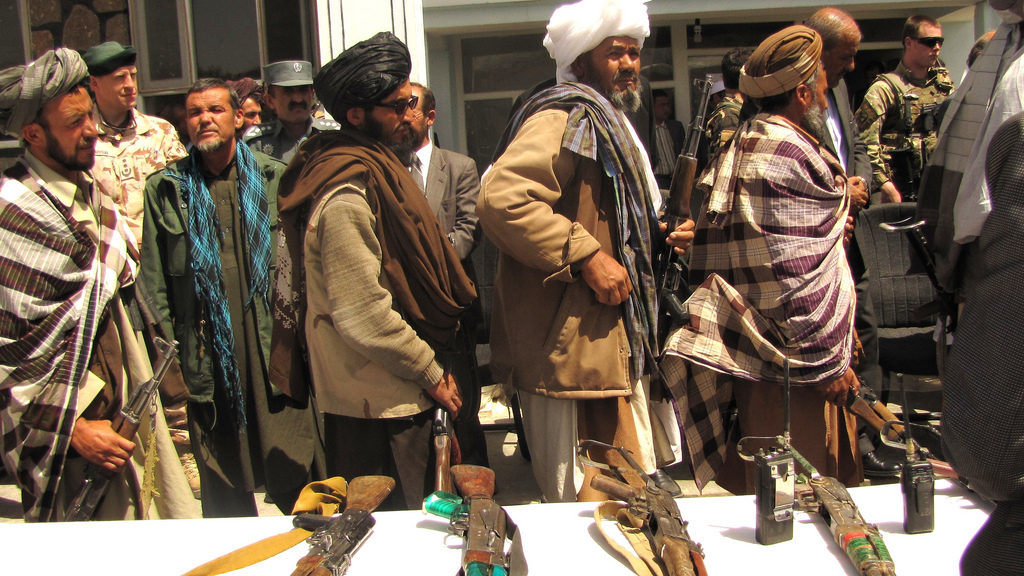
The “new and improved” tactics of “divide and conquer” are operational both at the vertical and horizontal layers of the government and society in Afghanistan.
Informal Governance and Role of State in Cities in Developing Countries: Comparing Karachi and Cairo
The 21st century has been called the “Century of the City,” as half of the world’s population lives in urban areas.[1] Virtually all of the projected global population growth will be in cities of the developing world, and most of it will be concentrated in informal settlements.
The oldest peer-reviewed publication dedicated to the study of the modern Middle East, MEI’s flagship journal covers politics, society, and culture in the region.