تمت ترجمة هذا النص بواسطة الذكاء الاصطناعي وقد يحتوي على أخطاء.
تخطي إلى المحتوى

الأبحاث والتعليقات

اقرأ الأبحاث والتحليلات والتعليقات المتعمقة من زملاء وخبراء معهد الشرق الأوسط عن الشرق الأوسط. 

Trump’s Family Business Deals Risk Further Undermining the Credibility of US Middle East Policy
  • التحليل
  • Trump’s Family Business Deals Risk Further Undermining the Credibility of US Middle East Policy

    President Trump’s family businesses are once again in the spotlight as a new financial disclosure showed they earned $2 billion in income in 2025 — a dramatic increase on the year before, with much of it coming from Gulf entities, raising emoluments concerns. Mounting perceptions of corruption, combined with unresolved crises in Iran and Israel-Palestine, are eroding trust among key partners in the Middle East. With the 2026 midterms approaching, these entanglements could represent a major political vulnerability and further undermine America’s already-strained standing in the region.

    Do the Gulf States Need a New Playbook?
  • Podcast
  • Do the Gulf States Need a New Playbook?

    After the US-Israel-Iran war — and the strikes that followed the cease-fire — the Gulf states find themselves dangerously exposed. Host Alistair Taylor is joined by MEI Associate Fellow Gregory Gause to discuss the war’s impact on the Gulf, their partnership with the United States, and whether the turmoil of recent months will push Gulf leaders to reassess their alliances and international engagement.

    July 2, 2026

    Additional Research & Commentary

    معلومات أساسية

    The Houthis
  • معلومات أساسية
  • The Houthis

    The Houthis are a political-military faction and Zaydi religious movement founded in northwestern Yemen in the 1980s. A key member of Iran’s Axis of Resistance with links to other militant organizations in the Arabian Peninsula and the Horn of Africa, the group has continued to pose a threat to Western interests on a global scale.

    May 15, 2026

    The Abraham Accords
    الصورة من تصوير أليكس وونغ/Getty Images
  • معلومات أساسية
  • The Abraham Accords

    تقدم هذه الوثيقة المعلوماتية لمحة عامة عن كيفية التوصل إلى اتفاقيات أبراهام، والمصالح الأمريكية المعنية، وعواقبها الاقتصادية والاستراتيجية، وآفاق التوسع في المستقبل.

    17 نوفمبر 2025

    Turkish Foreign Policy
  • معلومات أساسية
  • Turkish Foreign Policy

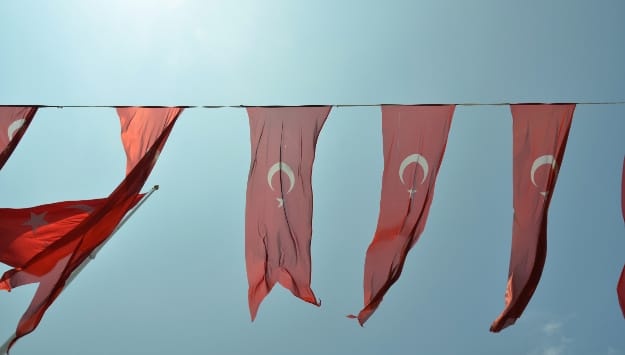
    After a decade of post-Arab Spring isolation, Turkey’s leaders have recognized that their ambition to position the country as an agenda-setter on the world stage requires active engagement in all directions. President Recep Tayyip Erdoğan’s consolidation of executive authority has centralized foreign policy decision-making and tied it to his domestic political priorities, transforming the country’s revisionist approach to one shaped primarily by personal and pragmatic interests.

    April 23, 2026

    الصحراء الغربية: لماذا لا يزال الصراع مهمًا
  • Video
  • الصحراء الغربية: لماذا لا يزال الصراع مهمًا

    مع دخول نزاع الصحراء الغربية عقده الخامس، لا يزال النزاع الإقليمي دون حل وغير معروف إلى حد كبير. تحلل إنتصار فقير من معهد الشرق الأوسط (MEI) التاريخ المعقد للصحراء الغربية والمطالبات المتنافسة من قبل المغرب والجمهورية العربية الصحراوية الديمقراطية. وتبحث في التطورات الأخيرة، مثل اعتراف الرئيس ترامب بسيادة المغرب على الإقليم وانهيار وقف إطلاق النار الذي دام 30 عامًا، بالإضافة إلى الأسئلة الجوهرية التي لا تزال دون إجابة بعد نصف قرن.

    7 أغسطس 2025

    المدونات الصوتية

    التركيز على الشرق الأوسط

    البودكاست الأسبوعي الرائد لمعهد الشرق الأوسط حول السياسة الخارجية الأمريكية والقضايا السياسية والاجتماعية المعاصرة في الشرق الأوسط.

    إزالة الحافة من الشرق الأوسط

    براين كاتوليس، زميل أول في معهد الشرق الأوسط كاتوليس يشارك الأصدقاء والزملاء وخبراء السياسة في محادثات غير رسمية حول أهم الأحداث في الشرق الأوسط. 

    إعادة التفكير في الديمقراطية

    زميل أول في معهد الشرق الأوسط غونول تول تستضيف كبار العلماء وقادة الفكر حول اتجاهات الديمقراطية العالمية وحالة النظام الدولي الليبرالي. 

    تصفية حسب
    8748 Results
    Saudi Arabia on the Edge: The Uncertain Future of an American Ally
    معهد الشرق الأوسط
  • Podcast
  • Saudi Arabia on the Edge: The Uncertain Future of an American Ally

    The Middle East Institute is proud to host MEI scholar Thomas W. Lippman for a discussion of his new book, Saudi Arabia on the Edge: The Uncertain Future of an American Ally. Of all the countries that are vital to the strategic and economic interests of the United States, Saudi Arabia is the least understood by the American people.

    January 12, 2012

    Egypt: Islamists vs. Islamists
    معهد الشرق الأوسط
  • التحليل
  • Egypt: Islamists vs. Islamists

    *This Opinion first appeared in the Huffington Post on December 13, 2011

    The first free and by all accounts fair elections in Egypt mark a major turning point in the country's long history. In what is likely to be a tenuous and trying transition to democracy, Egypt's Islamists won a resounding victory, gaining two-thirds of the vote in the first round of Egypt's parliamentary elections. While many in the West fear that the Islamist victory in this first election will radicalize Egypt, in reality, the situation is far more complex and nuanced.

    December 13, 2011

    Eternal Rivals? The Artesh and the IRGC
    معهد الشرق الأوسط
  • التحليل
  • Eternal Rivals? The Artesh and the IRGC

    More than three decades after the Revolution of 1979, the Islamic Republic of Iran Army [Artesh-e Jomhouri-ye Eslami-ye Iran] and the Islamic Revolutionary Guard Corps [Sepah-e Pasdaran-e Enqelab-e Eslami] (IRGC), remain entangled in a state of fierce rivalry.

    November 15, 2011

    The Iranian Army: Tasks and Capabilities
    معهد الشرق الأوسط
  • التحليل
  • The Iranian Army: Tasks and Capabilities

    Much attention has been given to the IRGC’s asymmetric defense capabilities, its role in Iraq’s post-2003 insurgency, and its alleged hold over the Strait of Hormuz, but there is little scrutiny in open source literature on the significance of the Iranian Army (Artesh) to Iran’s national security.

    November 15, 2011

    The Artesh and Revolution
    معهد الشرق الأوسط
  • التحليل
  • The Artesh and Revolution

    Since its inception in 1979, the Islamic Republic of Iran (IRI) has duplicated almost all state institutions. It retained the institutions that existed under the old regime while creating new Islamic agencies to perform the same tasks. The Iranian armed forces did not escape this process. Under the monarchy, the armed forces were called the Artesh Shahanshahi or Imperial Army. Although called the “Army,” or Artesh, the force consisted of the three main services (army, navy, and air force) plus the Imperial Guard Divisions (Gard-e Javidan) and the Army Aviation Command (Hawa Nirouz).

    November 15, 2011

    Living with the Artesh's Green Sympathies
    معهد الشرق الأوسط
  • التحليل
  • Living with the Artesh's Green Sympathies

    In an official gathering in December 2010, Major General Attollah Salehi, Commander-in-Chief of the Iranian Army said that during his visits to Army barracks, he would see the pictures of the leaders of the “sedition” (The Islamic Republic’s present hard-line leadership refers to opposition leaders and 2009 presidential candidates Mir Hossein Moussavi and Mehdi Karrubi as leaders of sedition) hanging on the walls.

    November 15, 2011

    Iran’s Regular Army: Its History and Capacities
    معهد الشرق الأوسط
  • التحليل
  • Iran’s Regular Army: Its History and Capacities

    Along with Egypt and Turkey, Iran is one of the most populous countries in the Middle East. Aware of its strategic significance and millennium-long civilization, Iranian leaders have always aspired to assume a leadership role on regional and international issues and pursued an assertive policy to reach their country’s potential. This ambitious strategy requires, among other things, strong military forces.

    November 15, 2011

    The Artesh: Iran’s Marginalized and Under-Armed Conventional Military
    معهد الشرق الأوسط
  • التحليل
  • The Artesh: Iran’s Marginalized and Under-Armed Conventional Military

    Originally posted November, 2011

    Ravaged, intimidated, and gutted to the core in a series of purges after the 1979 Revolution, the remnant of the Shah’s military, renamed the Army of the Islamic Republic of Iran, known generally in Persian as the Artesh, put itself together as best as it could to face invading Iraqi forces at the beginning of the Iran-Iraq war.

    November 15, 2011

    The Artesh: From the War with Iraq until Today
    معهد الشرق الأوسط
  • التحليل
  • The Artesh: From the War with Iraq until Today

    Iran’s conventional military forces — ground, air, and naval — once stood tall as the best armed military forces in the Middle East aside from those of Israel.  The United States lavished the most sophisticated military hardware on the Shah, who was willing and able to tap his financial resources from Iran’s oil wealth to buy modern conventional arms.  The Shah had the ambition, the financial means, and the political-military backing of the United States to turn Iran into the Persian Gulf’s most formidable military power.  

    November 15, 2011

    A United States Marine's View of the Artesh and IRGC
    معهد الشرق الأوسط
  • التحليل
  • A United States Marine's View of the Artesh and IRGC

    United States military forces use standard procedures for planning operations against other militaries.  These procedures differentiate between different branches, or units, of an opposing force depending on their capabilities and limitations.  This article presents one such analysis of the Iranian Military, where there are vast differences between the Islamic Revolutionary Guard Corps (IRGC)and the Artesh, or the regular Iranian armed forces.  The article then draws parallels to the planning for Operation Iraqi Freedom that led to the defeat of the Iraqi Republican Guard and regular Iraqi

    November 15, 2011

    Sanctioning Iran's Military-Industrial Complex
    معهد الشرق الأوسط
  • التحليل
  • Sanctioning Iran's Military-Industrial Complex

    As the United States and its allies have tightened sanctions on Iran, they have sought in particular to isolate the Islamic Revolutionary Guard Corps, the regime’s most aggressive institution. The IRGC, known in Persian as the Pasdaran, fields its own army, navy, and air force, and dominate a large and increasing share of Iran’s national economy.

    November 15, 2011

    اقرأ مجلة الشرق الأوسط

    تُعد المجلة الرئيسية لمعهد الشرق الأوسط أقدم مطبوعة محكّمة مكرّسة لدراسة الشرق الأوسط الحديث، وتغطي المجلة الرئيسية في المعهد السياسة والمجتمع والثقافة في المنطقة.